

Airport at a Glance
| Field | Detail |
|---|---|
| Airport | Ankara Esenboğa Airport |
| IATA Code | ESB |
| Country | Türkiye |
| City | Ankara |
| Annual Passengers | 12.9 million (2024) |
| Primary Audience | Government and diplomatic professionals, defence industry executives, domestic business travellers, Anatolian trade class |
| Peak Advertising Season | April to June, September to November |
| Audience Tier | Tier 1 |
| Best Fit Categories | B2B and corporate services, financial services, luxury automotive, premium real estate, international education, defence and technology brands |
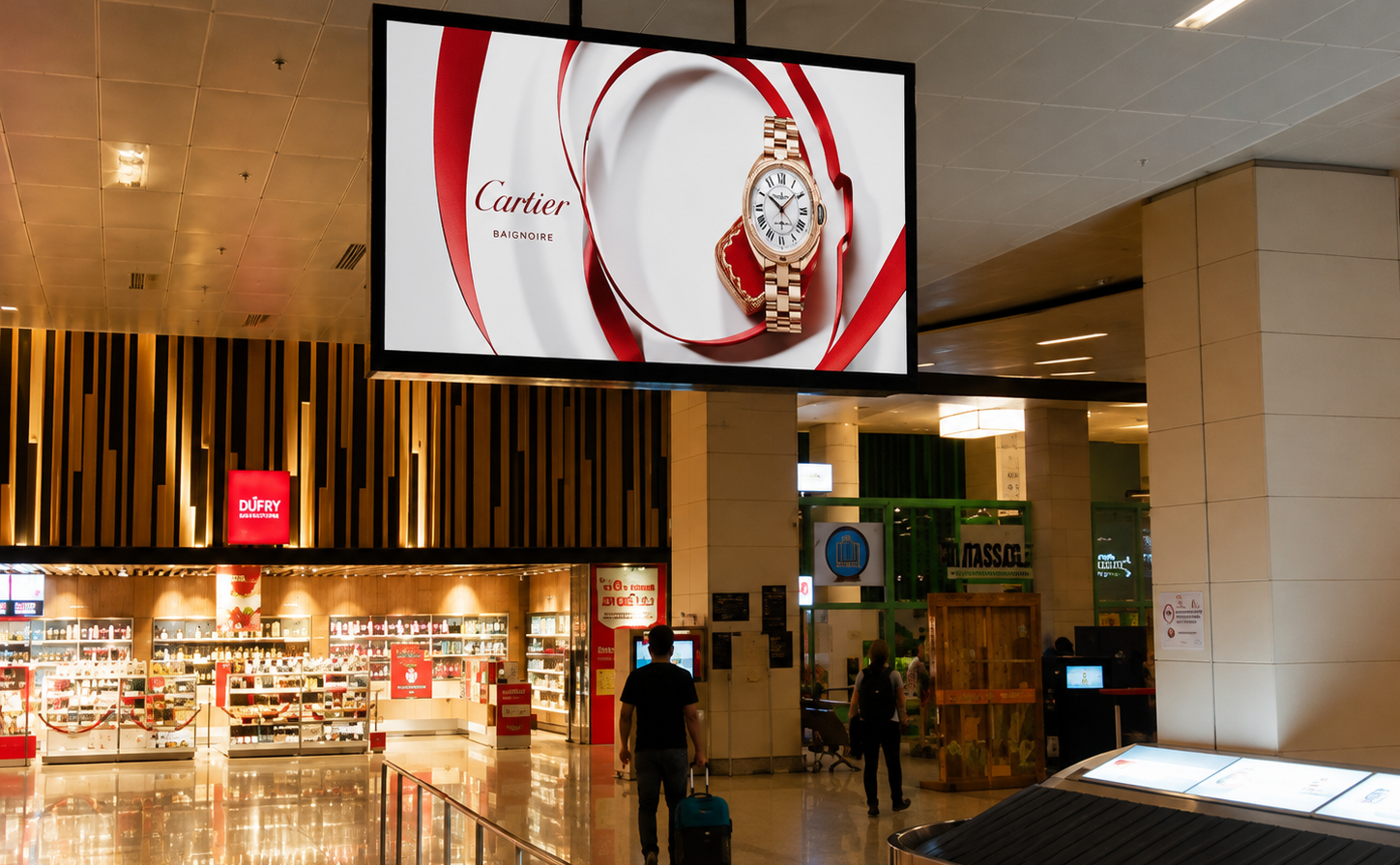
Ankara Esenboğa Airport is one of Europe and the Middle East's most commercially distinctive yet systematically underserved advertising environments. As the sole international airport serving Türkiye's capital — a city of 5.8 million that hosts the national government, every foreign embassy, Türkiye's entire defence industry command structure, and a rapidly expanding technology and university ecosystem — ESB delivers a concentration of decision-making, procurement-authorised, and institutionally connected travellers that no commercial hub airport can replicate. These are not leisure tourists or price-sensitive domestic travellers. The ESB passenger is predominantly a professional flying with institutional purpose — a government minister's delegate, a defence procurement executive, a diplomat, an ASELSAN engineer, or a senior civil servant — and their airport advertising receptivity reflects the commercially elevated context of their travel. For B2B brands, premium financial services, luxury automotive, and international property developers, ESB represents an access point to Türkiye's power class that has no equivalent in any other Turkish airport.
Ankara generates approximately 50% of Türkiye's entire national defence industry turnover — a concentration of sovereign industrial wealth in a single city that is unique among European and Middle Eastern capitals. Companies including ASELSAN, ROKETSAN, TAI, Baykar, HAVELSAN, and STM are headquartered in Ankara's organised industrial zones and technoparks, each employing thousands of high-income engineers, procurement specialists, and research directors who travel through ESB for business purposes on a consistent year-round basis. Türkiye's defence exports reached a record $7.1 billion in 2024 — the direct product of decisions made in Ankara boardrooms — and every contract signed in this sector generates travel through ESB connecting Turkish executives to their counterparts in the Middle East, Central Asia, Eastern Europe, and Africa. For brands that understand where institutional wealth is created and moved, Ankara is a priority market that Istanbul's commercial noise has obscured for too long.


Advertising Value Snapshot
- Passenger scale: 12.9 million total passengers in 2024 — 9.6 million domestic, 3.3 million international — representing 8% year-on-year growth, with 2025 already surpassing 13 million; TAV Airports has committed €300 million toward terminal expansion to accommodate 30 million annual passengers by 2040
- Traveller type: Government and diplomatic professionals, defence and aerospace industry executives and engineers, senior civil servants, international procurement delegations, Anatolian business class, domestic professional frequent flyers
- Airport classification: Tier 1 — Türkiye's fourth-busiest airport, 13th busiest in the Middle East, Skytrax ASQ "Best Airport" award winner 2022, carbon neutral Level 4+ accreditation, TAV concession to 2050
- Commercial positioning: The exclusive air gateway to Türkiye's capital and political decision-making centre — no government ministry, embassy, or defence industry headquarters in Türkiye is accessible without passing through ESB
- Wealth corridor signal: ESB sits at the centre of Türkiye's defence-industrial wealth corridor — a sector generating $7.1 billion in exports in 2024, accounting for 50% of national defence turnover, and backed by a national defence budget of $47 billion for 2025
- Advertising opportunity: Masscom Global provides brands with precise access to ESB's institutionally concentrated audience — the senior professional and government-adjacent traveller who decides procurement budgets, investment mandates, and corporate spending — in a single-terminal environment where competitive advertising pressure remains low relative to audience quality
Airport Advertising is Complex to Get Right
We help you execute faster, with proven results and local insight most planners lack starting now.
Talk to an ExpertCatchment Area and Economic Drivers
Top 10 Cities within 150 km — Marketer Intelligence
- Ankara (Çankaya, Keçiören, Etimesgut and metro districts): The political and administrative capital of Türkiye — home to all government ministries, the Grand National Assembly, NATO's SHAPE Allied Land Command, every foreign diplomatic mission in the country, and a combined professional-public sector population of approximately 5.8 million; the upper income bracket of this catchment — civil servants at Grade 1, ambassadorial staff, senior military officers, and defence industry management — represents one of the highest concentrations of institutionally connected wealth in any European or Middle Eastern capital
- Kırıkkale: Türkiye's most defence-intensive secondary city — home to the Kırıkkale Machinery and Chemical Industry Corporation (MKEK), ammunition and explosives manufacturing facilities, and a dense cluster of defence-adjacent engineering firms whose employees and management form a well-compensated professional audience with strong B2B advertising receptivity
- Kazan: An Ankara satellite district that is rapidly industrialising as a defence and aerospace production zone — TUSAŞ (Turkish Aerospace Industries) operates major manufacturing facilities here, generating a significant population of aerospace engineers, logistics professionals, and procurement managers whose daily commute and travel patterns connect through ESB
- Sincan: Ankara's western industrial corridor hosting organised industrial zones that supply both civilian manufacturing and defence sub-contracting networks; the professional management class in Sincan's industrial estates forms a commercially active audience travelling to Istanbul, Gulf states, and Central Asian procurement destinations through ESB
- Polatlı: The western agricultural and light manufacturing hub of the Ankara catchment — home to the Turkish military's central logistics command and significant armoured vehicle storage and maintenance facilities; the military and logistics management community here is a functionally mobile professional audience
- Haymana: A southern Ankara district known for its geothermal resources and agricultural wealth; the landholding and agri-business entrepreneurial class of the Haymana plateau represents an asset-rich rural HNI audience whose travel through ESB connects to Ankara's commercial services and occasionally to Istanbul and Middle Eastern business destinations
- Beypazarı: The artisanal heritage and silver jewellery capital of the Ankara region — a niche but commercially distinctive tourism and craftwork export economy whose business owners and hospitality operators form a small but consistently mobile entrepreneurial audience
- Kızılcahamam: A thermal spa and wellness resort destination in the forested hills north of Ankara — hosting several government-affiliated conference and rehabilitation facilities whose use generates a consistent stream of institutional and government-adjacent travel connecting to ESB
- Gölbaşı: A rapidly developing southern Ankara suburb increasingly hosting corporate campuses, technology parks, and residential developments for Ankara's upper-income professional class — the outward growth of Ankara's wealthiest residential districts into Gölbaşı is creating a new catchment of premium-income commuters whose travel patterns centre on ESB
- Çankırı: The provincial capital 130 km north of Ankara, connected by dual carriageway — a predominantly agricultural and administrative provincial city whose civil service management class and commodity-agri business owners form a secondary catchment audience travelling through ESB for inter-city business and government liaison
NRI and Diaspora Intelligence
ESB's diaspora dynamic differs fundamentally from Türkiye's coastal and cultural airports. Rather than a traditional remittance-motivated diaspora, ESB sees a specialised form of professional return flow: Turkish-origin engineers, academics, and defence industry professionals who trained or worked in Germany, the United States, the Netherlands, and the United Kingdom and have returned to Ankara's defence and technology ecosystem as part of Türkiye's strategic effort to repatriate technical talent. This reverse-migration professional class travels through ESB on a regular basis — returning to Europe for academic conferences, partner firm meetings, and NATO-adjacent professional obligations — and represents a high-income, internationally experienced audience whose consumer profile mirrors their Western peer group. Their per-trip spend, brand awareness of premium international products, and receptivity to financial services and international real estate advertising is significantly above the domestic Ankara average. Additionally, the large Iraqi and Central Asian communities accessing ESB through direct routes to Baghdad, Erbil, Baku, and Almaty generate a commercially active inbound business and diaspora audience whose buying power and investment intent are relevant to Turkish and international real estate and financial advertisers.
Economic Importance
Ankara's economy operates on a fundamentally different model from Istanbul's commercial dynamism — it is an economy of institutional power, sovereign procurement, and knowledge-intensive industry rather than one of trade and consumer services. The national government and its procurement agencies, the defence industry cluster generating 50% of Türkiye's total defence turnover, six major research universities including ODTU (METU) and Bilkent, and the headquarters of major Turkish state-owned enterprises and regulatory bodies all generate a class of traveller whose travel decisions are institutionally funded and whose personal spending power is consistently in Türkiye's top income decile. For advertisers, this economic structure produces a relatively small but exceptionally high-value target audience — the senior decision-maker class — at an airport where competitive advertising pressure is dramatically lower than at Istanbul's saturated hubs. The brand that owns ESB's premium inventory is effectively advertising to Türkiye's power structure in a space where their message is unlikely to be diluted by ten competing luxury brands doing the same.
Business and Industrial Ecosystem
- Defence and aerospace industry: Companies including ASELSAN, ROKETSAN, TAI, Baykar, HAVELSAN, STM, and their supplier networks account for 50% of Türkiye's national defence turnover and are all headquartered in Ankara's defence technoparks; this ecosystem employs nearly 100,000 workers in Türkiye and its senior management, engineers, and procurement officers are among ESB's most consistent premium business travellers
- Government and public administration: All national ministries, the Presidency, the Grand National Assembly, the Central Bank, the Banking Regulation and Supervision Agency, and the Competition Authority are based in Ankara — generating a vast class of senior civil servant and regulatory official whose travel connects Ankara to every Turkish city and to international government delegations
- Research universities and technology transfer: ODTU (Middle East Technical University), Bilkent University, Hacettepe, and Ankara University collectively enrol over 200,000 students and produce a substantial proportion of Türkiye's engineering and research output — their faculty, international visiting scholars, and technology transfer professionals travel through ESB year-round creating a consistent academic and innovation audience
- Energy and infrastructure: Türkiye's energy regulatory framework, nuclear power programme planning, and large infrastructure procurement are all administered from Ankara — the executives and consultants serving BOTAŞ, TETAŞ, and the Ministry of Energy travel through ESB on a regular basis, representing a high-income B2B audience for energy sector suppliers, management consultants, and financial services
Passenger Intent — Business Segment
The dominant business traveller at ESB is not a retail executive or a media buyer — they are a procurement professional, a government delegate, a defence engineer, or a regulatory official flying with institutional purpose and an institutionally funded budget. Their decision-making authority, their spending power, and their receptivity to premium brand messaging in the professional categories — corporate financial services, executive travel, premium technology, and luxury automotive — is among the highest of any airport audience in the broader Middle East and Europe region. The business travel from ESB to Gulf destinations — Dubai, Doha, Riyadh — consistently involves defence export negotiations, energy sector partnerships, and bilateral government investment discussions whose commercial value to Turkey's economy is measured in hundreds of millions of dollars per transaction.
Strategic Insight
ESB's business audience is commercially underpriced for its decision-making weight. Brands advertising at Istanbul's airports are reaching a far higher proportion of leisure and price-sensitive travellers than they realise. At ESB, the concentration of institutional decision-makers — government procurement officials, defence company executives, diplomatic personnel, and regulatory authorities — creates a B2B and premium consumer advertising environment that is structurally absent from most European and Middle Eastern airport media plans. The brand that allocates budget to ESB is placing its message in front of the people who sign procurement contracts, not the people who buy them under instruction.
Tourism and Premium Travel Drivers
- Anıtkabir (Atatürk Mausoleum): The most visited monument in Türkiye and a site of profound national significance — drawing millions of domestic visitors per year, it generates a concentrated flow of culturally motivated and patriotically engaged domestic tourists whose airport transit represents a strong seasonal premium F&B and gifting advertising window
- Museum of Anatolian Civilisations: A UNESCO-awarded institution housing one of the world's most significant collections of Hittite and pre-Hittite artefacts — attracting a global audience of academic tourists, heritage enthusiasts, and diplomats whose cultural engagement profile makes them receptive to premium lifestyle and cultural brand advertising
- Ankara Castle and Ulus Historic District: The Ottoman and Byzantine heritage core of Ankara, generating domestic and international cultural tourism with strong craft, gastronomy, and artisanal retail spending triggers that benefit premium F&B and lifestyle brands
- Central Anatolian plateau and natural heritage: The volcanic Phrygian Valley, Kızılcahamam thermal parks, and the Ankara-Konya agricultural plateau generate a growing niche eco and wellness tourism segment — active lifestyle and wellness brands find a natural audience match in this growing inbound flow
Passenger Intent — Tourism Segment
Tourism at ESB is predominantly domestic — Ankara is not Türkiye's primary international leisure destination — but the inbound international tourist at ESB is a distinctly high-value traveller. Diplomatic staff on assignment, international academics visiting ODTU and Bilkent, heritage tourists from Germany, the Netherlands, and the Gulf, and visiting delegations from Central Asian and Middle Eastern governments all represent an audience whose per-day spend significantly exceeds the leisure average. Brands targeting premium cultural tourists, institutional hospitality, and high-end accommodation find their most concentrated access to this niche at ESB.
Travel Patterns and Seasonality
Peak seasons:
- April to June (Spring Business Peak): The most commercially active business travel season at ESB — diplomatic conference season, NATO-adjacent summit activity, university graduation and academic conference cycles, and the peak period for inter-ministerial and government procurement travel all concentrate in this window; the highest dwell-time, decision-maker audience density of the ESB calendar occurs between April and June
- September to November (Autumn Institutional Peak): The second major business travel surge — parliamentary legislative sessions resume in October, defence procurement contracting cycles peak in Q4, and international investor and government delegation visits concentrate in this period ahead of year-end budget commitment deadlines; advertisers targeting B2B audiences should treat September to November as the single highest-ROI window at ESB
- December to January (Holiday and Eid Seasonal Peak): Domestic leisure travel surges as Ankara residents travel to coastal and cultural destinations; the New Year holiday and the Eid al-Fitr and Eid al-Adha windows generate the year's highest domestic passenger volumes and create gifting, hospitality, and premium consumer category advertising opportunities
Traffic volume data: ESB handles approximately 12.9 million annual passengers (2024), with domestic traffic comprising 74% of total volume; approximately 280 aircraft movements per day generate roughly 40,000 passenger touchpoints daily within the terminal.
Event-Driven Movement
- Victory Day (August 30) and Republic Day (October 29): Türkiye's two most significant national holidays generate strong domestic travel surges both toward and away from Ankara — Republic Day in particular, celebrated at Anıtkabir with national ceremonies, brings inbound domestic movement through ESB from all regions of Türkiye; premium F&B, gifting, and lifestyle brands benefit from the concentrated national sentiment of these windows
- IDEF Defence Exhibition (biennial, April-May, Ankara): Türkiye's most significant international defence and aerospace trade show — attracting procurement delegations from over 70 countries and generating ESB's highest concentration of international business visitors in any event window; defence technology, corporate hospitality, luxury automotive, and premium financial services brands have no better single advertising moment at ESB than the IDEF window
- TEKNOFEST Aerospace and Technology Festival (September, Ankara edition): Türkiye's largest technology and aerospace festival — drawing hundreds of thousands of visitors and generating a strong influx of technology professionals, students, and international aerospace delegations through ESB; STEM-oriented corporate brands, technology companies, and premium automotive brands find a uniquely engaged audience
- Parliamentary Opening Session (October 1): The annual reconvening of the Grand National Assembly is a reliable ESB traffic trigger — diplomats, media, business lobbyists, and government officials return to Ankara in concentrated numbers in late September and early October, creating one of the year's most institutionally dense audience concentrations at the airport
- Eid al-Adha and Eid al-Fitr: The two Eid holidays consistently produce the highest domestic leisure travel volumes of the year through ESB — families travelling to İzmir, Antalya, Istanbul, and coastal destinations generate peak consumer spending intent for hospitality, gifting, and premium lifestyle categories
It’s Not Just Where You Advertise - It’s How Fast You Execute
We combine local insight with fast rollout to deliver results for you, now.
Talk to an ExpertAudience and Cultural Intelligence
Top 2 Languages
- Turkish: The sole operational and commercial language of ESB's entire passenger base — Turkish-language creative is non-negotiable for domestic campaigns and achieves complete audience penetration; premium brand messaging in Turkish carries significantly higher recall and conversion than English-only creative at ESB, particularly with the government and Anatolian business traveller segments
- Arabic: The commercially significant second language at ESB — driven by direct routes to Baghdad, Erbil, Riyadh, Dubai, and Doha, and by the presence of substantial Iraqi, Saudi, and Gulf state diplomatic and business communities in Ankara; Arabic-language creative in departure areas intercepts one of the most commercially active cross-border business audiences in the Turkish airport network, particularly relevant for real estate, investment, and luxury brand categories
Major Traveller Nationalities
ESB's international passenger base reflects Ankara's role as a capital city and regional power centre rather than a leisure destination. Iraqi nationals — travelling through ESB on the Baghdad and Erbil routes — represent a significant and commercially active international segment, many of whom are business operators and investors connecting Turkish industrial capacity to Iraqi reconstruction and energy investment demand. Azerbaijani passengers on the Baku route reflect the deep Turkic cultural and economic ties between Ankara and Baku, and travel with strong B2B investment and commercial intent. Gulf state travellers — from Saudi Arabia, Qatar, and the UAE — arrive as defence procurement partners, investment delegation members, and high-income professional visitors whose per-trip spend reflects GCC wealth norms. European Union diplomatic and academic visitors from Germany, the Netherlands, Belgium, and France form a consistent and institutionally funded inbound flow connected to NATO obligations and academic exchange.
Religion — Advertiser Intelligence
- Sunni Islam (approximately 80%): The dominant faith of Ankara's population and the majority of ESB's passenger base — Ramadan and Eid periods are the year's most powerful consumer spending triggers, with gifting, premium F&B, travel, and lifestyle categories all seeing measurable uplifts in conversion; luxury confectionery, premium food brands, and premium hospitality advertising during Ramadan and the pre-Eid window delivers some of the year's highest engagement at ESB; Ankara's officially secular character does not diminish the population's observant practice — prayer room usage at ESB is among the highest of any Türkiye airport and signals a devout majority audience
- Alevi Islam (approximately 15 to 20%): A significant and historically distinct Turkish Muslim tradition concentrated in Central Anatolia — the Alevi community tends to be more secular in public expression but equally observant in family and community practice; Alevism's strong cultural emphasis on music, poetry, and community identity creates advertising resonance with cultural tourism, artisanal, and community-oriented brands
- Secular and non-observant (significant minority): Ankara's strong university and professional class includes a substantial secular population whose consumer behaviour mirrors that of educated Western European consumers — brand-conscious, internationally oriented, and strongly receptive to premium lifestyle, technology, and financial product advertising
Behavioral Insight
The Ankara traveller operates from a mindset of institutional obligation and professional responsibility rather than leisure aspiration. They are flying because their government, their employer, or their contract requires it — which means their airport dwell time is a moment of relative relaxation within a high-pressure professional schedule. This creates a specific advertising receptivity profile: premium brands that signal executive status, efficiency, and professional quality outperform aspirational leisure brands. The corporate car brand, the premium business credit card, the executive management education programme, and the international investment property offering all resonate with an audience that is mentally attuned to professional advancement and institutional performance rather than holiday fantasy. Brands that address this audience as professionals — not as tourists — will consistently outperform at ESB.
Outbound Wealth and Investment Intelligence
The outbound ESB passenger connects Türkiye's capital city wealth to an international network that is defined not by luxury leisure but by institutional power and industrial capital. Senior government officials, defence company directors, and Ankara's professional class travel outbound primarily to Gulf states, Central Asian capitals, and European cities — and in each case, they are travelling to conduct bilateral business, manage investment interests, or attend institutional obligations. This is an outbound audience with procurement authority and investment mandate, not a shopping audience. Their brand receptivity en route is toward categories that serve their professional and personal capital preservation goals — wealth management, executive property, international education for their children, and premium business services.
Outbound Real Estate Investment
Ankara's HNI class — defence industry executives, senior civil servants with accumulated pension and investment wealth, and successful Anatolian entrepreneurs — participates actively in Türkiye's domestic real estate investment market and is increasingly investing outbound in markets that offer either yield diversification or second-residency access. Dubai is the primary destination for Ankara's outbound property investment — the UAE Golden Visa programme, zero capital gains tax, and direct flydubai and Turkish Airlines connectivity make Dubai the most actively marketed international property market at ESB. Northern Cyprus (accessible via direct Ercan route) is a significant secondary market for Ankara real estate investors — cheaper entry prices, Turkish legal familiarity, and proximity make it a natural secondary property destination for the Ankara professional class. Georgia (Tbilisi and Batumi) has emerged as a budget-accessible outbound property market for Türkiye's upper-middle-income investors seeking rental yield outside Turkish inflation risk. European markets — Germany, the Netherlands, and the United Kingdom — attract the most sophisticated Ankara HNI real estate investors, particularly those with academic or defence industry connections to European institutions.
Outbound Education Investment
Ankara's strong university culture — anchored by ODTU and Bilkent, both of which operate significant international programmes — creates a domestic educational confidence that nonetheless generates outbound student investment from the top-income bracket. Germany is the dominant outbound education destination for Ankara families — the deep Turkish-German historical connection, scholarship availability, and ODTU's technical peer relationship with German universities all reinforce this corridor. The United Kingdom, particularly London and the Oxbridge-Russell Group cluster, attracts the premium end of Ankara's educational investment — defence industry and government-connected families sending children to UK boarding schools and universities represent a consistent annual spending commitment. The United States — particularly engineering and policy programmes at MIT, Georgetown, and Johns Hopkins — attracts the most academically elite segment of Ankara's university-aspiring families, drawn by the defence and government policy alignment with Türkiye's strategic interests.
Outbound Wealth Migration and Residency
Ankara's HNI traveller is not a primary wealth migration candidate in the traditional Golden Visa sense — they are generally committed to Türkiye and to its capital. However, second residency and safe-haven asset acquisition has grown significantly among Ankara's professional class as a financial risk management strategy rather than a primary relocation intent. The UAE's Golden Visa programme is the most actively pursued residency investment by Ankara's defence and technology executive class — Dubai's combination of lifestyle, tax efficiency, and proximity serves as an ideal financial base alongside a primary Ankara residence. Portugal and Greece have attracted a smaller but growing segment of Ankara's professional class seeking EU mobility rights, particularly academics and technology professionals with European peer networks. The second-residency conversation at ESB is about financial optionality and international mobility for children rather than permanent relocation — a nuance that brands in immigration advisory and international wealth management should understand when crafting their messaging for this audience.
Strategic Implication for Advertisers
The outbound wealth corridor from ESB is not about consumer luxury — it is about capital movement, institutional procurement, and professional investment. International real estate developers offering Dubai, Northern Cyprus, Germany, or UK properties find an audience at ESB that is both financially qualified and actively engaged with international investment decisions. International education brands targeting the top 5% of Türkiye's income distribution by profession — government officials, defence executives, academics — find a more concentrated audience at ESB than at any other Turkish airport. Masscom Global provides the intelligence and inventory precision to reach this audience at the exact moment of departure — when their international engagement is activated and their brand receptivity is at its peak.
Airport Infrastructure and Premium Indicators
Terminals
- Single Integrated Terminal (opened 2006): A 182,000 sqm modern terminal covering both domestic and international operations — 138 check-in counters, 105 check-in positions, 18 air bridges, 34 passport counters, and a 4,000-vehicle multi-storey car park; the single terminal structure ensures full audience concentration with no competing satellite zones, delivering complete passenger catchment for every advertising placement
- Expansion to 30 million passengers: TAV Airports' €300 million development programme — covering a new runway, new air traffic control tower, cargo facilities, and an eventual terminal extension — is underway, with Phase 1 targeted for completion within 36 months and Phase 2 extending to 2040; current capacity is rated at 10 million passengers, already exceeded, confirming the structural driver behind the investment commitment
Premium Indicators
- VIP and government aviation facilities: ESB maintains four dedicated helicopter pads — two for government use, two for private aviation — confirming the airport's dual-use role as a civilian commercial facility and a state-adjacent transport hub; the regular movement of government and NATO-related private aviation through ESB signals an HNI and institutional aviation layer above the commercial passenger statistics
- NASA Space Shuttle emergency landing designation: ESB is one of a small number of global airports designated as an emergency landing facility for NASA's Space Shuttle programme — a technical credential that confirms the airport's runway and operational infrastructure quality at the highest international aviation standards
- ASQ "Best Airport" Award 2022 and ACI Europe Best Airport 2009: These quality recognitions confirm a consistent passenger experience standard that elevates the advertising brand association value at ESB — campaigns placed at an award-winning airport benefit from the quality halo that these credentials create
- Carbon Neutral Level 4+: ESB holds the highest ACI Airport Carbon Accreditation designation — a commercially relevant sustainability signal for brands whose audience includes the internationally oriented and ESG-conscious professional class that dominates ESB's business traveller segment
Forward-Looking Signal
ESB's transformation trajectory from a 12.9 million passenger airport to a 30 million passenger international gateway is confirmed, funded, and underway. The TAV Airports concession extension to 2050 provides the long-term investment certainty that runway expansion, terminal extension, and route network development require. New cargo facilities under development will accelerate Ankara's role as a logistics hub connecting Central Asian and Middle Eastern supply chains to European markets — a signal that the airport's commercial catchment will expand significantly as freight and associated business travel volumes grow. The city of Ankara itself is in a strategic transformation — from a government-only capital into an emerging technology and innovation capital — as Türkiye's defence industry technoparks, ODTU Technopark spinoffs, and Bilkent's technology transfer activity generate a growing private-sector wealth class alongside the traditional government and institutional base. Masscom Global advises clients to act now and secure ESB inventory at current rates — ahead of the audience quality uplift and the competitive pressure that the €300 million expansion programme and Ankara's rising technology economy will inevitably deliver.
Airline and Route Intelligence
Top Airlines
- AJet (hub carrier — formerly AnadoluJet; approximately 591 weekly departures)
- Turkish Airlines
- Pegasus Airlines
- SunExpress
- Iraqi Airways
- Wizz Air
- Qatar Airways
- AZAL Azerbaijan Airlines
- flydubai
- Saudi Arabian Airlines
- Mahan Air (Tehran)
- Transavia France
- Air Serbia
- Corendon Airlines
Key International Routes
- Ankara (ESB) to Baku (GYD) — the primary Turkic-corridor business route connecting Ankara's diplomatic and defence executive community to Azerbaijan; a high-frequency wealth route with strong B2B investment and energy sector commercial content
- Ankara (ESB) to Ercan (ECN), Northern Cyprus — the most frequent international route by departure count; reflects deep political, property investment, and family connection flows between the Turkish mainland and Northern Cyprus
- Ankara (ESB) to Almaty (ALA) — the primary Central Asian corridor; connects Ankara's defence export and government diplomatic community to Kazakhstan, one of Türkiye's fastest-growing arms export markets
- Ankara (ESB) to Baghdad (BGW) and Erbil (EBL) — operated by Iraqi Airways; the single most commercially active inbound international route for business investment purposes, connecting Iraqi reconstruction capital and energy sector wealth to Ankara's procurement and contracting ecosystem
- Ankara (ESB) to Doha (DOH) — Qatar Airways; the Gulf corridor connecting Ankara's government and defence community to Qatar's sovereign investment and strategic partnership channels
- Ankara (ESB) to Dubai (DXB) — flydubai; the primary UAE leisure and investment corridor for Ankara's upper-income professional class accessing Dubai's real estate and financial services markets
- Ankara (ESB) to Riyadh (RUH) — Saudi Arabian Airlines; the bilateral defence and energy procurement route between Türkiye's capital and the GCC's largest economy
- Ankara (ESB) to Lisbon (LIS) — the longest direct European route at ESB; serving Portugal's growing attraction as a second residency and investment destination for Turkish HNI travellers
Domestic Connectivity
- Ankara (ESB) to Istanbul (IST) — approximately 100 weekly flights; the most frequent domestic route and the primary business connectivity corridor between Türkiye's capital and its commercial hub
- Ankara (ESB) to İzmir (ADB) — the Aegean coast connection serving domestic leisure, academic, and business travel
- Ankara (ESB) to Antalya (AYT) — the Mediterranean holiday corridor, generating the year's highest domestic leisure travel volumes in summer and Eid periods
- Ankara (ESB) to Trabzon (TZX), Erzurum (ERZ), Van (VAN) — the eastern Anatolia domestic network connecting Ankara's government administration to provincial capitals and military installations
Wealth Corridor Signal
ESB's route network is a direct map of Türkiye's geopolitical and commercial priorities rather than its leisure preferences. The Baghdad and Erbil routes carry reconstruction capital and energy sector wealth between Ankara and Iraq. The Baku and Almaty routes carry defence export revenues and Turkic-world investment flows. The Doha and Riyadh routes carry Gulf sovereign investment and strategic procurement dialogues. The Ercan route carries Northern Cyprus property investment and political relationship management. No other Turkish airport has a route network so precisely calibrated to institutional and sovereign wealth movement — and for brands seeking to intercept decision-makers rather than leisure travellers, this network is among the most commercially precise in the Middle East and Eastern Europe.
Media Environment at the Airport
- Single terminal, no audience loss: All 12.9 million annual passengers flow through one terminal building — domestic and international in the same structure — delivering complete catchment penetration from a single well-positioned campaign; at ESB, a brand owns the entire audience or none of it, eliminating the partial coverage risk of multi-terminal European airports
- Institutional dwell profile: ESB's dominant business traveller audience — government officials, defence professionals, diplomatic staff — arrives early, processes methodically, and occupies premium lounge and departure gate environments with above-average dwell time; the airport's 280 daily aircraft movements generate a consistent twice-daily peak that concentrates the senior professional audience in the terminal concourse for extended periods
- Low competitive advertising clutter: ESB's premium inventory remains significantly less contested than comparable-audience airports in Istanbul, Dubai, or Frankfurt — brands entering ESB's media environment today are competing with a fraction of the advertising noise present at busier but lower-quality-audience airports; this low-clutter environment delivers measurably higher message recall and brand attribution
- Masscom's ESB access and activation: Masscom Global provides direct inventory access, institutional audience timing intelligence, and full campaign execution at ESB — including Arabic-language creative consultation for Gulf-corridor campaigns, defence industry event timing strategy for IDEF and TEKNOFEST windows, and placement precision in the departure and lounge environments most frequented by the senior professional audience
Strategic Advertising Fit
Best Fit
- B2B technology and corporate services: ESB's defence, government, and technology executive audience is Türkiye's most concentrated B2B purchasing authority population — enterprise software, cybersecurity, consulting, and corporate financial services brands find an audience at ESB whose procurement budgets are institutional in scale and whose decision-making authority is unmatched at any other Turkish airport
- Premium automotive: Ankara's defence industry executives, senior civil servants, and diplomatic staff form one of Türkiye's most active premium vehicle markets — German luxury marques, SUV categories, and electric premium vehicles all find a natural concentrated audience at ESB whose brand loyalty and vehicle purchasing cycle aligns precisely with the institutional travel profile
- International real estate and investment funds: The outbound ESB audience — travelling to Dubai, Northern Cyprus, Germany, and the UK — is actively engaged with international property and investment diversification; developers and fund managers targeting Turkish HNI investors find ESB's departure environment a direct channel to qualified buyers
- Luxury financial services and private banking: Ankara's institutional wealth class — engineers, executives, and senior officials with significant investment assets and deferred compensation — is one of Türkiye's least-served private banking audiences; international wealth management and premium financial product brands find minimal competitive pressure at ESB relative to their Istanbul alternatives
- International education and MBA programmes: Ankara's aspirational professional class — motivated by institutional performance and their children's international credentials — is one of Türkiye's most educationally invested demographics; UK, German, and US universities and executive education brands intercept this audience with strong conversion potential at ESB
- Premium hospitality and business travel services: Five-star hotel groups operating in Istanbul, Dubai, and European capitals find an ideal business traveller audience at ESB whose accommodation decisions are institutionally influenced and whose per-night spend is at the premium tier of the market
- Defence and aerospace technology brands: ESB is the only Turkish airport where defence procurement professionals, aerospace engineers, and military logistics managers form a statistically significant proportion of the daily passenger base — a unique targeting environment for suppliers and partners to Türkiye's defence industry ecosystem
Brand Alignment at a Glance
| Category | Fit |
|---|---|
| B2B technology and corporate services | Exceptional |
| Premium automotive | Exceptional |
| International real estate and investment | Exceptional |
| Private banking and wealth management | Exceptional |
| International education | Strong |
| Premium hospitality and business travel | Strong |
| Defence and aerospace brands | Strong |
| Mass FMCG and value retail | Poor fit |
Who Should Not Advertise Here
- Mass-market FMCG and value retail: ESB's professionally concentrated, institutionally oriented audience produces structural misalignment for price-led consumer goods campaigns — the audience composition at ESB is not the volume domestic consumer base that mass FMCG brands require
- Luxury leisure and resort tourism brands: While Ankara's professional class takes holidays, the airport environment at ESB is dominated by business travel intent — departure-time advertising for luxury beach resorts and leisure experiences finds poor contextual resonance among passengers travelling to Baghdad, Doha, or Istanbul for institutional purposes
- Youth-oriented lifestyle and entertainment brands: Ankara's university student population travels primarily by ground transport or through Istanbul — ESB's terminal audience skews consistently toward the 35 to 60 age bracket of senior professionals, making youth-targeted brand campaigns a poor investment relative to alternative Turkish channels
Event and Seasonality Analysis
- Event Strength: High (IDEF, TEKNOFEST, Parliamentary cycle)
- Seasonality Strength: Moderate (institutional travel is year-round; leisure peaks are moderate compared to Istanbul or Antalya)
- Traffic Pattern: Stable with Institutional Peaks (October parliamentary session, April-May IDEF, Q4 procurement cycles)
Strategic Implication
ESB's traffic pattern rewards a different advertising strategy from leisure-oriented airports. Rather than concentrating budget entirely in summer peak months, brands at ESB achieve maximum ROI by aligning campaigns with institutional cycles — the IDEF defence exhibition window in spring, the parliamentary reopening period in October, and the Q4 government procurement deadline rush. Masscom Global structures ESB campaigns around this verified institutional rhythm, with recommendations for sustained year-round presence in premium placement positions supplemented by event-specific uplift investment during the IDEF biennial, TEKNOFEST, and the October-to-November parliamentary peak. For B2B and premium financial categories, year-round ESB commitment at low competitive clutter outperforms a seasonal Istanbul campaign targeting a higher-volume but lower-intent audience.
Poor Placement and Delays Affect Airport Campaigns
We help you move faster, access better inventory, and get it right now.
Talk to an ExpertFinal Strategic Verdict
Ankara Esenboğa Airport is one of the most commercially underexploited premium advertising environments in Türkiye and the broader Middle East. It is the sole air gateway to the seat of Türkiye's national power — a city generating 50% of the nation's defence turnover, hosting every government ministry and foreign diplomatic mission, and producing a professional class whose institutional decision-making authority and personal wealth profile is unmatched outside of Istanbul. At 12.9 million passengers and growing, with a €300 million expansion committed to 2040, a TAV concession secured to 2050, and a route network precisely mapped to the Gulf, Central Asia, and the Balkans — ESB is an airport in structural growth mode with an audience that competitive advertising pressure has barely touched. The brands that recognise this now — in B2B services, premium automotive, international real estate, private banking, and defence-adjacent technology categories — will establish category ownership at Türkiye's power airport at rates that will not survive the airport's next phase of expansion. Masscom Global has the intelligence, inventory access, and execution capability to deliver that positioning with precision and speed, starting immediately.
About Masscom Global
Masscom Global is a premium international airport advertising and media buying agency operating across 140 countries. With deep expertise in airport OOH, premium publications, and high-net-worth audience targeting, Masscom helps brands reach the world's most valuable travellers at the moments that matter most. For advertising packages, media rates, and campaign planning at Ankara Esenboğa Airport and airports across the globe, contact Masscom Global today.
Frequently Asked Questions
How much does airport advertising cost at Ankara Esenboğa Airport? Advertising costs at ESB vary based on format type, placement zone within the terminal, campaign duration, and seasonal or event-specific demand windows. The IDEF Defence Exhibition biennial, the October parliamentary reopening period, and the Eid holiday peaks command premium rates reflecting the concentrated audience quality those windows deliver. Year-round sustained placements in the departures concourse and lounge environments are available at rates that currently reflect significantly lower competitive pressure than Istanbul or Gulf hub airports. Masscom Global provides current rate cards, strategic placement recommendations, and full media proposals directly — contact us to begin planning your ESB campaign.
Who are the passengers at Ankara Esenboğa Airport? ESB's passenger base is dominated by domestic Turkish business and professional travellers — government officials, defence and aerospace industry executives and engineers, senior civil servants, academics, and the Anatolian business class of Central Türkiye. The international passenger segment — 3.3 million in 2024 — is led by Iraqi business and investment travellers, Azerbaijani partners and diplomats, Gulf state procurement and investment delegations, and European diplomatic and academic visitors. This is not a leisure-heavy or price-sensitive audience — it is institutionally concentrated, professionally purposeful, and carrying spending authority that significantly exceeds the domestic average.
Is Ankara Esenboğa Airport good for luxury brand advertising? ESB is an exceptional environment for premium B2B and professional luxury categories — premium automotive, executive financial services, international real estate, and high-end business travel brands all find strong audience alignment at a level that Istanbul's more diluted passenger mix does not replicate. Traditional consumer luxury — fashion, jewellery, leisure hospitality — finds a more moderate fit; ESB's audience buys premium products for professional and investment reasons rather than lifestyle display reasons. Brands that understand the distinction between institutional luxury and leisure luxury will find ESB a high-performing channel for the former category.
What is the best airport in Türkiye to reach government and defence industry audiences? ESB is the only answer to this question. Istanbul Airport and Sabiha Gökçen collectively handle over 130 million passengers but carry a far higher proportion of leisure, diaspora, and transiting travellers relative to the institutionally professional audience that ESB concentrates. For brands specifically targeting Türkiye's government decision-makers, defence procurement executives, diplomatic community, and senior regulatory class, ESB provides a focused audience access that Istanbul's scale and diversity dilutes. Masscom Global can structure combined Turkish airport campaigns across ESB and Istanbul for brands requiring both institutional reach and consumer volume.
What is the best time to advertise at Ankara Esenboğa Airport? ESB's highest-ROI advertising windows are: the IDEF Defence and Aerospace Exhibition window (biennial, April-May), which generates ESB's highest concentration of international business and procurement visitors; the October parliamentary reopening period (September 25 to October 15), when Ankara's full institutional community reconvenes; and the Q4 government procurement deadline period (November to December), when institutional purchasing decisions are finalised for the following year. The Eid al-Adha and Eid al-Fitr periods generate the year's highest domestic leisure traffic volumes for consumer-oriented brands. Masscom Global recommends at least a 6 to 8-week sustained campaign commitment in each institutional peak window for maximum brand recall and conversion.
Can international real estate developers advertise at Ankara Esenboğa Airport? ESB is one of the most commercially productive airports in Türkiye for international real estate advertising. Ankara's defence industry executive class, senior civil servants, and professional entrepreneur community are actively investing in Dubai, Northern Cyprus, Georgia, Germany, and the United Kingdom — all markets with direct or easily connected air access from ESB. The outbound passenger psychology at ESB is oriented toward capital preservation and professional investment, making property advertising for yield, residency, or diversification purposes highly relevant. Masscom Global can structure ESB real estate campaigns aligned with the Dubai, Ercan, Almaty, and London route corridors to maximise relevance and conversion among the most commercially active investor segments.
Which brands should not advertise at Ankara Esenboğa Airport? Mass-market FMCG brands seeking volume reach will find ESB's passenger scale (12.9 million vs Istanbul's 83 million) insufficient to justify a standalone investment for consumer goods objectives. Youth-oriented lifestyle brands targeting the 18 to 28 age segment face persistent demographic misalignment at an airport dominated by the 35 to 60 professional bracket. Budget travel, low-cost accommodation, and value financial products find no audience alignment in an institutionally professional environment where price sensitivity is rarely the primary decision criterion. Masscom Global can recommend complementary airports within its 140-country network that offer stronger volume reach for these categories.
How does Masscom Global help brands advertise at Ankara Esenboğa Airport? Masscom Global provides complete campaign intelligence and execution at ESB: institutional audience timing strategy aligned to the IDEF, TEKNOFEST, and parliamentary cycle; direct premium placement access in the departures concourse, lounge environments, and international arrivals zones; Arabic and Turkish-language creative consultation for campaigns targeting Gulf corridor and domestic audiences simultaneously; and end-to-end campaign delivery with performance reporting against agreed commercial targets. We also manage multi-city Turkish campaigns combining ESB with Istanbul Airport and Sabiha Gökçen for brands requiring national reach alongside capital city precision. To begin planning your ESB campaign today,