




Airport at a Glance
| Field | Detail |
|---|---|
| Airport | Shanghai Hongqiao International Airport |
| IATA Code | SHA |
| Country | People's Republic of China |
| City | Shanghai |
| Annual Passengers | Approximately 40 million (2023, recovering toward pre-pandemic peak of 45 million) |
| Primary Audience | Chinese domestic corporate elite, Yangtze River Delta HNWI business travellers, Shanghai-based investment and financial services principals, senior government and state enterprise officials |
| Peak Advertising Season | March to June, September to November (peak business travel quarters), Chinese New Year and Golden Week windows |
| Audience Tier | Tier 1 Ultra-Premium |
| Best Fit Categories | Premium financial services and wealth management, luxury automotive, international real estate, premium technology and business services, ultra-luxury lifestyle and fashion, international education |
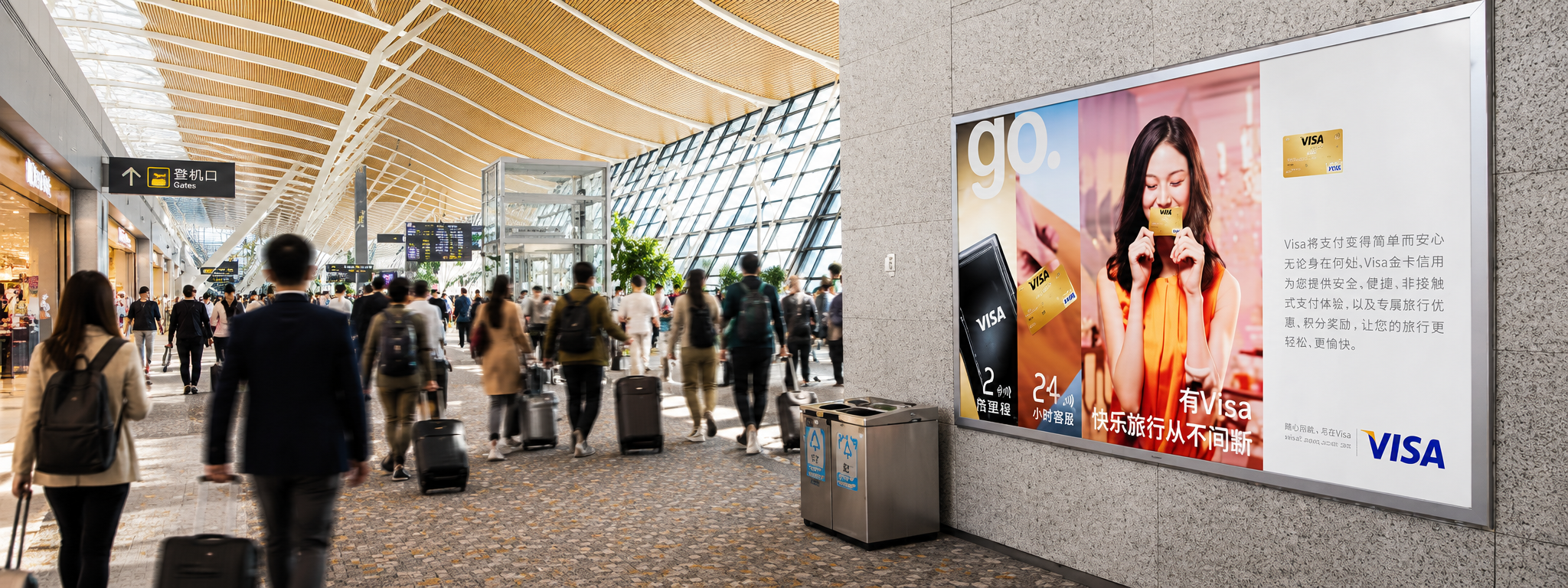
Shanghai Hongqiao International Airport is a category unto itself in the global airport advertising landscape, and that category cannot be understood through the lens of conventional international hub airport logic. SHA is not competing with Pudong for international volume or with Beijing Capital for long-haul prestige. It is doing something fundamentally more commercially precise: it is serving as the primary aviation node of the world's most economically significant domestic business travel corridor, concentrating China's corporate and investment elite within a single terminal environment as they move daily between Shanghai, Beijing, Guangzhou, Shenzhen, Chengdu, and the other commercial capitals that together constitute the world's second-largest economy. The audience at SHA is not passing through China. They are the people who run it.
The commercial case for SHA begins with Shanghai itself. Shanghai is China's financial capital, the headquarters city of the country's largest banks, the largest stock exchange in Asia by market capitalisation, the primary location of China's most significant foreign direct investment activity, and the residential address of a Chinese HNWI community that is among the most concentrated in the Asia-Pacific region. The business travellers who use SHA as their primary departure point are the senior executives, private equity principals, technology founders, state enterprise directors, and family business patriarchs whose daily investment decisions collectively move more capital than most national economies produce in a year. Advertising at SHA is not reaching passengers. It is reaching principals.


Advertising Value Snapshot
- Passenger scale: Approximately 40 million annual passengers in 2023, recovering toward a pre-pandemic peak of 45 million, with domestic capacity utilisation among the highest of any Chinese airport as China's internal business travel market sustains structural growth driven by continued urbanisation, Yangtze River Delta integration, and the domestic conference and corporate event economy
- Traveller type: Chinese domestic corporate elite, Shanghai-based investment and financial services principals, Yangtze River Delta manufacturing and technology company leadership, senior government and state enterprise officials, and high-frequency business travellers whose annual SHA usage represents a sustained and compounding brand contact opportunity
- Airport classification: Tier 1 Ultra-Premium domestic business gateway, with an audience quality index anchored by the Yangtze River Delta's position as the world's most productive regional economic cluster outside of the United States
- Commercial positioning: China's preeminent domestic corporate aviation hub, serving the most commercially valuable internal business travel corridor in the world's second-largest economy with a frequency, a consistency, and an audience wealth concentration that no other domestic Chinese airport replicates
- Wealth corridor signal: SHA sits at the commercial heart of the Yangtze River Delta economic zone, an integrated regional economy of 170 million people generating approximately 24 percent of China's total GDP, whose corporate and investment leadership uses this airport as the primary physical nexus of its inter-city business activity
- Advertising opportunity: Masscom Global provides structured access to the SHA media environment, delivering campaigns calibrated to the cultural intelligence requirements of China's corporate elite, the specific investment and lifestyle categories that drive the highest commercial return with this audience, and the sustained high-frequency contact patterns that compound brand recall into genuine purchase intent for the premium categories where this audience's spending is most concentrated.

Airport Advertising is Complex to Get Right
We help you execute faster, with proven results and local insight most planners lack starting now.
Talk to an ExpertCatchment Area and Economic Drivers
Top 10 Cities within 150 km — Marketer Intelligence:
- Shanghai (Jing'an, Huangpu, Xuhui, Changning, Pudong): The primary and overwhelmingly dominant commercial universe for SHA, Shanghai's core business districts house the headquarters of ICBC, Bank of China, and the largest Chinese commercial banks' Shanghai operations, the Shanghai Stock Exchange, the offices of every major global investment bank in China, and the residential addresses of a Chinese HNWI community whose collective net worth is among the highest of any city in the world. The corporate and investment elite commuting from Shanghai's premium residential enclaves of Xintiandi, the French Concession, Jing'an, and Pudong's Lujiazui financial district to SHA represent the most commercially valuable domestic business travel audience in China and one of the most valuable in Asia.
- Suzhou: Approximately 85 km west of SHA and one of China's most economically significant second-tier cities, Suzhou is home to the Suzhou Industrial Park, one of the most successful Sino-foreign economic development projects in the world, alongside a dense concentration of high-technology manufacturers, semiconductor companies, and precision engineering firms whose executive leadership maintains consistent high-frequency travel to Shanghai and Beijing via SHA. Suzhou's business community is above-average income, internationally connected, and strongly receptive to premium financial services, luxury automotive, and international investment advertising.
- Kunshan: Approximately 50 km west and one of China's wealthiest county-level cities by per capita income, Kunshan is the world's largest concentration of Taiwanese-owned manufacturing enterprises, housing the operational headquarters of Foxconn's China mainland operations and hundreds of other Taiwan-origin technology and precision manufacturing companies. The senior Taiwanese and mainland Chinese executive community based in Kunshan is a high-frequency SHA user with confirmed premium consumer profiles in automotive, real estate, and financial services categories, and a unique dual-identity investment orientation spanning both mainland Chinese and Taiwan markets.
- Wuxi: Approximately 130 km west, Wuxi is one of the most economically advanced cities in Jiangsu Province, housing a major semiconductor manufacturing cluster including SMIC's Wuxi operations, a substantial solar energy and clean technology industrial base, and a growing financial services and private equity sector whose senior leadership travels consistently through SHA to connect with Shanghai's financial community and Beijing's government decision-making centres. Wuxi's technology entrepreneur class represents an aspirational premium consumer segment with rapidly accelerating wealth accumulation and strong receptivity to luxury automotive, private banking, and international lifestyle brand advertising.
- Jiaxing: Approximately 100 km southwest in Zhejiang Province, Jiaxing is a major textile, manufacturing, and e-commerce logistics hub whose business community includes a significant concentration of Zhejiang-origin private entrepreneurs and family business owners whose generational commercial wealth, active investment in Shanghai's financial markets, and frequent inter-city business travel make them a consistent premium audience at SHA. The Zhejiang entrepreneurial community is one of China's most commercially sophisticated private wealth segments, with above-average receptivity to financial planning, premium lifestyle, and international real estate advertising.
- Huzhou: Approximately 120 km southwest at the southern edge of the Yangtze River Delta, Huzhou is a growing industrial and green economy city whose business community includes a significant concentration of manufacturing, logistics, and agricultural enterprise owners with established family wealth and increasing premium consumption patterns. Its proximity to both Shanghai and Hangzhou's economic corridors creates a dual-influence professional class with growing engagement in financial services, premium automotive, and family education investment categories.
- Taicang: Approximately 60 km north of SHA along the Yangtze River estuary, Taicang is Germany's most significant industrial investment location in China, housing over 400 German-owned manufacturing and engineering companies. The German expatriate business community and the Chinese senior management layer of German-invested enterprises constitute a premium professional audience with strong European brand orientation, above-average income, and high travel frequency through SHA on the Shanghai-Beijing and Shanghai-Guangzhou corridors.
- Nantong: Approximately 100 km north across the Yangtze River, Nantong is a major manufacturing, shipbuilding, and textile city undergoing rapid economic transformation with growing technology and financial services investment. Its established business families, shipping and logistics industry leadership, and professional class are consistent SHA users whose premium consumer profiles are expanding with the city's economic diversification and whose receptivity to financial planning, real estate, and premium lifestyle advertising is accelerating with rising household income.
- Changshu: Approximately 80 km northwest, Changshu is one of China's most commercially dynamic county-level cities, known for its garment manufacturing and export industry, its established textile trading families, and a growing professional services and retail commercial centre. The Changshu business community includes a significant concentration of privately owned enterprise owners with above-average disposable income, active Shanghai market investment, and growing premium consumer engagement in automotive, luxury goods, and financial services categories.
- Zhangjiagang: Approximately 130 km northwest along the Yangtze River, Zhangjiagang is a major Yangtze River port and steel and petrochemical industrial city with one of the highest per capita GDP levels among Chinese county-level cities. The city's established industrial and trading business families carry significant private wealth accumulated through three decades of Yangtze River industrial development and are active SHA users whose investment orientation toward Shanghai's financial markets, premium real estate, and international outbound investment makes them a productive target for financial services, real estate, and premium lifestyle advertising.
NRI and Diaspora Intelligence:
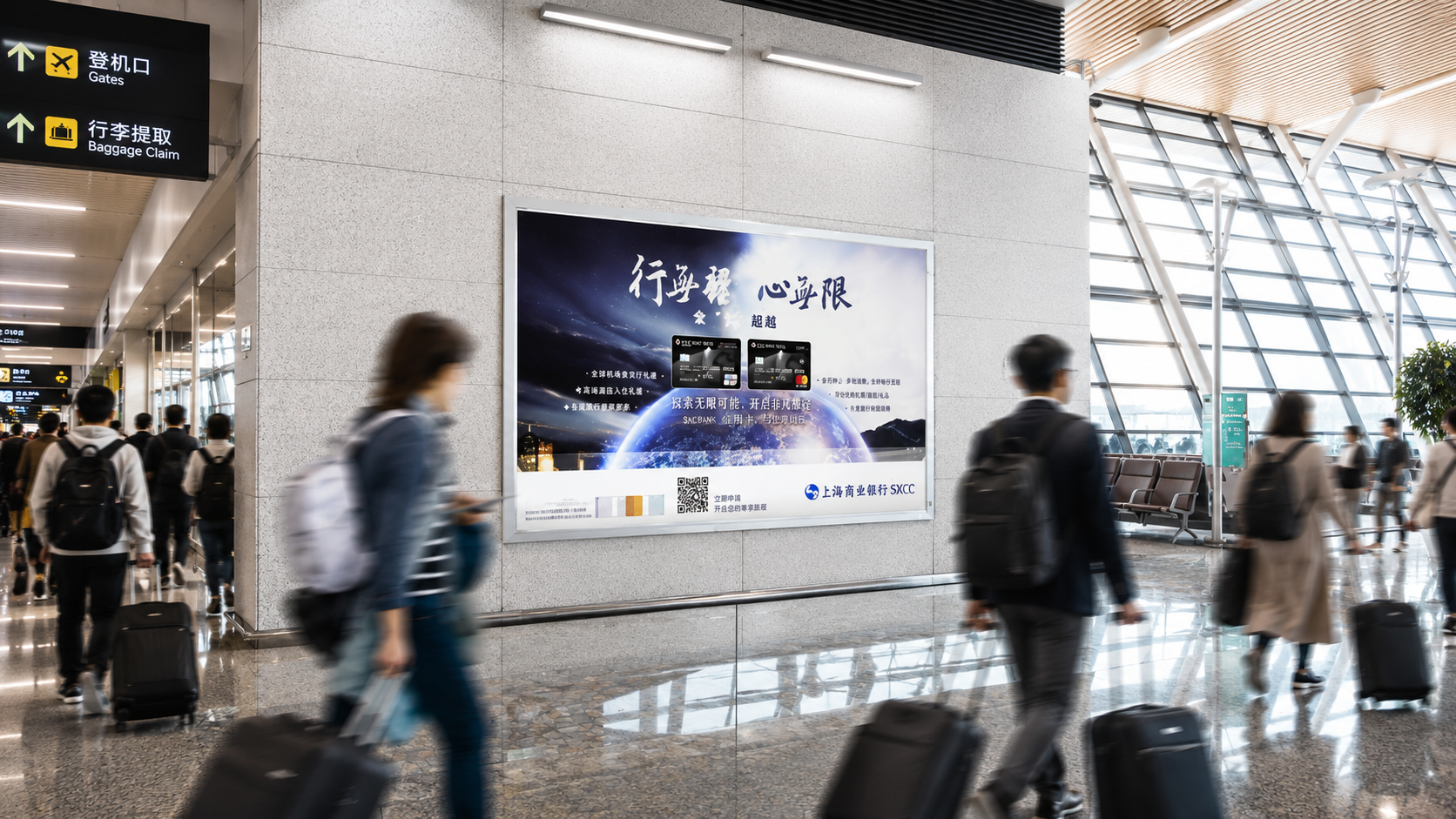
Shanghai Hongqiao's audience intelligence is structured around a domestically focused but globally connected corporate community rather than a traditional overseas diaspora flow. The commercially critical intelligence for advertisers is the high-frequency pattern of SHA's core audience: a Chinese corporate elite that uses this airport multiple times per month to move between China's most commercially significant cities, creating a sustained and compounding brand contact environment unlike anything available at international hub airports where the same passenger rarely transits more than a few times per year. The overseas returnee community, specifically the haigui professionals who studied or worked abroad before returning to Shanghai's financial and technology sectors, adds a globally literate, English-fluent, and internationally brand-aware secondary layer to the SHA audience. This community, concentrated in finance, technology, and professional services, is particularly receptive to international real estate, overseas education for their own children, and premium lifestyle categories whose quality standards they have evaluated personally through international exposure. For international brands, this overseas returnee professional class at SHA represents a directly accessible bridge between China's domestic wealth and the international markets where that wealth is increasingly being deployed.
Economic Importance:
The SHA catchment economy is the most commercially productive regional economic cluster in China and one of the most significant in the world. The Yangtze River Delta integration zone, encompassing Shanghai, Jiangsu, Zhejiang, and Anhui provinces, generates approximately 24 percent of China's total GDP from approximately 12 percent of its population, producing the highest regional economic density of any Chinese geographic area and a per capita productivity figure that anchors the country's premium consumer economy. Shanghai's specific role as China's financial capital, its position as the primary entry and exit point for foreign direct investment, and its status as the headquarters city for China's most globally active corporations create a business leadership community whose decisions at the company, portfolio, and personal wealth level constitute the most commercially significant concentration of Chinese private capital accessible at any single transportation node in the country.
Business and Industrial Ecosystem
- Financial services, banking, and capital markets: The Shanghai offices of the Big Four Chinese state banks, the Shanghai Stock Exchange, the China Securities Regulatory Commission's local operations, and the full spectrum of domestic and international investment banks, securities firms, private equity houses, and fund management companies generate the most senior and highest-compensated financial services professional community in China. This audience travels consistently on the Shanghai-Beijing and Shanghai-Guangzhou corridors via SHA and represents the primary target for private banking, wealth management, international real estate, and ultra-luxury lifestyle advertising.
- Technology, semiconductor, and innovation economy: Shanghai's growing technology ecosystem, anchored by Alibaba's Shanghai operations, Tencent's regional offices, the semiconductor industry cluster in Zhangjiang Hi-Tech Park, and a dense network of venture capital-backed startups and scale-ups, is producing a new generation of technology entrepreneur and executive HNWIs whose international investment orientation, premium lifestyle consumption, and above-average English-language business fluency make them among the most commercially accessible and brand-sophisticated premium audiences in China's domestic aviation network.
- Manufacturing and trading conglomerates: The Yangtze River Delta's manufacturing base encompasses the headquarters of some of China's most globally active industrial corporations, including SAIC Motor, Baoshan Iron and Steel, and the regional operations of hundreds of multinational manufacturing groups. The senior executive layer of this industrial economy travels consistently through SHA and represents a premium business audience with strong receptivity to enterprise technology, executive services, premium automotive, and international business investment advertising.
- Real estate, construction, and urban development: Shanghai's role as the anchor of China's most dynamic urban development economy has produced a class of real estate developers, construction industry principals, and urban infrastructure investors whose wealth accumulation over three decades of Chinese urbanisation is substantial and whose current investment diversification toward international property, alternative assets, and premium lifestyle is among the most commercially significant capital reallocation stories in contemporary Chinese wealth management.
Passenger Intent — Business Segment:
The business travellers transiting SHA are moving between China's most commercially significant cities with a frequency and a purpose that defines them not as occasional travellers but as professional circuit riders whose economic output is tied directly to the inter-city connectivity this airport provides. They are commuting between Shanghai's financial markets and Beijing's policy-making centres, between Shanghai's headquarters and Shenzhen's manufacturing operations, between Yangtze River Delta boardrooms and Chengdu's expanding western China markets. At the airport they are time-efficient, brand-aware, and in the specific state of focused professional attention that makes premium business category advertising most effective. Advertiser categories that intercept this audience most productively include premium financial advisory, executive management tools, luxury automotive, international real estate, and premium health and wellness services designed for high-performance professionals.
Strategic Insight:
The SHA business audience possesses a commercially defining characteristic that no other Chinese domestic airport can replicate: the sustained high-frequency contact pattern. A senior partner at a Shanghai private equity firm who uses SHA twice a week for Beijing commutes encounters airport advertising at this frequency for 48 or more weeks of the year. The compound recall effect of this exposure pattern means that a well-placed, well-executed campaign at SHA delivers more total brand contact hours with a single high-value individual than almost any other media format available in the Chinese premium market. For brands building long-term Chinese market positioning with the country's most valuable corporate audience, SHA's frequency dynamic is not just an advertising metric. It is a relationship-building mechanism whose commercial return is measured over quarters and years rather than campaign weeks.
Tourism and Premium Travel Drivers
- Shanghai's luxury retail and hospitality ecosystem: Nanjing West Road, Huaihai Road, the Bund, and the IAPM and Plaza 66 luxury mall complexes collectively form one of Asia's most premium retail environments, whose domestic Chinese and inbound international luxury consumer base generates consistent inbound arrival traffic at SHA from across China's most affluent provincial cities. Business visitors to Shanghai increasingly extend trips for luxury retail and dining, creating a confirmed premium consumer audience among inbound business arrival passengers.
- Shanghai's convention and exhibition economy: The National Exhibition and Convention Centre adjacent to the Hongqiao Transportation Hub, one of the world's largest single-building exhibition facilities, hosts China's most significant trade fairs including the China International Import Expo, the Auto Shanghai exhibition, and dozens of major industry conferences annually. Each event generates concentrated waves of premium business audience arrivals at SHA, with trade fair participants representing the most commercially active corporate buyer and investment decision-making audience in their respective industries.
- Yangtze River Delta heritage and cultural tourism: The classical gardens of Suzhou, the water towns of Tongji and Xitang, the tea culture of Hangzhou's West Lake, and the maritime heritage of the Yangtze River estuary generate a consistent premium cultural tourism audience of domestic Chinese visitors whose above-average income, cultural sophistication, and appreciation for authentic quality make them strongly aligned with heritage brand, premium hospitality, and artisan product advertising.
- The Hongqiao Transportation Hub and integrated mobility: SHA's integration within the Hongqiao Transportation Hub, which connects the airport directly to China's high-speed rail network at one of the country's busiest HSR stations, creates a passenger catchment that extends well beyond the 150 km aviation radius to encompass Nanjing, Hangzhou, Ningbo, and other major Yangtze River Delta cities whose corporate and professional communities access the SHA advertising environment through the connected transit ecosystem. This integration multiplies the effective audience catchment of SHA advertising beyond any purely aviation-based airport.
Passenger Intent — Tourism Segment:
The leisure and cultural visitors transiting SHA are drawn overwhelmingly from China's domestic upper-income and HNWI community, arriving in Shanghai for luxury retail, premium hospitality, business event attendance, or outbound international travel connections. Unlike international airports where tourism audiences are heterogeneous in wealth profile, SHA's domestic leisure audience is a filtered premium segment whose decision to travel to or through Shanghai is itself a wealth signal. These are the consumers who have already committed to five-star hotel bookings, premium restaurant reservations, and confirmed luxury retail budgets before they board. They arrive in a confirmed spending mindset that makes them among the most commercially responsive leisure audiences available at any domestic Chinese airport.
Travel Patterns and Seasonality
Peak seasons:
- Spring business peak (March to June): China's primary corporate business activity quarter, when annual targets are being pursued, investment decisions are being executed, and conference and deal-making activity is at its annual peak. SHA's business travel audience is at its highest frequency and most commercially motivated during this window, making it the most productive sustained advertising period for financial services, corporate services, and premium business lifestyle categories.
- Autumn business peak (September to November): The second major corporate activity quarter, coinciding with the return from summer holiday breaks and the push toward year-end financial targets. This window delivers consistent premium business audience density and is particularly productive for year-end financial planning, luxury gifting, and premium automotive categories whose purchase decisions are accelerated by the approach of the Chinese fiscal and calendar year-end.
- Chinese New Year travel window (January to February): The most culturally significant travel event in China, generating the world's largest annual human migration as Chinese nationals travel between cities for family reunion visits. SHA's premium audience during the Spring Festival period includes the highest concentration of gift-purchasing, family lifestyle spending, and outbound international leisure travel intent of the entire year, making it a primary window for luxury gifting, premium hospitality, and international real estate categories.
- Golden Week holidays (October and May): China's two major national holiday periods each generate a concentrated outbound leisure and domestic tourism surge, with Shanghai's HNWI community using these windows for international travel and premium domestic experiences. The Golden Week departure windows at SHA deliver a confirmed leisure-spending audience in the precise state of elevated discretionary expenditure that maximises advertising engagement for lifestyle, travel, and premium experience categories.
Event-Driven Movement:
- China International Import Expo, CIIE (November, Shanghai): One of the world's most commercially significant trade exhibitions, held at the National Exhibition and Convention Centre adjacent to SHA's Hongqiao Transportation Hub. CIIE draws the most senior corporate purchasing decision-makers, government officials, and international business delegates in China in a single week, creating the most concentrated single-event corporate buyer audience concentration at SHA of the entire year. Premium advertising placements during CIIE week reach an audience whose purchasing authority and institutional decision-making weight is unmatched by any other event in the Chinese domestic corporate calendar.
- Auto Shanghai (April, alternate years): One of the world's most significant automotive trade events, held in Shanghai and drawing automotive industry executives, media, and premium automotive consumers from across China and globally. The Auto Shanghai audience transiting SHA is among the most directly relevant premium automotive advertising target available at any Chinese airport during the exhibition period, with confirmed luxury vehicle purchase intent and brand awareness operating at maximum intensity.
- Shanghai Fashion Week (March to April and October): One of Asia's most significant fashion industry events, drawing fashion industry professionals, luxury retail buyers, brand executives, and premium lifestyle media from across China and internationally. The fashion week audience transiting SHA is a directly relevant target for luxury fashion, accessories, and premium lifestyle brand advertising, with confirmed brand awareness and purchase intent at the highest level of the Chinese fashion consumer hierarchy.
- China International Industry Fair (November, Shanghai): One of Asia's largest industrial technology exhibitions, drawing manufacturing executives, technology procurement directors, and industrial enterprise owners from across China. The CIIF audience at SHA is a directly relevant target for enterprise technology, premium business services, and industrial sector financial advisory advertising.
- Chinese New Year departure surge (January to February): The single highest passenger volume event at SHA annually, concentrating the full spectrum of the airport's corporate and professional audience in the most gift-purchasing and leisure-spending motivated state of the year. Premium advertising during the pre-Spring Festival departure window reaches an audience whose combination of family gifting intent, outbound leisure travel confirmation, and year-end bonus wealth deployment makes it the highest single-period commercial advertising opportunity at the airport.
- National Day Golden Week (October): China's largest annual public holiday generates the year's most concentrated outbound international leisure travel surge among Shanghai's HNWI community, with confirmed bookings to Japan, Southeast Asia, Europe, and the United States creating a directly validated outbound investment and luxury leisure spending audience at SHA during the pre-holiday departure window.

It’s Not Just Where You Advertise - It’s How Fast You Execute
We combine local insight with fast rollout to deliver results for you, now.
Talk to an ExpertAudience and Cultural Intelligence
Top 2 Languages:
- Mandarin Chinese (Putonghua): The official language of all commercial and administrative activity at SHA and the primary communication register for the entirety of the airport's domestic Chinese audience. Campaign creative in Mandarin must operate at the cultural intelligence standard of China's most sophisticated corporate and investment audience, whose professional engagement with global markets, international business education, and premium brand experience makes them a particularly exacting evaluator of Chinese-language advertising quality. The SHA corporate elite responds to advertising that demonstrates genuine understanding of Chinese business culture, acknowledges the social dynamics of professional achievement and family advancement that motivate their most significant spending decisions, and communicates with the combination of authority and respect that Chinese corporate culture requires from brands seeking serious commercial engagement. Generic or poorly localised Mandarin advertising actively damages brand perception with this audience.
- English: A commercially significant secondary language reflecting the substantial internationally educated professional community at SHA, including haigui returnees from US, UK, and Australian universities and postgraduate programmes, the Western and international expatriate business community in Shanghai, and the bilingual Chinese corporate elite whose global business fluency makes them accessible through English creative in international business contexts. English-language advertising at SHA is most productive for categories where international brand heritage, overseas education, and international investment are the core proposition, as it signals the international quality and global standard that motivates this segment's purchasing decisions in these specific categories.
Major Traveller Nationalities:
SHA's passenger base is overwhelmingly Chinese domestic, reflecting the airport's primary role as a domestic aviation hub. Chinese nationals from across the country's most commercially significant cities form the near-totality of the passenger flow, with the inbound domestic audience dominated by business and professional travellers from Beijing, Guangzhou, Shenzhen, Chengdu, Hangzhou, Nanjing, and Wuhan. The international layer at SHA, while smaller than at Pudong, includes a significant community of Japanese, Korean, and Taiwanese business professionals whose regular China mainland business travel generates consistent premium audience presence within the terminal. The resident foreign business community in Shanghai, concentrated in finance, automotive, technology, and professional services, contributes a high-income expatriate layer whose lifestyle and investment behaviour aligns with premium international brand advertising. For advertisers, the SHA audience segmentation is fundamentally by professional level and wealth tier rather than by nationality, with Chinese domestic business elite constituting the primary premium commercial audience and international business visitors and expatriates forming a directly complementary secondary tier.
Religion — Advertiser Intelligence:
- Buddhism and Taoism (practiced by approximately 30 to 40% in varying degrees of observance): China's dominant traditional religious practices shape the cultural calendar in ways that are commercially relevant for advertisers through their intersection with major festival and gift-giving events. The Qingming Festival in April, the Mid-Autumn Festival in September to October, and the Lunar New Year are the three most commercially significant traditional observance-adjacent spending events in the Chinese calendar, each driving premium gifting, family gathering, and hospitality spending that is directly aligned with luxury food, premium beverage, high-end gift packaging, and family lifestyle brand advertising categories. Moon cake gifting culture around the Mid-Autumn Festival alone represents a multi-billion renminbi premium gifting market that is accessed most effectively through China's premium corporate traveller community.
- Non-religious or secular (approximately 60%): The majority of urban Chinese professional and corporate elite identifies as non-religious in formal terms while maintaining participation in traditional cultural festivals through their social and commercial dimensions. For advertisers, this means the commercially relevant cultural calendar is structured around secular national holidays and traditional festivals rather than religious faith observances, and that purchasing motivations are driven by family obligation, social capital, professional achievement recognition, and personal quality standards rather than religious spending triggers. Chinese New Year, Golden Week, and the National Day holiday are the secular calendar's most powerful commercial spending moments.
- Christianity (approximately 3 to 5% nationally, higher among internationally educated Shanghai professionals): A small but commercially significant Christian community concentrated among Shanghai's internationally educated professional and expatriate population, with Christmas and Easter generating secondary premium gifting and hospitality spending windows. This community's above-average international exposure, English-language fluency, and premium consumption orientation make them a productive secondary audience for international lifestyle, education, and luxury brand advertising at SHA.
Behavioral Insight:
The SHA corporate audience makes purchasing decisions through a cultural framework that simultaneously balances mianzi (face), guanxi (relationship networks), and genuine quality evaluation in proportions that vary by category and by individual but that collectively define a purchasing culture unlike any other in the global premium consumer market. For major capital purchases including real estate, automotive, and financial services, the mianzi dimension means that brand visibility and social recognition matter alongside product quality, and advertising that successfully signals both social acceptability and genuine excellence within the Chinese cultural vocabulary of achievement and quality will consistently outperform advertising that addresses either dimension alone. For personal luxury and lifestyle categories, the quality-driven evaluation is increasingly dominant among the younger Chinese HNWI cohort whose international education and global travel exposure has calibrated their quality standards against global benchmarks rather than domestic comparisons. The SHA corporate audience's combination of enormous purchasing power, cultural sophistication, and high advertising contact frequency creates the conditions for the most productive sustained brand relationship available in domestic Chinese market advertising.
Outbound Wealth and Investment Intelligence
The Chinese HNWI and corporate elite who constitute the primary audience at Shanghai Hongqiao Airport represent one of the most significant and most rapidly evolving outbound wealth deployment communities in the global economy. While SHA itself is primarily a domestic aviation hub, the audience it serves is the same community that, when travelling internationally through Pudong or directly outbound from Shanghai, deploys capital across international real estate, education, and alternative asset markets at a scale that makes them among the most commercially sought-after audiences for international brands in any advertising environment globally. Reaching this community at SHA, in the domestic business travel mindset where their professional and personal investment decision-making is most actively engaged, delivers a brand introduction and consideration opportunity that compounds directly into the purchasing decisions they execute on international trips. For international brands, SHA is not just a domestic Chinese advertising channel. It is the primary access point to the domestic side of China's most significant outbound wealth community.
Outbound Real Estate Investment:
Shanghai's HNWI and upper-income professional community is among the most active Chinese outbound real estate investor segments in the world, with portfolio diversification, education access, and capital protection motivations driving sustained investment in international residential and commercial property markets. Japan, particularly Tokyo's prime residential districts of Minato and Shibuya and Osaka's central city market, is the most active destination by volume, driven by the combination of geographic proximity, cultural familiarity, currency dynamics, and yield differentials that make Japanese property particularly compelling for Chinese capital seeking safe Asian haven diversification. Australia, specifically Sydney's eastern suburbs, Melbourne's inner city, and Queensland's coastal markets, is the second most active destination, anchored by the established Chinese community, strong education infrastructure, and property appreciation history that sustains consistent Chinese investment demand. The United States, particularly New York's prime residential market, Los Angeles, and San Francisco's tech community-adjacent housing, attracts the segment seeking dollar-denominated capital diversification and proximity to American university destinations for children. Canada's Vancouver and British Columbia coastal market remains a significant Chinese investment destination despite regulatory changes, with Montreal and Toronto absorbing growing demand from Shanghai families seeking English and French bilingual education contexts. Portugal's Golden Visa programme and Lisbon's residential market attract a growing segment of Shanghai HNWI investors seeking European capital diversification with residency pathway access. Singapore's prime residential sector is an increasingly significant destination for Chinese institutional and family office capital seeking a Southeast Asian financial hub base with rule-of-law asset protection.
Outbound Education Investment:
Education investment is the single most culturally motivated and financially intense outbound spending category for Shanghai's HNWI and upper-income professional community, reflecting a Chinese cultural orientation toward educational achievement as the primary vehicle of family advancement and social capital that has intensified rather than diminished with rising wealth. The United States is the dominant destination, with American universities in business, technology, law, and medicine drawing Shanghai students whose family investment per academic year in tuition, accommodation, international travel, and supplementary preparation costs consistently exceeds six figures in USD terms. The Ivy League, MIT, Stanford, the University of California system, and Duke are the most actively pursued destinations among Shanghai's premium secondary school community. The United Kingdom follows closely, with British boarding schools receiving the children of Shanghai's most established business and government-adjacent families, and postgraduate programmes at Oxford, Cambridge, the London Business School, and Imperial College drawing the Shanghai MBA and research cohort. Australia, particularly the University of Melbourne, University of Sydney, and the Australian National University, draws a Pacific-oriented segment whose families value research-intensive programmes, manageable time zone differences from Shanghai, and confirmed post-graduation employment pathways in the Asia-Pacific region. Canada's University of Toronto, McGill, and the University of British Columbia attract families seeking a North American academic environment with a less politically complex immigration context than the United States currently presents.
Outbound Wealth Migration and Residency:
Second residency and citizenship-by-investment interest among Shanghai's HNWI community is among the most active of any Chinese city, driven by a combination of asset protection diversification, education access, and the lifestyle flexibility that international residency provides for families whose children are studying overseas or whose business activities require extended international presence. Singapore's permanent residency and global investor programme is the single most sought-after residency destination for Shanghai's financial and technology elite, offering a zero-capital-gains tax environment, Mandarin-familiar social context, direct flight connectivity to Shanghai, and the combination of Asian cultural continuity with global financial and legal infrastructure that Shanghai's family office community requires. Portugal's Golden Visa programme, despite its evolution, continues to attract significant Shanghai investor interest as a European diversification vehicle and Schengen access point for families with children studying in Europe. Greece's Golden Visa programme has seen rapidly accelerating Shanghai investor interest given its lower investment threshold and EU residency and travel benefits. The Caribbean citizenship-by-investment programmes in Saint Kitts and Nevis and Vanuatu attract the segment seeking a second passport primarily for travel document diversification and business facilitation rather than physical residency intent. Malta's citizenship-by-investment programme attracts the highest-wealth segment seeking EU citizenship as a long-term generational estate and business planning vehicle.
Strategic Implication for Advertisers:
International brands at the intersection of luxury real estate, private wealth management, education investment, and residency planning should treat Shanghai Hongqiao Airport as a mandatory China market advertising channel for outbound capital targeting. The frequency advantage of SHA's high-repeat corporate audience means that a sustained campaign presence here delivers more total brand contact hours with Shanghai's HNWI real estate investors, education planning families, and residency-seeking wealth managers than any comparable Chinese airport format. Masscom Global positions international advertisers at SHA and simultaneously at the destination airports where Shanghai capital is being deployed, creating compounding brand exposure across the full wealth journey from China's financial capital to the global markets where its most commercially significant outbound investments are being made.
Airport Infrastructure and Premium Indicators
Terminals:
- Terminal 1 at SHA handles a significant share of domestic and regional international route operations, serving major Chinese carriers and the eastern China domestic route network. Its passenger flow includes a consistent daily stream of business travellers from Shanghai's financial and corporate community whose advertising exposure within T1's commercial environment represents the most frequency-intensive brand contact opportunity available at the airport.
- Terminal 2 is SHA's primary commercial facility, handling China Eastern Airlines operations alongside other major domestic carrier services and the limited international route portfolio. T2's scale, its integrated commercial and retail environment, and its direct connectivity to the Hongqiao Transportation Hub create the most comprehensive advertising environment at the airport, reaching both the domestic business elite using the aviation network and the broader premium audience accessing the integrated Hongqiao hub via high-speed rail connections.
- The Hongqiao Transportation Hub integration, directly connecting SHA to China's national high-speed rail network at one of the country's busiest HSR stations, is the single most commercially significant infrastructure characteristic of this airport from an advertising perspective. The combined passenger flow through the Hongqiao hub, encompassing aviation and rail passengers, creates a total audience catchment that extends well beyond the airport's own passenger numbers to include Yangtze River Delta city residents accessing Shanghai by high-speed rail and transiting the hub's commercial environment. For advertisers, the SHA buy in the Hongqiao integrated environment is effectively a Yangtze River Delta premium audience buy, not merely a Shanghai aviation buy.
Premium Indicators:
- China Eastern Airlines' premium cabin lounge infrastructure at SHA serves the highest-income tier of the domestic business traveller community in a premium environment whose dining, business service, and comfort standards reflect the expectations of China's corporate elite. Format placements accessible to premium lounge zones at SHA deliver the most commercially concentrated audience within the terminal.
- SHA's integrated retail and commercial environment, combining duty-paid retail, premium food and beverage, and luxury brand presence within the terminal, reflects the confirmed purchasing behaviour of a domestic Chinese business audience whose airport retail engagement is among the highest in the Asia-Pacific domestic aviation network.
- The Hongqiao hub's proximity to Shanghai's most premium hotel corridor, including the Marriott Marquis City Centre, the Four Points by Sheraton, and the Wyndham Grand hotel properties adjacent to the transportation hub, creates a premium hospitality ecosystem whose corporate guests transit the SHA advertising environment as part of their regular business travel pattern.
- SHA's geographic position within western Shanghai, closer to the city's Hongqiao business district and the premium residential areas of Changning, Minhang, and the broader western suburbs, means that its primary audience includes the residential communities of some of Shanghai's most established business families, whose proximity to the airport compounds their advertising contact frequency beyond the already high business travel pattern.
Forward-Looking Signal:
Shanghai Hongqiao Airport is positioned at the centre of China's most significant domestic aviation infrastructure development investment, with ongoing capacity expansion, terminal facility upgrades, and digital technology integration programmes funded as part of the broader Hongqiao International Open Hub development plan. The Chinese government's commitment to positioning the Hongqiao hub as an integrated international open economy platform, drawing international business investment into the adjacent Hongqiao import business zone and expanding the hub's international connectivity through targeted route development, will systematically elevate the international audience dimension of SHA beyond its current primarily domestic profile over the next five years. The simultaneous expansion of China's high-speed rail network extending the Hongqiao hub's effective catchment radius, combined with the continued growth of the Yangtze River Delta integration zone's HNWI community, will increase both the absolute audience volume and the wealth concentration of the SHA advertising environment over the planning horizon. Masscom Global advises brands to establish premium advertising positions at SHA now, ahead of the inventory demand growth that the Hongqiao hub's expanding international profile and rising Yangtze River Delta HNWI population will generate as both development programmes reach their target completion milestones.
Airline and Route Intelligence
Top Airlines:
- China Eastern Airlines (primary hub carrier, dominant domestic network)
- Air China
- China Southern Airlines
- Shenzhen Airlines
- Xiamen Airlines
- Hainan Airlines
- Shandong Airlines
- Juneyao Airlines (Shanghai-based, growing premium domestic network)
- Spring Airlines (budget domestic carrier, T1)
- All Nippon Airways (ANA, selected international)
- Japan Airlines (JAL, selected international)
- Korean Air (selected international)
- Asiana Airlines (selected international)
Key Domestic Routes by Commercial Value:
- Beijing Capital (PEK) and Beijing Daxing (PKX): Highest volume and highest commercial value domestic corridor in China, carrying the most senior corporate, government, and investment community between China's financial and political capitals at multiple daily frequencies
- Guangzhou (CAN): South China business and manufacturing corridor connecting Shanghai and Guangdong Province's industrial and export economy leadership
- Shenzhen (SZX): Technology and innovation corridor connecting Shanghai's financial community with China's technology capital and its venture capital and startup ecosystem
- Chengdu (CTU) and Chongqing (CKG): Western China business expansion corridor as Chinese corporations extend their market presence into the country's fastest-growing interior metropolitan economies
- Hangzhou (HGH): Yangtze River Delta intra-regional corridor connecting Shanghai with Alibaba's headquarters city and Zhejiang Province's entrepreneurial business community
- Nanjing (NKG): Jiangsu Province capital corridor connecting Shanghai with the provincial government and the Nanjing-based manufacturing and research university community
- Xi'an (XIY): Central China and Silk Road Economic Belt corridor connecting Shanghai with the historical capital and its growing aerospace, technology, and tourism economy
Key International Routes:
- Tokyo Haneda (HND) and Osaka Kansai (KIX): Primary Japan corridor for business and tourism, connecting Shanghai's Japanese business community and Chinese outbound Japan tourism market
- Seoul Incheon (ICN): Korea corridor for technology, cultural, and business travel
- Taipei Taoyuan (TPE): Cross-strait business and family visit corridor
Domestic Connectivity:
SHA's route network is the commercial map of China's domestic economy and the advertising intelligence case for its audience value is encoded within it. Every high-volume route at SHA is a wealth corridor between Shanghai and another major Chinese economic hub, carrying the executive and business owner class whose inter-city investment and commercial activity constitutes the engine of Chinese private sector growth. The Beijing corridor carries the policy-finance nexus. The Guangzhou-Shenzhen corridor carries the manufacturing-technology continuum. The Chengdu-Chongqing corridor carries the western expansion wave. Each of these routes delivers a distinct and commercially actionable audience segment to the SHA advertising environment, and Masscom Global structures campaign architecture that calibrates creative and placement to the specific professional and investment behaviour of each corridor's dominant audience profile.
Wealth Corridor Signal:
SHA's route network is unique among Asian airports in that its most commercially valuable corridors are entirely domestic. The Beijing-Shanghai axis is the single most commercially significant domestic aviation route in the world by the aggregate economic weight of the passengers it carries, connecting China's political and financial power centres in a daily two-way flow of the country's most senior executives, officials, and investors. Every flight on this corridor is a capsule of Chinese corporate and governmental elite whose decisions collectively shape the direction of the world's second-largest economy. For advertisers, this route is not a domestic transport connection. It is the primary physical channel through which Chinese institutional capital, investment strategy, and regulatory framework are negotiated and implemented. There is no equivalent domestic business travel corridor at any other airport in the world.
Media Environment at the Airport
- SHA's terminal structure, combined with the Hongqiao Transportation Hub's integrated commercial environment, creates the most extensive domestic premium audience contact surface available at any Chinese airport outside Beijing Capital. The combination of aviation terminal advertising, hub retail and commercial environment advertising, and the HSR platform concourse environment means that a comprehensive SHA campaign reaches a catchment audience of Yangtze River Delta corporate travellers that extends substantially beyond the airport's own passenger count.
- Dwell time at SHA is elevated by the airport's position as a business travel hub whose passengers arrive with the professional discipline of experienced frequent flyers who build departure buffer time into their travel schedules and whose domestic route patterns include waits for connecting flights on the Beijing-Shanghai corridor at peak business hours. The combination of professional dwell behaviour and the Chinese corporate culture of maximising productive time in transit creates an audience that is alert, commercially engaged, and receptive to premium brand information delivery rather than passive entertainment during its airport time.
- The premium commercial environment at SHA, reflecting China Eastern's brand standards and the commercial expectations of Shanghai's corporate travel community, provides a high-quality context for premium brand advertising whose elevation above generic domestic airport environments creates a positive brand association effect that compounds the audience's receptivity to the categories being communicated.
- Masscom Global approaches SHA placements with China market cultural intelligence as the operational foundation, ensuring that all Mandarin-language creative meets the standards of Shanghai's most demanding and internationally calibrated corporate audience, that campaign timing is aligned to China's business and cultural calendar to maximise both audience density and purchasing intent relevance, and that placement positioning within the terminal and Hongqiao hub environment is structured to maximise contact frequency with the high-repeat business traveller segment whose cumulative exposure delivers the compounding brand recall effect that makes SHA uniquely valuable among Chinese domestic airport advertising environments.
Strategic Advertising Fit
Best Fit:
- Premium financial services, private banking, and wealth management: The SHA corporate elite audience represents the single most commercially valuable private wealth management advertising target in China's domestic aviation network. Private banks, family office platforms, independent financial advisers, and wealth management product providers seeking Chinese HNWI client relationships find at SHA an audience whose wealth scale, international investment awareness, and growing appetite for premium private banking services is directly aligned with the most commercially significant financial services advertising opportunity in domestic Chinese aviation.
- International luxury real estate: Developers offering Japanese, Australian, Singaporean, British, Portuguese, and American properties to Shanghai HNWI buyers find a directly validated and financially active audience at SHA whose outbound real estate investment behaviour in these exact markets is confirmed and growing with China's accelerating international wealth diversification. The frequency advantage of SHA's corporate audience means that sustained real estate campaign presence here delivers more total qualified prospect contacts than any comparable Chinese media channel for international property advertising.
- Premium and ultra-luxury automotive: The Chinese automotive culture at the HNWI and corporate elite level is defined by a combination of domestic brand patriotism and deep appreciation for European and American ultra-luxury marques whose engineering and heritage credentials meet the quality standards of an audience that has been exposed to the world's best automotive products through international travel and direct market experience. New model launches, flagship brand campaigns, and limited edition announcements all find a directly engaged and purchase-authorising audience at SHA whose vehicle replacement frequency and fleet ownership patterns make them among the most commercially productive automotive advertising targets in China.
- International education: American, British, Australian, and Canadian universities and premium international boarding school groups find at SHA a parent and family decision-making audience whose education investment per child is among the most financially substantial and most culturally motivated in China. The SHA business audience's above-average international education exposure creates a particularly receptive community for overseas education advertising whose messaging speaks to the confirmed values of quality, international opportunity, and family advancement that drive Chinese HNWI education investment decisions.
- Premium enterprise technology and business services: The corporate technology buyer, enterprise software procurement director, and professional services decision-maker who constitute a significant share of SHA's business audience are directly relevant targets for premium technology, cloud services, executive management consulting, and professional services brands whose B2B advertising at SHA reaches procurement authority at the highest corporate level available in the Chinese domestic business travel market.
- Luxury fashion, accessories, and lifestyle brands: The SHA corporate elite's premium lifestyle consumption in clothing, accessories, watches, and personal goods is among the most brand-aware and quality-driven in China, combining the mianzi dimension of visible quality with an increasingly internationalised personal taste calibration. Both domestic Chinese luxury brands and international luxury maisons find a directly relevant and frequently accessible audience at SHA whose purchase frequency in premium fashion and accessories categories is above the Chinese domestic average.
- Premium healthcare, executive wellness, and longevity programmes: The Chinese corporate elite's growing engagement with health optimisation, executive wellness, and premium medical care, driven by both personal health awareness and the professional performance imperative of high-intensity careers, creates a productive audience for private health networks, executive wellness platforms, international medical tourism, and longevity programme advertising at SHA.
- Premium residential real estate in Shanghai and the Yangtze River Delta: Domestic Chinese luxury property developers and premium residential project marketers in Shanghai, Suzhou, Hangzhou, and other Yangtze River Delta premium residential markets find at SHA a directly relevant domestic investment audience whose property purchasing behaviour in these exact markets is confirmed and active.
Brand Alignment at a Glance:
| Category | Fit |
|---|---|
| Premium financial services and wealth management | Exceptional |
| International luxury real estate | Exceptional |
| Premium automotive | Exceptional |
| International education | Exceptional |
| Premium enterprise technology and B2B services | Strong |
| Luxury fashion and accessories | Strong |
| Premium healthcare and executive wellness | Strong |
| Domestic premium residential real estate | Strong |
| Mass-market consumer goods | Poor fit |
Who Should Not Advertise Here:
- Mass-market consumer goods and commodity retail brands: Brands whose commercial proposition depends on price competitiveness, promotional urgency, or mass demographic reach will generate no meaningful commercial return from an audience whose purchasing decisions are driven by quality evaluation, brand prestige, and personal achievement alignment rather than price or convenience considerations.
- Budget travel and low-cost airline brands: Price-led travel messaging is fundamentally misaligned with an audience whose travel behaviour is determined entirely by route directness, schedule reliability, and premium cabin quality. Low-cost carrier promotion and discount travel advertising produces no commercial return at this airport.
- Categories incompatible with Chinese regulatory and cultural standards: Brands whose products or advertising creative conflict with Chinese regulatory requirements, cultural norms, or political sensitivities must receive comprehensive China market compliance review before any SHA advertising investment is committed. Masscom Global provides this regulatory and cultural assessment as a standard component of every SHA campaign briefing process.
Event and Seasonality Analysis
- Event Strength: Very High (driven by China's structured national event calendar and Shanghai's position as China's premier trade and industry exhibition city)
- Seasonality Strength: High
- Traffic Pattern: Dual Business Peak (Spring March to June and Autumn September to November) with Chinese New Year and Golden Week festival surge layers
Strategic Implication:
The SHA advertising calendar is structured around two primary business travel peaks that together provide approximately seven months of the highest-quality corporate audience access in Chinese domestic aviation, with Chinese New Year and the two Golden Week holiday periods adding three distinct festival-driven spending surge windows across the year. Masscom Global structures SHA campaign schedules around the spring business peak from March through June as the primary investment window for financial services, automotive, and international investment brand categories, and the autumn business peak from September through November for year-end financial planning, luxury gifting, and premium real estate brands. The CIIE week in November represents a standalone event activation opportunity that delivers the single highest-quality single-week corporate buyer audience concentration at SHA of the entire calendar year, warranting dedicated campaign investment for brands in the appropriate categories. The Chinese New Year window from January through February delivers the year's most concentrated luxury gifting, outbound leisure travel, and premium lifestyle purchasing intent audience, making it essential for luxury, hospitality, and international real estate brands to maintain strong SHA presence during the pre-Spring Festival departure surge. The frequency advantage of SHA's high-repeat corporate audience means that sustained year-round presence delivers compounding brand recall effects that single-window campaign activations cannot replicate, and Masscom Global recommends annual campaign architectures rather than isolated placements for brands seeking genuine Chinese corporate market penetration.

Poor Placement and Delays Affect Airport Campaigns
We help you move faster, access better inventory, and get it right now.
Talk to an ExpertFinal Strategic Verdict
Shanghai Hongqiao International Airport is the most commercially undervalued advertising environment in Chinese domestic aviation, and that undervaluation rests on a single analytical error that international advertisers have consistently made: measuring SHA by the same international passenger volume metrics applied to hub airports when its actual commercial value is defined by the frequency, the wealth concentration, and the decision-making authority of its domestic corporate audience. No other domestic Chinese airport concentrates the country's financial services leadership, technology industry principals, manufacturing conglomerate executives, and state enterprise senior management in a single terminal environment at the frequency and the density that SHA delivers every business day of the year. The Beijing-Shanghai corridor alone carries more aggregate corporate decision-making authority per flight than any international route at any Asian hub airport. The Yangtze River Delta integration zone's 170 million people and 24 percent of China's GDP are accessible through SHA's catchment in a way that no digital platform, no out-of-home network, and no publication can replicate for the specific quality of captive, high-attention, high-frequency corporate audience contact that the airport environment uniquely provides. For private banks seeking China's next generation of HNWI wealth management relationships, for international real estate developers whose Shanghai buyer pipeline is the most commercially significant Chinese acquisition market they serve, for premium automotive brands whose Chinese HNWI fleet replacement cycle runs through the SHA audience every eighteen months, for international universities whose Shanghai student recruitment depends on reaching the parents making active enrollment decisions, and for premium enterprise technology and business service brands whose Chinese corporate buyer is only accessible at this quality and this authority level through the SHA business travel environment, Shanghai Hongqiao Airport is not a supporting channel in a China market advertising strategy. It is the primary instrument through which sustained relationships with China's corporate elite are initiated, deepened, and converted into the most commercially durable premium brand partnerships available in the world's most important emerging consumer market. Masscom Global delivers the cultural intelligence, the Chinese market network, and the campaign execution precision to convert this exceptional frequency-and-quality combination into the sustained brand performance that China's corporate elite rewards and the global premium advertising industry has not yet fully claimed.
About Masscom Global
Masscom Global is a premium international airport advertising and media buying agency operating across 140 countries. With deep expertise in airport OOH, premium publications, and high-net-worth audience targeting, Masscom helps brands reach the world's most valuable travellers at the moments that matter most. For advertising packages, media rates, and campaign planning at Shanghai Hongqiao International Airport and airports across the globe, contact Masscom Global today.
Frequently Asked Questions
How much does airport advertising cost at Shanghai Hongqiao International Airport?
Advertising costs at Shanghai Hongqiao International Airport vary by terminal zone, format type, placement position within the passenger and hub flow, campaign duration, and seasonal demand. The spring business peak from March through June and the autumn business peak from September through November command premium rates reflecting elevated corporate audience density and confirmed outbound investment and purchasing motivation. The Chinese New Year window from January through February and the Golden Week periods in May and October deliver the year's highest single-period luxury and leisure audience concentrations and are priced accordingly. CIIE week in November represents a standalone premium pricing moment reflecting the extraordinary corporate buyer audience quality during this period. For current media rates, format availability, and tailored campaign packages at SHA, contact Masscom Global directly for a proposal aligned to your brand category, target corporate audience segment, and China market objectives.
Who are the passengers at Shanghai Hongqiao International Airport?
Passengers at Shanghai Hongqiao International Airport are overwhelmingly domestic Chinese travellers, with the primary commercial audience being the corporate and investment elite of Shanghai and the broader Yangtze River Delta. The senior financial services professionals of Lujiazui, the technology founders and executives of Zhangjiang, the manufacturing and trading conglomerate leadership of the Yangtze River Delta industrial corridor, and the state enterprise and government officials transiting between Shanghai and Beijing constitute the most concentrated corporate decision-making audience in Chinese domestic aviation. The Hongqiao Transportation Hub's integration with China's high-speed rail network expands the effective audience catchment to include premium business travellers from Suzhou, Wuxi, Jiaxing, Nantong, and other Yangtze River Delta cities accessing the hub by HSR. The haigui returnee professional community, concentrated in Shanghai's financial and technology sectors, adds an internationally educated, English-fluent, and globally brand-aware secondary premium layer.
Is Shanghai Hongqiao International Airport good for luxury brand advertising?
Shanghai Hongqiao Airport is among the strongest domestic Chinese airport advertising environments for luxury brands targeting China's corporate elite and HNWI audience. The confirmed luxury purchasing behaviour of Shanghai's business community, combined with the high-frequency contact pattern of SHA's repeat business traveller audience, creates a brand engagement depth that single-visit international hub airports cannot replicate. The SHA corporate audience evaluates luxury brands on quality, heritage, and cultural sophistication, and brands that meet this standard consistently report Shanghai among their most commercially productive Chinese market channels. The frequency advantage of SHA advertising, where the same high-value individual encounters a campaign multiple times per month, creates compounding recall effects that translate into confirmed purchase intent over campaign periods of three months or more.
What is the best airport in China to reach HNWI business audiences?
Shanghai Hongqiao International Airport is the defining precision instrument for reaching China's Yangtze River Delta HNWI and corporate elite in a domestic business travel context. Beijing Capital Airport serves the complementary northern China corporate community with comparable business audience quality. A coordinated dual-airport programme combining SHA and Beijing Capital, structured by Masscom Global, creates the national platform that captures China's two most commercially significant corporate travel communities simultaneously. For brands seeking the highest-frequency contact with Shanghai's specific HNWI audience, SHA's repeat business traveller dynamic makes it the single most productive sustained brand relationship building environment in Chinese domestic aviation.
What is the best time to advertise at Shanghai Hongqiao International Airport?
The highest-value advertising windows at SHA are the spring business peak from March through June, the autumn business peak from September through November, and the Chinese New Year window from January through February. Within these primary windows, CIIE week in November is the single highest-quality corporate buyer audience concentration event of the year and warrants dedicated activation budget for appropriate categories. Golden Week departures in May and October deliver the year's strongest outbound leisure travel and premium lifestyle spending audience for international real estate, luxury hospitality, and lifestyle brand categories. Masscom Global recommends year-round campaign presence for brands seeking the compounding frequency advantage that defines SHA's unique value proposition, with budget concentration in the spring and autumn business peaks and dedicated event activations during CIIE and Chinese New Year.
Can international real estate developers advertise at Shanghai Hongqiao International Airport?
International real estate developers targeting Shanghai's HNWI buyers should consider SHA a mandatory channel in any China market advertising strategy. Shanghai's outbound real estate investment in Japan, Australia, Singapore, the UK, Portugal, and Canada is confirmed, structured, and growing with China's accelerating international wealth diversification culture. Developers offering properties in Tokyo, Sydney, Melbourne, Singapore, London, and Vancouver find the most directly validated Shanghai purchasing intent audience at SHA, whose outbound investment behaviour in these exact markets is documented across recent transaction volumes. The frequency advantage of SHA's corporate audience means that sustained campaign presence delivers more qualified prospect contact than any comparable China market digital or outdoor channel for international property advertising. Masscom Global can structure campaigns that reach this audience at SHA and simultaneously at the destination airports where Shanghai buyers are arriving to view properties, creating compounding brand exposure across the complete acquisition decision cycle.
Which brands should not advertise at Shanghai Hongqiao International Airport?
Brands whose value proposition depends on price competitiveness, mass demographic reach, or promotional urgency will find SHA a categorically misaligned environment. The SHA corporate elite evaluates brands on quality, prestige, and cultural sophistication, and advertising that communicates discount framing, urgency tactics, or mass-market social proof actively damages brand perception with an audience whose professional confidence and wealth security means they respond to authority and quality rather than promotional pressure. Brands whose products or advertising creative conflict with Chinese regulatory requirements, cultural standards, or political sensitivities must receive comprehensive compliance review before any SHA investment is committed. Masscom Global provides this assessment as a standard component of every China market campaign briefing.
How does Masscom Global help brands advertise at Shanghai Hongqiao International Airport?
Masscom Global provides complete airport advertising services at Shanghai Hongqiao International Airport, from initial audience intelligence and China market cultural strategy through to inventory access across Terminal 1, Terminal 2, and the integrated Hongqiao Transportation Hub commercial environment, Mandarin and English creative adaptation calibrated to Shanghai's corporate audience standards, China business and festival calendar planning, CIIE and Golden Week specific campaign structuring, campaign deployment, and performance review. Our China market cultural intelligence capability ensures that every campaign placed at SHA meets the linguistic, aesthetic, and contextual standards that Shanghai's most demanding corporate audience requires for genuine brand engagement. With a global network spanning 140 countries and established relationships across the Chinese airport advertising ecosystem, Masscom Global delivers campaigns that perform at SHA and coordinate seamlessly with brand activity at the international destination airports where Shanghai's outbound capital, education investment, and luxury leisure flows are most commercially concentrated.







