

Airport at a Glance
| Field | Detail |
|---|---|
| Airport | Guangzhou Baiyun International Airport |
| IATA Code | CAN |
| Country | China |
| City | Guangzhou |
| Annual Passengers | 63.1 million (2023–24) |
| Primary Audience | Very High HNWI South China manufacturing and trade dynasty families, Guangdong technology and innovation sector executives, GCC-China trade corridor business community, Greater Bay Area new-generation affluent consumers |
| Peak Advertising Season | February to June, October to January |
| Audience Tier | Tier 1 — Very High |
| Best Fit Categories | Luxury goods and premium consumer brands, international real estate and investment, GCC-China trade finance, premium travel and ultra-luxury hospitality |
Guangzhou Baiyun International Airport is the primary gateway to South China's most commercially consequential geography — the Pearl River Delta, whose transformation from rice paddies to the world's most densely industrialised manufacturing corridor over four decades represents the single most commercially significant economic development of the 20th century's final quarter. The Guangdong province that CAN serves generates approximately 12 percent of China's total GDP from a region whose population of 130 million — the largest provincial population in China — includes the manufacturing dynasty families of Shenzhen, Dongguan, Foshan, and Zhongshan whose combined personal wealth, accumulated through a generation of running the world's supply chain, now seeks expression in the global luxury goods, international real estate, and premium outbound leisure markets that their commercial success has made accessible.
CAN is simultaneously the aviation hub for two of the most commercially consequential cities in modern Chinese commercial history. Guangzhou — the Cantonese trading capital whose commercial relationship with the world predates the Communist era by two centuries, whose Canton Fair has been the world's most commercially significant trade exhibition event since 1957, and whose commercial culture of pragmatic wealth creation is embedded in the Cantonese identity more deeply than any equivalent Chinese provincial commercial tradition. And Shenzhen — the original Special Economic Zone whose transformation from fishing village to the world's second-largest financial centre by market capitalisation in 40 years has produced the most concentrated new-economy technology and finance wealth creation of any urban experiment in economic history. Together, these two cities produce an advertising audience at CAN whose commercial breadth — from the third-generation ceramic tile manufacturer who now runs a USD 2 billion listed company to the Tencent executive whose WeChat equity stake is worth USD 100 million — is the most commercially diverse Very High HNWI audience of any Chinese regional gateway airport.
Advertising Value Snapshot
- Passenger scale: 63.1 million international passengers annually, making CAN one of China's three busiest airports and the primary international hub for Guangdong province's 130 million residents and the broader Greater Bay Area whose combined GDP exceeds USD 1.9 trillion. CAN's passenger growth trajectory reflects both Guangdong's continued economic expansion and China Southern Airlines' aggressive international route network development from its primary hub.
- Traveller type: Very High HNWI South China manufacturing dynasty families from Guangdong's industrial heartland, Shenzhen technology and finance sector executives, Foshan-Dongguan-Zhongshan light manufacturing and export trade entrepreneurs, GCC-China bilateral trade community business principals, Greater Bay Area new-generation affluent consumers with premium outbound travel and luxury brand engagement, and the international business community whose China commercial engagement connects the world's most commercially consequential manufacturing ecosystem to global sourcing, investment, and market development
- Airport classification: Tier 1 — Very High. CAN's Very High HNWI classification reflects the extraordinary commercial wealth concentration of the Pearl River Delta manufacturing dynasty community, Shenzhen's technology sector HNWI population, and the specific commercial character of South China's historically internationally engaged, pragmatically wealth-oriented commercial culture
- Commercial positioning: The Greater Bay Area's primary aviation hub and South China's international commercial gateway, serving the most commercially productive manufacturing economy in the world alongside the technology innovation ecosystem whose Shenzhen nexus has made the Pearl River Delta the most comprehensive supply chain and new economy industrial concentration on earth
- Wealth corridor signal: CAN sits at the convergence of China's most commercially important bilateral trade corridors — connecting South China's manufacturing and technology wealth to the GCC's import and distribution economy, Southeast Asia's manufacturing integration partners, Europe's luxury goods and real estate markets, and Australia's education and immigration gateway
- Advertising opportunity: Masscom Global provides direct access to CAN's premium terminal inventory within China's most commercially productive manufacturing and technology wealth gateway, enabling luxury goods, international real estate, GCC trade finance, premium travel, and investment migration brands to reach the accumulated wealth of the world's most commercially consequential industrial transformation
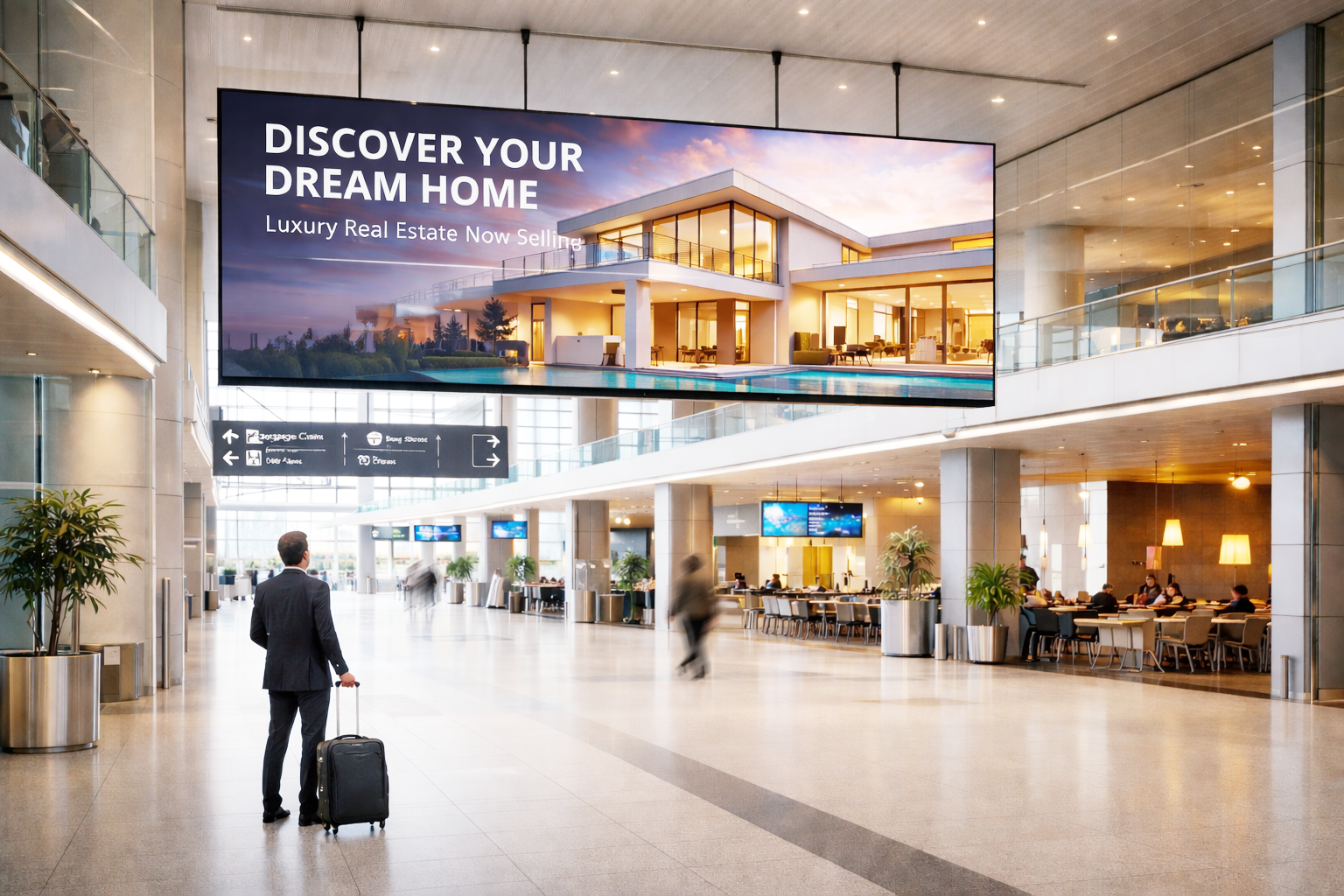
Airport Advertising is Complex to Get Right
We help you execute faster, with proven results and local insight most planners lack starting now.
Talk to an ExpertCatchment Area and Economic Drivers
Top 10 Cities within 150 km — Marketer Intelligence
- Guangzhou: South China's commercial and administrative capital — the home of the Canton Fair (China Import and Export Fair, the world's most commercially significant trade exhibition event), China Southern Airlines' global hub, South China University of Technology, Sun Yat-sen University's medical and research corridor, and the operational headquarters of major South Chinese enterprises including Evergrande (historically), Country Garden, and dozens of the region's most commercially established real estate and industrial corporations. Guangzhou's HNWI community combines the old commercial wealth of the Pearl River trading dynasties with the new economy wealth of the Greater Bay Area's most commercially ambitious generation.
- Shenzhen: The world's most commercially remarkable economic transformation story — a fishing village in 1980 that has become a metropolis of 18 million people, China's Silicon Valley, the headquarters of Tencent, Huawei, DJI, BYD, and ZTE, the world's busiest manufacturing export port, and the location of the Shenzhen Stock Exchange that has produced more Chinese technology billionaires per square kilometre than any comparable urban geography. Shenzhen's HNWI community — anchored in the equity wealth of China's most commercially productive new economy companies — is the most rapidly wealthy and the most internationally mobile of any Chinese city's comparable community, generating sustained CAN transit for international technology business development, investment management, and premium outbound leisure travel.
- Foshan: China's manufacturing capital for ceramics, furniture, aluminium products, and household appliances — a city whose industrial output has made it one of China's most commercially prolific manufacturing export economies and whose first and second-generation manufacturing dynasty families now represent some of the Pearl River Delta's most commercially established private HNWI wealth. Foshan's Midea Group headquarters and the broader cluster of globally trading consumer goods manufacturers whose Foshan operations have built the world's supply chain for kitchen appliances, air conditioning, and household electronics generate a business executive community with strong international trade connections and Very High HNWI compensation profiles.
- Dongguan: The manufacturing hub whose factories produce electronics components, shoes, toys, and consumer goods for every major brand in the global retail economy — a city whose manufacturing wealth has concentrated across three generations of family-owned factories that grew from contract manufacturers into brand builders, generating a community of industrial entrepreneurs whose accumulated capital now seeks diversification into luxury real estate, international education, and premium lifestyle brands with a commercial urgency that reflects both financial opportunity and personal aspiration.
- Zhongshan: The home city of Sun Yat-sen and a major hub for lighting, locks, elevator, and apparel manufacturing whose industrial community includes some of South China's most commercially established manufacturing families. Zhongshan's manufacturers have served every major global retailer's supply chain for decades, accumulating the kind of generational manufacturing wealth whose expression in premium consumer goods and international real estate is a natural commercial evolution.
- Zhuhai: The free trade zone and gaming industry city adjacent to Macau, whose combination of special economic zone benefits, proximity to Macau's gaming and hospitality economy, and the Hengqin New Area development has created a commercially distinctive community of finance, tourism, and technology sector professionals with active international commercial engagement and strong premium leisure spending profiles.
- Hong Kong (approximately 150 km, connected via high-speed rail): The Special Administrative Region and global financial centre whose HNWI community maintains active commercial connections to Guangdong through the Greater Bay Area integration framework — generating a commercially significant bilateral Hong Kong-CAN professional community whose Hong Kong financial sector authority and personal wealth profiles represent a commercially distinctive premium tier within CAN's Greater Bay Area catchment.
- Macau (adjacent to Zhuhai): The world's largest gaming economy by revenue, whose combination of gaming revenues, luxury hospitality, and the Cotai Strip's premium resort infrastructure generates a hospitality industry executive community and high-spending gaming tourism audience with strong premium brand engagement and confirmed luxury leisure spending profiles.
- Huizhou: An emerging technology manufacturing hub east of Guangzhou — housing significant semiconductor, electronics, and new energy vehicle component manufacturing operations whose expanding technology industrial base is progressively elevating the income and HNWI concentration of its professional community toward the levels established in Shenzhen's more mature technology economy.
- Jiangmen: The historic Cantonese diaspora origin city — the ancestral home of the majority of the global Chinese-American and Chinese-Canadian diaspora whose Taishan and Enping county heritage creates a bilateral diaspora connection that generates sustained North American-to-Guangdong family connection and investment travel through CAN, making it a commercially distinctive diaspora gateway for the Chinese-American community's continued engagement with their Pearl River Delta ancestral geography.
NRI and Diaspora Intelligence
CAN's diaspora intelligence is among the most commercially distinctive of any Chinese airport — rooted in the specific history of Cantonese emigration that has made the Pearl River Delta the ancestral origin of the majority of the Chinese diaspora in North America, Australia, Southeast Asia, and the United Kingdom. The Chinese-American community whose Taishan and Jiangmen county heritage reflects the original Gold Rush era and railroad-era immigration — now a community whose accumulated commercial wealth across four to five American generations is being reinvested in ancestral homeland real estate, educational connections, and business engagement through CAN — represents a commercially active return diaspora whose bilateral investment in Pearl River Delta property and the broader Guangdong commercial ecosystem is commercially significant for real estate, financial services, and cultural connection brands. The Southeast Asian Chinese diaspora — the commercially dominant Chinese communities of Singapore, Malaysia, Thailand, Indonesia, and the Philippines whose Cantonese and Teochew origins connect them to the Pearl River Delta through sustained bilateral family and business travel — generates some of CAN's highest-volume bilateral routes and most commercially active bilateral investment flows. The GCC's Chinese community — a growing community of Chinese professionals and business operators in Dubai, Riyadh, and Abu Dhabi whose commercial engagement with South China's manufacturing export economy generates sustained bilateral CAN-GCC travel — adds a commercially significant Middle Eastern dimension to CAN's diaspora profile.
Economic Importance
Guangdong province's economy is the largest of any Chinese province by GDP — exceeding USD 1.9 trillion annually and representing approximately 11 to 12 percent of China's total national output. The Pearl River Delta's manufacturing ecosystem generates approximately 30 percent of China's total export value — making it, structurally, the world's most commercially consequential single manufacturing geography. The Greater Bay Area framework — integrating Guangzhou, Shenzhen, Hong Kong, and Macau with the surrounding Pearl River Delta cities into a single coordinated economic zone — creates a combined economic geography whose total GDP, at approximately USD 1.9 to 2 trillion, would rank it as the world's 10th largest economy if measured as an independent nation. For an advertiser, CAN's catchment economy does not produce a commercially uniform audience — it produces the full spectrum of South China commercial wealth simultaneously, from the electronics component manufacturer's first-generation export wealth to the Tencent executive's technology equity fortune, from the Guangzhou real estate developer's property empire to the Zhuhai fintech founder's startup equity — all concentrated in the same terminal and all commercially active in the international luxury, real estate, and premium lifestyle markets whose brands are most effectively positioned at South China's primary international gateway.
Business and Industrial Ecosystem
- Manufacturing dynasty families and export trade entrepreneurs: The Pearl River Delta's commercial heritage — three generations of factory owners, export traders, and supply chain builders whose combined accumulated wealth represents the most commercially significant single-generation wealth creation story in Chinese economic history — generates a community of manufacturing entrepreneurs whose CAN transit for international trade procurement, export market development, and supplier relationship management is the most commercially consequential B2B industrial audience at any Chinese regional gateway airport. These families have funded the world's supply chains for decades. Their accumulated wealth is now being deployed into luxury real estate, premium education, and international investment diversification with the same commercial pragmatism that built their factories.
- Technology and new economy sector — Shenzhen's global champions: Tencent, Huawei, DJI, BYD, ZTE, and the broader ecosystem of Shenzhen technology companies whose commercial output has made the Pearl River Delta the most comprehensive technology manufacturing and innovation ecosystem on earth generate a community of technology executives, commercial leaders, and R&D professionals whose international travel for global partnership development, technology procurement, and investor relations makes them the most commercially sophisticated technology sector B2B audience at any South Chinese airport.
- Greater Bay Area finance and professional services: The financial services ecosystem anchored in Shenzhen's financial district and extending through Hong Kong's commercial banking infrastructure generates a community of fund managers, investment bankers, and financial regulatory professionals whose bilateral Greater Bay Area commercial engagement creates a financially sophisticated professional audience at CAN with strong private banking, international real estate, and premium lifestyle brand engagement.
- Canton Fair and international trade community: The Canton Fair — held biannually in April/May and October/November and attracting approximately 200,000 foreign buyers from over 200 countries — generates CAN's most commercially significant single-event international business audience concentration of the year. The Canton Fair brings the world's most commercially active import buyers directly through CAN's terminal, creating a concentrated international trade professional audience whose purchasing authority over billions of dollars of annual supply chain transactions makes the Canton Fair weeks among the most commercially valuable B2B advertising windows at any Chinese airport.
Passenger Intent — Business Segment
The CAN business traveller carries the commercial pragmatism that defines Cantonese commercial culture — direct, transactional, focused on commercial outcomes, and deeply suspicious of brand communications that promise more than they deliver. The Dongguan factory owner flying to Dubai for a procurement meeting, the Shenzhen technology executive flying to London for a strategic partnership discussion, the Guangzhou real estate developer flying to Singapore for a fund management review, and the Canton Fair buyer from the UAE completing their final order negotiations — all represent distinct commercial archetypes whose purchasing behaviour and brand decision-making is shaped by the specific commercial directness of South China's trading tradition. For brands whose product delivers genuine commercial value with honest positioning, the CAN business audience is among the most commercially loyal in Chinese regional aviation.
Strategic Insight
The B2B advertising environment at CAN is the most commercially pragmatic in Chinese aviation — the Pearl River Delta's manufacturing and technology commercial culture rewards advertising that demonstrates genuine product capability, honest value positioning, and a specific understanding of the South China commercial context. Unlike Beijing's technology community's intellectual engagement or Shanghai's financial sector's institutional authority consciousness, the Guangdong business community makes brand decisions through a lens of pure commercial utility — will this product or service help me do better business, more efficiently, at better margins? Brands that can honestly answer that question in their CAN advertising will find the Pearl River Delta commercial community among the most commercially action-oriented brand adopters in Chinese regional aviation.
Tourism and Premium Travel Drivers
- Canton Fair and international trade tourism: The biannual Canton Fair is the world's most commercially significant trade exhibition event — attracting 200,000-plus international buyers from every continent for three phases of product presentations across consumer goods, electronics, machinery, and building materials. The Canton Fair generates the most commercially active international trade buyer audience at any Chinese commercial airport twice annually, creating B2B advertising windows of extraordinary commercial density for supply chain, trade finance, and professional services brands.
- Guangdong's cultural and heritage tourism circuit: The Pearl River Delta's living cultural heritage — Cantonese opera, traditional Lingnan architecture, the Shunde culinary tradition (the origin of much of the world's Chinese restaurant cuisine), and the historic Xiguan merchant mansions of Guangzhou's old commercial district — attracts culturally motivated premium tourism from across China and from international source markets whose appreciation for authentic Chinese commercial heritage complements their manufacturing and business engagement with the region.
- Hainan Island connection and South China leisure circuit: CAN's role as China Southern's hub connects it to China's premium domestic leisure circuit — including Hainan Island's Sanya resort community (China's equivalent of the Maldives for domestic luxury resort tourism), Guilin's karst landscape tourism, and the broader southern Chinese premium leisure network that draws Guangdong's affluent consumer community for domestic luxury resort and cultural tourism.
- Macau and Zhuhai gaming and luxury hospitality: The proximity of Macau — the world's largest gaming economy by revenue — and the Cotai Strip's luxury resort infrastructure to CAN's catchment generates a premium gaming and luxury hospitality tourism audience whose confirmed luxury accommodation and entertainment spending profiles are commercially significant for premium lifestyle and ultra-luxury hospitality brand advertising.
Passenger Intent — Tourism Segment
The CAN departing leisure traveller is the new-generation Guangdong affluent consumer at their most internationally aspirational — the Shenzhen technology executive whose outbound Europe itinerary was planned on Xiaohongshu and booked through Ctrip at a per-night rate that would have been unthinkable for their parents' generation, or the Foshan manufacturing family whose annual Maldives or European Alps holiday is the personal luxury expression of a decade of factory profits. Their outbound leisure spending — at European luxury hotels, Japanese ryokan, Maldivian private villas, and Australian coastal resorts — is among the most commercially consequential of any emerging market outbound tourism flow, and their premium goods purchasing at international duty-free and luxury retail environments reflects the specific combination of price-premium international brands and the gift-giving cultural tradition that makes Chinese outbound tourists the most commercially sought-after luxury goods consumer nationality globally.
Travel Patterns and Seasonality
Peak seasons:
- October to January (Canton Fair autumn session, National Day Golden Week, and year-end commercial cycle): The primary commercial window combining the October/November Canton Fair's international trade buyer concentration, the National Day Golden Week outbound leisure travel peak, and the year-end corporate international engagement and pre-Spring Festival luxury gifting season.
- February to June (Spring Festival, Canton Fair spring session, and leisure season): The secondary commercial peak combining the Spring Festival Lunar New Year outbound travel surge, the April/May Canton Fair spring session's international buyer concentration, and the spring outbound leisure season as Guangdong's affluent consumer community begins their annual Europe and Mediterranean travel cycle.
Event-Driven Movement
- Canton Fair — Phase I, II, and III (April/May and October/November): The world's most commercially significant trade exhibition event, held biannually at the Canton Fair Complex adjacent to CAN — generating concentrated influxes of 200,000-plus international buyers from over 200 countries across three two-week phases in both the spring and autumn sessions. The Canton Fair buyer community — the world's most commercially active import procurement community concentrated at a single exhibition venue — creates CAN's most commercially intense single-event international B2B advertising audience twice annually.
- National Day Golden Week (October 1 to 7): China's primary outbound leisure travel event — generating one of the year's most concentrated single-week premium leisure travel surges from Guangdong's affluent consumer community, with confirmed luxury accommodation spending at international destinations whose commercial premium reflects the Pearl River Delta's accumulated manufacturing wealth.
- Spring Festival Lunar New Year (January/February): The Chinese cultural calendar's most commercially consequential single event — generating extraordinary outbound leisure travel volumes, the most intense luxury gifting and premium retail purchasing season, and the most emotionally significant bilateral diaspora family connection travel of the annual calendar.
- Guangzhou Auto Show (November): One of China's five premier automotive exhibitions — attracting major global and domestic automotive brands to showcase their China market products — generating a concentrated automotive industry executive and premium consumer audience at CAN whose premium vehicle purchasing intent and automotive sector commercial authority make the Auto Show period commercially productive for premium automotive brand advertising.
- Single's Day (November 11) and pre-Golden Week luxury retail season: China's most commercially consequential single retail event — generating the world's highest single-day e-commerce transaction volume — creates a surrounding retail spending motivation that amplifies luxury goods and premium consumer brand advertising receptivity in the weeks around November 11.
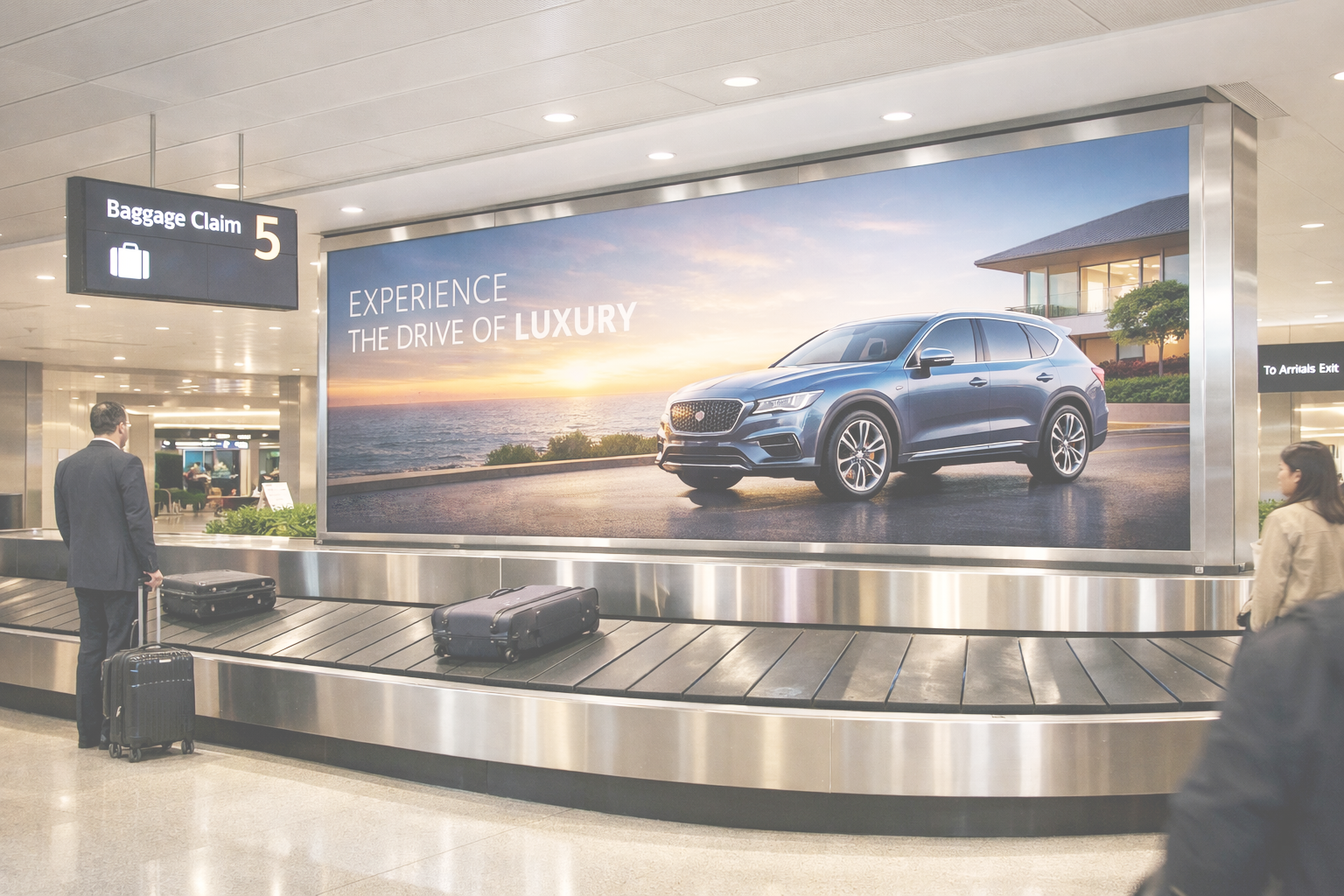
It’s Not Just Where You Advertise - It’s How Fast You Execute
We combine local insight with fast rollout to deliver results for you, now.
Talk to an ExpertAudience and Cultural Intelligence
Top 2 Languages
- Cantonese (Yue Chinese): The native language of the Guangdong province community and the cultural language of the global Cantonese diaspora — a dialect whose speakers have a specific and commercially significant cultural identity that distinguishes them from Mandarin-speaking China in ways that are commercially important for advertisers. The Cantonese commercial culture — direct, pragmatic, internationally oriented, and deeply connected to the trading tradition of South China — responds to advertising in Cantonese with a cultural authority and authenticity recognition that Mandarin-only advertising cannot replicate among the Guangdong HNWI audience. For brands seeking genuine resonance with the Pearl River Delta's most commercially established wealth community, Cantonese-language creative engagement is the most culturally authentic communication channel.
- Mandarin Chinese (Putonghua): The national standard language and the commercial language through which CAN's Mandarin-speaking Chinese national community — including the significant in-migration from other Chinese provinces who constitute a growing proportion of Guangdong's professional population — conducts its commercial activities. Mandarin-language advertising at CAN reaches the broadest cross-section of the airport's Chinese passenger community, including both the Cantonese local community and the nationally mobile professional class whose commercial presence in the Greater Bay Area reflects China's domestic labour and talent migration.
Major Traveller Nationalities
CAN's terminal reflects the specific bilateral commercial relationships of the world's most commercially productive export manufacturing economy. Chinese nationals — the dominant outbound community — represent the most commercially diverse HNWI spectrum of any Chinese gateway airport, from the generational manufacturing entrepreneur to the technology unicorn executive. Southeast Asian nationals — the largest single international community at CAN — reflect the deep bilateral commercial and diaspora ties between the Pearl River Delta and Chinese-descent communities across Malaysia, Singapore, Thailand, Indonesia, the Philippines, and Vietnam. GCC nationals — the Middle East's most commercially active China engagement community — generate significant bilateral Canton Fair and manufacturing procurement travel whose commercial authority over import-export supply chain transactions is commercially distinctive in CAN's international audience. African traders — whose commercial engagement with South China's manufacturing ecosystem has made Guangzhou home to the largest African expatriate community in China — add a commercially distinctive African bilateral trade dimension that is unique to CAN among Chinese airport catchments.
Religion — Advertiser Intelligence
- Buddhism, Taoism, and traditional Chinese cultural practice (majority of the Guangdong community): The Guangdong community's religious practice reflects the southern Chinese cultural tradition of pragmatic eclecticism — drawing on Buddhist temple attendance, Taoist ritual observation, and the specific ancestral veneration practices that are particularly strong in Cantonese culture. The Qingming Festival (tomb-sweeping) and the Hungry Ghost Festival generate specific travel patterns and retail spending behaviour that are commercially relevant for the domestic Chinese consumer calendar. Chinese New Year's specific association with prosperity, luck, and family reunion creates the year's most commercially intense advertising window for luxury gifting, premium goods, and premium travel brands.
- Islam (Muslim trading community — significant in Guangzhou's Xiaobei district): Guangzhou has one of the oldest and most commercially established Muslim communities in China — the Huaisheng Mosque is among the oldest mosques in the world, traditionally dated to the 7th century CE, reflecting the ancient Arab trading relationship with Canton. The contemporary Guangzhou Muslim community includes both Chinese Muslims and a significant community of African and Middle Eastern traders whose commercial engagement with South China's manufacturing ecosystem creates an active Muslim commercial audience at CAN. Ramadan and both Eid festivals generate bilateral trade travel and commercial relationship management activity on GCC and African routes that is commercially relevant for halal food, Islamic finance, and commercial trade services brands.
- Christianity (Protestant and Catholic minority — approximately 5 to 7% of Guangdong province):Guangdong has one of China's most historically established Protestant Christian communities, rooted in the 19th-century missionary engagement with Canton that produced some of China's earliest Christian converts and the Pearl River Delta's most internationally oriented Christian church community. This community's specific values of community service, education, and international engagement create a commercially active subset of CAN's domestic audience with strong international education, premium healthcare, and philanthropic brand engagement.
Behavioral Insight
The CAN Very High HNWI audience makes brand decisions through the lens of Cantonese commercial pragmatism — a cultural commercial tradition that is among the most practically oriented and the most internationally calibrated in China. The Pearl River Delta's manufacturing families have been selling to the world since the Canton trading era of the 18th century. They understand international brand standards because they have been making products to meet those standards for generations. They evaluate advertising not through the face-consciousness lens of Beijing's institutional hierarchy or the status aspiration of Shanghai's cosmopolitan consumption culture, but through the direct commercial assessment that asks: does this product deliver genuine value, is the brand behind it genuinely excellent, and does this advertising respect my commercial intelligence enough to speak honestly? Brands that lead with genuine product quality, honest value propositions, and a specific acknowledgement of the South Chinese commercial tradition's international engagement history will find the Pearl River Delta HNWI community among the most commercially loyal and the most commercially direct brand relationships in Chinese regional aviation.
Outbound Wealth and Investment Intelligence
CAN's outbound wealth intelligence reflects the specific investment behaviour of South China's most commercially established manufacturing and technology wealth community — a community whose capital deployment combines the property investment instincts of China's most real-estate-engaged provincial economy with the international diversification ambitions of the world's most commercially productive manufacturing diaspora.
Outbound Real Estate Investment
Guangdong's HNWI community is China's most commercially active international real estate investment community by historical transaction volume — a consequence of the province's specific combination of long-standing international commercial engagement, the Cantonese diaspora's established international property ownership culture, and the specific wealth levels that three generations of manufacturing export success have produced. Australia — particularly Sydney and Melbourne — is the most historically established and most commercially significant single-country international real estate destination for the Guangdong HNWI community, reflecting both the Cantonese diaspora's established presence in Australian cities and the education-immigration pathway whose student visa and permanent residency structures create a combined education and real estate investment logic. Canada — Vancouver specifically — has historically received significant Pearl River Delta manufacturing family investment, though recent capital controls and foreign buyer taxes have moderated this flow. Japan — particularly Tokyo and Osaka premium residential — has experienced growing South Chinese buyer concentration driven by relative value propositions and the Guangdong community's established cultural familiarity with Japanese consumer aesthetics. Portugal and Greece offer EU residency pathway real estate whose Golden Visa structures are commercially aligned with the Guangdong HNWI community's diversification objectives. Dubai and the UAE are experiencing rapidly growing Guangdong buyer engagement driven by the bilateral GCC-South China trade relationship's commercial community and the UAE's zero-tax residency proposition for internationally mobile Chinese entrepreneurs. For real estate developers in Australia, Japan, Portugal, Greece, and Dubai, CAN is a primary South Chinese HNWI buyer acquisition channel.
Outbound Education Investment
South China's education investment in international institutions reflects the Pearl River Delta's specific educational culture — a community that has historically combined China's most commercially pragmatic provincial education tradition with one of China's highest per-capita investments in international education for the next generation. Australia remains the most established destination — the University of Melbourne, UNSW, and Monash University all have very large South Chinese student communities whose Guangdong family connections generate sustained bilateral CAN-Australia educational travel. The United Kingdom — UCL, King's College London, Manchester, and Birmingham — attracts the South Chinese premium student market whose combination of UK academic credentials and international cultural exposure reflects the Guangdong community's historically international commercial orientation. Canada and the United States attract the most academically ambitious South Chinese students whose Ivy League and Russell Group application profiles reflect families whose commercial success has funded educational ambitions that their parents' generation could not have imagined. Singapore — NUS and NTU — attracts Pearl River Delta families whose proximity preference, cultural familiarity, and Southeast Asian commercial network rationale creates a specifically Cantonese-oriented educational engagement with the city-state's excellent university system.
Outbound Wealth Migration and Residency
The Guangdong HNWI community's residency diversification behaviour reflects the Pearl River Delta's historically internationally mobile commercial culture — a community whose ancestors emigrated to build commercial opportunities and whose current generation replicates that pattern through investment migration at the most commercially consequential scale. Australia's Significant Investor Visa programme has historically attracted more Pearl River Delta applicants than any other Chinese regional community. Canada's business investor visa programmes have a deep Guangdong application history. Portugal's Golden Visa has received significant South Chinese participation. Singapore's Global Investor Programme attracts Shenzhen technology and finance sector principals. The UAE's Golden Visa is experiencing rapidly growing Guangdong uptake from the GCC-connected trade and manufacturing community. For immigration advisory firms, international tax planning practices, and government investment promotion boards from Australia, Canada, Portugal, Singapore, and the UAE, CAN is the primary South Chinese HNWI investment migration access channel.
Strategic Implication for Advertisers
CAN's outbound wealth intelligence is the most commercially action-oriented of any Chinese gateway airport — reflecting the Pearl River Delta's deeply embedded tradition of commercial pragmatism and international engagement. The manufacturing dynasty family whose parents built the factory and whose children are now deploying the accumulated capital internationally is not a speculative investor — they are a commercial actor making calculated diversification decisions with the same diligence they applied to supply chain optimisation. For brands that serve this community's specific investment needs — with genuine product quality, transparent cost structures, and honest commercial propositions in Cantonese and Mandarin — CAN provides the most commercially direct-access HNWI audience in Chinese regional aviation.
Airport Infrastructure and Premium Indicators
Terminals
- Terminal 2 (T2 — China Southern hub and international operations): CAN's primary commercial terminal — the expanded international terminal that handles the majority of China Southern's long-haul and regional international operations, processing the bulk of Guangdong's international passenger community through its check-in halls, immigration corridors, and departure concourses. T2's commercial advertising estate is the most commercially relevant component of CAN's terminal infrastructure for brands targeting the international premium cabin and Very High HNWI outbound community.
- Terminal 1 (T1 — additional domestic and some international operations): The legacy original terminal handling supplementary domestic and some international operations, providing a secondary commercial advertising environment with broader domestic Chinese consumer audience reach.
Premium Indicators
- China Southern Airlines premium cabin community — SkyTeam hub: China Southern's status as Asia's largest airline by fleet size and its SkyTeam membership creates a premium cabin community at CAN whose Pearl Premier Gold and Diamond elite frequent flyer population represents the most commercially established regular international business traveller community at any South Chinese airport. The CAN premium lounge environment serves this community with a dwell-time advertising adjacency that reaches the most institutionally commercially authoritative component of the airport's Very High HNWI audience.
- Canton Fair Complex proximity: The Canton Fair Complex — the world's largest exhibition centre, located approximately 15 minutes from CAN — creates a direct commercial adjacency between the airport and the world's most commercially significant trade exhibition event. The bilateral flow of international buyers between CAN and the Canton Fair Complex twice annually is the most commercially active single trade event-driven passenger movement at any Chinese commercial airport — creating a specific and commercially distinctive advertising audience window whose international trade buyer community's purchasing authority over global supply chains is commercially irreplaceable.
- Greater Bay Area integration connectivity: CAN's integration with the Greater Bay Area's high-speed rail and expressway network — connecting the airport to Shenzhen, Dongguan, Foshan, Zhongshan, and the broader Pearl River Delta within 30 to 90 minutes by surface transport — creates the most commercially comprehensive urban catchment network of any Chinese regional gateway airport, effectively extending CAN's advertising reach across the world's most productive manufacturing corridor within a single surface transport commuter zone.
- Guangzhou's African and Middle Eastern trader community: Guangzhou's unique status as home to China's largest African expatriate commercial community — concentrated in the Xiaobei district whose wholesale trade markets serve African importers from across the continent — creates a commercially distinctive bilateral African-South Chinese trade advertising audience at CAN that is found at no other Chinese commercial airport and that is commercially relevant for trade finance, African market access, and bilateral commercial service brands.
Forward-Looking Signal
CAN is implementing a major expansion programme including a new third terminal (T3) whose construction, planned for completion by 2030, will add approximately 45 million additional annual passenger capacity and a new commercial advertising estate of significant scale. China Southern's continued international route network expansion — adding new direct services to European, North American, and African destinations from its CAN hub — will progressively deepen CAN's international premium cabin passenger volume and the associated Very High HNWI advertising audience quality. The Greater Bay Area's progressive economic integration — whose framework is bringing Hong Kong's financial sector, Shenzhen's technology sector, and Guangzhou's manufacturing and trade sector into a coordinated economic zone of extraordinary commercial breadth — will progressively elevate CAN's catchment economy's commercial sophistication and HNWI density over the coming decade. Masscom advises brands to establish CAN advertising positions now — at pre-T3 rates that reflect the airport's current capacity rather than its designed commercial ceiling — and to plan campaigns that capture both the established Pearl River Delta manufacturing wealth community and the emerging Greater Bay Area new-economy technology wealth that will increasingly define CAN's commercial audience character over the next ten years.
Airline and Route Intelligence
Top Airlines
China Southern Airlines (SkyTeam hub — Asia's largest airline), China Eastern Airlines, Shenzhen Airlines, Xiamen Airlines, Scoot, Thai Airways, Vietnam Airlines, Philippine Airlines, Malaysia Airlines, Singapore Airlines, AirAsia, Emirates, Qatar Airways, Etihad Airways, Air France, KLM, British Airways, Lufthansa, Ethiopian Airlines, Kenya Airways, South African Airways
Key International Routes
- Singapore (SIN): Multiple daily China Southern and Singapore Airlines services — the primary Southeast Asian financial hub and diaspora connection corridor, carrying the bilateral China-Singapore investment, technology, and Cantonese diaspora community flows
- Bangkok (BKK): Daily services — the Southeast Asian leisure tourism gateway, serving Guangdong's most popular outbound leisure destination
- Kuala Lumpur (KUL): Daily China Southern and Malaysia Airlines services — the Malaysian diaspora connection and Southeast Asian hub corridor
- Jakarta (CGK): Regular services — the Indonesian bilateral trade and diaspora connection corridor, serving China's most commercially active African-Indonesian trade relationship
- Ho Chi Minh City (SGN) and Hanoi (HAN): Regular services — the Vietnam bilateral manufacturing supply chain and trade corridor, one of South China's most commercially active bilateral trade relationships
- Manila (MNL): Daily services — the Philippines bilateral diaspora and trade corridor, serving the Guangdong-Philippine commercial community's sustained bilateral engagement
- Dubai (DXB): Emirates and China Southern services — the primary GCC bilateral trade and investment corridor, connecting South China's manufacturing economy to the Gulf's import distribution ecosystem
- London (LHR): British Airways and China Southern services — the UK bilateral corridor serving the Cantonese diaspora, luxury real estate investment, and educational travel community
- Paris (CDG): Air France service — the European luxury destination and cultural tourism corridor
- Amsterdam (AMS): KLM service — the Netherlands and Northern European trade and professional community corridor
- Sydney (SYD) and Melbourne (MEL): China Southern services — the Australian education, diaspora, and real estate investment bilateral corridor
- Addis Ababa (ADD), Nairobi (NBO), and Johannesburg (JNB): Ethiopian, Kenya, and South African Airways services — the African bilateral trade and investment corridors reflecting Guangzhou's unique role as China's African trade gateway
Wealth Corridor Signal
CAN's route network is the most commercially diverse of any Chinese regional gateway airport — reflecting the Pearl River Delta's extraordinary range of bilateral commercial relationships. The Southeast Asian routes carry the most commercially active manufacturing supply chain integration and Cantonese diaspora connection corridors. The GCC routes carry the bilateral GCC-South China import-export trade relationship that makes Dubai the most commercially consequential individual market for Guangdong's manufacturing export economy. The African routes — unique among Chinese airport route networks in their concentration of sub-Saharan African bilateral trade connections — reflect Guangzhou's specific role as China's gateway for African commercial engagement, carrying the continental trade relationship's most commercially active bilateral flows. The Australian routes carry the education and real estate investment diaspora corridor. Every significant CAN route cluster maps a distinct dimension of the Pearl River Delta's global commercial relationship ecosystem — confirming that CAN's advertising environment serves the most commercially internationally engaged manufacturing economy of any airport catchment on earth.
Media Environment at the Airport
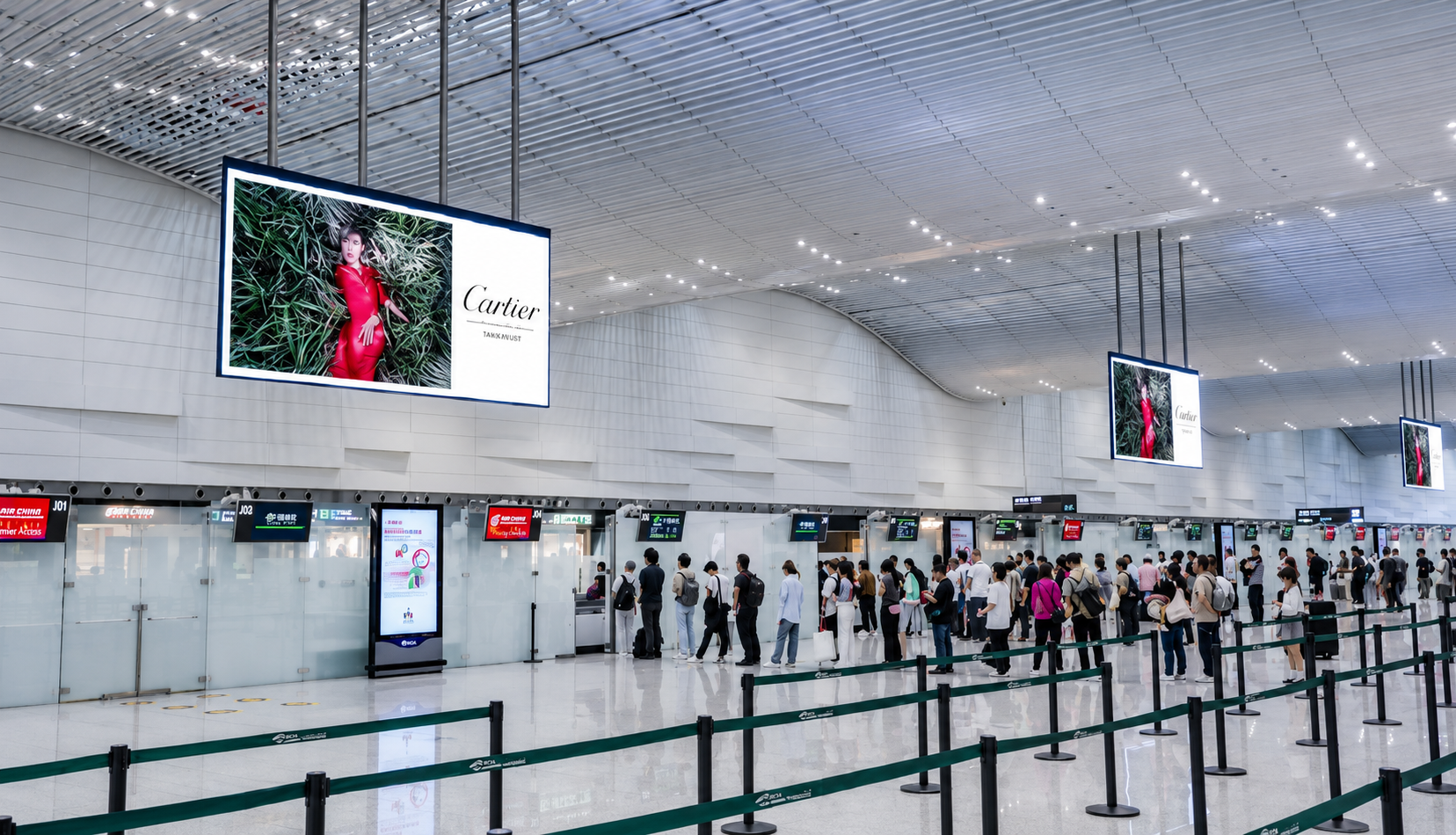
- CAN's T2 international terminal — processing the majority of Guangdong's international premium cabin and outbound HNWI passenger community — creates an advertising estate of significant commercial depth whose primary passenger flow zones in check-in, immigration, departure concourses, and retail corridors serve a Very High HNWI audience whose commercial engagement with international brand advertising reflects the Pearl River Delta's historically internationally calibrated commercial culture
- The specific commercial character of CAN's Canton Fair event windows — when 200,000-plus international buyers transit the terminal twice annually — creates advertising conditions of extraordinary commercial density in which the world's most commercially active import procurement community is concentrated in a single terminal over a compressed three-phase period, creating B2B trade finance, logistics, professional services, and commercial brand advertising opportunities of unmatched intensity at any other Chinese commercial airport
- The African and Middle Eastern trader community that transits CAN as part of its Guangzhou commercial engagement — unique to this airport's bilateral trade advertising environment — creates commercially distinctive niche B2B advertising windows for trade finance, halal commercial services, and bilateral market access brands whose commercial targets include the most commercially active African-Chinese trade community at any Chinese commercial airport
- Masscom Global provides comprehensive inventory access across CAN's T2 and T1 commercial advertising estate, with full campaign management covering Cantonese-language and Mandarin-language creative strategy developed with genuine South China commercial cultural expertise, compliance with Chinese advertising regulatory standards, optimal zone positioning for manufacturing wealth, technology sector, luxury goods, and international real estate brand audiences, Canton Fair event window campaign planning, and Chinese holiday calendar peak season management
Strategic Advertising Fit
Best Fit
- Luxury goods and premium consumer brands — Chinese outbound luxury market: CAN is one of China's most commercially productive airport advertising environments for luxury goods whose brand authority can demonstrate genuine international craftsmanship and heritage to a South Chinese HNWI audience whose accumulated manufacturing wealth has created one of the world's most commercially active luxury goods purchasing communities. The Golden Week outbound travel window, the Spring Festival luxury gifting season, and the broader year-round premium consumer appetite of Guangdong's manufacturing HNWI community make CAN a sustained luxury goods advertising environment of commercially significant scale.
- International real estate — Australia, Japan, Portugal, UAE, and Canada: The Pearl River Delta HNWI community's historically established and commercially active international real estate investment in Australian, Japanese, Portuguese, and UAE markets creates a directly addressable, pre-qualified South Chinese property buyer audience at CAN whose purchase intent is confirmed by historical bilateral transaction data. Cantonese-language creative with culturally authentic investment logic appeals are commercially essential for real estate advertising at CAN.
- GCC-China trade finance and commercial services: The bilateral GCC-South China trade relationship — whose annual merchandise trade value exceeds USD 100 billion and whose import buyer community transits CAN through the Canton Fair and bilateral trade travel — creates a commercially distinctive B2B trade finance and commercial services advertising audience at CAN that is specifically relevant for international banks with South China-GCC trade corridor expertise, logistics and supply chain platforms, and bilateral commercial service providers.
- Premium travel and ultra-luxury hospitality: The Greater Bay Area's affluent consumer community's outbound leisure travel to Southeast Asian premium resorts, Japanese luxury experiences, European luxury hotel circuits, and Maldivian private villa stays creates a commercially active premium travel advertising audience at CAN whose confirmed outbound leisure spending per visit is among the highest of any Chinese regional airport's departing leisure community.
- Investment migration and residency advisory: The Guangdong HNWI community's historically highest-volume Chinese investment migration participation in Australian, Canadian, Portuguese, Singapore, and UAE programmes creates the most commercially active Chinese investment migration advertising audience of any South Chinese gateway airport. Cantonese-language, culturally adapted investment migration advisory advertising at CAN reaches the most action-oriented Chinese HNWI residency diversification community in regional aviation.
- International education — Australia, UK, Singapore, and Canada: The Pearl River Delta's historically established international education investment culture — whose Cantonese diaspora's Australian, Canadian, and British educational achievement provides a demonstrated pathway that subsequent generations continue to follow — creates a commercially active international education advertising audience at CAN whose confirmed student placement spending and strong bilateral education institutional relationships make CAN a productive channel for Australian, British, Singaporean, and Canadian universities.
- Premium automotive — new energy vehicles and international luxury brands: Guangdong's role as the heartland of China's electric vehicle revolution — BYD's Shenzhen headquarters, the broader Pearl River Delta EV supply chain ecosystem — creates a commercially distinctive new energy vehicle advertising audience at CAN whose combination of domestic EV brand pride and international luxury automotive purchasing aspiration makes premium automotive advertising from both Chinese and international brands commercially productive.
- Canton Fair B2B trade finance and professional services: The biannual Canton Fair's concentration of the world's most commercially active international import procurement community creates specifically targeted B2B advertising windows for trade finance, logistics, legal advisory, and supply chain management brands whose commercial target is the international buyer and Chinese manufacturer communities whose combined purchasing authority defines the world's most commercially significant bilateral trade relationship.
Brand Alignment at a Glance
| Category | Fit |
|---|---|
| Luxury goods and premium consumer brands | Exceptional |
| International real estate | Exceptional |
| Investment migration and residency advisory | Exceptional |
| Premium travel and ultra-luxury hospitality | Exceptional |
| GCC-China trade finance and commercial services | Exceptional |
| International education | Strong |
| Premium automotive | Strong |
| Mass-market consumer brands | Poor fit |
Who Should Not Advertise Here
- Brands without Cantonese cultural adaptation or genuine South China market commitment: The most commercially critical failure mode for international brands at CAN is deploying generic Mandarin-language creative without Cantonese cultural acknowledgement or South China commercial context specificity. The Pearl River Delta's commercial community has been engaging with international brands since the Canton trading era — they apply a sophisticated evaluation framework to brand advertising that immediately identifies campaigns developed for a generic Chinese national market rather than the specifically Cantonese commercial culture whose values and commercial tradition are commercially distinctive.
- Brands or content that conflict with Chinese regulatory standards: Chinese advertising regulations require compliance with State Administration for Market Regulation standards, CAAC content guidelines, and specific content restrictions whose non-compliance creates both legal risk and commercial brand damage in the Chinese market. Masscom Global's China market regulatory expertise provides the compliance advisory necessary for successful campaign execution at CAN.
- Mass-market consumer brands without premium differentiation: CAN's Very High HNWI manufacturing dynasty and technology sector audience has graduated beyond mass-market consumer brand engagement — the Pearl River Delta HNWI community's commercial success has elevated their consumption standards to international luxury benchmarks that mass-market consumer positioning cannot serve.
Event and Seasonality Analysis
- Event Strength: Exceptional — particularly Canton Fair sessions (biannual), National Day Golden Week, Spring Festival, and Guangzhou Auto Show
- Seasonality Strength: High — strong dual-season commercial windows aligned with Chinese holiday calendar and Canton Fair biannual schedule
- Traffic Pattern: Dual-season with Canton Fair event concentration, Chinese holiday Golden Week peaks, and sustained year-round manufacturing trade baseline
Strategic Implication
CAN's commercial calendar is structured around the unique combination of the Chinese public holiday cycle and the Canton Fair's biannual schedule — a commercial calendar that is found at no other airport in the world and that creates advertising opportunities of extraordinary commercial specificity. The Canton Fair periods — April/May and October/November — create the most commercially concentrated B2B international trade buyer advertising windows in Chinese aviation and should anchor campaign investment for trade finance, logistics, and professional services brands. The National Day Golden Week in October should anchor luxury goods, premium travel, and real estate advertising investment for the outbound leisure community. The Spring Festival gifting and travel season in January-February should anchor luxury goods gifting and premium outbound leisure travel advertising. The summer June-August period represents the most commercially active Southeast Asian outbound leisure travel window for Guangdong's affluent consumer community. Masscom structures CAN campaigns to activate each of these distinct commercial windows with culturally calibrated Cantonese and Mandarin creative that speaks to the specific purchasing motivation of each audience moment — ensuring that the brand investment at CAN captures the full commercial breadth of South China's most commercially internationally engaged HNWI community across the full annual calendar of its most commercially consequential departures and arrivals.
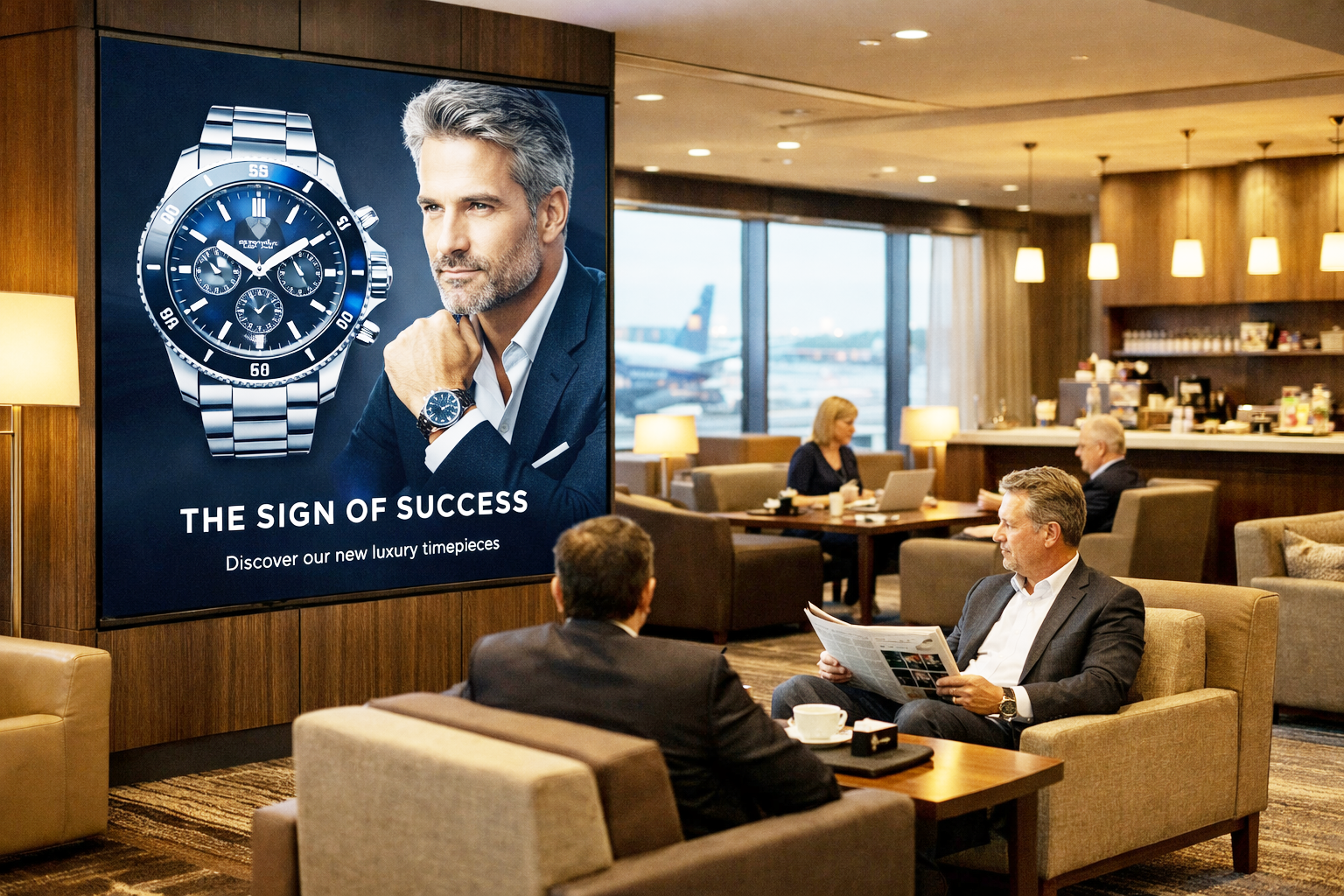
Poor Placement and Delays Affect Airport Campaigns
We help you move faster, access better inventory, and get it right now.
Talk to an ExpertFinal Strategic Verdict
Guangzhou Baiyun International Airport serves the world's most commercially productive manufacturing dynasty and the most commercially ambitious new economy technology community simultaneously — a Pearl River Delta whose export-led wealth creation over four decades has produced the single most commercially consequential first-to-second-generation HNWI wealth accumulation story of the modern era, and a Shenzhen technology ecosystem whose equity wealth generation has created the most commercially productive new economy wealth concentration in Asia outside of Beijing and Shanghai. The 63.1 million passengers who transit CAN annually include the factory owners who made the world's supply chains, the technology executives who are redefining those supply chains with artificial intelligence and robotics, the GCC traders who buy the output, the African entrepreneurs who distribute it, the Australian diaspora families whose Cantonese grandparents built communities in Sydney and Melbourne, and the new-generation Greater Bay Area affluent consumers whose outbound luxury leisure and premium brand engagement is reshaping the global luxury economy's geographic centre of gravity. For luxury goods brands targeting the world's most commercially active emerging luxury consumer community, for international real estate developers targeting the most historically active Chinese HNWI property buying community, for investment migration advisory firms targeting China's most action-oriented residency diversification market, for GCC trade finance brands targeting the bilateral South China-Gulf commercial corridor's most commercially active participants, and for premium travel brands targeting the most internationally engaged affluent consumer community in South China — CAN is the most commercially diverse and the most commercially pragmatic HNWI gateway in Chinese regional aviation. Masscom Global delivers the Cantonese cultural authority, the Pearl River Delta commercial intelligence, and the full-service execution capability to ensure that every brand investing at CAN reaches South China's most commercially consequential manufacturing and technology wealth community with the cultural authenticity, the commercial directness, and the genuine market understanding that the world's most commercially pragmatic HNWI trading culture demands.
About Masscom Global
Masscom Global is a premium international airport advertising and media buying agency operating across 140 countries. With deep expertise in airport OOH, premium publications, and high-net-worth audience targeting, Masscom helps brands reach the world's most valuable travellers at the moments that matter most. For advertising packages, media rates, and campaign planning at Guangzhou Baiyun International Airport and airports across the globe, contact Masscom Global today.
Frequently Asked Questions
How much does airport advertising cost at Guangzhou Baiyun International Airport?
Advertising costs at CAN vary by terminal zone, format type, position within passenger flow, campaign duration, and seasonal demand. T2 international terminal positions — serving China Southern's long-haul premium cabin community and the international outbound HNWI community — command the highest rates in the CAN estate. The Canton Fair periods in April/May and October/November command significant event-driven rate premiums reflecting the extraordinary concentration of international trade buyers. National Day Golden Week and Spring Festival consumer seasons command outbound leisure and luxury goods advertising rate uplifts. Cantonese and Mandarin dual-language creative requirements are commercially essential. Masscom Global provides current rate structures, Canton Fair and holiday calendar guidance, and full campaign proposals. Contact Masscom for a tailored CAN proposal.
Who are the passengers at Guangzhou Baiyun International Airport?
CAN serves a Very High HNWI-rated audience anchored by South China's manufacturing dynasty families from Dongguan, Foshan, Zhongshan, and the broader Pearl River Delta industrial corridor, Shenzhen's technology and new economy executive community including Tencent, Huawei, DJI, and BYD executives, Greater Bay Area new-generation affluent consumers with premium outbound travel and luxury brand engagement, GCC import buyers and Middle Eastern trade community participants, African commercial community members engaged in South China's manufacturing export ecosystem, Cantonese diaspora families returning from Australia, Canada, and Southeast Asia, and the international Canton Fair buyer community from over 200 countries who represent the world's most commercially active import procurement concentration.
Is Guangzhou Baiyun International Airport good for luxury brand advertising?
CAN is commercially productive for luxury brands with genuine Cantonese cultural adaptation whose product authority can withstand the South Chinese commercial community's pragmatic quality evaluation framework. The Pearl River Delta HNWI community is among the world's most commercially active luxury goods purchasing communities — particularly during Golden Week and Spring Festival windows — but their commercial culture's directness makes advertising that demonstrates genuine product excellence with honest value propositions significantly more commercially productive than generic aspirational luxury imagery. Luxury brands with strong craftsmanship heritage narratives, Cantonese-language cultural adaptation, and specific South China market investment will find CAN's manufacturing dynasty audience among the most commercially loyal luxury consumers in Chinese regional aviation.
What is the best airport in China for manufacturing wealth advertising?
CAN is definitively China's most commercially concentrated manufacturing dynasty wealth gateway — the Pearl River Delta's industrial heritage families, whose accumulated wealth represents the most commercially significant single-generation private wealth creation in modern Chinese economic history, are concentrated in CAN's departure hall to a degree that is commercially unmatched at any other Chinese commercial airport. For brands targeting this specific South Chinese manufacturing HNWI community — whose commercial pragmatism, international trade engagement, and Cantonese cultural identity distinguish them from Beijing's institutional wealth or Shanghai's financial sector — CAN is the mandatory primary Chinese airport advertising investment.
What is the best time to advertise at Guangzhou Baiyun International Airport?
The Canton Fair period — both spring (April/May) and autumn (October/November) — is CAN's most commercially distinctive advertising window, producing the world's most commercially active international trade buyer concentration in China twice annually. National Day Golden Week delivers the year's primary outbound luxury leisure and premium goods advertising peak. The pre-Spring Festival gifting season delivers the most commercially intense Chinese luxury goods consumer advertising window. The spring May-June period delivers the most active Southeast Asian outbound leisure travel. A campaign structure that activates both Canton Fair sessions, both Golden Week periods, and sustains baseline brand presence through the year-round manufacturing trade corridor delivers the full commercial breadth of CAN's extraordinary South Chinese HNWI and international trade community audience.
Can international real estate developers advertise at Guangzhou Baiyun International Airport?
CAN is the most commercially productive Chinese gateway airport for international real estate developers targeting the Pearl River Delta HNWI community's historically established investment corridors. Australian property developers — particularly in Sydney and Melbourne — have the most historically proven and most commercially active South Chinese buyer audience at CAN. Japanese luxury residential developers targeting the growing Guangdong buyer community find a culturally receptive audience at CAN whose appreciation of Japanese consumer aesthetics creates natural real estate investment alignment. Portuguese, Greek, and UAE developers with Golden Visa and zero-tax investment structures have a commercially active Guangdong applicant community at CAN. Cantonese-language creative, culturally specific investment logic, and genuine South China market advisory capability are essential requirements. Masscom Global provides both inventory access and cultural advisory capability.
Which brands should not advertise at Guangzhou Baiyun International Airport?
Brands without genuine Cantonese cultural adaptation or South China commercial context specificity, brands whose content conflicts with Chinese regulatory standards, and mass-market consumer brands without premium differentiation are commercially misaligned with CAN's Very High HNWI Pearl River Delta manufacturing dynasty and technology sector audience. The South Chinese commercial community's pragmatic quality evaluation framework is the most commercially demanding brand evaluation process in Chinese regional aviation — brands that cannot demonstrate genuine product excellence and authentic Chinese cultural respect will find the Pearl River Delta HNWI community's commercial directness the most commercially challenging brand engagement environment in South China.
How does Masscom Global help brands advertise at Guangzhou Baiyun International Airport?
Masscom Global provides full-service airport advertising execution at CAN — covering Pearl River Delta manufacturing dynasty and technology sector audience intelligence, Cantonese-language and Mandarin-language creative strategy developed with genuine South China commercial cultural expertise, State Administration for Market Regulation and CAAC compliance management, optimal T2 and T1 zone positioning for luxury goods, real estate, trade finance, and premium lifestyle brand audiences, Canton Fair event window planning, Chinese holiday calendar peak season management, and live campaign performance reporting. With operations across 140 countries, Masscom provides both the South China Cantonese cultural intelligence and the global network capability to activate CAN as part of a coordinated Greater Bay Area and Chinese outbound investment corridor strategy — running concurrent campaigns across CAN, Shenzhen Bao'an, Hong Kong International, Singapore, and Dubai to intercept South China's most commercially ambitious HNWI community at every stage of their international manufacturing trade and luxury investment journey.