

Airport at a Glance
| Field | Detail |
|---|---|
| Airport | Dabolim Airport (Goa International Airport) |
| IATA Code | GOI |
| Country | India |
| City | Goa (Vasco da Gama, South Goa) |
| Annual Passengers | Approx. 8 to 8.5 million (2023-24 cycle, combined Goa state including Mopa MOP) |
| Primary Audience | Indian HNI leisure tourists, international charter and resort travellers, Goan NRI diaspora |
| Peak Advertising Season | November to February, Christmas and New Year, Easter, Carnival |
| Audience Tier | Tier 1 leisure with concentrated HNI and NRI pockets |
| Best Fit Categories | Luxury hospitality, premium spirits, real estate, automotive, banking and wealth |
Dabolim is not a conventional Indian metro airport. It is a leisure-anchored terminal where the audience arrives with discretionary budget already committed to spending. The catchment is small in resident population but extraordinarily high in transient HNI density, with a passenger base built around domestic Indian premium travellers, international charter tourists, the Goan NRI diaspora, and a concentrated layer of expatriate second-home owners. For advertisers, this is a Tier 1 leisure airport with a wealth profile that few non-metro Indian airports can match.
The commercial value of GOI lies in the spending state of the passenger. Goa visitors arrive in a high-receptivity mindset for luxury, hospitality, premium spirits, real estate, and lifestyle categories. The route network connects directly to India's wealthiest metros, the Gulf NRI corridor, and the European charter market, which makes Dabolim one of the most strategically efficient leisure airports in South Asia.
Advertising Value Snapshot
- Passenger scale: Approximately 8 to 8.5 million annually across the combined Goa airport system, with steady year-on-year growth driven by domestic premium tourism and recovering international charter traffic.
- Traveller type: Indian HNI and upper-middle-class leisure travellers, international charter and resort tourists, Goan NRI diaspora, and second-home owners.
- Airport classification: Tier 1 leisure with concentrated HNI and NRI pockets. The audience punches above the airport's headline volume in discretionary spend per passenger.
- Commercial positioning: India's premier leisure gateway, the country's only sustained international charter tourism market, and a defined HNI weekend corridor from Mumbai, Delhi, Bengaluru, and Pune.
- Wealth corridor signal: Sits on the India-Gulf-Europe leisure and second-home corridor, with secondary flows from the Goan diaspora across Portugal, the United Kingdom, Canada, and Australia.
- Advertising opportunity: Masscom Global delivers structured access to GOI inventory across departure and arrival journeys, with placement strategies built for the high-discretion leisure traveller and the once-a-year HNI family flyer. Few airports in India deliver this concentration of discretionary-spend audiences in a single terminal, which makes precise placement and category exclusivity through Masscom commercially decisive.
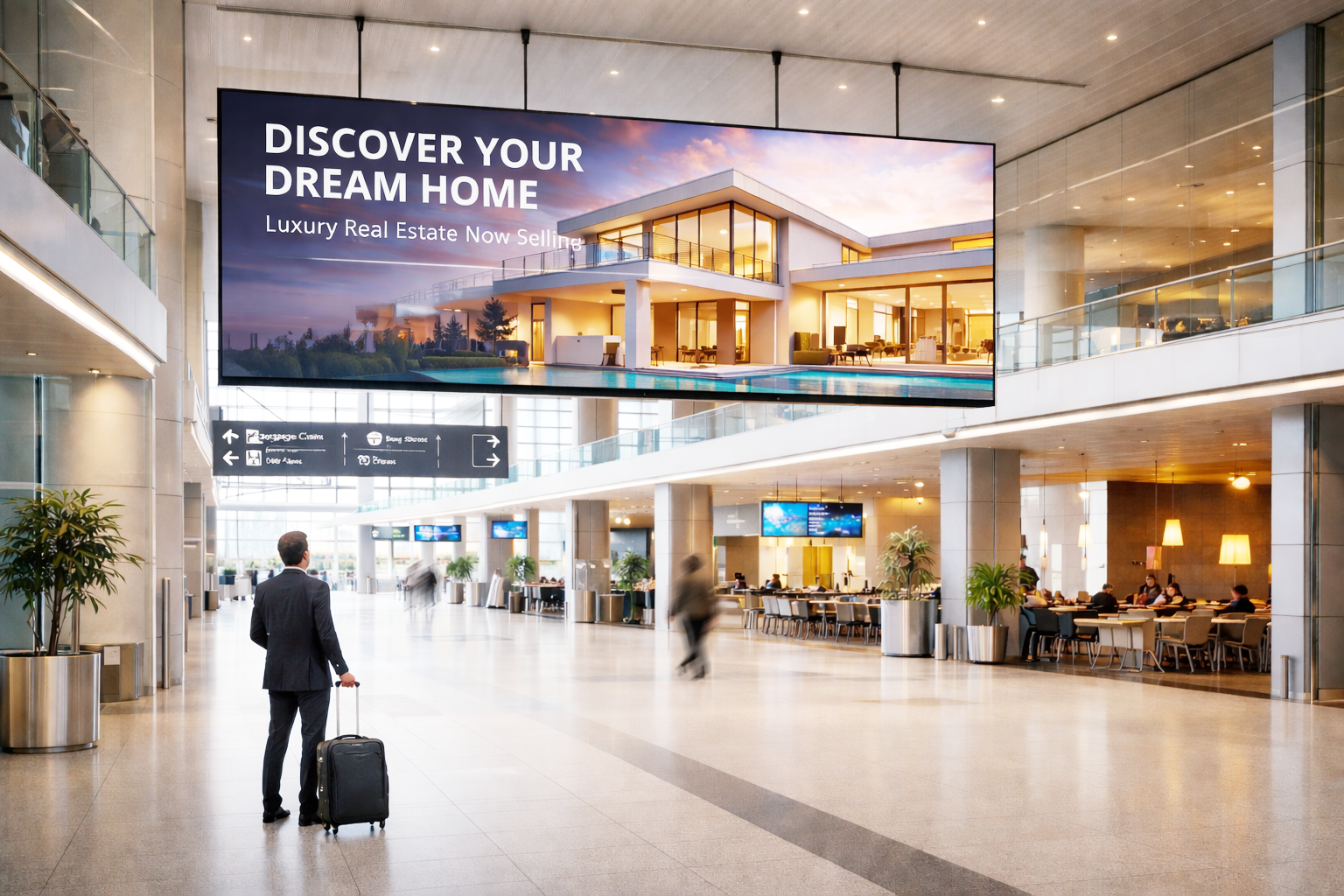
Airport Advertising is Complex to Get Right
We help you execute faster, with proven results and local insight most planners lack starting now.
Talk to an ExpertCatchment Area and Economic Drivers
Top 10 Cities within 150 km — Marketer Intelligence:
- Panaji (Panjim): Goa's capital and administrative core with a concentrated government, professional, and Goan elite audience. High receptivity to banking, wealth management, premium automotive, and lifestyle categories.
- Vasco da Gama: Port and logistics city directly adjacent to the airport, with industrial executive and shipping audiences relevant to B2B, banking, and corporate insurance brands.
- Margao (Madgaon): South Goa's commercial centre with a strong Goan Catholic professional and trading audience. Strong relevance for jewellery, premium F&B, and family-anchored financial services.
- Calangute, Candolim, and Baga (North Goa beach belt): India's most concentrated leisure tourism corridor with extensive five-star hospitality, lifestyle retail, and premium F&B. Audience receptivity is highest here for fashion, watches, premium spirits, and international travel categories.
- Anjuna, Vagator, and Assagao: Premium boutique and design-led tourism enclaves attracting young Indian HNI, expatriates, and creative-class travellers. Audience aligns with premium consumer technology, lifestyle apps, and luxury fashion.
- Morjim and Ashvem: Russian and European long-stay tourist enclaves and increasingly an Indian HNI second-home corridor. Strong relevance for international real estate, currency and remittance services, and luxury wellness.
- Old Goa: Heritage and pilgrimage corridor drawing a Catholic and Christian Goan diaspora audience for major religious events. Relevant for jewellery, family travel, and faith-anchored consumer categories.
- Ponda: Industrial belt with pharmaceutical and engineering operations driving a mid-tier executive and skilled-workforce audience. Relevant for B2B, automotive, and insurance categories.
- Mapusa: Commercial and trading hub of North Goa with a broad consumer audience aligned to FMCG, telecom, and consumer finance.
- Karwar (Karnataka coastal corridor): Nearby naval base, port, and tourism cluster extending Goa's catchment southward. Audience relevance spans government, defence-linked HNI, and emerging leisure travellers.
NRI and Diaspora Intelligence:
The Goan diaspora is one of the most globally distributed and commercially sophisticated diasporas in India, with strong concentrations in Portugal (which provides EU passport eligibility for Goans of Portuguese descent), the United Kingdom, the Gulf states (particularly the UAE, Kuwait, and Oman), Canada, and Australia. This community travels home frequently, maintains second homes in Goa, and moves capital outward into Portuguese real estate, Canadian and Australian residency programmes, and UK and Gulf banking. Remittance volumes from the Gulf alone are commercially significant. International real estate, residency, banking, and wealth advertisers find this audience disproportionately valuable, particularly during the Christmas to New Year window when diaspora travel peaks.
Economic Importance:
The catchment is anchored by tourism and hospitality, mining and metallurgy (a recovering sector), pharmaceuticals, port and logistics, and an increasingly significant offshore-services and digital-economy layer. Each engine produces a distinct audience. Tourism and hospitality drive luxury, premium F&B, and lifestyle categories. Pharmaceuticals and industry drive B2B and corporate banking. The diaspora and second-home-owner segment drives international real estate, residency, and wealth migration categories.
Business and Industrial Ecosystem
- Tourism and hospitality: Goa hosts the highest concentration of five-star and luxury hospitality brands per capita of any Indian state, producing senior hospitality executives and a continuous high-value B2B audience.
- Pharmaceuticals and industrial manufacturing: Goa's industrial estates host major Indian and multinational pharmaceutical and engineering operations. Audience is mid-to-senior executives relevant to B2B technology, corporate banking, and premium hospitality.
- Mining, port, and logistics: Mormugao Port and the Goan mining and logistics ecosystem produce a male-skewed senior executive audience aligned with industrial brands, banking, and premium leisure rewards.
- Offshore services and digital economy: A growing IT, design, and remote-work professional cluster particularly in North Goa is creating a younger affluent audience relevant to fintech, premium consumer technology, and lifestyle subscription categories.
Passenger Intent — Business Segment:
Business travellers at GOI include hospitality executives, pharmaceutical and industrial leaders, port and logistics professionals, and an emerging creative and digital workforce. They travel on a mix of weekly rotations and event-driven cycles, with corporate offsite and conference traffic adding meaningful B2B volume during the November to February window. They are a reliable audience for corporate banking, business hotels, premium automotive, and B2B technology brands.
Strategic Insight:
The business audience at GOI is commercially valuable because corporate offsites, leadership retreats, and incentive trips concentrate India's senior decision-makers in this airport during predictable windows. Few airports in India intercept C-suite audiences in this density outside Mumbai, Delhi, and Bengaluru. The clutter level is meaningfully lower than metro airports, which makes category-defining placements through Masscom strategically valuable, particularly for B2B brands targeting CXOs.
Tourism and Premium Travel Drivers
- Beaches of North and South Goa: India's most established leisure beach corridor with a strong premium hospitality cluster. Audience is captive luxury and prime for jewellery, fashion, watches, and international real estate advertisers.
- Old Goa heritage and Basilica of Bom Jesus: Major Christian pilgrimage and heritage destination drawing both Indian and international travellers. Relevant for travel financial products, family-anchored brands, and faith-aligned categories.
- Casino and entertainment corridor (Panaji riverfront): Concentrated cluster of offshore and onshore casinos drawing Indian HNI gaming travellers. Audience aligns with premium spirits, watches, and aspirational lifestyle categories.
- Wedding and destination event tourism: Goa is one of India's top destination wedding markets, drawing extended HNI family travel with extraordinary discretionary spend. Highly relevant for jewellery, luxury fashion, premium spirits, and hospitality.
- Wellness, Ayurveda, and yoga retreats: Drawing a premium domestic and international wellness audience aligned with private healthcare, premium consumer goods, and second-home developers.
Passenger Intent — Tourism Segment:
Tourists at GOI represent the highest-yield leisure passenger profile in India. The Indian HNI traveller arrives with confirmed luxury hotel bookings and discretionary budget already allocated, primed for jewellery, premium spirits, fashion, watches, and lifestyle upgrades. The international charter passenger arrives committed to a one-to-three-week resort cycle with significant discretionary spend on dining, retail, and experiences. The wedding and event traveller arrives with the deepest single-trip discretionary budget of any Indian airport audience. Categories that win at GOI pair brand awareness with point-of-departure conversion offers and arrival-zone destination prompts.
Travel Patterns and Seasonality
- Peak seasons: November to February (peak tourism season and Christmas-New Year window), the Carnival period (February to early March), Easter, the May summer school-holiday peak, and the October pre-season ramp-up.
- Traffic volume data: Monthly peaks consistently fall in December and January, with the strongest single-week peak around Christmas and New Year. The wedding season layered through November to February intensifies the HNI passenger density.
Event-Driven Movement:
- Christmas and New Year (December): The single highest-yield window of the year, driving HNI domestic, international charter, and Goan NRI diaspora travel. Luxury, premium spirits, jewellery, and international real estate categories peak.
- Goa Carnival (February to early March): Major cultural and tourism event drawing both Indian and international travellers. Strong category fit for premium spirits, fashion, hospitality, and lifestyle.
- Sunburn and music festival cycles (December to early January): Concentrated younger HNI and millennial audience inflow with significant discretionary spend on lifestyle, premium consumer technology, fashion, and spirits.
- Easter (March to April): Important Christian travel and family-celebration window, particularly for the Goan Catholic diaspora returning home. Relevant for jewellery, premium F&B, and family travel categories.
- Destination wedding season (November to February, with secondary May to June pulse): Continuous high-yield event-led travel surge. Among the deepest single-trip discretionary spending audiences in India.
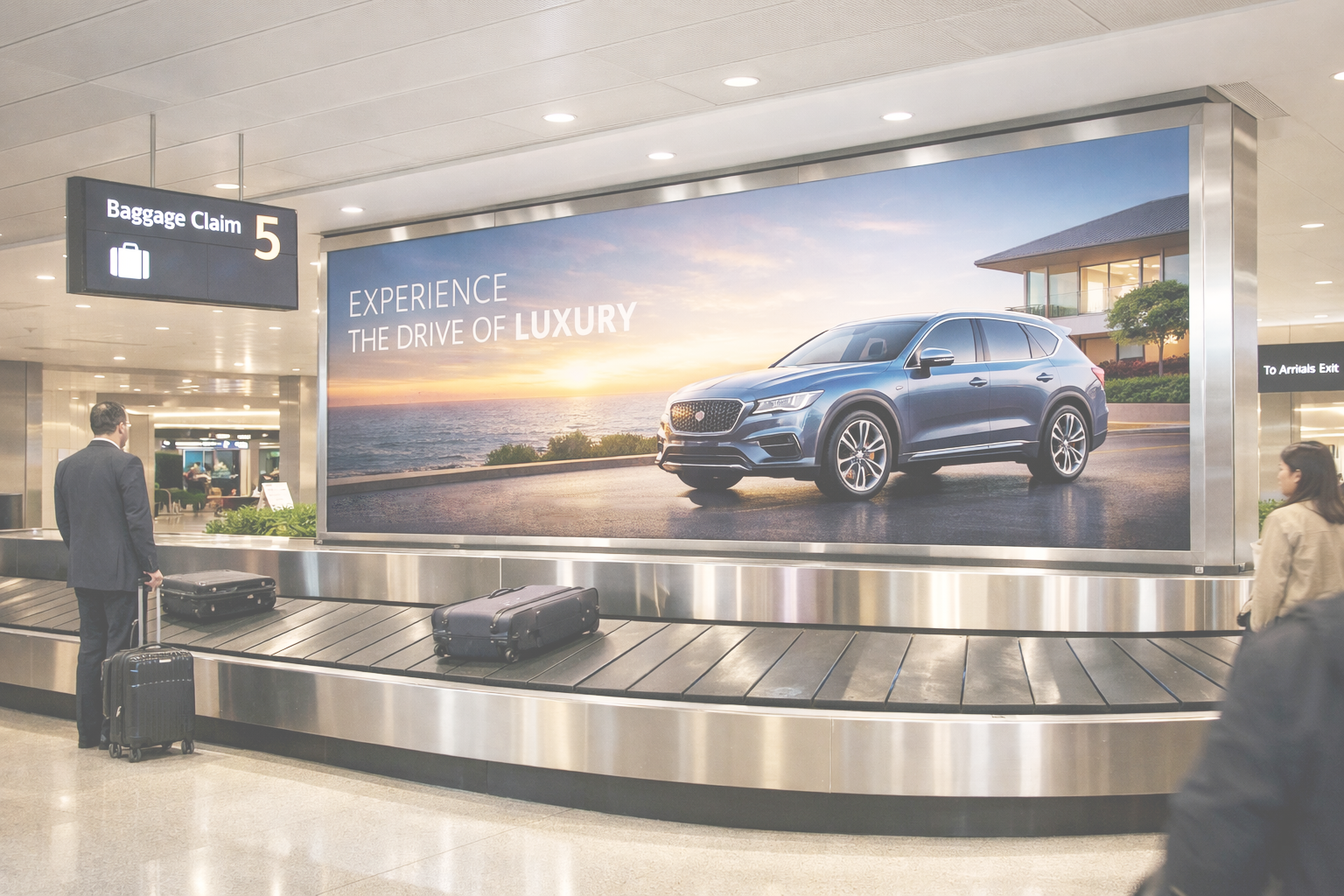
It’s Not Just Where You Advertise - It’s How Fast You Execute
We combine local insight with fast rollout to deliver results for you, now.
Talk to an ExpertAudience and Cultural Intelligence
Top 2 Languages:
- English: The dominant commercial language across GOI, used by Indian HNI travellers, international tourists, and the Goan professional audience. English creative is essential for premium and HNI categories.
- Konkani and Hindi: Konkani is the cultural identity language of Goa with strong resonance for the local audience and the Goan diaspora. Hindi is the operational language for the broader Indian domestic traveller. Mixed-language creative outperforms single-language placements for FMCG, telecom, and consumer finance categories.
Major Traveller Nationalities:
The dominant nationalities at GOI are Indian (the largest base, particularly from Mumbai, Delhi, Bengaluru, Pune, Hyderabad, and Ahmedabad), British, Russian (in recovery cycles), German, Israeli, and a growing East Asian leisure traveller flow. Gulf-based NRI traffic, particularly from the UAE, Oman, Kuwait, and Qatar, adds a high-yield segment year-round. Creative strategy must account for this multi-nationality blend rather than treating GOI as a purely domestic Indian airport.
Religion — Advertiser Intelligence:
- Hinduism (approx. 66%): The largest religious community in Goa and a significant portion of the inbound domestic Indian audience. Drives Diwali, Ganesh Chaturthi, and wedding-season spending cycles. Highly relevant for jewellery, premium F&B, banking, and family-anchored advertisers.
- Christianity (approx. 25%): A defining cultural identity of Goa with disproportionate commercial weight, particularly for the Goan Catholic diaspora. Drives Christmas, Easter, and Feast of St. Francis Xavier travel and gifting. Among the highest-yield religious segments in Goa for premium travel, jewellery, wine and spirits, and international real estate advertisers.
- Islam (approx. 8%): Smaller but commercially relevant community, with relevance for halal F&B, financial services, and Gulf NRI-aligned categories. Eid windows produce predictable retail and travel spikes.
Behavioral Insight:
The GOI audience makes discretionary decisions in a relaxed, high-receptivity mindset that does not exist at Indian metro airports. Departure travellers carry residual leisure spending intent, and arrival travellers carry confirmed leisure budgets ready to deploy. Trust signals, longevity cues, and aspirational lifestyle creative all perform consistently above functional or discount creative. The Goan local audience, by contrast, responds best to community trust, longevity, and Konkani-language reinforcement. Successful campaigns at GOI segment creative across these two distinct decision logics.
Outbound Wealth and Investment Intelligence
The outbound passenger at GOI carries a uniquely deep wealth profile because the airport intercepts both the Indian HNI leisure traveller and the Goan diaspora with EU passport access. This is not a transactional commuter base. It is a capital-deploying audience moving wealth into European real estate, Gulf and UK banking, North American residency, and global asset diversification. International real estate, residency, and wealth advertisers find few Indian airports more efficient for this audience profile.
Outbound Real Estate Investment:
GOI HNI travellers are highly active in Portuguese real estate (with Goan-origin buyers leveraging Portuguese citizenship eligibility), Dubai property, London residential, Australian residential particularly in Melbourne and Sydney, and emerging interest in Cyprus and Greece. Yield-led buyers favour Dubai and Lisbon. Status and education-driven buyers favour London and Sydney. Tax-efficient diversifiers focus on Portugal, Cyprus, and the UAE. International developers across these markets find GOI a highly efficient point-of-intercept for buyers who already have offshore intent and capital fluency.
Outbound Education Investment:
The United Kingdom, Australia, Canada, the United States, and Portugal are the dominant education destinations for the GOI HNI and diaspora audience. Goan families allocate significant multi-year budgets per child, and the Catholic-school feeder pipeline into UK, Canadian, and Australian universities is well established. International boarding schools, universities, and education consultancies treat GOI as a strategic intercept airport for both Indian HNI and diaspora-returning families.
Outbound Wealth Migration and Residency:
Portugal Golden Visa (and the Portuguese-passport pathway available to many Goans of Portuguese descent), UAE Golden Visa, Canadian and Australian skilled-migration and investor pathways, and Caribbean citizenship-by-investment programmes are the highest-priority targets for the GOI HNI audience. Cyprus and Greece residency programmes hold a smaller but consistent niche. Residency advisory firms and second-passport providers find the GOI audience disproportionately receptive, particularly during the Christmas to New Year window.
Strategic Implication for Advertisers:
International brands on both sides of the wealth corridor should treat GOI as a priority leisure and HNI buy. The audience is concentrated, the terminal is uncluttered relative to Mumbai and Delhi, and category exclusivity is highly achievable. Masscom Global activates campaigns simultaneously across both ends of the corridor, intercepting the same family on outbound flows from GOI and inbound flows in Lisbon, London, Dubai, or Sydney.
Airport Infrastructure and Premium Indicators
Terminals:
- Dabolim operates a single integrated passenger terminal handling both domestic and international traffic, with capacity expansion programmes ongoing alongside the new Manohar International Airport at Mopa serving North Goa. The two-airport system gives advertisers deeper coverage of the Goa state catchment.
- The terminal scale at GOI is mid-sized, with structured zones for premium and HNI passenger flow. Clutter is meaningfully lower than Indian metro airports, producing exceptional repeat-exposure efficiency for advertisers.
Premium Indicators:
- Lounge infrastructure: Multiple lounges including airline-operated and contract lounges servicing business class, premium credit card holders, and frequent-flyer audiences. Lounge dwell creates exceptional capture windows for banking, real estate, and luxury categories.
- Private aviation: Active private and chartered aviation movements particularly during the Christmas-New Year window, wedding season, and major event cycles. The HNI audience using these movements is among the deepest-pocket per-trip travellers in India.
- Luxury hospitality adjacency: International luxury hotel brands operate across Goa, including beachfront and heritage properties feeding directly into GOI premium passenger flow.
- Marina and superyacht ecosystem: Goa's growing marina and yachting infrastructure signals an accelerating luxury-leisure positioning relevant for watches, premium spirits, and international real estate.
Forward-Looking Signal:
Goa's two-airport system is reshaping the state's aviation map, with Dabolim continuing to anchor South Goa traffic and Mopa scaling North Goa flows. Combined with the marina expansion, the wedding-tourism boom, and the rise of premium long-stay digital nomad and second-home audiences, the structural trajectory is strongly upward. Advertising rates currently reflect today's volumes, not the forward trajectory. Masscom Global is advising clients to lock long-cycle placements at current rates before wedding-season demand and incoming international charter capacity intensify category competition.
Airline and Route Intelligence
Top Airlines:
IndiGo, Air India, Air India Express, Vistara (in transition), SpiceJet, Akasa Air, Emirates, Qatar Airways, Air Arabia, and selected European charter carriers operate the bulk of GOI traffic.
Key International Routes:
International operations connect Goa to Dubai, Sharjah, Doha, Kuwait, Muscat, and selected European charter destinations during peak winter season. The Gulf corridor delivers consistent year-round NRI volume, while the European charter network delivers concentrated high-spend tourism inflow during the November to March window.
Domestic Connectivity:
Mumbai, Delhi, Bengaluru, Hyderabad, Pune, Ahmedabad, Chennai, and Kolkata form the dominant domestic spine. Mumbai and Delhi routes deliver the highest HNI yield, while Bengaluru and Pune routes deliver the highest concentration of corporate offsite and weekend HNI traffic.
Wealth Corridor Signal:
The route map confirms GOI's identity as a leisure-anchored HNI corridor airport. The Mumbai, Delhi, and Bengaluru routes carry domestic HNI and corporate wealth. The Gulf routes carry NRI capital and family travel. The European charter routes carry deep-discretion international tourism spend. Advertisers can plan campaigns by route segment rather than treating GOI passengers as a single homogeneous audience.
Media Environment at the Airport
- The terminal is meaningfully less cluttered than Mumbai BOM or Delhi DEL, which gives standout placements through Masscom a far higher share of voice than equivalent inventory in Indian metro airports.
- Dwell time is structurally favourable. Leisure travellers arrive early, cluster around F&B and retail zones, and tend to engage with environmental brand presence in a more receptive mindset than business commuters at metro airports.
- The premium environment is reinforced by international hotel brand adjacency, charter-class passenger flow, and wedding and event traffic, which elevates brand association for advertisers in luxury, jewellery, banking, and international real estate categories.
- Masscom Global delivers structured access to GOI inventory with placement precision built around audience segment, route, and time-of-day, ensuring the right creative reaches the right passenger at the right point in their journey.
Strategic Advertising Fit
Best Fit:
- Luxury hospitality and resort brands intercepting the leisure traveller at the highest-receptivity moment of the journey.
- Premium spirits and wine brands targeting the festive, wedding, and event-led discretionary spending cycles.
- International real estate developers targeting Portugal, Dubai, London, and Australia property buyers from the Indian HNI and Goan diaspora base.
- Banking, wealth management, and NRI banking brands serving the Gulf-NRI corridor and the Indian HNI weekender flow.
- Jewellery and luxury watches capturing the wedding season, festive season, and HNI gifting cycles.
- Premium automotive intercepting the corporate offsite and HNI weekender audience.
- Residency, second-passport, and Golden Visa programmes servicing the Goan diaspora and Indian HNI demand.
- Premium fashion and lifestyle brands intercepting the leisure-mindset traveller at peak receptivity.
Brand Alignment at a Glance:
| Category | Fit |
|---|---|
| Luxury Hospitality | Exceptional |
| Premium Spirits and Wine | Exceptional |
| International Real Estate | Exceptional |
| Jewellery and Watches | Strong |
| Banking and NRI Wealth | Strong |
| Premium Automotive | Strong |
| Residency and Second-Passport | Strong |
| Premium Fashion and Lifestyle | Strong |
| International Education | Moderate |
| Mass-Market FMCG | Moderate |
| Mass-Market Discount Retail | Poor fit |
Who Should Not Advertise Here:
- Mass-market discount retail: The audience profile skews leisure HNI and discretionary, and discount creative dilutes premium category placements without converting the right segment.
- Domestic-only B2B industrial brands without leisure relevance: GOI is leisure-led, and pure industrial creative underperforms versus Mumbai BOM or Pune PNQ placements.
- Mid-tier mass automotive without HNI positioning: Automotive at GOI works at the premium and luxury end. Mass-market auto creative converts better at Tier 1 metro airports.
Event and Seasonality Analysis
- Event Strength: High
- Seasonality Strength: High
- Traffic Pattern: Seasonal with strong event-driven HNI bursts
Strategic Implication:
Advertisers should weight budgets toward the Christmas-New Year window, the November to February peak tourism season, the Carnival window, and the destination wedding season. A continuous base layer through the year captures the steady Gulf NRI flow and the corporate offsite cycle. Masscom Global structures campaigns around this rhythm, pairing always-on premium placements with seasonal heavy-up bursts during HNI peaks, which delivers the highest ROI configuration available at this airport.

Poor Placement and Delays Affect Airport Campaigns
We help you move faster, access better inventory, and get it right now.
Talk to an ExpertFinal Strategic Verdict
Dabolim is one of the most efficient leisure-HNI airports in South Asia. The volume is significant, but the audience composition is what makes it strategically unique, pairing Indian HNI weekenders, Gulf NRI returnees, European charter tourists, and the Goan diaspora in a single terminal that intercepts capital-deploying and discretionary-spending passengers at the highest receptivity point of their journey. Luxury hospitality, premium spirits, international real estate, jewellery, banking, and residency programmes will see disproportionately high efficiency at GOI, particularly when campaigns are sequenced across the Christmas-New Year, Carnival, and wedding-season peaks. Partnering with Masscom Global is the correct decision because the airport rewards precision, and precision here requires intelligence that goes beyond inventory access.
About Masscom Global
Masscom Global is a premium international airport advertising and media buying agency operating across 140 countries. With deep expertise in airport OOH, premium publications, and high-net-worth audience targeting, Masscom helps brands reach the world's most valuable travellers at the moments that matter most. For advertising packages, media rates, and campaign planning at Dabolim Airport (Goa International Airport) and airports across the globe, contact Masscom Global today.
Frequently Asked Questions
How much does airport advertising cost at Dabolim Airport (Goa)? Advertising rates at GOI vary by format, position, campaign duration, and seasonal demand, with significant uplift during the Christmas-New Year, Carnival, and wedding-season windows. Departure zones, lounges, arrival corridors, and digital networks each carry distinct rate cards. For current pricing, format availability, and category exclusivity options, contact Masscom Global directly.
Who are the passengers at Dabolim Airport? GOI serves a high-discretion audience of Indian HNI leisure travellers, international charter tourists, Gulf-based NRI families, Goan diaspora returnees, corporate offsite delegations, and destination wedding parties. The audience punches well above the airport's volume in spend per passenger and discretionary receptivity.
Is Dabolim Airport good for luxury brand advertising? Yes, exceptionally so. Premium spirits, jewellery, watches, fashion, international real estate, luxury hospitality, and wealth management brands perform very well due to the leisure-mindset HNI base and the wedding and event traffic. Few Indian airports match GOI for luxury fit.
What is the best airport in India to reach HNI leisure audiences? Goa GOI delivers the highest concentration of HNI leisure travellers in a single Indian airport, with Mumbai BOM as the most powerful complementary buy for nationwide HNI coverage. Pairing GOI and BOM through Masscom delivers the most complete Indian HNI leisure-corridor reach.
What is the best time to advertise at Dabolim Airport? The highest-yield windows are December and January (Christmas, New Year, and music festival cycles), February to early March (Carnival), the wider November to February tourism peak, and the destination wedding season. Easter and the May summer school-holiday peak provide secondary high-yield windows.
Can international real estate developers advertise at Dabolim Airport? Absolutely. The Indian HNI and Goan diaspora audience routing through GOI is actively buying property in Portugal, Dubai, London, Australia, and emerging European markets. GOI is among the most efficient airports in India to intercept this buyer profile at the point of outbound travel, particularly during the Christmas-New Year diaspora-return cycle.
Which brands should not advertise at Dabolim Airport? Mass-market discount retail, domestic-only B2B industrial brands without leisure relevance, and mid-tier mass automotive without HNI positioning are poor fits. The audience is leisure HNI, NRI, and high-discretion tourist, and creative needs to align with that profile rather than chase volume.
How does Masscom Global help brands advertise at Dabolim Airport? Masscom Global delivers airport intelligence, inventory access, creative strategy aligned to language and cultural codes, and full campaign execution at GOI. Our expertise across 140 countries means we activate the same brand consistently on both sides of the wealth corridor, including outbound markets like Lisbon, London, Dubai, and Sydney.