

Airport at a Glance
| Field | Detail |
|---|---|
| Airport | Aeroporto Internacional Afonso Pena |
| IATA Code | CWB |
| Country | Brazil |
| City | Curitiba, Paraná (located in São José dos Pinhais) |
| Annual Passengers | 3.1 million international passengers |
| Primary Audience | Automotive manufacturing executives (Renault, Volkswagen, Volvo, New Holland), Paraná agribusiness and Port of Paranaguá commodity trade HNWI, Technology and industrial sector professionals |
| Peak Advertising Season | Year-round automotive and agribusiness B2B base; December and July domestic leisure peaks |
| Audience Tier | Tier 1 (High HNWI; Paraná's automotive and industrial capital with agribusiness commodity wealth, European heritage commercial conservatism, and globally cited urban innovation model) |
| Best Fit Categories | Automotive sector enterprise B2B, Agribusiness financial services and commodity trading, Petrochemical and energy sector B2B, Premium consumer targeting Paraná HNWI |
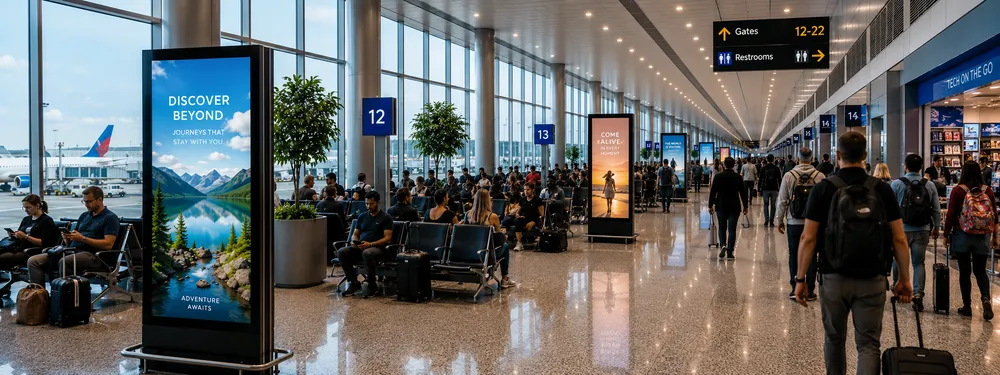
Curitiba's Aeroporto Internacional Afonso Pena (CWB) is the commercial gateway to one of South America's most commercially complex and internationally recognized provincial capitals, a city whose identity as a global reference for urban planning innovation, ecological sustainability, and efficient public transportation coexists with the commercial reality of being the operational headquarters of Latin America's most significant automotive manufacturing concentration. Renault's Brazilian operational centre in São José dos Pinhais, Volkswagen's major truck and bus manufacturing facility, Volvo's only commercial vehicle manufacturing plant in the Americas, and New Holland's agricultural machinery operations together create within the CWB metropolitan area an automotive and industrial machinery B2B executive community of extraordinary international calibration — Swedish, French, German, and American corporate culture simultaneously present in a single provincial Brazilian airport catchment. At the same time, Paraná state's position as one of Brazil's three largest soybean producing states, combined with the Port of Paranaguá's role as one of South America's most important commodity export facilities, creates an agricultural HNWI and port commerce executive dimension that gives CWB a second commercially substantive audience whose commodity market financial sophistication and international trade connectivity rival the industrial automotive layer in commercial quality while complementing it in sectoral specificity.
What distinguishes CWB commercially from every other provincial Brazilian airport in the Masscom Global portfolio is the specific combination of automotive multinational corporate culture, agricultural commodity HNWI wealth, and the distinctive European-heritage commercial conservatism of Paraná's Polish, Ukrainian, Italian, and German immigrant descendant communities, all operating within a city whose internationally recognized ecological innovation model and pragmatic problem-solving urban character create a commercial culture that is simultaneously European in its quality standards, North American in its corporate efficiency orientation, and uniquely Curitibano in its ecological and civic pride. For advertisers targeting the intersection of automotive B2B enterprise, commodity agricultural HNWI wealth, European heritage conservative quality purchasing behavior, and the specific commercial dynamics of a provincial Brazilian capital whose urban model is studied in universities from MIT to Tokyo, CWB offers a commercial advertising environment whose sectoral depth and international calibration rival the most commercially sophisticated Brazilian provincial airport in any sector-specific assessment.


Advertising Value Snapshot
- Passenger scale: 3.1 million international passengers, with the airport serving not only Greater Curitiba but the broader Paraná automotive, agribusiness, and industrial corridor whose executive and professional community uses CWB as their primary international air access point
- Traveller type: Renault, Volkswagen, Volvo, and New Holland automotive executives and international engineering professionals, Paraná agribusiness HNWI from the soybean, wheat, and coffee production interior, Port of Paranaguá commodity trade and logistics executives, REPAR Araucária petrochemical refinery professionals, technology and IT sector professionals from the UTFPR and Positivo ecosystem, European-heritage commercial dynasty families of the Curitiba metropolitan area
- Airport classification: Tier 1 with High HNWI concentration; Paraná's automotive and industrial capital with internationally calibrated automotive corporate B2B audience, agribusiness commodity HNWI, European heritage commercial conservatism, and globally recognized ecological urban innovation identity
- Commercial positioning: Gateway to Latin America's most concentrated automotive manufacturing cluster, one of South America's most important agricultural commodity export ports, Volvo's sole Americas manufacturing facility, and one of the world's most internationally studied models of ecological urban innovation
- Wealth corridor signal: Sits at the intersection of the Paraná automotive manufacturing multinational corporate corridor, the soybean and grain commodity HNWI wealth of the Paraná interior, the Port of Paranaguá's South American commodity export significance, and the European heritage conservative commercial culture whose quality-first brand values create above-average brand loyalty for authentically credentialed premium categories
- Advertising opportunity: Masscom Global provides brands with access to a commercially multi-dimensional High HNWI industrial and agribusiness audience whose international automotive corporate calibration, commodity market HNWI financial sophistication, and European heritage brand conservatism together create one of Brazil's most commercially substantive and internationally calibrated provincial airport advertising environments
Airport Advertising is Complex to Get Right
We help you execute faster, with proven results and local insight most planners lack starting now.
Talk to an ExpertCatchment Area and Economic Drivers
Curitiba Airport's commercial catchment spans the Curitiba Metropolitan Region (RMC), one of Brazil's most industrially concentrated urban agglomerations, and extends eastward to the Port of Paranaguá and westward through the Paraná agricultural interior to encompass the commodity production and export geography that makes Paraná one of South America's most economically productive agricultural states. The catchment's commercial character reflects Paraná's specific economic configuration: a diversified manufacturing economy anchored by automotive and industrial machinery production, supplemented by one of Brazil's most productive agricultural economies, a significant petrochemical refining sector, and an increasingly important technology and innovation services industry.
Top 10 Cities and Areas within 150 km — Marketer Intelligence:
- Curitiba Metropolitan Core (Paraná, local hub): Paraná's capital and South America's eighth-largest metropolitan economy, whose commercial landscape encompasses financial and banking services, technology and IT, retail and commerce, legal and professional services, and the urban planning and sustainability innovation industry whose international reputation generates a continuous flow of academic, government, and private sector visitors studying Curitiba's urban transit, park, and ecological systems. The Curitiba HNWI and professional class, including the European-heritage commercial dynasty families, the technology entrepreneurs of the Curitiba innovation ecosystem, and the automotive sector management community, constitutes the airport's primary domestic commercial audience.
- São José dos Pinhais (approx. 15 km southeast, CWB airport location): The municipality that hosts both Curitiba's international airport and the most significant automotive manufacturing investments in the southern Brazil industrial corridor. The Renault Brasil operations centre, the Volkswagen Caminhões e Ônibus plant, and the extended automotive supply chain ecosystem concentrated in São José dos Pinhais create a commercially specific automotive B2B executive and engineering professional audience at CWB whose international corporate calibration — French, German, Swedish, and American corporate culture simultaneously present — gives the airport a multinational enterprise brand sophistication unique among Brazilian provincial airports.
- Araucária (approx. 25 km southwest): Home to the Refinaria Presidente Getúlio Vargas (REPAR), one of Brazil's five most important petroleum refineries and a strategically critical PETROBRAS facility whose refining capacity makes Araucária one of the most industrially significant municipalities in southern Brazil. The REPAR management, engineering, and technical professional community generates a commercially specific B2B energy sector audience at CWB with demand for industrial technology, energy services, and corporate professional products brands.
- Paranaguá (approx. 90 km east): Home to the Port of Paranaguá, one of South America's busiest and most commercially important commodity export ports, through which Brazil exports massive volumes of soybean, corn, wheat, and sugar to Asian, European, and global markets. Paranaguá's port operations executives, commodity logistics professionals, and shipping company management represent a commercially distinct maritime trade B2B audience at CWB with demand for port technology, trade finance, maritime logistics, and commodity trading professional services brands.
- Ponta Grossa (approx. 120 km west): One of Brazil's most important grain processing and commodity origination centers, with major grain elevator operations, commodity trading companies, and agro-industrial processing facilities representing Cargill, ADM, Bunge, Coamo, and other major global grain companies. Ponta Grossa's agribusiness commercial and management class represents a commercially significant secondary agribusiness B2B audience for commodity financial services, agricultural technology, and trade finance brands accessible through CWB.
- Campo Largo and Western Metropolitan Corridor (approx. 25 km west): An industrial and ceramic manufacturing municipality with significant industrial activity in the Curitiba western metropolitan corridor. Campo Largo's industrial class and the broader western metropolitan corridor's manufacturing and commercial operators represent a secondary B2B manufacturing audience for industrial technology and professional services brands.
- Colombo (approx. 15 km north): A significant northern Curitiba metropolitan municipality with industrial and residential development whose commercial and manufacturing class represents a secondary domestic consumer and B2B audience for financial services and professional products brands with Curitiba northern metropolitan market coverage.
- São Mateus do Sul (approx. 100 km south): Home to major Petrobras shale oil operations and one of the world's few commercially operational oil shale mining and processing facilities. The Petrobras Industrialization of Irati Shale (SIX) project creates a specific energy sector B2B professional audience for oil shale technology, industrial services, and energy professional products brands.
- Lapa and Central-Southern Paraná (approx. 70 km south): A historic Paraná interior town and the beginning of the Paraná agricultural interior's soybean and grain production geography whose fazendeiro and agribusiness landowner class travels through CWB for financial and commercial engagements in the capital and internationally.
- Foz do Iguaçu (approx. 640 km west, extended catchment): While far beyond the 150 km geographic radius, Foz do Iguaçu's status as the host of Iguaçu Falls — one of the New Seven Natural Wonders of the World — and the gateway to one of the world's most visited natural heritage tourism destinations generates international premium tourism flows through CWB as a connecting hub. International visitors combining Iguaçu with São Paulo or Rio de Janeiro frequently transit CWB, adding a globally sourced premium natural heritage tourism audience whose conservation and eco-tourism values align with Curitiba's own ecological city brand identity.
NRI and Diaspora Intelligence: Curitiba and Paraná maintain commercially significant connections with Poland, Ukraine, Italy, and Germany through the ancestral heritage networks of Brazil's most diverse European immigrant communities. The Polish-Brazilian community, one of the world's largest outside Poland itself, creates specific demand for Polish legal, cultural, and European Union residency advisory services. Ukrainian-descended Paraná families maintain the largest Ukrainian-Brazilian community in the country, with growing interest in Ukrainian heritage cultural programs and European residency pathways following the geopolitical disruptions that have intensified diaspora community solidarity. Italian-heritage families in the Curitiba region parallel the Rio Grande do Sul pattern in their pursuit of Italian citizenship by descent, creating a commercially distinct legal and real estate advisory demand similar to POA's Italian heritage market. German-descendant business and professional families maintain commercial connections with Germany through the automotive sector's Volkswagen and Mercedes-Benz relationships.
Economic Importance: Paraná's economy is one of Brazil's most industrially diversified and technologically sophisticated provincial economies, combining one of the country's three most productive soybean and grain agricultural sectors with a world-class automotive manufacturing concentration, a significant petrochemical refining base, the most important grain commodity export port in South America, and a growing technology and innovation economy whose urban planning and sustainability innovation reputation generates international institutional and commercial engagement. The automotive sector's international corporate presence — Renault, Volkswagen, Volvo, and New Holland together employing tens of thousands and maintaining international supply chain relationships with European, Asian, and North American partners — creates a professionally calibrated, internationally mobile executive class at CWB whose brand expectations and financial services demand reflect global corporate culture standards. For advertisers, this economy delivers a commercial signal of extraordinary sectoral specificity: automotive multinational corporate wealth, commodity agricultural HNWI, energy sector industrial authority, and port commerce trade professionalism within a single provincial airport whose European heritage commercial conservatism creates above-average brand quality discrimination relative to Brazilian provincial averages.
Business and Industrial Ecosystem
- Automotive and commercial vehicle manufacturing cluster: Curitiba and São José dos Pinhais constitute Latin America's most significant single automotive manufacturing geographic concentration outside São Paulo's ABC region. Renault Brasil's operations centre, Volkswagen Caminhões e Ônibus's major manufacturing complex, Volvo's sole Americas commercial vehicle manufacturing plant, and New Holland's agricultural machinery production create a B2B executive community whose French, German, Swedish, and American corporate culture calibration simultaneously makes CWB one of the most internationally diverse provincial airport B2B audiences in Brazil. The hundreds of Tier 1 and Tier 2 automotive suppliers concentrated in the metropolitan industrial parks add further automotive professional depth.
- Port of Paranaguá commodity trade and maritime logistics: The Port of Paranaguá's position as South America's most important commodity export facility for soybeans, corn, wheat, and other agricultural products creates a maritime logistics, commodity trading, and port operations professional community whose international trade relationships and commodity market sophistication generate specific B2B demand for trade finance, maritime technology, port logistics services, and commodity risk management brands at CWB.
- REPAR Araucária petrochemical and Petrobras SIX oil shale: The REPAR refinery and the SIX oil shale project together create a significant energy sector B2B professional community at CWB with specific demand for petroleum refining technology, industrial safety, energy services, and corporate professional products brands whose energy sector relevance to the southern Brazil energy industrial corridor is specifically concentrated at Paraná's gateway airport.
- Technology and innovation sector (UTFPR and Positivo ecosystem): Curitiba's Federal Technological University (UTFPR), one of Brazil's most respected technical universities, and the commercial technology ecosystem including Positivo Tecnologia, Siemens' technology operations, and a growing startup community create a technology and engineering professional audience at CWB with specific demand for enterprise technology, digital services, and innovation economy professional products brands.
Passenger Intent — Business Segment: The business traveler at CWB is primarily an automotive sector executive or engineer at Renault, Volkswagen, Volvo, or New Holland, a Port of Paranaguá commodity trade or maritime logistics professional, a REPAR or Petrobras energy sector manager, or a Curitiba commercial and industrial professional whose operational engagements connect the Paraná industrial economy to São Paulo, Brasília, European corporate headquarters, and international commodity markets. The automotive multinational executive tier carries the most internationally calibrated brand sophistication, with French, German, Swedish, and American corporate culture simultaneously creating a linguistically and culturally diverse but commercially premium B2B advertising environment whose quality expectations reflect global automotive industry standards.
Strategic Insight: CWB's business audience is commercially valuable for the extraordinary concentration of four globally significant multinational automotive and machinery brands in a single regional airport catchment, creating at CWB what is functionally the most internationally diverse automotive multinational executive audience of any Brazilian provincial airport. The simultaneous presence of French (Renault), German (Volkswagen), Swedish (Volvo), and American (New Holland/CNH) corporate executive communities at a single provincial airport creates brand advertising opportunities that cut across corporate cultural boundaries in ways that no single-brand or single-nationality industrial hub can replicate.
Tourism and Premium Travel Drivers
- Curitiba's Ecological Parks and Urban Innovation Tourism: Curitiba's globally recognized ecological park system — including the Botanical Garden, Tanguá Park, Barigui Park, and over thirty additional green spaces — and the city's internationally cited Bus Rapid Transit system create a specific urban innovation and sustainability tourism audience of government officials, urban planners, architects, and academic researchers who visit Curitiba specifically to study its ecological urban model. This institutional and academic tourism audience adds a globally diverse, intellectually sophisticated audience dimension to CWB's dominant industrial B2B profile.
- Foz do Iguaçu Natural Wonder Tourism Circuit: Iguaçu Falls, one of the New Seven Natural Wonders of the World and the most visited natural attraction in South America, generates significant premium international tourism that routes through CWB for Paraná state combinations with the capital city. International visitors combining Iguaçu with Curitiba's urban innovation heritage transit CWB, creating a secondary premium natural heritage tourism audience whose global brand sophistication and above-average income levels reflect the premium eco-tourism profile of world-wonder destination travelers.
- Serra Gaúcha and Gramado Day-Trip Circuit (shared with Porto Alegre): Curitiba's geographic proximity to the Serra Gaúcha wine region and Gramado mountain resort creates a premium domestic leisure tourism overlap with the Porto Alegre tourism circuit, with some CWB-based premium leisure travelers accessing Paraná's own mountain tourism circuit in the Campos Gerais and rural Paraná destinations.
- Paranaguá and the Paraná Coast Premium Eco-Tourism: The Paraná coast's extraordinary Atlantic Forest and coastal island eco-tourism circuit, including the ilha do Mel (Honey Island), the Guaraqueçaba environmental protection area, and the Lagamar ecological complex, attracts a premium nature and eco-tourism audience from Curitiba and southern Brazil whose conservation values and boutique coastal leisure spending create a secondary premium eco-tourism audience at CWB.
Passenger Intent — Tourism Segment: The tourism audience at CWB is dominated by two commercially distinct profiles. The urban innovation and sustainability academic or government tourist, visiting Curitiba specifically to study its ecological urban planning model, carries an intellectually sophisticated, institutionally connected, and globally calibrated professional audience with above-average engagement for technology, sustainability, and urban innovation brand categories. The Iguaçu Falls international visitor transiting CWB is an ultra-premium natural wonder tourist whose commitment to a destination ranked among the world's greatest natural wonders confirms HNWI leisure orientation and above-average eco-luxury brand receptivity.
Travel Patterns and Seasonality
Peak seasons:
- Year-Round Automotive and Industrial B2B Base: The automotive manufacturing sector's continuous production calendar, the Port of Paranaguá's year-round commodity export operations, and the petrochemical refinery's perpetual operational rhythm create a sustained year-round B2B executive and professional travel base at CWB whose commercial quality is maintained across all twelve months by the global corporate operational demands of the Paraná industrial complex.
- December and January (Summer Holiday Peak): Brazil's summer holiday season generates CWB's highest domestic leisure passenger concentration, as Curitiba's professional and HNWI class departs for coastal destinations, Gramado, and international holidays during the Brazilian summer.
- June and July (Winter and Cold Season Appeal): Curitiba's cold southern winter, whose temperatures can approach near-zero degrees Celsius — highly unusual for Brazil — creates a secondary domestic tourism inflow as São Paulo and northeastern Brazilian HNWI travel to Curitiba to experience authentic cold weather in a safe, modern, and culturally rich environment. The winter school holiday recess in July supplements this cold-weather curiosity leisure peak.
- March to May (Paraná Agricultural Soybean Harvest Season): The Paraná soybean harvest creates above-baseline agribusiness HNWI commercial activity at CWB during the first-quarter harvest management and commodity trading period.
Event-Driven Movement:
- Renault, Volkswagen, Volvo, and New Holland Corporate Event Calendar (Year-Round): The automotive manufacturing sector's corporate event calendar generates continuous B2B executive audience concentration spikes at CWB, with supplier conferences, model launches, engineering reviews, board visits, and production milestone celebrations creating predictable above-baseline automotive executive audience windows throughout the year.
- Port of Paranaguá Commodity Export Peak Seasons (March to June and September to December): The Brazilian agricultural calendar's harvest and export seasons create concentrated port commerce and commodity trading B2B audience intensity at CWB when Paranaguá handles its highest soybean and grain export volumes and the logistics, shipping, and commodity trading professional community is most operationally active.
- Curitiba Urban Innovation Conference and Academic Tourism (Year-Round): The global academic and government institutional interest in Curitiba's urban planning model generates a year-round flow of government delegations, urban planning professionals, sustainability academics, and international NGO and development organization representatives through CWB whose intellectual sophistication and institutional authority create a commercially distinct audience for public sector technology, sustainability, and innovation economy brand categories.
- Christmas and New Year (December to January): CWB's summer holiday domestic leisure departure peak, combining Brazilian family travel to coastal destinations and international holidays with the automotive sector's year-end corporate travel, for the year's highest combined domestic and international passenger concentration.
- Festa das Nações (Curitiba, October): Curitiba's annual nations festival, celebrating the extraordinary European and Asian immigrant heritage diversity of Paraná's founding communities through cultural performances, traditional food, and folk art exhibitions from Polish, Ukrainian, Italian, German, Japanese, and other immigrant communities, creates a culturally engaged domestic and regional tourism peak that celebrates the European heritage identity most commercially significant for premium food, artisan craft, and heritage lifestyle brand categories at CWB.
It’s Not Just Where You Advertise - It’s How Fast You Execute
We combine local insight with fast rollout to deliver results for you, now.
Talk to an ExpertAudience and Cultural Intelligence
Top 2 Languages:
- Portuguese: The primary language of CWB's entire commercial audience, encompassing the Curitibano Portuguese whose efficiency-oriented, pragmatic communication register reflects the city's urban planning and civic problem-solving identity in ways that differ from both the Gaúcho conservatism of Porto Alegre and the corporate cosmopolitanism of São Paulo. Curitibano Portuguese carries a cultural pride in urban innovation and ecological consciousness whose commercial brand values of efficiency, sustainability, and quality reward brand messaging that demonstrates genuine environmental and urban responsibility credentials rather than generic lifestyle aspiration.
- English and European Languages: The working language of CWB's automotive multinational executive class, whose daily professional environment spans French (Renault), German (Volkswagen), Swedish (Volvo), and English (New Holland/CNH) corporate communication demands. This creates at CWB one of Brazil's most linguistically diverse automotive B2B executive communities, whose multilingual professional calibration makes English the unifying commercial language for cross-corporate-culture communication and the primary language for international brand messaging directed at this specific audience.
Major Traveller Nationalities: CWB's international passenger profile is defined by the specific automotive multinational and commodity trade relationships of the Paraná industrial economy. Brazilian nationals represent the overwhelming majority. French citizens form the largest European nationality through Renault Brasil's significant French expatriate executive community and the operational travel between the Curitiba facilities and Renault's Paris and global headquarters. German nationals represent the second European segment through Volkswagen's Curitiba operations and the broader German corporate community in Paraná. Swedish nationals, present specifically through Volvo's Curitiba manufacturing operations — whose commercial vehicle production in Brazil maintains a sustained operational relationship with Volvo's Gothenburg headquarters — create a Scandinavian corporate presence at CWB that is unique among Brazilian provincial airports. Argentine and Uruguayan regional commercial and agricultural travelers complete the primary international composition through the Mercosur corridor's agricultural commodity and industrial trade relationships.
Religion — Advertiser Intelligence:
- Roman Catholicism (approx. 56 to 62%): Curitiba's Catholic tradition encompasses both the Italian and Portuguese heritage Catholicism of the colonial founding communities and the Greek Catholic (Byzantine rite) tradition of the Ukrainian community, whose Church of Saint John the Baptist in Curitiba is one of the most architecturally extraordinary representations of Ukrainian religious heritage in the Americas. Christmas, Semana Santa, and the Feast of Our Lady of Aparecida generate faith-aligned domestic travel peaks at CWB whose Catholic cultural character rewards consumer, family lifestyle, and heritage brand campaign placements during these windows.
- Lutheran and Protestant traditions (approx. 16 to 20%): The German immigrant heritage communities of the Curitiba region maintain a significant Lutheran tradition that parallels the Rio Grande do Sul pattern but with greater urban concentration in Curitiba's metropolitan professional class. The Lutheran heritage's commercial cultural values — quality consciousness, community solidarity, and deliberate decision-making — supplement the Catholic majority's faith-aligned travel behavior with a distinctively European commercial conservatism that shapes the broader Curitibano HNWI brand engagement framework.
- Evangelical and Pentecostal Christianity (approx. 18 to 22%): Curitiba's Evangelical community, while smaller proportionally than Northeast Brazil's, has significant presence in the city's working and commercial middle class and contributes to the broader conservative social and consumption values that characterize the Curitibano commercial culture's preference for quality, reliability, and relationship-based brand loyalty.
Behavioral Insight: The Curitibano commercial and HNWI audience carries a behavioral profile shaped by the specific urban cultural identity of Brazil's most internationally celebrated model city, whose civic pride in its ecological parks, urban planning innovation, and European heritage creates a commercial culture of unusual efficiency, quality consciousness, and institutional responsibility orientation. The Curitibano's brand engagement is defined by pragmatic quality evaluation rather than aspirational status pursuit — a commercial behavioral pattern reinforced simultaneously by the European heritage conservatism of the immigrant community descendant families, the automotive corporate culture's global quality management standards, and the city's own reputation as a problem-solving urban innovator whose solutions are evaluated by their practical effectiveness rather than their symbolic aspiration. For advertisers, this creates a commercial environment where genuine quality credentials, demonstrated sustainability commitment, and authentic professional expertise generate above-average commercial resonance, while promotional urgency and status-aspirational messaging encounter the same conservative brand skepticism documented at Porto Alegre's European-heritage HNWI audience but expressed through the more urban, innovation-oriented filter of Brazil's most planned and most celebrated eco-city.
Outbound Wealth and Investment Intelligence
Curitiba Airport's outbound wealth intelligence reflects the specific international investment patterns of Paraná's HNWI class, whose automotive sector international corporate connections, European heritage community networks, and agricultural commodity export relationships generate outbound investment activity directed toward Europe, Uruguay, and the United States in patterns that reflect the specific commercial geography of Paraná's international economic relationships.
Outbound Real Estate Investment: Paraná's HNWI commercial class directs outbound real estate investment toward Uruguay, Italy, Germany, and the United States in patterns shaped by both the European heritage community connections and the Southern Cone geographic proximity that also characterizes the Rio Grande do Sul HNWI market. Uruguay, particularly Punta del Este, is the most geographically accessible and culturally familiar international real estate market for the Curitiba HNWI class, whose Southern Cone proximity and Mercosur commercial familiarity make Montevideo and the Uruguayan coast the most commercially natural first international real estate destination. Italy attracts the Italian-heritage communities of the Curitiba region through the same cittadinanza italiana pathway that drives RS real estate investment, creating specific demand for Italian property legal advisory and Italian real estate brand categories. Germany's Stuttgart and Munich regions attract the German-heritage business families and Volkswagen-connected executives whose professional European engagement creates genuine lifestyle motivation for German real estate acquisition. Miami and South Florida complete the Paraná HNWI outbound real estate portfolio as the USD-denominated asset security market consistent with the national Brazilian pattern.
Outbound Education Investment: Paraná HNWI families invest in international education with an engineering-heavy orientation that reflects the state's automotive, agricultural machinery, and industrial technology economic identity. German and Swedish technical universities — particularly Germany's TU Munich, RWTH Aachen, and Chalmers University in Sweden — attract Paraná engineering families whose Volkswagen and Volvo sector connections create specific engineering credential motivation for European technical education. Italian universities in the Veneto and Lombardy regions attract Italian-heritage families whose cittadinanza pursuit creates natural education investment pathways alongside citizenship documentation. US engineering programs at Georgia Tech, Purdue, and MIT attract the most internationally ambitious segment of Paraná's technical professional class. The UTFPR's own international partnerships direct postgraduate education investment toward specific European and North American partner institutions whose engineering and technology program excellence aligns with the Paraná industrial economy's professional development requirements.
Outbound Wealth Migration and Residency: The Paraná HNWI class shows active demand for European residency pathways concentrated in Italian, German, and Polish citizenship by descent channels. Italian citizenship by descent (jure sanguinis) generates the same commercially concentrated legal advisory and Italian real estate demand as at Porto Alegre, with Curitiba's Italian-heritage community adding a significant second market for Italian legal services and property brands. Polish citizenship by descent (Karta Polaka) attracts the Polish-Brazilian community's growing interest in European Union mobility access and Polish cultural reconnection, creating a specific legal and Polish real estate advisory market at CWB that is unique among Brazilian provincial airports. The Ukrainian-descent community's European Union access aspiration, amplified by the geopolitical developments of recent years, creates growing demand for Ukrainian-heritage legal advisory and European alternative residency programmes. German citizenship by descent and naturalisation pathways attract the German-heritage community's European mobility aspiration.
Strategic Implication for Advertisers: The Italian, Polish, and German citizenship by descent markets' combined concentration in the Curitiba European-heritage HNWI community creates a tri-heritage European legal advisory and real estate advertising opportunity at CWB that is unparalleled in the Brazilian airport market. No other Brazilian provincial airport serves a Polish-Ukrainian-Italian-German heritage HNWI community of this commercial depth simultaneously, giving European heritage legal services, Italian and Polish real estate developers, and EU residency advisory brands a specifically concentrated and motivated buyer audience at CWB accessible through targeted airport campaign placement.
Airport Infrastructure and Premium Indicators
Terminals:
- Aeroporto Internacional Afonso Pena operates as a modern terminal facility located in São José dos Pinhais, approximately 15 km southeast of Curitiba's city centre, placing it in direct proximity to the Renault and Volkswagen manufacturing facilities whose executive and engineering professional community constitutes the airport's largest single B2B audience segment. This geographic co-location of the airport and the region's most significant automotive manufacturing operations creates a structural commercial efficiency for the automotive B2B audience whose operational travel to and from the manufacturing facilities is directly facilitated by the airport's São José dos Pinhais location.
- The airport's infrastructure reflects the commercial ambitions of Brazil's most planned and most internationally recognized model provincial capital, whose urban reputation for efficiency, design quality, and ecological innovation creates expectations for airport facility quality that the Afonso Pena terminal increasingly meets through modernisation and operational improvement programmes.
Premium Indicators:
- Volvo's sole commercial vehicle manufacturing plant in the Americas, operating in Curitiba, provides CWB with a Scandinavian automotive corporate institutional presence whose Swedish corporate culture's quality, sustainability, and engineering excellence values create a specific brand environment at the airport that reinforces Curitiba's own ecological and innovation city identity in commercially compelling ways for premium automotive, engineering, and sustainable technology brand categories.
- The Port of Paranaguá's status as one of South America's most important agricultural commodity export ports, through which hundreds of millions of tonnes of soybeans, corn, and wheat are shipped annually to global markets, provides CWB with a commodity trade institutional authority indicator whose maritime and agricultural commercial significance is regionally unmatched and creates specific commercial opportunities for trade finance, maritime technology, and commodity services brands.
- Curitiba's repeated recognition in international urban planning literature, academic research, and government policy circles as the world's most cited model of ecological urban innovation provides the city with a global institutional prestige indicator whose sustainability and urban innovation brand authority is unique among provincial Brazilian capitals and creates specific contextual resonance for sustainability, green technology, and urban innovation brand categories at CWB.
- The concentration of four globally significant multinational automotive and machinery companies (Renault, Volkswagen, Volvo, New Holland) within the immediate CWB catchment provides the airport with an automotive multinational corporate institutional endorsement of the Paraná industrial economy's global manufacturing quality standards that rivals São Paulo's ABC automotive corridor in sectoral brand authority if not in absolute production scale.
Forward-Looking Signal: Curitiba and Paraná are positioned for sustained commercial growth driven by three intersecting trends. The global automotive industry's electric vehicle transition is directly impacting the Paraná automotive cluster, with Renault and Volkswagen both investing in EV model integration and production capability at their Curitiba metropolitan facilities, creating a growing EV technology, battery supply chain, and sustainable mobility brand audience at CWB whose internationally calibrated commercial sophistication reflects the global corporate EV transition agenda. The Port of Paranaguá's strategic position as South America's most important soybean export facility aligns commercially with the global protein demand growth trajectory that is sustaining above-average commodity prices and Paraná agribusiness HNWI wealth accumulation at robust levels. The Italian, Polish, and Ukrainian citizenship by descent market's growing commercial activity in the Paraná European-heritage community is creating an expanding legal advisory and European real estate investment market whose commercial depth at CWB will grow alongside the three heritage communities' sustained EU citizenship acquisition activity. Masscom Global advises brands to invest in CWB advertising as a sustained strategic presence that captures the automotive EV transition's emerging B2B commercial dynamics, the commodity market's sustained agribusiness HNWI wealth generation, and the European citizenship market's growing advisory demand from a single provincially focused campaign investment.
Airline and Route Intelligence
Top Airlines:
- LATAM Brasil (primary domestic carrier and international connections)
- Gol Linhas Aéreas (domestic network)
- Azul Linhas Aéreas (domestic network)
- American Airlines (Miami MIA connections through the US-Brazil gateway)
- Copa Airlines (Panama City PTY hub for Latin American and international connectivity)
- LATAM Argentina and Aerolíneas Argentinas (Buenos Aires connections reflecting the Mercosur automotive and agricultural commercial relationship)
- TAP Air Portugal (Lisbon connections via São Paulo hub)
Key International Routes:
- United States: Miami MIA connections serving the Brazilian HNWI real estate investment corridor and the US automotive corporate headquarters connectivity
- Argentina: Buenos Aires connections (multiple carriers) reflecting the Mercosur automotive supply chain and agricultural commodity trade relationship
- Latin America: Via Copa Airlines Panama City hub for regional connectivity
Domestic Connectivity:
- São Paulo (GRU and CGH), Rio de Janeiro (GIG and SDU), Brasília (BSB), Belo Horizonte (CNF), Porto Alegre (POA), Florianópolis (FLN), and comprehensive Brazilian domestic network
Wealth Corridor Signal: CWB's route network reveals its dual commercial character through the Buenos Aires multiple-carrier service and the US gateway connections. The Buenos Aires connections explicitly signal the Mercosur automotive supply chain relationships — particularly Volkswagen and Renault's Argentine operations whose management and engineering relationships with the Curitiba facilities create regular executive travel across the River Plate corridor — and the agricultural commodity trade's Mercosur dimension. The US gateway connections serve simultaneously the North American automotive corporate headquarters communications of Ford, General Motors, and Fiat Chrysler-legacy corporate relationships, the New Holland/CNH industrial US operational connectivity, and the Brazilian HNWI real estate investment corridor to Florida. Together, the route network confirms CWB as an airport whose international commercial relationships are defined by automotive multinational corporate supply chain management and Mercosur agricultural commodity trade, creating a commercially specific outbound travel pattern that distinguishes the Paraná gateway from the European cultural heritage airports of southern Brazil.
Media Environment at the Airport
- Aeroporto Internacional Afonso Pena's terminal serves a commercially pragmatic, quality-conscious B2B and HNWI audience whose Curitibano urban efficiency orientation and European-heritage commercial conservatism create a brand advertising environment that rewards practical quality demonstration, demonstrated technical expertise, and efficiency-led value communication over aspirational lifestyle positioning or promotional urgency messaging.
- The automotive multinational executive community's multilingual and multicultural corporate environment creates a specific brand advertising context where internationally calibrated quality standards, engineering precision, and the kind of professional authenticity that resonates with French, German, Swedish, and American corporate culture simultaneously reward brands whose technical and quality credentials are verifiable and whose professional positioning reflects global industry standards rather than Brazilian provincial aspiration.
- Curitiba's ecological city reputation creates a specific sustainability-aligned brand context at CWB that rewards environmental responsibility, green innovation, and urban sustainability brand messaging with above-average resonance from an audience whose civic identity is defined by the same ecological values whose global recognition has made Curitiba a reference for sustainable urban development.
- Masscom Global provides clients with complete inventory access and campaign execution capability at Aeroporto Internacional Afonso Pena, backed by Paraná and southern Brazil market expertise and deep understanding of CWB's automotive multinational corporate culture diversity, the agribusiness HNWI's Port of Paranaguá commodity export commercial dynamics, the European heritage citizenship market's legal advisory demand concentration, and the Curitibano commercial culture's pragmatic quality-first brand engagement framework.
Strategic Advertising Fit
Best Fit:
- Automotive enterprise technology, manufacturing services, and EV sector B2B brands: CWB is Brazil's most commercially concentrated provincial airport for automotive multinational B2B brand advertising, serving simultaneously the Renault, Volkswagen, Volvo, and New Holland executive and engineering professional communities whose combined corporate culture diversity and international automotive market calibration create an unparalleled multinational automotive B2B audience at a single provincial airport. Automotive enterprise software, manufacturing technology, EV supply chain services, quality management systems, and corporate automotive insurance brands find at CWB their most precisely targeted Brazilian provincial automotive executive audience.
- European citizenship advisory — Italian, Polish, Ukrainian, and German heritage services: CWB is the only Brazilian provincial airport serving simultaneously significant Italian, Polish, Ukrainian, and German heritage HNWI communities whose active citizenship by descent pursuit creates a commercially concentrated tri-heritage European legal advisory and real estate market at POA found nowhere else in the Brazilian airport portfolio. Italian legal services, Polish heritage advisory, European real estate brands for Italian and Polish markets, and EU residency advisory firms find at CWB their most commercially concentrated and motivated European heritage buyer audience in Brazil.
- Agribusiness financial services and commodity trading (Port of Paranaguá corridor): The Port of Paranaguá's South American commodity export significance creates a commercially specific maritime and agricultural trade finance audience at CWB for commodity risk management, port logistics technology, trade credit insurance, and maritime services brands whose sector relevance to the southern Brazil commodity export economy is specifically accessible through the Paraná state gateway.
- Petrochemical and energy sector B2B (REPAR Araucária and Petrobras SIX): The REPAR refinery and Petrobras oil shale operations create a commercially specific energy B2B audience at CWB for petroleum refining technology, industrial safety, energy corporate services, and oil shale technology brands whose sector relevance to Paraná's energy industrial corridor is specifically concentrated at the Curitiba metropolitan gateway.
- Sustainability, urban innovation, and ecological technology brands: Curitiba's globally recognized ecological city identity creates at CWB a specific contextual resonance for sustainability technology, urban innovation, green building, clean transportation, and ecological lifestyle brand categories whose alignment with the city's international reputation generates brand association value at the terminal that conventional promotional messaging cannot replicate.
- Premium consumer brands targeting Paraná HNWI (automotive lifestyle, premium European brands): The automotive sector's executive class and the Paraná European-heritage HNWI commercial families create a premium consumer audience for luxury automotive, European heritage lifestyle, premium watches, and quality-first consumer goods whose European commercial culture calibration makes CWB specifically productive for brands whose luxury positioning connects to engineering excellence, heritage craftsmanship, and Scandinavian or European design quality.
- International real estate (Uruguay, Italy, Germany, Poland): The Southern Cone proximity, Italian citizenship demand, and European heritage connections create complementary real estate advertising audiences at CWB for Uruguayan coastal properties, Italian residential developers, and the growing German and Polish real estate markets whose European citizenship pathway motivations drive RS-parallel international property investment activity in the Paraná HNWI community.
- Agricultural and grain sector B2B (Paraná interior and Paranaguá corridor): The Paraná agribusiness HNWI's Port of Paranaguá commodity export activity creates a commercially specific agricultural and grain sector B2B audience for agribusiness financial services, grain logistics technology, and commodity trading professional services brands whose southern Brazil agricultural market reach is specifically accessible through CWB.
Brand Alignment at a Glance:
| Category | Fit |
|---|---|
| Automotive enterprise B2B and EV sector | Exceptional |
| European citizenship advisory (Italian, Polish, Ukrainian, German) | Exceptional |
| Agribusiness and Port of Paranaguá commodity trade B2B | Exceptional |
| Petrochemical and energy sector B2B | Exceptional |
| Sustainability and urban innovation brands | Strong |
| Premium consumer (automotive lifestyle, European heritage) | Strong |
| International real estate (Uruguay, Italy, Germany, Poland) | Strong |
| Agricultural B2B (Paraná interior and Paranaguá corridor) | Strong |
| Beach resort and coastal leisure brands | Moderate |
Who Should Not Advertise Here:
- Beach resort and coastal leisure destination brands without Paraná ecological or urban connection: CWB's dominant commercial character is defined by automotive industrial authority, agribusiness commodity HNWI, and ecological urban innovation identity. Coastal beach resort and tropical leisure brands whose positioning has no connection to Paraná's specific commercial and cultural identity will find the Curitibano audience's pragmatic, efficiency-oriented brand evaluation framework actively unreceptive to leisure aspiration messaging not grounded in genuine quality and sustainability credentials.
- Brands with no Brazilian automotive, agribusiness, commodity trade, European heritage, or ecological innovation commercial relevance: CWB's defining commercial personality is deeply specific to Paraná's automotive, agricultural, European heritage, and sustainability innovation identity. Brands without structural relevance to these commercial contexts will find insufficient audience-category alignment at CWB's commercial scale.
Event and Seasonality Analysis
- Event Strength: Moderate (automotive corporate event calendar generates consistent B2B spikes; Festa das Nações cultural peak in October)
- Seasonality Strength: Moderate (Year-round automotive B2B base with agricultural commodity seasonal peaks and December-January domestic leisure secondary surge)
- Traffic Pattern: Year-Round Automotive and B2B Base with Commodity Seasonal Intensity Peaks and December Domestic Holiday Surge
Strategic Implication: CWB's commercial calendar rewards sustained year-round automotive and agribusiness B2B campaign investment more than any seasonal leisure or cultural event timing strategy. The automotive manufacturing sector's continuous production and corporate event calendar makes CWB viable for year-round enterprise technology, automotive services, and corporate professional products campaigns whose audience quality is maintained by the perpetual operational demands of four globally significant multinational automotive companies simultaneously. The commodity trade seasonal intensity periods from March to June (soybean harvest and export) and September to November (second-crop corn and export planning) create above-baseline agribusiness HNWI and commodity trade B2B audience concentration at CWB that rewards precision timing for agricultural financial services and commodity logistics brand categories. October's Festa das Nações creates a culturally engaged domestic leisure peak for European heritage and premium food and lifestyle brand categories. December's summer holiday surge provides domestic consumer and family leisure brand opportunities. Masscom Global structures CWB campaigns around the pragmatic efficiency orientation of the Curitibano audience's commercial culture, advising clients on sustained quality-led brand investment strategies that build the deliberate relationship trust the European-heritage Curitibano HNWI audience rewards with above-average commercial loyalty over time.
Poor Placement and Delays Affect Airport Campaigns
We help you move faster, access better inventory, and get it right now.
Talk to an ExpertFinal Strategic Verdict
Aeroporto Internacional Afonso Pena (CWB) is Brazil's most internationally diverse automotive multinational provincial airport, defined by a commercial audience whose simultaneous presence of French, German, Swedish, and American corporate automotive culture creates a brand advertising environment whose international corporate calibration and engineering quality standard orientation rival the most sophisticated B2B industrial airport environments in Latin America. The concentration of Renault, Volkswagen, Volvo, and New Holland in a single provincial airport catchment, combined with the Port of Paranaguá's South American commodity export authority, the REPAR and Petrobras energy sector's industrial weight, the unique tri-heritage Italian-Polish-Ukrainian European citizenship market, and Curitiba's globally recognized ecological city identity, together create a commercial advertising opportunity whose total sectoral breadth and international corporate calibration make CWB one of Brazil's most commercially substantive provincial airport investments for automotive B2B, European heritage advisory, agribusiness commodity, energy sector, and sustainability-aligned brand categories. The Curitibano commercial culture's pragmatic quality-first brand engagement framework — European in its heritage conservatism, North American in its corporate efficiency orientation, and uniquely Brazilian in its ecological civic pride — rewards brands whose genuine quality, technical expertise, and sustainable business credentials are verifiable with the kind of deliberate but deeply loyal commercial relationship that the most rewarding HNWI brand audiences in any market ultimately provide. Masscom Global brings the Paraná and southern Brazil market expertise, CWB inventory access, and automotive-heritage-ecological campaign execution capability needed to activate the full commercial breadth of this internationally calibrated and industrially substantive provincial gateway airport for every brand category whose audience is defined by engineering quality, European heritage conservatism, commodity market sophistication, or the globally recognized ecological urban innovation identity that makes Curitiba one of the world's most extraordinary provincial capitals.
About Masscom Global Masscom Global is a premium international airport advertising and media buying agency operating across 140 countries. With deep expertise in airport OOH, premium publications, and high-net-worth audience targeting, Masscom helps brands reach the world's most valuable travellers at the moments that matter most. For advertising packages, media rates, and campaign planning at Aeroporto Internacional Afonso Pena (CWB) and airports across the globe, contact Masscom Global today.
Frequently Asked Questions
How much does airport advertising cost at Curitiba Afonso Pena Airport (CWB)? Advertising costs at Aeroporto Internacional Afonso Pena vary based on format, placement, campaign duration, and the commercial windows that concentrate CWB's highest-quality audience tiers. Year-round automotive and industrial B2B campaigns benefit from the consistent multinational corporate executive audience present across all twelve months. The commodity trade seasonal intensity periods reward precision timing for agricultural financial services brands. October's Festa das Nações cultural peak rewards European heritage and premium food brand placements. December delivers the domestic holiday consumer leisure surge. For current media rates and tailored campaign proposals, contact Masscom Global.
Who are the passengers at Curitiba Afonso Pena Airport (CWB)? CWB serves a High HNWI audience dominated by Renault, Volkswagen, Volvo, and New Holland automotive multinational executives and engineering professionals, Port of Paranaguá commodity trade and maritime logistics executives, REPAR Araucária petrochemical professionals, Paraná agribusiness HNWI from the soybean and grain interior, Curitiba's European-heritage commercial dynasty families with Italian, Polish, Ukrainian, and German ancestry, and the technology and innovation professional community of the UTFPR ecosystem.
Is Curitiba Afonso Pena Airport (CWB) good for automotive brand advertising? Curitiba Airport is the most commercially productive Brazilian provincial airport for automotive sector B2B brand advertising, serving the simultaneous executive and engineering professional communities of Renault (France), Volkswagen (Germany), Volvo (Sweden), and New Holland (USA-Italy) — four globally significant automotive and machinery multinationals whose combined Curitiba metropolitan presence creates a multinational automotive executive audience of unparalleled corporate diversity at a single Brazilian provincial airport. Automotive enterprise technology, manufacturing services, EV supply chain, quality management, and corporate automotive financial services brands find at CWB their most internationally calibrated and corporately diverse provincial Brazilian automotive B2B audience.
What makes Curitiba Airport commercially unique in Brazil? CWB is the only Brazilian provincial airport simultaneously serving the executive and engineering professional communities of four globally significant automotive and machinery multinationals with different national corporate cultures (French, German, Swedish, American-Italian). The Italian-Polish-Ukrainian citizenship by descent market's commercial concentration in the Paraná European-heritage community creates a tri-heritage European legal advisory opportunity available at no other Brazilian airport. The Port of Paranaguá's South American commodity export authority gives CWB a maritime agricultural trade B2B commercial dimension unmatched among Brazilian inland provincial airports. Curitiba's globally cited ecological urban innovation model creates a sustainability brand context of global institutional prestige available at no other Brazilian capital city airport.
What is the best time to advertise at Curitiba Afonso Pena Airport (CWB)? Year-round investment is commercially justified for automotive enterprise B2B, European citizenship advisory, and agribusiness commodity categories whose audience quality is sustained by continuous operational demands. The March to June soybean harvest season creates the highest agribusiness HNWI commercial intensity for agricultural financial and commodity trade brand categories. October's Festa das Nações rewards European heritage and artisan food brand placements. December delivers domestic holiday consumer brand opportunities. Masscom Global recommends sustained investment approaches calibrated to the Curitibano European-heritage audience's patient brand relationship development timeline.
Can European citizenship advisory brands advertise at Curitiba Airport (CWB)? Curitiba Airport is the most commercially concentrated gateway in Brazil for Italian, Polish, and Ukrainian citizenship by descent advisory services, serving simultaneously the three largest European-heritage descent communities actively pursuing EU citizenship in the Brazilian market. Italian legal advisory firms, Polish heritage citizenship consultants, and European real estate developers targeting these tri-heritage communities find at CWB a self-qualifying, legally motivated, and financially capable audience whose citizenship and European heritage investment aspiration is more commercially concentrated in the Paraná market than at any other Brazilian airport. No other Brazilian provincial airport serves Italian-Polish-Ukrainian heritage HNWI citizenship demand simultaneously, making CWB the definitive destination for European citizenship advisory brand advertising in Brazil.
Which brands should not advertise at Curitiba Airport (CWB)? Beach resort and coastal leisure brands without sustainability or ecological innovation credentials, brands with no automotive, agribusiness, commodity trade, European heritage, or ecological innovation commercial relevance, and aspirational lifestyle brands without genuine quality or technical substance to support premium positioning are poor commercial fits for CWB's pragmatic, quality-first Curitibano audience. The European-heritage commercial conservatism reinforced by four multinational automotive corporate quality cultures simultaneously creates an audience that actively resists promotional aspiration without verifiable quality substance.
How does Masscom Global help brands advertise at Curitiba Afonso Pena Airport (CWB)? Masscom Global provides complete airport advertising solutions at Aeroporto Internacional Afonso Pena, combining Paraná and southern Brazil market expertise with CWB inventory access and campaign execution capability calibrated to the airport's multi-sector commercial audience. Our understanding of the automotive multinational corporate cultural diversity, the Italian-Polish-Ukrainian citizenship market's advisory demand concentration, the Port of Paranaguá's commodity trade commercial calendar, and the Curitibano commercial culture's pragmatic quality-first brand evaluation framework enables campaigns that deliver genuine commercial impact across all of CWB's commercially distinct audience segments. To plan your campaign at Curitiba Afonso Pena Airport today, talk to an expert.