


Airport at a Glance
| Field | Detail |
|---|---|
| Airport | Cuiabá Marechal Rondon International Airport |
| IATA Code | CGB |
| Country | Brazil |
| City | Cuiabá, Mato Grosso |
| Annual Passengers | Approximately 1.1 million (2023) |
| Primary Audience | Soybean and cotton fazendeiros, agribusiness conglomerate executives, Pantanal luxury ecotourists, agro-technology procurement professionals |
| Peak Advertising Season | Year-round agribusiness baseline; Planting season (October to November); Harvest peaks (February to April, July to September) |
| Audience Tier | Tier 2 / Medium-High HNWI |
| Best Fit Categories | Agribusiness B2B, Agricultural Technology and Machinery, Luxury Ecotourism, Crop Insurance, Premium Automotive, Real Estate |
Cuiabá Marechal Rondon International Airport is the sole commercial gateway to Mato Grosso, a state whose agricultural output shapes global food supply chains at a scale that makes its capital city one of the most institutionally consequential regional airports in the Southern Hemisphere. Serving approximately 1.1 million passengers annually, CGB processes a business-dominant traveller profile whose per-passenger institutional wealth exceeds that of virtually any Brazilian airport outside the São Paulo metropolitan axis. Mato Grosso produces approximately 30 percent of Brazil's total soybean output and leads the country in cotton production, and every major soybean exporter, agricultural technology company, rural credit bank, and commodity trading platform with Brazilian operations routes its Mato Grosso institutional travel through this single terminal. For B2B brands targeting the world's most concentrated and productive agricultural wealth class, CGB is not a regional airport, it is the only entry point to a market that determines the global price of soybeans.
The commercial argument for CGB extends beyond its agribusiness dominance to a second commercially powerful dimension that no other Brazilian grain-belt airport possesses. The Pantanal, the world's largest tropical wetland and a UNESCO World Heritage Site and Biosphere Reserve, is accessed almost exclusively through Cuiabá. Its jaguar-viewing circuit at Porto Jofre, its luxury lodge network, and its globally recognised wildlife photography opportunities attract an ultra-premium international ecotourism audience from Europe, North America, and Asia whose per-night lodge spend and brand receptivity profile are structurally distinct from domestic leisure tourism. The convergence of one of the world's wealthiest agricultural business classes and a globally elite ecotourism audience within a single compact terminal creates a brand context that is commercially without parallel in the Brazilian regional airport landscape.


Advertising Value Snapshot
- Passenger scale: Approximately 1.1 million passengers annually, with a business-to-leisure ratio skewed toward institutional agricultural and commercial travel well above the Brazilian regional airport average
- Traveller type: Soybean and cotton fazendeiros, agribusiness conglomerate executives, rural credit and commodity trading professionals, agro-technology procurement managers, and ultra-premium international Pantanal ecotourists
- Airport classification: Tier 2, operating as the exclusive commercial gateway to the world's single most productive soybean-producing state and the Pantanal's international ecotourism circuit
- Commercial positioning: Brazil's primary agricultural capital gateway, combining the world's highest concentration of soybean landowner wealth with a globally premium wildlife tourism destination in a single low-clutter terminal
- Wealth corridor signal: Mato Grosso state generates an estimated BRL 200 billion-plus in annual agricultural output, with the fazendeiro landowning class whose primary commercial gateway is CGB representing some of Latin America's most concentrated private agricultural wealth
- Advertising opportunity: CGB delivers an institutional agricultural audience whose per-traveller economic weight is among the highest of any Brazilian regional airport, combined with an international ecotourism audience whose daily accommodation spend reflects ultra-HNWI consumption capacity. Masscom Global structures placements that intercept both audiences at their respective moments of maximum commercial receptivity within a media environment whose competitive clutter is a fraction of São Paulo or Rio de Janeiro.
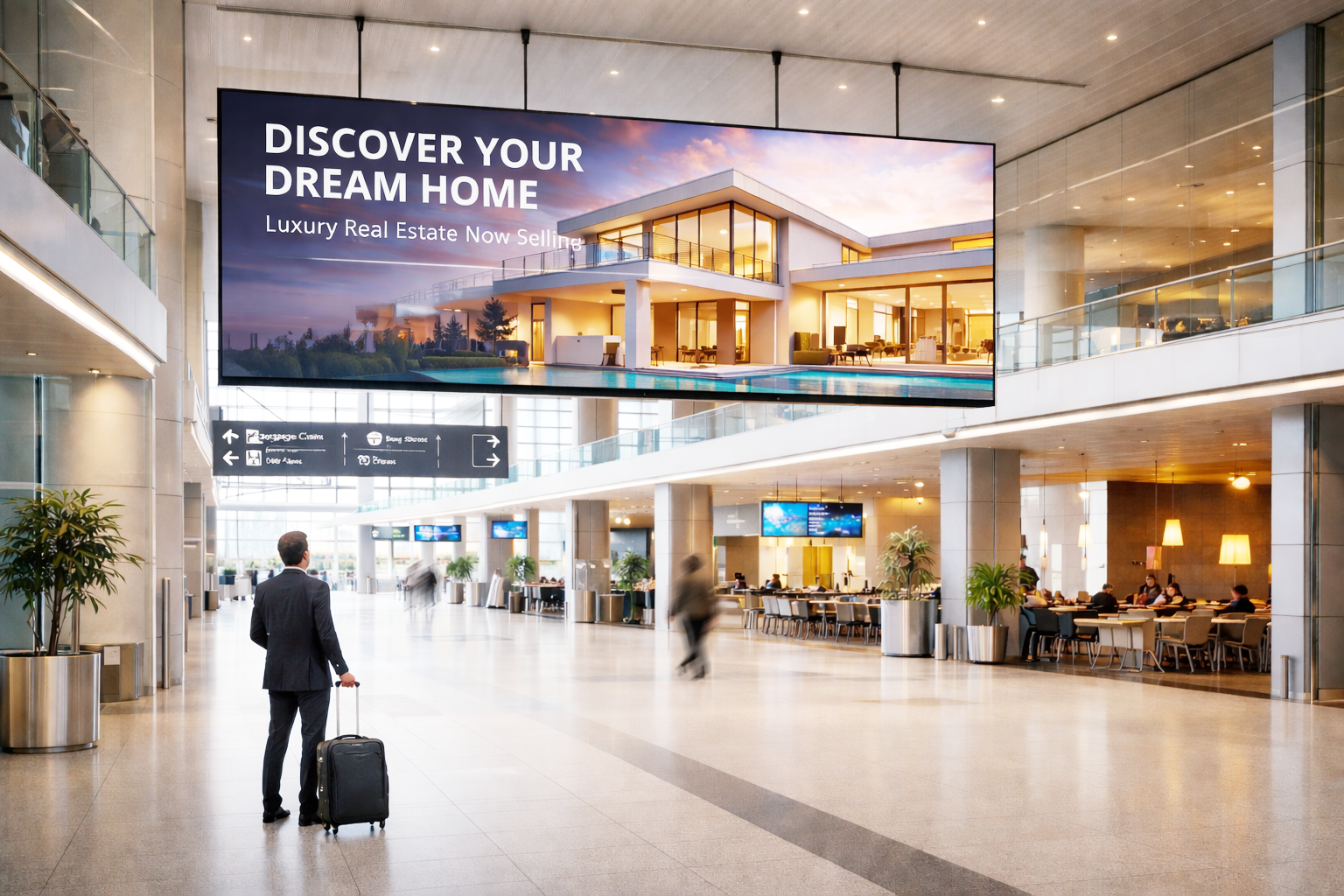
Airport Advertising is Complex to Get Right
We help you execute faster, with proven results and local insight most planners lack starting now.
Talk to an ExpertCatchment Area and Economic Drivers
Top 10 Cities within 150 km — Marketer Intelligence
- Cuiabá and Várzea Grande: The twin-city metropolitan core of Mato Grosso, with Várzea Grande immediately adjacent and hosting the airport itself. Together these cities concentrate the state's administrative, commercial, and financial services infrastructure through which the entire Mato Grosso agribusiness economy flows. Banking executives, agribusiness logistics directors, state government officials, and rural credit professionals form the permanent institutional business traveller base, while the commercial retail and services sector reflects spending patterns shaped by the state's agricultural export revenues.
- Chapada dos Guimarães: A protected plateau ecosystem 65 kilometres northeast of Cuiabá, nationally recognised for its dramatic tabletop rock formations, waterfall corridors, and cerrado biodiversity. The Chapada draws a domestic and growing international ecotourism audience with premium outdoor and natural heritage brand receptivity, and its lodge and resort operators generate consistent business travel to Cuiabá and São Paulo for commercial and institutional purposes.
- Santo Antônio do Leverger: An agricultural and fishing municipality 50 kilometres south of Cuiabá, situated at the northern edge of the Pantanal plain. Cattle ranchers, fishing operators, and rural tourism entrepreneurs from this corridor contribute to CGB's regional institutional travel baseline and represent the agricultural wealth class at its most direct and least urbanised commercial expression.
- Poconé: The gateway municipality to the Transpantaneira highway and the primary land access corridor to the Pantanal's northern section, approximately 100 kilometres southwest of Cuiabá. Poconé's lodge operators, wildlife tourism guides, and rural landowners are the operational backbone of the Pantanal luxury ecotourism economy, generating business travel to Cuiabá and São Paulo for supplier, partnership, and investment meetings with a strong premium hospitality and ecotourism brand context.
- Barão de Melgaço: A remote riverside municipality 115 kilometres south of Cuiabá, positioned at the edge of the Pantanal's interior lake system and known for boat-based wildlife tourism and traditional fishing culture. Barão de Melgaço's ecotourism operators and rural landowners contribute a small but distinctive high-value travel segment whose premium environmental brand associations align with the Pantanal's international luxury positioning.
- Nobres: A crystal-spring river tourism destination approximately 140 kilometres north of Cuiabá, increasingly recognised internationally for transparent natural pools and rivers of exceptional visual quality. Nobres is undergoing rapid tourism infrastructure development, and its lodge developers, ecotourism operators, and growing inbound visitor flow through CGB add a domestic natural tourism dimension to the airport's leisure profile that is commercially growing year-on-year.
- Rosário Oeste: A cattle ranching municipality approximately 105 kilometres north of Cuiabá, representative of the mid-scale landowner class whose beef cattle operations contribute to Mato Grosso's livestock export economy. Rosário Oeste's ranchers and rural commerce operators are part of the institutional agricultural travel backbone that flows through CGB on recurring business connections to São Paulo's commodity and financial markets.
- Jangada: A small agricultural municipality approximately 60 kilometres northwest of Cuiabá in the cerrado transition zone. Jangada's grain and cattle producers represent the smaller-scale end of the Mato Grosso agribusiness spectrum, whose financial product and rural insurance needs are commercially active and whose travel through CGB for institutional business reflects the geographic reach of the state's agricultural economy.
- Acorizal: A rural municipality approximately 70 kilometres northwest, sitting within the cerrado-Pantanal transition corridor. Acorizal's mixed agricultural and environmental economy generates a small commercial traveller cohort whose institutional needs span agricultural finance, environmental compliance services, and sustainable land management products relevant to the growing sustainability-focused agribusiness investor audience.
- Nossa Senhora do Livramento: A historically significant gold-mining municipality approximately 50 kilometres southwest of Cuiabá, whose colonial heritage connects directly to the 18th-century gold rush that founded the city. Today an agricultural and tourism municipality, Livramento's rural landowners and artisan tourism operators contribute to the regional business travel baseline and represent the historical depth of Mato Grosso's economic identity for culturally-oriented brand positioning.
NRI and Diaspora Intelligence
Cuiabá's diaspora dynamic reflects the internal migration history of Brazil's agricultural frontier. The Mato Grosso agribusiness class includes a commercially significant community of Brazilian-Japanese descent, whose ancestors were among the pioneering agricultural settlers of the cerrado frontier in the mid-20th century and who today operate some of the state's most sophisticated and largest-scale farming operations. This community maintains commercial ties to Japanese agricultural technology companies, trading houses, and financial institutions that create a global B2B interface through CGB disproportionate to its demographic size. A community of Brazilian-Gaúcho descent, originating from Rio Grande do Sul's agricultural migration into the cerrado during the 1970s and 1980s, represents another commercially significant landowner cohort whose institutional ties to southern Brazilian agricultural financial institutions and cooperatives generate recurring business travel. International agribusiness investors from the United States, France, and the Netherlands, drawn to Mato Grosso by its scale and productivity, add a growing foreign institutional presence whose needs for agricultural technology, financial services, and property advisory products are commercially active.
Economic Importance
Mato Grosso's agricultural economy is not regional in any meaningful commercial sense. When a single Brazilian state produces approximately 30 percent of the world's third-largest national soybean crop, the commercial flows generated by that production, spanning rural credit, crop insurance, agricultural inputs, machinery procurement, commodity hedging, and export logistics, are globally significant. The Mato Grosso fazendeiro class has generated private agricultural wealth concentrations that rival the fortunes of major industrial conglomerates, with leading farm operators managing hundreds of thousands of hectares of some of the world's most productive land at annual revenue scales measured in hundreds of millions of reais. Cuiabá is where that wealth is administered, financed, legally structured, and commercially managed. For any brand operating in the global food system, the agricultural supply chain, or the premium conservation economy, the commercial case for CGB begins with understanding the extraordinary scale of what routes through this terminal.
Business and Industrial Ecosystem
- Soybean and corn mega-farming operations: The Mato Grosso fazendeiro class includes farm operators whose individual holdings produce volumes of soybean and corn that would rank as significant agricultural enterprises in any country in the world. Their annual procurement decisions spanning seed technology, fertiliser, pesticides, precision farming systems, logistics services, and crop financing are measured in billions of reais and represent among the highest-value B2B purchasing decisions transiting any Brazilian regional airport terminal.
- Cotton production and textile supply chain: Mato Grosso leads Brazil in cotton production and supplies a significant share of the global textile industry's raw material. Cotton farming executives and their supply chain counterparts in the textile and processing sector generate consistent institutional travel through CGB whose procurement authority spans ginning technology, logistics platforms, and commodity financial instruments.
- Cattle ranching and beef export operations: Mato Grosso maintains one of Brazil's largest cattle herds and is a primary supplier to Brazil's beef export industry. Cattle ranching executives, meatpacking company procurement officers, and livestock genetics specialists generate a parallel institutional travel stream whose B2B financial, veterinary, and technology product needs are commercially active year-round.
- Agribusiness conglomerates and commodity traders: Grupo Amaggi, one of Brazil's and the world's largest soybean traders and producers, is headquartered in Cuiabá. The presence of Amaggi and other vertically integrated agribusiness conglomerates generates a commercial services, legal, financial, and logistics professional class in Cuiabá whose institutional sophistication and travel frequency are disproportionate to the city's population size.
Passenger Intent — Business Segment
Business travellers at CGB are among the most institutionally significant per-passenger in any Brazilian regional airport. The dominant cohort is fazendeiros and agribusiness executives travelling to São Paulo for commodity trading, rural credit negotiation, equipment procurement, and agribusiness conference participation. Their trips are funded by operations generating tens to hundreds of millions of reais in annual revenue, and their brand receptivity in agricultural technology, corporate banking, crop insurance, premium automotive, and wealth management categories reflects a purchasing authority and income level that systematic audience analysis consistently underestimates at a city of Cuiabá's scale.
Strategic Insight
The Mato Grosso agribusiness landowner is commercially unique within the Brazilian airport advertising landscape because their institutional wealth is not expressed through the conventional urban professional signals that standard audience measurement tools capture. There are no headquarters towers, no stock exchange listings, and no fashion-district consumption patterns. The wealth is in the land, in the harvest, and in the commodity contracts, and it transits CGB at a density and institutional weight that makes this one of the highest per-traveller commercial value audiences in the entire Brazilian airport network. B2B brands that understand this dynamic and structure their creative accordingly convert at rates that generic consumer advertising at this terminal does not approach.
Tourism and Premium Travel Drivers
- Pantanal Jaguar Safari Circuit (Porto Jofre and Transpantaneira): The global benchmark for wildlife photography tourism and jaguar observation, drawing ultra-HNWI international travellers from Europe, North America, Asia, and South America whose lodge expenditure of USD 500 to 2,000 per night positions this as one of Brazil's most premium inbound ecotourism audiences. Every international visitor to the Pantanal's northern jaguar circuit transits CGB, making the airport a genuine ultra-HNWI international audience point despite its regional classification.
- Chapada dos Guimarães National Park: A dramatic plateau landscape 65 kilometres from Cuiabá with spectacular waterfalls, rock formations, and cerrado ecosystem. The Chapada draws a growing domestic and international premium eco and adventure tourism audience whose outdoor lifestyle, conservation, and premium experience brand receptivity is commercially active.
- Nobres Crystal Springs and Transparent Rivers: Brazil's emerging natural pools destination, whose spring-fed rivers of extraordinary visual clarity are attracting growing domestic tourism from São Paulo and Rio de Janeiro and nascent international attention. The audience profile skews toward environmentally engaged, upper-middle-income domestic Brazilian tourists with strong premium outdoor and lifestyle brand receptivity.
- Pantanal Fishing and Wildlife Tourism (Barão de Melgaço corridor): The interior Pantanal's boat-based wildlife and sport fishing tourism circuit draws a specialised domestic and international audience of high-income outdoors enthusiasts whose per-trip spend on equipment, guides, and accommodation reflects strong premium outdoor, conservation, and lifestyle brand engagement.
Passenger Intent — Tourism Segment
The inbound leisure traveller at CGB divides into two commercially distinct segments. The first is the international ultra-premium ecotourist, almost entirely Pantanal-bound, whose travel from Europe and North America is purpose-driven, pre-committed to thousands of dollars in lodge spend, and exceptionally receptive to premium conservation, wildlife, and luxury outdoor brands. The second is the domestic Brazilian leisure tourist from São Paulo and Rio de Janeiro visiting the Chapada dos Guimarães, Nobres, and Pantanal day tourism circuits, whose holiday budget and brand profile reflects Brazil's upper-middle class consumer spending patterns. Both segments arrive in confirmed leisure mindsets with committed expenditure and extended dwell time between flights in a terminal environment whose relaxed pace is conducive to brand engagement.
Travel Patterns and Seasonality
Peak seasons:
- Year-round agribusiness institutional baseline: The dual-crop soybean and corn calendar, combined with cotton harvest cycles and cattle ranching institutional travel, generates non-seasonal B2B traffic that sustains CGB's passenger flow through months when purely leisure airports operate at minimal capacity.
- Soybean first harvest season (February to April): Brazil's primary soybean harvest drives the year's first concentrated agribusiness travel peak as Mato Grosso's fazendeiros travel to São Paulo for crop settlement, new-season financing, and equipment procurement decisions. This is CGB's single highest-value institutional advertising window.
- Second corn crop harvest and planting season (July to September and October to November): The second corn crop harvest and simultaneous preparation for the next soybean planting season create a sustained mid-year B2B institutional travel concentration with procurement authority and financial decision-making actively in motion.
- Pantanal dry season ecotourism peak (June to October): The Pantanal's wildlife is most visible and accessible during the dry season, when water levels drop and animals concentrate around remaining water sources. This window produces CGB's most concentrated inbound premium ecotourism traffic, with international visitors from Europe and North America arriving for jaguar safaris and bird photography expeditions.
Event-Driven Movement
- Agro-Cuiabá (Variable — October): One of Brazil's largest agribusiness technology exhibitions, staged in Cuiabá and drawing agricultural equipment manufacturers, seed technology companies, precision farming platform providers, and rural credit institutions from across Brazil and internationally. This event generates the year's most concentrated B2B institutional travel spike through CGB, with procurement decision-makers converging from across the cerrado and international agribusiness supply chains.
- Pantanal International Photo Festival (Variable): A growing international wildlife photography event that draws premium photographic tourism from Europe, North America, and Asia to the Pantanal circuit, generating a concentrated ultra-HNWI international audience arrival at CGB whose per-traveller brand spend profile is disproportionately high relative to passenger volume.
- Brazil Agribusiness Procurement Cycles (March to April, September to October): The seasonal rhythm of Mato Grosso's agricultural procurement calendar, spanning equipment finance, crop insurance renewal, seed and input purchase agreements, and rural credit contracts, generates predictable institutional travel peaks that align directly with CGB's highest B2B audience quality windows.
- Carnaval and Summer Leisure (January to February): Brazil's summer holiday and Carnaval season drives Cuiabá's urban professional class toward coastal destinations and generates inbound domestic tourism from southern states for Pantanal and cerrado leisure visits, creating a secondary consumer leisure audience peak within the airport's B2B-dominant annual calendar.
- Festa de São Benedito and Regional Religious Festivals (Variable): Cuiabá's traditional Catholic and popular religious calendar, including one of Brazil's most distinctive regional festival cultures, generates community and family travel peaks whose hospitality and consumer spending contribution adds a culturally anchored seasonal dimension to the airport's domestic passenger rhythm.
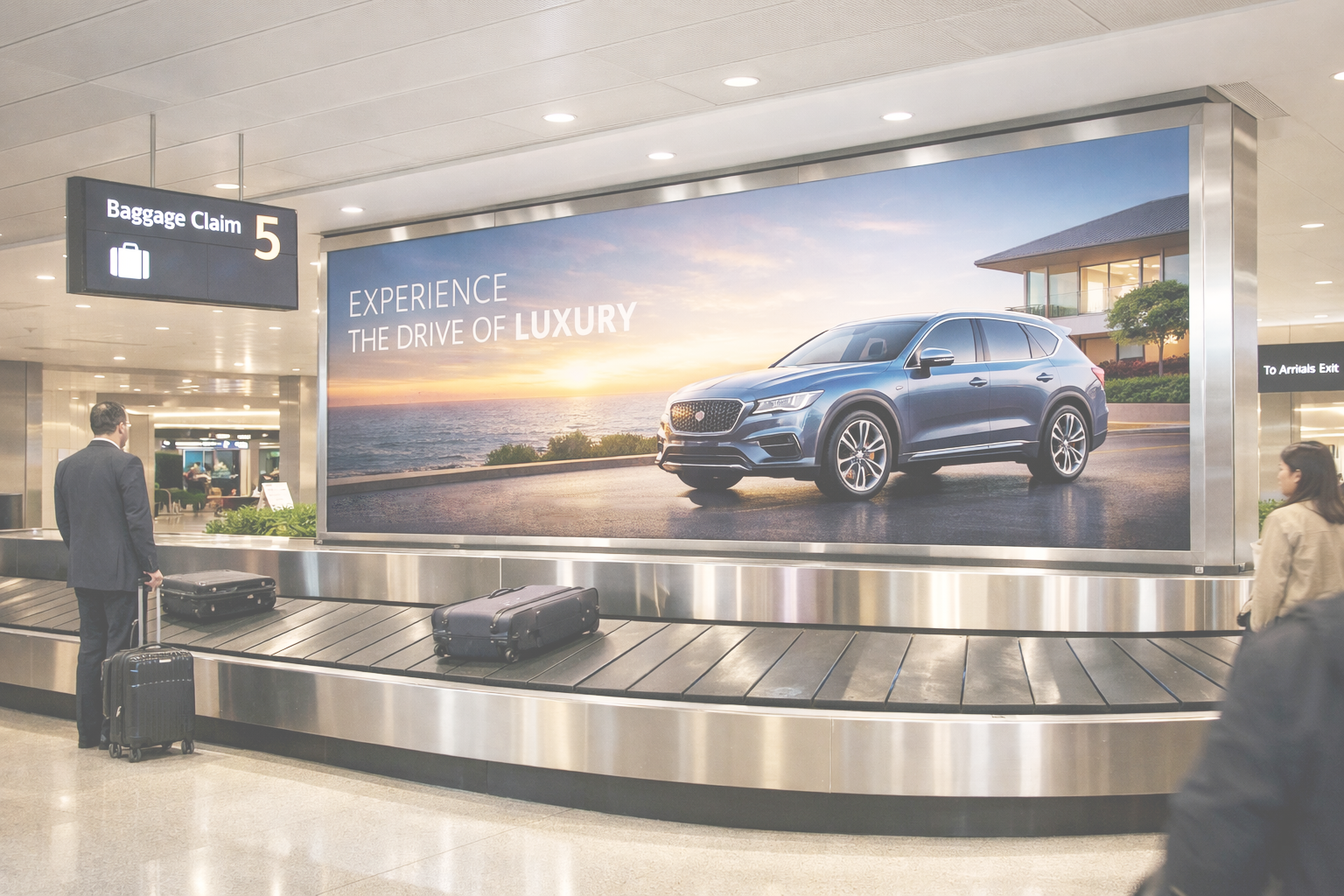
It’s Not Just Where You Advertise - It’s How Fast You Execute
We combine local insight with fast rollout to deliver results for you, now.
Talk to an ExpertAudience and Cultural Intelligence
Top 2 Languages
- Portuguese: The exclusive commercial language across all domestic audience segments at CGB. Mato Grosso's Portuguese carries the direct, unambiguous register of a frontier agricultural economy where communication is measured by its operational utility rather than its social elaboration. Brand messaging that leads with specificity, performance evidence, and institutional credibility consistently outperforms aspirational lifestyle framing with the fazendeiro and agribusiness professional audience. Creative for the domestic leisure segment can engage more emotionally, leveraging the cerrado and Pantanal's extraordinary natural identity to build lifestyle and premium brand associations.
- English: The working language of CGB's international ecotourism segment, whose European, North American, and Australian visitors transit the terminal on Pantanal safari bookings and wildlife photography expeditions. English-language signage, concession communication, and advertising placements serve this audience directly and signal the international quality positioning appropriate for premium conservation and wildlife brand categories. English is also the operational language of Mato Grosso's international agricultural trade relationships, making it commercially relevant for agro-technology and commodity finance brands targeting the fazendeiro class's global supply chain connections.
Major Traveller Nationalities
The CGB passenger base is predominantly domestic Brazilian, with São Paulo state, Rio de Janeiro, and the Federal District representing the primary origin markets for both institutional business and leisure travel. Within the domestic profile, the Mato Grosso agribusiness class itself, travelling from the state's northern grain-producing municipalities to Cuiabá for connections to São Paulo, constitutes the most commercially significant traveller cohort by institutional value. The international segment, while numerically modest, is commercially premium: European wildlife photographers and ecotourists from Germany, the United Kingdom, France, and the Netherlands, together with North American and Australian jaguar safari visitors, represent a genuine ultra-HNWI international inbound audience whose presence at CGB is uniquely concentrated compared to any other Brazilian agribusiness airport.
Religion — Advertiser Intelligence
- Roman Catholicism (approximately 55%): The historically dominant faith across Mato Grosso, whose syncretic regional Catholic traditions, including distinctive festival culture and Jesuit-influenced indigenous heritage practices, define the state's cultural calendar. Christmas and New Year, Semana Santa, and the Festa de São Benedito generate family and community travel peaks whose hospitality and consumer spending contributions are commercially relevant for domestic leisure brands.
- Evangelical and Protestant Christianity (approximately 32%): A rapidly growing and commercially active faith community across Mato Grosso's agricultural interior, reflecting the evangelical expansion that has accompanied Brazil's cerrado frontier settlement over the past four decades. This community's strong family-travel behaviour, entrepreneurial orientation, and growing consumer middle class make it a commercially significant audience for financial services, insurance, and family lifestyle brands whose values-led messaging aligns with community identity.
- Indigenous spiritual traditions and syncretic practices (approximately 5%): Mato Grosso has one of Brazil's largest concentrations of indigenous communities, whose cultural heritage is commemorated in the airport's own name — Marechal Rondon, the founder of Brazil's indigenous protection service. Indigenous cultural tourism and heritage awareness generate a growing niche audience whose environmental and cultural heritage brand associations are commercially relevant for the premium ecotourism category.
Behavioral Insight
The Mato Grosso fazendeiro is one of Brazil's most commercially specific and least marketing-saturated professional audiences. Operating at the interface of global commodity markets and frontier agricultural management, this class has developed a commercial decision-making style that is evidence-driven, performance-oriented, and suspicious of brand messaging that cannot be translated into operational or financial outcomes. Campaigns that speak the language of yield improvement, risk reduction, capital efficiency, and technology performance convert with this audience in ways that aspiration-only messaging does not. The international ecotourist, by contrast, is in a state of maximum open-minded exploration, having committed to one of the world's most remote and specialised travel experiences, and is highly receptive to premium conservation, luxury outdoor, and premium lifestyle brands whose positioning aligns with responsible luxury and environmental stewardship values.
Outbound Wealth and Investment Intelligence
The outbound traveller at Cuiabá Marechal Rondon International Airport represents the most concentrated per-capita agricultural wealth of any Brazilian regional airport catchment. The Mato Grosso fazendeiro class's investable assets, generated by decades of cerrado frontier expansion and successive soybean and corn boom cycles, are now actively being diversified beyond land and commodity exposure into financial instruments, urban real estate, and international investment vehicles at an accelerating rate. Understanding where that capital is moving is the commercial foundation for any advertiser seeking to intercept Brazil's agricultural wealth class at its primary air gateway.
Outbound Real Estate Investment
São Paulo is overwhelmingly the dominant domestic outbound real estate market for Mato Grosso's agribusiness wealth class. High-end residential acquisitions in Itaim Bibi, Jardins, and the Pinheiros corridor function simultaneously as lifestyle assets for children attending São Paulo universities and investment vehicles generating rental yield and capital appreciation independent of agricultural commodity cycles. Rio de Janeiro's luxury coastal properties, Angra dos Reis marina developments, and Búzios resort residences represent the second-tier domestic leisure real estate market for Cuiabá's upper-income professional and landowner class. Florida, particularly the Miami, Sarasota, and Naples corridors, is the primary international real estate destination for Mato Grosso's ultra-HNWI agribusiness operators, whose dollar-denominated commodity revenues and international agribusiness relationships create a natural financial interface with US property markets. Portugal's Golden Visa and NHR programmes represent a growing secondary international channel for the professional management class within Cuiabá's agribusiness ecosystem.
Outbound Education Investment
ESALQ at the University of São Paulo, Brazil's globally ranked agricultural sciences faculty and the most prestigious higher education destination for the children of Brazil's agribusiness landowner class, represents the single most important outbound education investment for Mato Grosso's fazendeiro families. FGV and Insper in São Paulo serve the management and financial education needs of the agribusiness professional class. International placements in agricultural business and economics at Iowa State University, the University of Illinois, Wageningen University in the Netherlands, and similar globally ranked agricultural institutions are a growing aspiration for the upper tier of Mato Grosso's farming families, whose global commodity market orientation creates direct relevance for internationally credentialled agricultural management education. Language preparation services, education consultancies, and US university agricultural programme admissions brands find a commercially motivated audience at CGB during January to February enrollment travel windows.
Outbound Wealth Migration and Residency
Mato Grosso's ultra-HNWI agribusiness class is showing growing interest in asset internationalisation and residency diversification, driven by Brazilian tax and political environment uncertainty and the operational advantages of international financial flexibility for globally trading commodity operations. US EB-5 investor visa pathways are relevant for the upper tier of the fazendeiro class with active US business relationships. Portugal's Golden Visa and Spain's non-lucrative residency programmes attract the professional management class within the Cuiabá agribusiness ecosystem whose international mobility needs are commercially rather than lifestyle-driven. Caribbean citizenship-by-investment programmes in Grenada and St. Kitts are of growing interest to the mid-upper HNWI segment whose commodity trading relationships benefit from passport optionality and access to international financial centres without the compliance complexity of more restrictive jurisdictions.
Strategic Implication for Advertisers
International and domestic brands operating across Mato Grosso's agricultural wealth corridor, whether São Paulo luxury real estate developers, US land-grant university agricultural programmes, Florida property advisors, or precision agriculture technology companies from the United States and Europe, should treat CGB as Brazil's most commercially concentrated and institutionally underserved channel for reaching the cerrado's landowning wealth class. Masscom Global can activate coordinated campaigns at both CGB and the São Paulo hub airports where Mato Grosso's fazendeiros connect for financial and commercial meetings, creating a full-funnel brand presence that intercepts the agricultural decision-maker at every point of their institutional travel journey.
Airport Infrastructure and Premium Indicators
Terminals
- Cuiabá Marechal Rondon International Airport operates a single modernised terminal building that underwent significant infrastructure upgrades ahead of the 2014 FIFA World Cup, for which Cuiabá was selected as one of Brazil's twelve host cities. The World Cup investment elevated the terminal's international operational standard and physical passenger environment to a level consistent with premium brand advertising contexts, significantly above the baseline that a regional state capital of Cuiabá's size would otherwise support.
- The terminal's single-building configuration concentrates the entire passenger flow through a consolidated advertising environment whose brand placement visibility is structurally high across all departure and arrivals categories simultaneously.
Premium Indicators
- The airport's World Cup infrastructure legacy includes a modernised international arrivals facility that processes the Pantanal's inbound international ecotourist stream at a quality standard consistent with the ultra-premium lodge experience that begins upon departure from European and North American origin airports.
- CGB holds designated international airport status, enabling direct international route activation and processing the growing stream of international charter and commercial flights from South America and Europe bringing Pantanal ecotourists to the jaguar safari circuit.
- Cuiabá's designation as the geographic centre of South America, formally marked by a monument in the city, is a cultural identity anchor with global recognition that reinforces the airport's positioning as a genuinely central node in South America's agricultural and ecological geography.
- The Marechal Rondon naming honours one of Brazil's most celebrated national figures in the fields of indigenous rights, geographic exploration, and frontier development, connecting the airport's identity directly to the conservation and indigenous heritage values that define the Pantanal's international ecotourism positioning.
Forward-Looking Signal
The Pantanal's international ecotourism profile is expanding at a rate that CGB's current infrastructure is beginning to struggle to absorb during peak dry season months. Growing coverage in international wildlife photography media, conservation-focused premium travel platforms, and natural history documentary content from the BBC, National Geographic, and major streaming platforms is progressively elevating the Pantanal's global profile from a specialised destination to a mainstream premium travel aspiration. This expanding international audience profile will progressively internationalise CGB's passenger base, raising both the commercial quality of the airport's advertising environment and the competitive intensity for available inventory. Simultaneously, Mato Grosso's soybean expansion, driven by global food security demand and Brazil's competitive production cost advantages, will continue to grow the state's institutional agribusiness travel baseline for the foreseeable future. Masscom Global advises brands to establish presence at CGB now, while the international audience is growing but the media market remains in early formation, to capture brand equity with both the world's most productive grain belt's landowner class and the Pantanal's expanding ultra-premium ecotourist audience at current inventory rates.
Airline and Route Intelligence
Top Airlines
- LATAM Airlines Brasil (primary full-service domestic and international connections)
- Gol Linhas Aéreas (domestic)
- Azul Linhas Aéreas Brasileiras (domestic)
- International charter services from South American and European origins (Pantanal season)
Key International Routes
- International connectivity primarily accessed through São Paulo Guarulhos (GRU)
- Seasonal international charter services from Buenos Aires, Montevideo, and European origins during Pantanal dry season peak
- Direct regional connections from Bolivian and Paraguayan border cities (seasonal charter)
Domestic Connectivity
- São Paulo Guarulhos (GRU) and Congonhas (CGH) — primary hub connections to Brazil's financial and commodity trading capital
- Brasília (BSB) — federal capital for regulatory and government affairs travel
- Goiânia (GYN) — cerrado agricultural corridor connection
- Rio de Janeiro Galeão (GIG) and Santos Dumont (SDU)
- Campo Grande (CGR) — Mato Grosso do Sul agricultural corridor
- Belo Horizonte (CNF and PLU)
- Porto Alegre (POA) — Gaúcho agricultural and financial connection
- Campinas (VCP)
- Belém (BEL) — northern soybean corridor via BR-163 connection
Wealth Corridor Signal
CGB's domestic route network is a precise institutional map of Brazil's cerrado agribusiness supply chain and financial architecture. The São Paulo connections carry Mato Grosso's fazendeiros to commodity trading desks, rural credit facilities, equipment company headquarters, and private banking institutions. The Brasília connection carries agribusiness policy, environmental licensing, and regulatory affairs travel essential to the farming operations whose profitability is directly shaped by federal agricultural and environmental legislation. The Porto Alegre connection reflects the Gaúcho-origin agricultural migration community whose financial and cooperative relationships remain anchored in the south. For B2B brands that understand the institutional travel geography of the world's soybean supply chain, CGB's route network identifies its passenger base's purchasing decisions with commercial precision.
Media Environment at the Airport
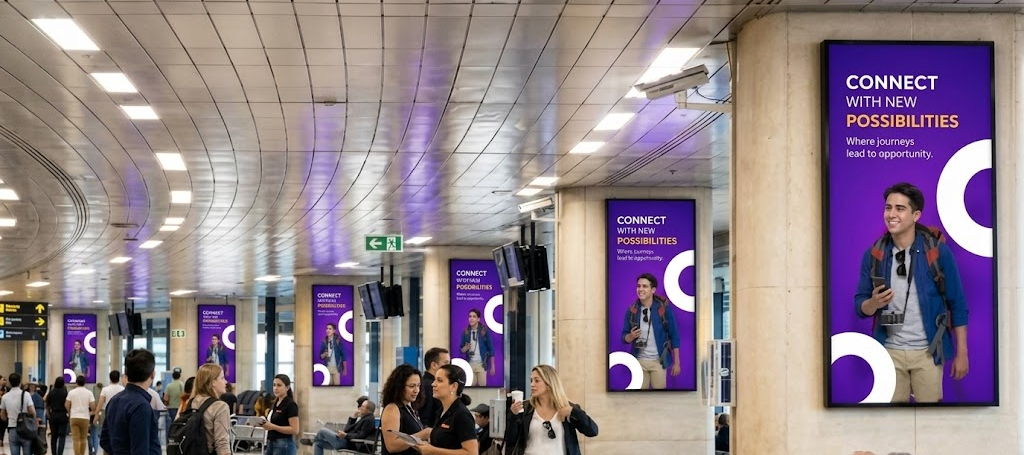
- CGB's modernised single-terminal footprint, upgraded for the 2014 World Cup, provides a contemporary brand environment whose physical standard is above regional expectation and whose low competitive media clutter gives individual placements a share-of-visual-attention that Brazil's major hub airports structurally cannot deliver. A brand campaign at CGB operates in a media space where institutional agriculture professionals encounter premium creative without the ambient noise that renders São Paulo Guarulhos campaigns invisible to all but the most prominent formats.
- The nature of agribusiness travel, involving long distances from farm to terminal and institutional meeting schedules that create structured pre-departure windows, means that CGB's B2B passenger cohort arrives with deliberate dwell time already allocated. These are not rushed commuters but operational decision-makers who process terminal information attentively during the pre-departure period.
- The Pantanal ecotourist's terminal experience at CGB carries a specific emotional register: these are travellers who have committed to a transformative natural experience and are in a state of heightened anticipation and open engagement. Premium conservation, luxury outdoor, and environmental brand messaging encounters this audience at its most receptive possible moment, in the hours immediately before or after the wildlife encounter that motivated an intercontinental journey.
- Masscom Global holds direct access to CGB's advertising inventory and executes placements across all available terminal formats. Creative scheduling can be aligned to the soybean first harvest window, the Pantanal dry season ecotourism peak, the Agro-Cuiabá exhibition calendar, and the planting season procurement window to ensure every campaign dollar intercepts the highest-quality audience at its most commercially active moment.
Strategic Advertising Fit
Best Fit
- Agricultural machinery and precision farming (OEM and precision technology): CGB is Brazil's highest-quality access point per impression for the global agricultural machinery and technology sector's most important buyer class. John Deere, AGCO, CNH Industrial, and precision agriculture technology platforms including drone application systems, soil analysis AI, and GPS-guided planting technology find an audience at CGB whose procurement authority is institutionally backed by farm revenues at a scale matched in very few global agricultural regions.
- Rural credit, agribusiness banking, and commodity finance: Brazil's rural credit institutions, commodity trading risk management platforms, and agribusiness banking specialists intercept a structurally motivated buyer audience at CGB whose annual financing decisions are measured in hundreds of millions of reais. No other Brazilian airport delivers this buyer concentration per impression.
- Crop insurance and agribusiness risk management: Mato Grosso's climate volatility and the sheer scale of crop value exposed to weather and commodity price risk make CGB's institutional traveller among the most actively engaged crop insurance and risk management buyers in Brazil. Platforms offering parametric weather insurance, multi-risk rural coverage, and commodity hedging instruments find a commercially receptive and financially sophisticated audience whose risk management decisions are actively driven.
- Premium luxury ecotourism and conservation brands: The Pantanal's international ecotourist audience at CGB represents one of Brazil's most commercially premium inbound leisure segments. Ultra-luxury lodge brands, premium wildlife photography equipment, international conservation organisations, and sustainable luxury lifestyle brands find a genuinely ultra-HNWI international audience whose brand engagement at the terminal is warm and highly receptive.
- Premium automotive (pickup trucks and luxury vehicles): Mato Grosso's agribusiness class drives Brazil's most active market for high-specification pickup trucks and premium passenger vehicles. RAM, Ford Ranger, Toyota Hilux, Chevrolet S10, and luxury SUV categories from BMW, Mercedes, and Land Rover find a buyer audience at CGB whose vehicle procurement decisions are funded by farm revenue cycles and whose brand loyalty reflects operational performance requirements as much as lifestyle aspiration.
- Wealth management and private banking: The concentration of agricultural wealth and its progressive diversification into financial instruments creates a structurally motivated audience for Brazilian private banking platforms, multi-market investment funds, real estate investment trusts, and international wealth management services. CGB's institutional fazendeiro traveller is among the most commercially significant private banking prospecting audiences in any Brazilian regional terminal.
- São Paulo and international real estate investment: Developers with São Paulo high-end residential inventory, Florida property, and Portuguese Golden Visa-eligible assets find a buyer audience at CGB whose capital diversification needs are growing and whose São Paulo connections make the route timing commercially precise for property brand engagement.
Brand Alignment at a Glance
| Category | Fit |
|---|---|
| Agricultural Machinery and Precision Technology | Exceptional |
| Rural Credit and Agribusiness Banking | Exceptional |
| Premium Automotive (Pickup and SUV) | Exceptional |
| Crop Insurance and Risk Management | Strong |
| Wealth Management and Private Banking | Strong |
| Luxury Ecotourism and Conservation Brands | Strong |
| Ultra-luxury Fashion and Couture | Poor fit |
Who Should Not Advertise Here
- Ultra-luxury fashion and couture: CGB's fazendeiro wealth class, while institutionally significant, does not express itself through fashion consumption patterns that sustain couture advertising ROI. São Paulo Guarulhos' international terminal remains the appropriate channel for this category.
- Mass-market FMCG and grocery retail: The institutional B2B and premium ecotourism orientation of CGB's passenger base creates poor alignment with commodity household purchase intent. Retail media and digital channels deliver greater efficiency for this category at Cuiabá's scale.
- International beach and leisure resort brands: The Pantanal ecotourist is already committed to a specific and highly purposeful nature experience. International beach resort advertising targeting the general leisure traveller finds limited audience alignment at an airport whose leisure audience is overwhelmingly conservation and adventure-oriented rather than passive beach-holiday motivated.
Event and Seasonality Analysis
- Event Strength: High
- Seasonality Strength: High
- Traffic Pattern: Agricultural Dual-Harvest B2B Peaks with Pantanal Dry Season Ecotourism Peak (Structurally Non-Overlapping, Creating Year-Round High-Value Windows)
Strategic Implication
CGB's commercial calendar is distinguished by the structural non-overlap of its two peak audience types: the agribusiness procurement peaks in February to April and September to November align with the Brazilian agricultural cycle, while the Pantanal ecotourism peak in June to October occupies the mid-year window when institutional agricultural travel is between its two harvest-driven peaks. The practical result is a year-round sequence of high-value advertising windows with virtually no dead season. Masscom Global structures CGB campaigns to maintain continuous brand presence across the full annual calendar, concentrating B2B agribusiness creative in the harvest and planting windows and premium ecotourism and consumer brand creative in the Pantanal dry season window, ensuring optimal audience alignment at every point of the commercial year.
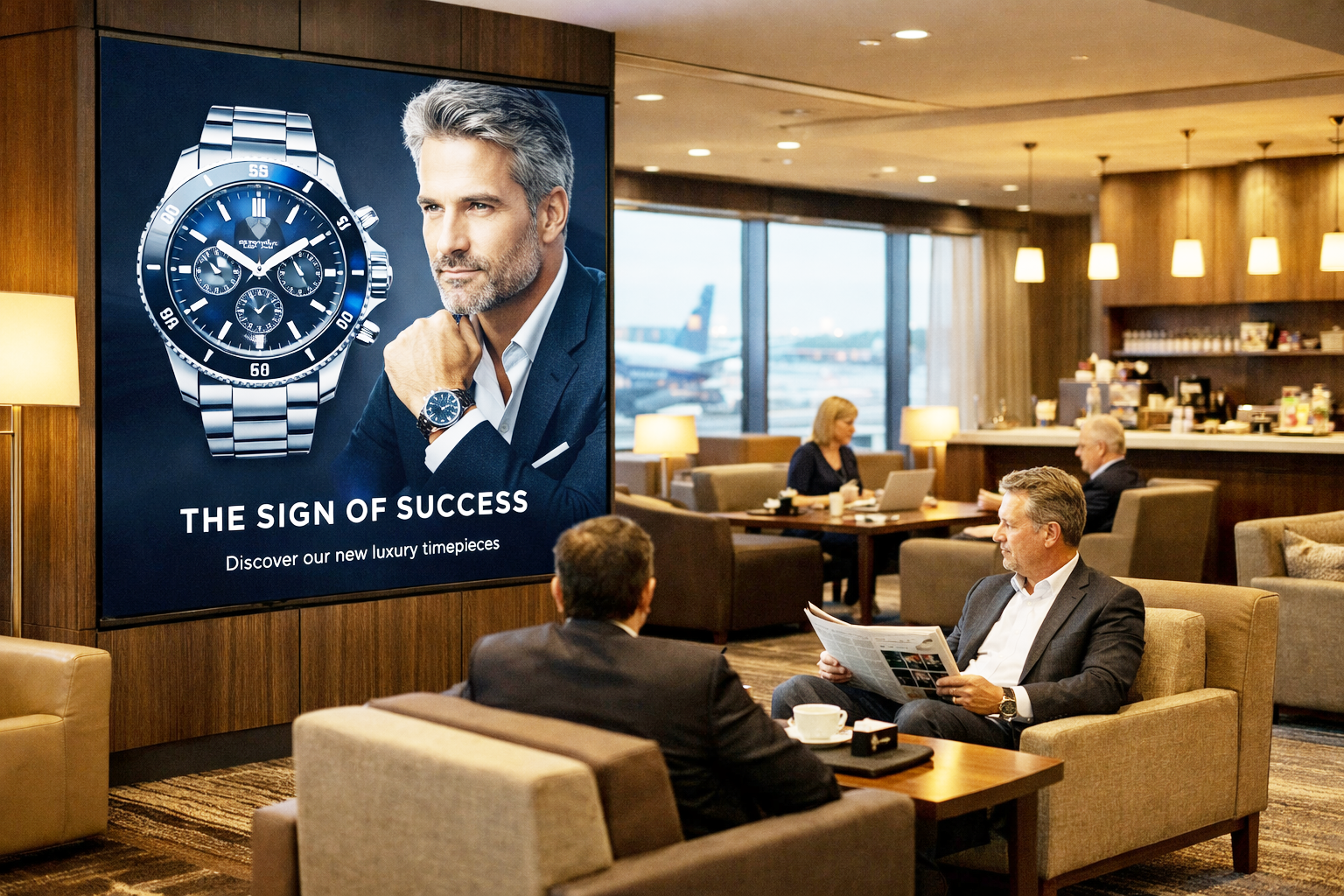
Poor Placement and Delays Affect Airport Campaigns
We help you move faster, access better inventory, and get it right now.
Talk to an ExpertFinal Strategic Verdict
Cuiabá Marechal Rondon International Airport is the commercial gateway to a global agricultural economy that the world's food supply depends on and that Brazil's financial sector orbits, housed in a compact terminal whose low competitive clutter and year-round institutional B2B baseline make it one of the highest per-traveller commercial value airports in the Brazilian regional network. The Mato Grosso fazendeiro class, whose soybean and cotton operations generate revenues at scales that rival major Brazilian industrial conglomerates, transits CGB continuously, carrying procurement authority and investment decisions that B2B brands in agriculture, finance, automotive, and technology will not encounter in higher concentration at any other airport. The Pantanal's ultra-premium ecotourist adds a globally premium inbound dimension that no other Brazilian grain-belt airport possesses, completing a commercial audience profile whose breadth and depth are structurally underpriced in the current media market. Brands that recognise the institutional value behind the passenger volume and establish presence at CGB through Masscom Global's direct inventory access and cerrado market intelligence will build category dominance with Brazil's agricultural wealth class and the Pantanal's international conservation audience at a cost and competitive position that market maturation will not sustain for much longer.
About Masscom Global
Masscom Global is a premium international airport advertising and media buying agency operating across 140 countries. With deep expertise in airport OOH, premium publications, and high-net-worth audience targeting, Masscom helps brands reach the world's most valuable travellers at the moments that matter most. For advertising packages, media rates, and campaign planning at Cuiabá Marechal Rondon International Airport and airports across the globe, contact Masscom Global today.
Frequently Asked Questions
How much does airport advertising cost at Cuiabá Marechal Rondon International Airport? Advertising costs at CGB vary based on format type, placement zone, creative dimensions, campaign duration, and seasonal demand. The soybean first harvest window in February to April, the planting and second crop season in September to November, and the Pantanal dry season ecotourism peak in June to October each carry premium rates reflecting concentrated high-value audience quality. The Agro-Cuiabá exhibition period generates the highest single-event B2B institutional traveller concentration of the year. For current media rates, format availability, and customised package proposals, contact Masscom Global directly.
Who are the passengers at Cuiabá Marechal Rondon International Airport? CGB processes three commercially significant audience streams. The primary and largest by institutional value is the Mato Grosso agribusiness class: fazendeiros managing large-scale soybean, corn, cotton, and cattle operations, executives of agribusiness conglomerates including Grupo Amaggi, and the rural credit, insurance, and agricultural technology professionals who service the cerrado economy. The second is domestic Brazilian business and leisure travellers from the Cuiabá metro and smaller Mato Grosso municipalities. The third, small by volume but ultra-premium by value, is the international ecotourist arriving from Europe and North America for Pantanal jaguar safaris and wildlife photography expeditions.
Is Cuiabá Airport good for luxury brand advertising? CGB carries a Medium-High HNWI classification at the institutional rather than consumer luxury level. The fazendeiro wealth class represents genuine high-net-worth consumers whose spending in agricultural technology, premium automotive, wealth management, and real estate investment categories is commercially significant. The Pantanal ecotourist audience adds a genuine ultra-HNWI international consumer dimension that elevates the airport's luxury brand suitability for conservation, outdoor, and premium experience categories. Ultra-luxury fashion and couture achieve stronger ROI at São Paulo Guarulhos, but brands operating in premium automotive, agribusiness technology, rural finance, and luxury ecotourism find strong audience alignment at CGB.
What is the best airport in Brazil to reach soybean and cotton fazendeiros? CGB is Brazil's most concentrated access point for Mato Grosso's fazendeiro landowning class, the world's most productive soybean region's dominant commercial audience. No other Brazilian airport produces the same institutional agribusiness audience density within a single compact terminal. Goiânia (GYN) serves the Goiás agribusiness class as a complementary channel. For brands seeking maximum cerrado agricultural wealth coverage across both Mato Grosso and Goiás, Masscom Global can structure a coordinated CGB and GYN multi-airport strategy that captures the full commercial scope of the Brazilian grain belt.
What is the best time to advertise at Cuiabá Marechal Rondon International Airport? B2B agribusiness brands achieve maximum decision-maker audience concentration during the soybean first harvest window in February to April and the planting and second crop season in September to November. The Agro-Cuiabá exhibition period delivers the single highest B2B institutional event spike of the year. Brands targeting the Pantanal ecotourism audience should concentrate in the June to October dry season window. Consumer brands benefit from the January to February summer leisure peak. CGB's structural advantage is that these windows largely complement rather than overlap, enabling a year-round campaign to maintain high audience quality across twelve months with minimal low-value periods.
Can international real estate developers advertise at Cuiabá Marechal Rondon International Airport? Yes. Developers with São Paulo premium residential inventory, Florida property, and Portuguese Golden Visa-eligible assets find a commercially motivated buyer audience at CGB among the fazendeiro and agribusiness professional class whose investment diversification beyond agricultural assets is actively accelerating. The Mato Grosso agricultural wealth class holds significant capital that is progressively being deployed into urban real estate and international investment vehicles as hedge strategies against commodity cycle exposure. Masscom Global can structure placement timing to align with post-harvest capital availability windows when property investment decisions are most actively in motion, maximising the conversion probability of real estate campaigns at this airport.
Which brands should not advertise at Cuiabá Marechal Rondon International Airport? Ultra-luxury international fashion and couture brands requiring consistent consumption-focused ultra-HNWI footfall will find stronger ROI at São Paulo Guarulhos. Mass-market FMCG and grocery brands seeking commodity household product reach at scale are better served by retail media channels than airport OOH at CGB's passenger volume level. International beach and leisure resort brands targeting generic outbound leisure audiences will find poor audience alignment at an airport whose leisure traveller profile is overwhelmingly conservation and adventure-oriented rather than passive beach-holiday motivated.
How does Masscom Global help brands advertise at Cuiabá Marechal Rondon International Airport? Masscom Global provides complete airport advertising intelligence and execution at CGB. From fazendeiro audience profiling and agricultural harvest cycle timing strategy through to format selection, creative coordination, placement booking, and campaign monitoring, Masscom manages the full cycle with the cerrado market intelligence and agribusiness sector expertise that generalist agencies cannot bring to this commercially specific and institutionally complex market. With direct inventory access and deep understanding of Mato Grosso's soybean, cotton, and cattle economy alongside the Pantanal's international ecotourism commercial dynamics, Masscom removes the guesswork and execution delays that brands encounter when entering this market independently. To discuss rates, formats, and campaign timing at Cuiabá Marechal Rondon International Airport, book a consultation with Masscom Global today.