




Airport at a Glance
| Field | Detail |
|---|---|
| Airport | Copenhagen Airport, Kastrup |
| IATA Code | CPH |
| Country | Denmark |
| City | Copenhagen |
| Annual Passengers | 29.9 million (2024); 32.4 million (2025, all-time record) |
| Primary Audience | Nordic HNWIs, Business Executives, Pharma and Tech Professionals, Premium Leisure Travellers |
| Peak Advertising Season | May to August and November to January |
| Audience Tier | Tier 1 |
| Best Fit Categories | Luxury Goods, International Real Estate, Financial Services, Premium Automotive, International Education |
Copenhagen Airport is the undisputed gateway to the Nordic region, processing 29.9 million passengers in 2024 and setting an all-time record of 32.4 million in 2025. It serves not just Denmark's capital but the entire Øresund Region — encompassing Copenhagen, Malmö, and southern Sweden — giving advertisers access to a dual-nation catchment that is among the most economically productive in Europe. The airport connects 63 airlines to over 200 destinations worldwide, and its audience is defined by Nordic prosperity: high disposable incomes, strong investment behaviour, and a sophisticated appetite for premium products and international experiences. For brands seeking to reach wealthy Northern Europeans at the point of departure, CPH is the only viable channel.
What makes CPH commercially exceptional is the economic foundation of its catchment. Denmark's economy has been dramatically reshaped by the global dominance of Novo Nordisk — Europe's second-largest company by market capitalisation — which has concentrated extraordinary wealth within the Copenhagen professional and investor class. Alongside the pharmaceutical surge, Denmark's long-standing strengths in shipping, clean technology, financial services, and life sciences produce a business traveller base that is continuously mobile, globally connected, and deployed across high-value decision-making roles. This is not a leisure-heavy airport. It is a professional gateway, and its passengers are among the most commercially relevant in European aviation.
Advertising Value Snapshot
- Passenger scale: 29.9 million passengers in 2024, up 3.1% on 2023; 32.4 million in 2025 — the highest passenger volume in the airport's 100-year history
- Traveller type: Nordic HNWIs and upper-income professionals, life sciences and pharma executives, international business travellers, premium leisure tourists from the UK, Germany, and North America
- Airport classification: Tier 1 — the only Tier 1 airport in Scandinavia, serving as the region's primary hub for long-haul, intercontinental, and high-frequency European business routes
- Commercial positioning: The defining gateway for Nordic consumer wealth, recognised as the highest-income traveller environment in Northern Europe
- Wealth corridor signal: CPH sits at the intersection of the Copenhagen-London premium business corridor, the Scandinavian-North American education and investment flow, and the growing pharma wealth corridor generated by Denmark's life sciences dominance
- Advertising opportunity: Masscom Global structures campaigns across CPH's terminal environment with placement precision that captures the airport's dual audience of departing Nordic professionals and arriving international investors, ensuring brand exposure at the highest-value moments in the passenger journey
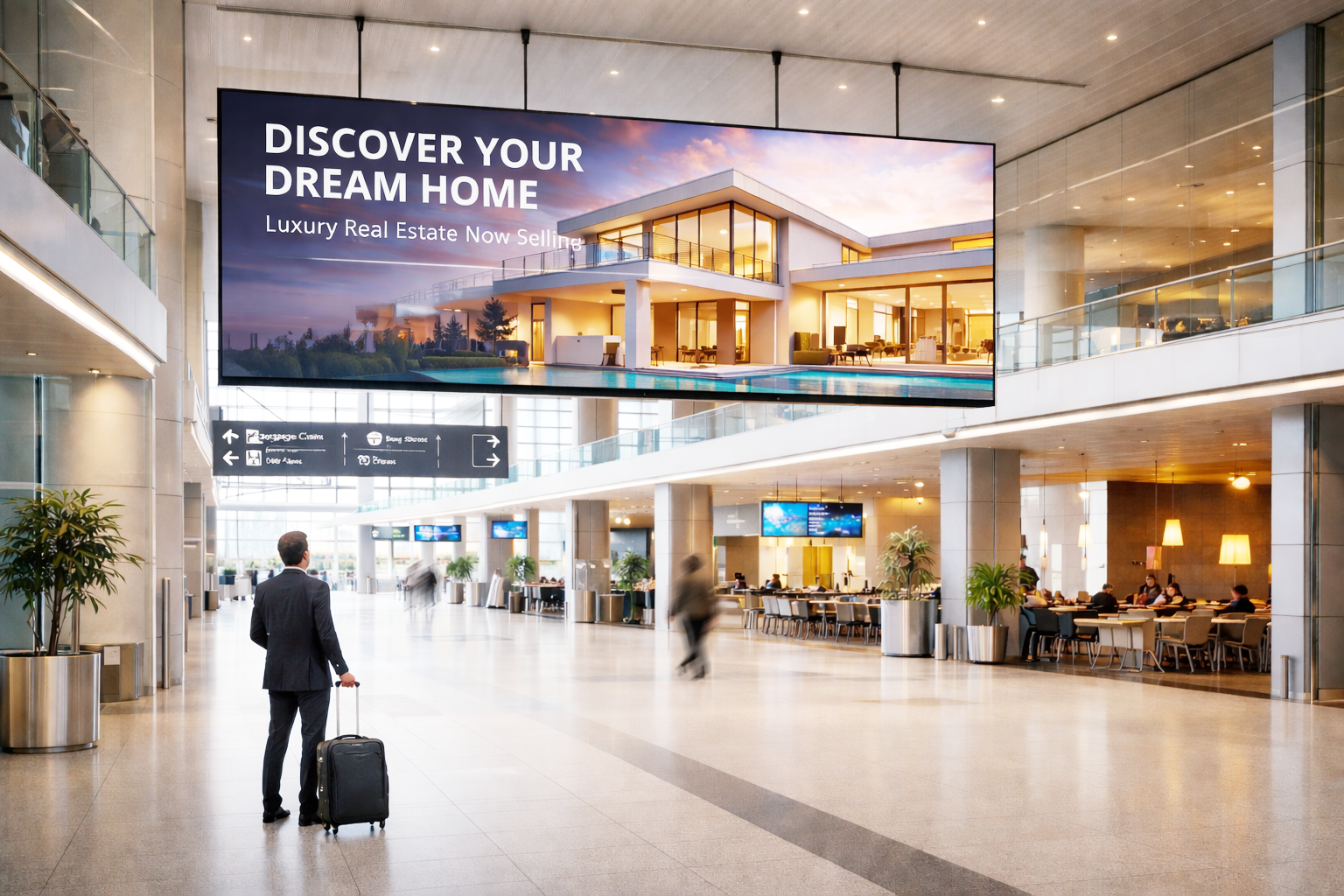
Airport Advertising is Complex to Get Right
We help you execute faster, with proven results and local insight most planners lack starting now.
Talk to an ExpertCatchment Area and Economic Drivers
Top 10 Cities within 150 km — Marketer Intelligence:
- Copenhagen: The primary catchment and the wealth engine of the entire Nordic region. Home to the headquarters of Novo Nordisk, A.P. Møller-Maersk, Carlsberg, Vestas, and Danske Bank, Copenhagen produces a C-suite business traveller base with investment mandates, global mobility, and purchasing authority that places it in the same advertiser tier as Frankfurt, Stockholm, and Zurich.
- Malmö: Sweden's third-largest city, directly connected to CPH via the Øresund Bridge with a 20-minute train journey. Malmö's professional and entrepreneur class uses CPH as their primary international departure point, effectively adding the southern Swedish market to Copenhagen's already affluent catchment without any additional route overlap.
- Helsingborg: A significant southern Swedish industrial and logistics hub with a growing white-collar professional population. Helsingborg residents regularly use CPH for direct long-haul connections, contributing upper-income Swedish consumers to the airport's advertiser audience.
- Gothenburg: Sweden's second city and a major automotive and maritime trade centre. Gothenburg-based executives with connections to Volvo, SKF, and the Swedish shipping industry transit through CPH for intercontinental routes, particularly to North America and Asia.
- Odense: Denmark's third-largest city and a major robotics and drone technology hub. Odense's industrial innovation ecosystem generates STEM professionals and entrepreneurs with above-average incomes who travel through CPH for international business and conference attendance.
- Aalborg: A university city and North Jutland's commercial centre. Aalborg contributes young professional and academic travellers who feed into CPH's growth in North American and European education-linked travel.
- Roskilde: A prosperous satellite city immediately west of Copenhagen, home to significant financial and government professional households. Its proximity to CPH makes it a primary feeder market for premium leisure and business travel.
- Helsingør: An affluent coastal city north of Copenhagen known for its premium residential market. Helsingør's upper-income residents, many employed in Copenhagen's financial and corporate sectors, represent a reliable premium leisure travel segment.
- Lund: A Swedish university city of exceptional academic prestige, housing one of Scandinavia's oldest universities and a significant biotech cluster. Lund produces internationally mobile researchers, academics, and life sciences professionals who travel regularly through CPH.
- Kristianstad: A regional commercial centre in the Swedish province of Scania. Kristianstad's agricultural industry leaders and professional class contribute a smaller but consistent stream of business travellers who rely on CPH's intercontinental connectivity.
NRI and Diaspora Intelligence: While Copenhagen does not carry a large diaspora community in the traditional remittance-and-investment sense, it hosts a commercially significant international expatriate professional population. Over 120,000 non-Danish EU citizens live in the Greater Copenhagen area, including large communities of Germans, British nationals, Swedes, and Eastern Europeans employed across pharma, technology, shipping, and financial services. These residents use CPH as their primary link to home markets and investment destinations, generating a travel behaviour profile that closely mirrors the HNWI diaspora patterns seen at larger European hubs. Of particular commercial relevance are the Indian, Chinese, and American expat communities — primarily employed in Novo Nordisk's global operations and Copenhagen's biotech cluster — who travel on high-frequency routes between Copenhagen and their home markets, carrying spending power and investment intent in both directions.
Economic Importance: The Copenhagen catchment economy is defined by two structural forces that directly produce high-value advertiser audiences. First, Denmark's pharmaceutical and life sciences sector — dominated globally by Novo Nordisk but extending across dozens of biotech companies in the Medicon Valley corridor spanning Copenhagen and Malmö — generates an unusually high concentration of globally mobile professionals with significant equity stakes, bonuses, and investment portfolios. Second, Denmark's traditional strength in shipping, clean energy, and financial services provides a second layer of C-suite business travellers with complex international supply chains and capital deployment needs. These two economic pillars produce an airport audience that is consistently above the European median for investable assets, property ownership, and appetite for premium consumer categories.
Business and Industrial Ecosystem
- Pharmaceuticals and life sciences: Novo Nordisk alone employs over 60,000 people globally and has its research headquarters in Copenhagen. The resulting flow of executives, scientists, and investors through CPH is one of the most commercially concentrated pharma traveller streams in European aviation — highly relevant for financial services, premium automotive, and private banking advertisers
- Shipping and maritime trade: A.P. Møller-Maersk, headquartered in Copenhagen, is the world's largest container shipping company, generating a constant movement of senior trade, logistics, and supply chain professionals through CPH on routes to Asia, North America, and the Middle East
- Clean energy and technology: Denmark is Europe's leading wind energy nation, with Vestas, Ørsted, and dozens of renewable energy companies based in the Copenhagen region. Their senior management travel extensively to project sites across Europe, Asia, and the Americas, producing a technically sophisticated, high-income business traveller
- Financial services and banking: Danske Bank, Nordea, and Jyske Bank anchor Copenhagen's banking sector, generating senior finance professionals who travel on European and intercontinental routes for deal-making, fund management, and institutional client relationships
Passenger Intent — Business Segment: CPH's business travellers are predominantly senior professionals and executives from globally significant companies. They travel to negotiate contracts, attend board meetings, review international operations, and deploy capital. The advertiser categories that intercept this audience most effectively are private banking and wealth management, premium automotive, B2B financial technology, luxury hospitality, and international real estate. These are not frequent business travellers booking cheaply. They are business class passengers with expense accounts, equity stakes, and purchasing autonomy who make decisions measured in hundreds of thousands of euros.
Strategic Insight: What distinguishes CPH's business audience from comparable European airports is the pharma-wealth effect. The extraordinary growth of Novo Nordisk's market capitalisation — which at its peak exceeded the entire Danish GDP — has created a wealth concentration effect among Copenhagen's professional class that is visible in property prices, luxury retail sales, and investment behaviour. Senior Novo Nordisk employees and their supplier ecosystem travel through CPH carrying equity, bonus income, and investment mandates that make them extraordinarily valuable targets for financial services, premium lifestyle, and real estate advertisers. No other airport in Scandinavia offers this wealth-density signal, and very few airports in Europe can match it.
Tourism and Premium Travel Drivers
- Copenhagen city centre: Consistently ranked among Europe's most desirable city-break destinations, attracting premium leisure visitors from Germany, the UK, the United States, and Asia. Copenhagen's New Nordic food scene, design culture, and sustainability credentials generate a high-spending inbound tourist who has committed to above-average accommodation and dining expenditure before arriving at the airport
- Tivoli Gardens and cultural attractions: Tivoli, one of the world's oldest amusement parks, alongside the National Museum, the Louisiana Museum of Modern Art, and the Copenhagen Opera House, draws culturally affluent international visitors whose airport spending reflects their cultural investment orientation
- Danish coastal and wellness tourism: The southern Scandinavian coastline, Kronborg Castle at Helsingør, and Denmark's growing wellness retreat market attract Northern European affluent holidaymakers who have pre-committed to premium accommodation and experience spending
- MICE and conference tourism: Copenhagen consistently ranks among Europe's top five conference destinations, attracting international delegates across pharma, sustainability, design, and technology. These conference travellers represent a high-density B2B advertising opportunity concentrated in Spring and Autumn travel windows
Passenger Intent — Tourism Segment: The inbound tourist at CPH has typically chosen Copenhagen as a conscious premium destination. They are not budget travellers. They have booked above-median hotels, budgeted for Michelin-quality restaurant experiences, and allocated spending for design retail and cultural activities. At the airport, they arrive in a receptive, experience-oriented mindset. Advertiser categories that benefit most include Scandinavian design and lifestyle brands, premium jewellery and accessories, luxury hospitality, international financial products, and destination experiences marketing Copenhagen as a return-visit proposition.
Travel Patterns and Seasonality
Peak seasons:
- May to August: The primary outbound leisure peak, driven by Danes and southern Swedes travelling to Southern Europe, the Mediterranean, and long-haul summer destinations. This is also CPH's highest absolute monthly traffic window — 2025's busiest summer ever recorded 9.7 million passengers in June to August alone. Advertisers targeting outbound Nordic HNWIs should plan their heaviest investment in this window.
- November to January: The second peak, driven by holiday travel, Christmas market tourism to Northern Europe, and corporate year-end travel. December 2024 was the best single month ever recorded at CPH, with 2.2 million passengers. Luxury gifting, premium hospitality, and financial year-end messaging perform strongly in this window.
- March to April: Easter travel creates a compressed but significant traffic surge, particularly on Southern European, North African, and long-haul leisure routes. Education-linked travel peaks in April as student decisions for autumn entry finalise.
Traffic volume data: CPH set an all-time passenger record of 32.4 million in 2025, with the summer period alone exceeding 9.7 million passengers. Monthly peaks regularly exceed 3 million passengers in summer months. Transfer passenger numbers grew 19% year-on-year in 2024, reflecting CPH's strengthening position as a transit hub for connecting passengers from regional Scandinavian airports to long-haul routes.
Event-Driven Movement:
- Copenhagen Fashion Week (February and August): One of the most commercially influential fashion events in Northern Europe, attracting buyers, designers, and media from across Europe and Asia. The August edition coincides with CPH's summer peak, generating a concentrated luxury-adjacent audience of fashion industry decision-makers at the terminal.
- CPH:DOX Film Festival (March): Copenhagen's International Documentary Film Festival attracts cultural industry professionals and premium arts audiences from across Europe, adding a culturally affluent traveller segment to March's travel pattern.
- Roskilde Festival (June/July): One of Europe's largest music festivals draws international visitors from across the UK, Germany, and the Nordic countries, generating an inbound leisure surge that overlaps with CPH's summer peak and contributes younger premium-lifestyle travellers to the terminal audience.
- Copenhagen Marathon (May): An internationally attended sporting event that generates affluent health-and-wellness travellers from across Europe. This audience has strong crossover with premium nutrition, luxury sportswear, and financial services advertisers.
- COP Summits and Major International Conferences: Copenhagen's position as a global sustainability capital generates recurring large-scale international conference events that concentrate government officials, institutional investors, and corporate sustainability leaders at CPH, often with no fixed seasonal pattern but significant commercial density when they occur.
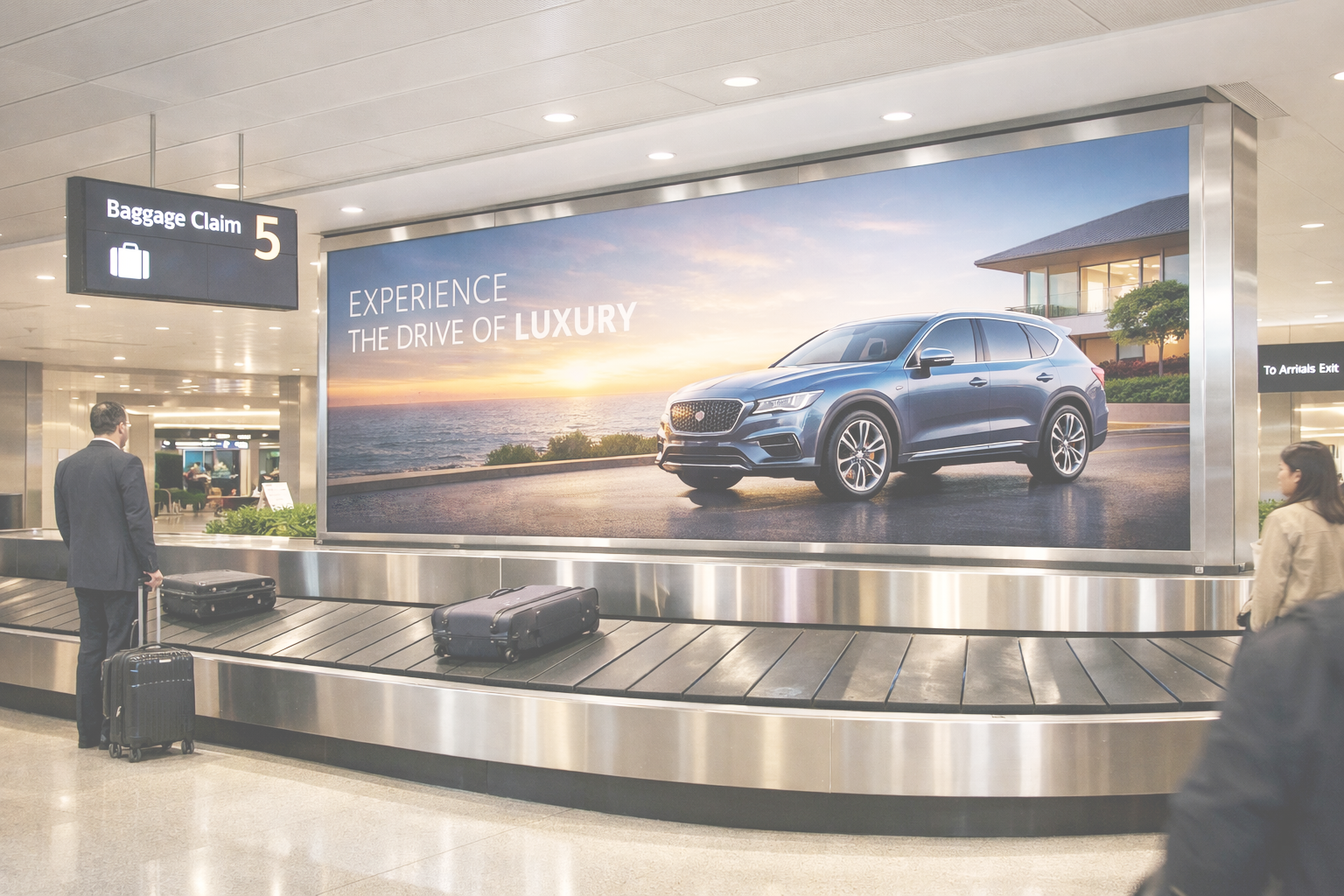
It’s Not Just Where You Advertise - It’s How Fast You Execute
We combine local insight with fast rollout to deliver results for you, now.
Talk to an ExpertAudience and Cultural Intelligence
Top 2 Languages:
- Danish: The primary language of the local and regional traveller base, spoken by over 5.5 million Danes and understood by Swedish speakers with minimal friction. Danish-language campaigns reach the airport's largest single traveller cohort — departing Danish residents who are among the highest per-capita spenders on travel and consumer goods in Europe.
- English: The universal working language of CPH's substantial international expatriate and business traveller communities. English is used fluently by over 85% of adult Danes, making it the natural language of any campaign targeting the airport's cross-national professional audience, including the large British, American, German, and international expat populations.
Major Traveller Nationalities: Danes constitute the largest single nationality group, accounting for over 50% of passengers when combined with southern Swedish residents. British travellers are the largest inbound and outbound non-Nordic nationality, with nearly 2.8 million passengers on the Copenhagen-UK route in 2024. German, American, Norwegian, and Swedish travellers follow. North American traffic grew 23% in 2024, driven by 14 direct routes connecting CPH to the United States and Canada. Chinese travellers have returned to pre-pandemic levels following Air China's expansion of Copenhagen-Beijing capacity. The nationality mix reflects a broadly European, highly educated, professionally employed audience with strong income fundamentals across every major traveller group.
Religion — Advertiser Intelligence:
- Christianity, primarily Lutheran (approximately 72%): Lutheranism shapes Denmark's cultural calendar and spending behaviour more through secular cultural inheritance than active religious practice. Christmas remains the single most commercially powerful cultural event, generating the year's highest retail and gift-spending peak. The period from mid-November through early January is the most valuable advertising window for luxury consumer goods, premium experiential gifts, and high-end hospitality in the Danish cultural context.
- Islam (approximately 5%): Primarily within Copenhagen's established Turkish, Pakistani, Somali, and Moroccan communities. Ramadan and Eid generate elevated travel to home countries and gift-purchasing behaviour. Advertisers in jewellery, fashion, and financial services can activate targeted campaigns within this growing but commercially underserved segment at CPH.
- Non-religious and secular (approximately 20%): A substantial portion of the Danish population identifies as non-religious, which reinforces a spending pattern driven by lifestyle values, quality signalling, and design consciousness rather than religious gifting cycles. Brands built around craft, sustainability, innovation, and premium provenance resonate strongly with this secular-affluent Danish consumer.
Behavioral Insight: The Nordic traveller at CPH operates from a set of values that is commercially distinct from Southern European or Middle Eastern HNWI audiences. Danes and Swedes respond to quality, authenticity, and design integrity over ostentation. They are highly educated, research-led consumers who do not purchase on impulse — but they do purchase at a premium when brand values align with their own. Environmental credentials, transparency, and craft positioning unlock purchasing intent in a way that pure luxury signalling alone does not. Advertising at CPH that leads with innovation, Scandinavian design sensibility, or authentic premium positioning consistently outperforms messaging built around social status alone. Understanding this distinction is the difference between wasted budget and genuine brand conversion in this market.
Outbound Wealth and Investment Intelligence
The outbound passenger at Copenhagen Airport is one of the most financially stable and asset-rich traveller profiles in Northern European aviation. Denmark's high average wealth, low unemployment, and the pharma-driven wealth acceleration of the past five years have created an outbound passenger class that is not merely wealthy by inheritance or seniority, but actively accumulating investable assets in mid-career. These individuals travel with intention and they invest across borders with the same deliberateness they apply to professional decisions.
Outbound Real Estate Investment: Copenhagen's high property taxes and the relative restriction on holiday home ownership under Danish law have historically pushed affluent Danes to seek investment properties abroad. The most active outbound real estate destinations for CPH's HNWI audience include Spain — particularly Mallorca, the Costa del Sol, and Barcelona — where Danish buyers are consistently among the most active non-Spanish property purchasing nationalities. Portugal's Algarve region attracts Danish buyers for both lifestyle and investment purposes, particularly with the Golden Visa real estate fund route offering residency alongside yield. Italy, specifically Tuscany and the Italian Lakes, attracts the Copenhagen cultural and design professional class. France, particularly Provence and Normandy, draws Danish buyers with family connections to French agricultural and cultural properties. International developers and real estate advertisers marketing Spanish, Portuguese, and Italian properties should treat CPH as a primary Nordic acquisition channel.
Outbound Education Investment: Danish families in the upper-income segment increasingly send children abroad for international university education, with the United Kingdom — particularly Oxford, Cambridge, LSE, Imperial, and UCL — consistently the most preferred destination. The United States follows, with Ivy League and top liberal arts colleges attracting Danish students whose families have the financial capacity and international orientation to support transatlantic education investments. The Netherlands and Sweden represent closer alternatives, but the prestige premium drives upper-income Danish families toward Anglophone destinations. International universities and education consultancies marketing UK and US degree programmes should treat CPH's upper-income Danish family traveller as a qualified prospect with both the intent and the spending capacity to follow through.
Outbound Wealth Migration and Residency: Second-residency demand among Copenhagen's HNWI audience is growing, driven primarily by tax optimisation and lifestyle diversification. Denmark's high personal income tax rates — among the highest in the OECD — create structural incentives for wealthy Danes to explore international residency options, particularly for retirement planning or partial year residency. Portugal's Non-Habitual Resident tax regime, despite modifications, remains attractive for Danish professionals planning semi-retirement. Greece's Golden Visa programme is gaining traction as an entry-level investment residency for Copenhagen-based investors seeking Mediterranean lifestyle access. Malta's residency programmes appeal to Danish professionals within the financial services sector who require EU residency flexibility with tax advantages. Caribbean citizenship-by-investment programmes are of limited primary interest but serve as supplementary travel document strategies for internationally mobile Danish entrepreneurs.
Strategic Implication for Advertisers: International brands operating on both sides of the Nordic outbound investment corridor — from Spanish resort real estate developers to UK university admissions teams, Portuguese property funds, and private banking institutions servicing the tax-efficient residency market — should recognise CPH as one of the highest-qualifying acquisition channels in Northern Europe. The passenger here is not browsing. They are planning, and the airport environment gives advertisers access to that planning mindset at its most commercially receptive moment. Masscom Global activates campaigns on both the departing and arriving sides of this corridor simultaneously, ensuring that brands capture the Nordic investor whether they are heading out to view property or returning to make a decision.
Airport Infrastructure and Premium Indicators
Terminals:
- Terminal 2: Handles a significant share of European and domestic traffic. Directly connected to Terminal 3 via indoor corridors, Terminal 2 received a major expansion in March 2025, adding 25 new shops, cafés, and restaurants including premium Danish brands. The terminal expansion has significantly increased retail dwell time and brand exposure opportunity within the Schengen departures zone.
- Terminal 3: The premium heart of CPH. Terminal 3 serves long-haul and non-Schengen international traffic, housing the SAS Lounge, Emirates operations, and the majority of premium cabin departures. A 60,000 square metre expansion between Gates B and C is currently under construction and due for completion in 2028, which will double baggage reclaim capacity, add over 30 new shops and restaurants, and create an expanded transit and shopping zone that will be among the most commercially sophisticated terminal retail environments in Northern Europe.
- Pier F (CPH Go): The dedicated low-cost pier for Ryanair, easyJet, and Transavia, producing a volume audience that complements rather than dilutes CPH's premium inventory. Its separation from Terminals 2 and 3 ensures that premium brand campaigns in the main terminal environment are not audience-diluted by budget carrier passengers.
Premium Indicators:
- CPH's lounge infrastructure includes the flagship SAS Lounge at the C gates — the primary premium environment for long-haul and business class passengers — the newly opened Aspire Lounge in Terminal 2 with an adults-only Aspire Suite featuring à la carte dining and table service, and the Eventyr Lounge with panoramic runway views. The density and quality of lounge facilities signals the proportion of CPH passengers travelling in premium cabins and holding elite frequent flyer status.
- The Hilton Copenhagen Airport Hotel, a five-star property with 382 rooms directly connected to the terminal, provides premium dwell-time accommodation for layover and early-arrival passengers. Its presence within the airport ecosystem reinforces the premium environment signal for luxury brand advertising adjacent to the terminal.
- CPH has been recognised by Skytrax and multiple industry organisations for its combination of operational efficiency, design quality, and passenger experience. Its design-forward terminal architecture — particularly the planned cloud ceiling and garden feature in the new B-C expansion — positions it as one of the most aesthetically premium airport environments in Europe, elevating brand association for any advertiser present in its commercial zones.
- Copenhagen Airport operates under one of the lowest airport charge structures in Europe while maintaining world-class facilities, a combination that has enabled SAS's decision to designate CPH as its global hub with at least 15 new routes launching from Copenhagen in 2025.
Forward-Looking Signal: CPH is undergoing its most significant infrastructure investment in decades. A DKK 1,487 million capital programme in 2024 funded the Terminal 3 expansion, 20 new CT scanner security lanes, baggage system upgrades, and runway improvements. The terminal-of-the-future expansion between Gates B and C will complete in 2028, adding 60,000 square metres of terminal space, over 30 new retail and food outlets, and a dramatically improved non-Schengen passenger environment. SAS has simultaneously committed to using CPH as its global hub and launching at least 15 new routes, adding significant long-haul capacity and premium cabin seats to the airport's already strong route network. Passenger records were broken consecutively in 2024 and 2025, and the trajectory points to CPH surpassing 35 million annual passengers before the end of the decade. Brands that invest in CPH advertising today secure positioning within a growing, increasingly premium terminal environment before expanded capacity attracts a new wave of advertiser competition. Masscom Global advises clients to plan multi-year commitments at CPH now to lock in current rates before the post-expansion inventory premium takes effect.
Airline and Route Intelligence
Top Airlines: SAS (Scandinavian Airlines), Norwegian Air Shuttle, Ryanair, easyJet, Lufthansa, British Airways, Emirates, Air France, KLM, Turkish Airlines, American Airlines, Delta Air Lines, Air Canada, Air China, United Airlines, Finnair, Swiss International Air Lines
Key International Routes:
- Copenhagen to London Heathrow and Gatwick (multiple daily, the single most trafficked international corridor from CPH with 2.8 million passengers in 2024)
- Copenhagen to New York JFK (multiple daily, SAS, Delta, and American Airlines — the highest-yield transatlantic route from Scandinavia)
- Copenhagen to Los Angeles and San Francisco (daily, key West Coast premium routes restored to full capacity)
- Copenhagen to Dubai (daily, Emirates A380 — operating since 2015, one of the first Scandinavian A380 routes and a premium Gulf corridor)
- Copenhagen to Bangkok (SAS, seasonal)
- Copenhagen to Toronto and Montreal (Air Canada)
- Copenhagen to Beijing (Air China, five weekly flights)
- Copenhagen to Amsterdam, Frankfurt, Paris CDG, and Zurich (multiple daily each — European financial hub connectors)
- Copenhagen to Oslo, Stockholm, and Helsinki (multiple daily — Nordic intra-regional business routes)
Domestic Connectivity: CPH connects to Aarhus, Aalborg, Billund, Bornholm, and other Danish regional airports via Danish Air Transport and SAS, providing feeder traffic from across Denmark's regional professional and business communities.
Wealth Corridor Signal: The CPH route network reveals a dual wealth corridor structure. The London, New York, Zurich, and Amsterdam routes are pure business and investment corridors where premium cabin passengers manage cross-border portfolios, close institutional deals, and attend high-level corporate governance events. The Dubai route carries a significant proportion of Scandinavian HNWI leisure travel to the Gulf, alongside business travel into Dubai's financial and real estate market. The Beijing and North American routes carry the pharmaceutical and clean energy executive class making decisions about global supply chains and market entry. For advertisers, the route network confirms that CPH is not a holiday airport. It is a professional productivity airport where the decisions made at the gate are measured in millions.
Media Environment at the Airport
- CPH's compact, design-led terminal layout creates an intimate yet high-traffic media environment. Unlike larger fragmented mega-hubs, CPH concentrates passenger flow through well-defined corridors between Terminals 2 and 3 and along the pier concourses, creating high-frequency exposure windows with consistently relevant audience composition. Brand presence here feels premium rather than scattered.
- Dwell time at CPH is enhanced by the deliberate retail-and-dining integration across the Shopping Street — the airside retail corridor between Terminals 2 and 3. With an expanding portfolio of over 30 new outlets opening progressively as the terminal expansion completes, CPH is investing directly in the commercial infrastructure that turns dwell time into purchase time for advertisers.
- The premium environment signals at CPH are reinforced by the airport's Scandinavian design ethos. The terminal's clean lines, quality materials, and high-daylight architecture create a brand association context that lifts any advertiser's perceived positioning. A campaign at CPH benefits from an ambient luxury signal that is harder to achieve in larger, more utilitarian international hubs.
- Masscom Global's inventory access at CPH enables precise placement across the terminal's highest-traffic zones — from pre-security check-in areas through to the Shopping Street, lounge adjacencies, and the long-haul pier concourses where business and first class passengers concentrate. Campaign structure can be tailored by audience segment, route origin, or departure pier, ensuring that investment is placed where the target audience is most reliably found.
Strategic Advertising Fit
Best Fit:
- International real estate developers: Particularly those marketing properties in Spain, Portugal, Italy, and France. Copenhagen's outbound HNWI audience is among the most active Nordic property buyers in Southern Europe, and CPH is the point of departure for every investment viewing trip they take.
- Private banking and wealth management: The pharma-wealth effect in Copenhagen has created a new cohort of asset-rich professionals who are actively seeking wealth management services beyond Denmark's domestic banking offer. International private banks and family office platforms should treat CPH as a primary Nordic acquisition channel.
- Premium automotive: BMW, Porsche, Mercedes-Benz, and Audi all have their core audience concentrated at CPH. Denmark's car registration tax structure makes premium vehicles a considered, high-involvement purchase, and airport advertising reaches the decision-maker at the point of peak aspiration during international travel.
- Luxury goods and fashion: Scandinavian HNWIs are among Europe's most discerning luxury purchasers. Design, craft, and brand heritage resonate more than logo visibility alone. International luxury brands that communicate authenticity and creative intelligence achieve strong brand affinity within CPH's predominantly design-literate audience.
- International education: UK and US universities and education consultancies targeting Danish upper-income families find at CPH one of the highest-converting Nordic acquisition environments. The airport puts campaigns in front of parents who are already planning, funding, and committing to international education pathways for their children.
- Sustainability-linked financial products and ESG investment platforms: Denmark's corporate and professional class is Europe's most environmentally motivated investor segment. Impact investment products, green bonds, and ESG wealth platforms have a rare opportunity at CPH to reach an audience whose values genuinely align with sustainable investment propositions.
- Premium Scandinavian and Nordic destination brands: International hospitality and destination brands marketing the Nordic region find at CPH an inbound audience primed to engage with authentic local experiences, high-quality accommodation, and design-led travel products.
Brand Alignment at a Glance:
| Category | Fit |
|---|---|
| International real estate (Southern Europe) | Exceptional |
| Private banking and wealth management | Exceptional |
| Premium automotive | Exceptional |
| Luxury goods and fashion | Strong |
| International education | Strong |
| ESG and sustainable investment platforms | Strong |
| Premium hospitality and Nordic destinations | Strong |
| Mass-market FMCG | Poor fit |
| Value retail and discount services | Poor fit |
Who Should Not Advertise Here:
- Budget consumer and discount retail brands: The CPH audience is defined by quality orientation and above-median spending. Discount propositions create brand dissonance in a terminal environment built around premium Danish design and quality retail.
- Geographically restricted domestic services: Products or services with no international relevance or digital accessibility will achieve negligible traction with a predominantly internationally mobile, digitally sophisticated audience.
- Mass-market fast food brands seeking brand advertising placements: While quick-service categories operate within the terminal's food offer, brand advertising in CPH's premium inventory zones is poorly aligned with the expectations of the audience and will not generate the association premium the environment is capable of delivering.
Event and Seasonality Analysis
- Event Strength: Medium-High
- Seasonality Strength: High
- Traffic Pattern: Dual-Peak (May to August primary summer peak; November to January secondary holiday peak)
Strategic Implication: CPH's traffic rhythm rewards advertisers who plan around two distinct windows rather than attempting year-round spend at full intensity. The May to August summer window is the highest-volume period and the primary opportunity for lifestyle, real estate, and travel-adjacent advertisers reaching outbound Nordic HNWIs at peak aspiration. The November to January window is the highest-revenue opportunity for luxury consumer goods, gifting, and financial year-end campaigns. Masscom Global builds CPH campaign structures around these peaks, securing premium inventory before summer and holiday competition reduces availability, and engineering creative rotations that match the distinct audience mindset of each window.

Poor Placement and Delays Affect Airport Campaigns
We help you move faster, access better inventory, and get it right now.
Talk to an ExpertFinal Strategic Verdict
Copenhagen Airport is the only Tier 1 advertising environment in Scandinavia and one of the most commercially compelling airports in Northern Europe for brands targeting wealthy, internationally mobile, and professionally significant audiences. The combination of pharma-driven wealth concentration in the Copenhagen catchment, a dual-nation audience spanning Denmark and southern Sweden, record passenger growth that broke the 32 million barrier in 2025, and a terminal currently undergoing its most ambitious expansion in decades creates a moment of exceptional opportunity for advertisers willing to act before infrastructure improvement drives inventory demand higher. Brands in international real estate, private banking, premium automotive, luxury goods, and sustainability-linked financial products have at CPH the precise audience, the commercial environment, and the dwell-time infrastructure to convert premium placement into qualified prospect contact. Masscom Global has the local execution capability, the inventory relationships, and the campaign intelligence to activate this environment with the precision and speed it demands.
About Masscom Global
Masscom Global is a premium international airport advertising and media buying agency operating across 140 countries. With deep expertise in airport OOH, premium publications, and high-net-worth audience targeting, Masscom helps brands reach the world's most valuable travellers at the moments that matter most. For advertising packages, media rates, and campaign planning at Copenhagen Airport and airports across the globe, contact Masscom Global today.
Frequently Asked Questions
How much does airport advertising cost at Copenhagen Airport?
Advertising costs at Copenhagen Airport vary significantly based on format, terminal location, campaign duration, and seasonal demand. Pier C and the Shopping Street between Terminals 2 and 3 command the highest rates, while the ongoing terminal expansion will introduce new premium formats as construction completes. Masscom Global provides current rate cards, format recommendations based on campaign objectives, and negotiated placements calibrated to budget and target audience. Contact Masscom for a tailored proposal.
Who are the passengers at Copenhagen Airport?
CPH's passengers are predominantly Danish and southern Swedish upper-income professionals and their families, complemented by significant inbound volumes of British, German, American, and international business and leisure travellers. The catchment economy — shaped by Novo Nordisk, Maersk, and Denmark's financial services sector — skews the departing audience heavily toward senior executives, scientists, engineers, and entrepreneurs with above-average investable assets. Inbound travellers include both premium leisure visitors from the UK, Germany, and North America and international professionals arriving for conferences and business appointments in Copenhagen's thriving corporate ecosystem.
Is Copenhagen Airport good for luxury brand advertising?
CPH is Scandinavia's best luxury brand advertising environment and among the top ten in Northern Europe. The airport's design-led terminal architecture, premium lounge infrastructure, and audience of financially sophisticated, quality-oriented Nordic professionals creates a brand association context that lifts any premium brand's perceived positioning. Luxury brands that communicate authenticity, craft, and design intelligence perform particularly well here. The ongoing terminal expansion will further strengthen CPH's luxury retail environment by 2028.
What is the best airport in Scandinavia to reach HNWI audiences?
Copenhagen Airport is the definitive answer. It is the only Tier 1 airport in Scandinavia, handles more passengers than any other Nordic airport, and serves as the primary international hub for Denmark's exceptionally wealthy professional class. Stockholm's Arlanda and Oslo's Gardermoen serve comparable national audiences but with lower catchment wealth density and fewer intercontinental route options. For any brand targeting Nordic HNWIs with international purchasing and investment behaviour, CPH is the single most efficient placement in the region.
What is the best time to advertise at Copenhagen Airport?
The May to August window is the primary campaign period, capturing the highest absolute passenger volumes, peak outbound holiday travel, and the summer conference season. The November to January period is the best window for luxury gifting, premium consumer, and financial year-end campaigns. March and April offer a secondary opportunity for education, real estate, and Easter travel-aligned advertisers. Copenhagen Fashion Week in February and August creates concentrated fashion-industry audience windows that luxury brands should programme around specifically.
Can international real estate developers advertise at Copenhagen Airport?
CPH is one of the most productive channels in Northern Europe for international real estate developers. Denmark's affluent professional class is actively seeking investment properties abroad — particularly in Spain, Portugal, Italy, and France — driven in part by Denmark's property tax structure and the high personal income tax rate that makes offshore asset diversification attractive. The airport puts advertising campaigns directly in front of the outbound investor at the moment of departure to viewing trips, investment appointments, and second-home holidays. Masscom Global has structured real estate campaigns at CPH with measurable lead generation outcomes across multiple European property markets.
Which brands should not advertise at Copenhagen Airport?
Budget consumer brands, discount services, and geographically restricted domestic offerings are misaligned with CPH's audience profile and premium terminal environment. The cost of quality inventory at CPH requires a brand that can credibly claim a premium positioning, and categories without a clear connection to the airport's professionally affluent, internationally mobile audience will not generate the return the investment requires.
How does Masscom Global help brands advertise at Copenhagen Airport?
Budget consumer brands, discount services, and geographically restricted domestic offerings are misaligned with CPH's audience profile and premium terminal environment. The cost of quality inventory at CPH requires a brand that can credibly claim a premium positioning, and categories without a clear connection to the airport's professionally affluent, internationally mobile audience will not generate the return the investment requires.







