

Airport at a Glance
| Field | Detail |
|---|---|
| Airport | Cologne Bonn Airport |
| IATA Code | CGN |
| Country | Germany |
| City | Cologne / Bonn |
| Annual Passengers | Approximately 10 million (2023) |
| Primary Audience | Turkish diaspora returnees, NRW pharmaceutical and media executives, UN and international civil servant class, Cologne trade fair business travelers |
| Peak Advertising Season | June to September, November to January |
| Audience Tier | Tier 1 — NRW Germany |
| Best Fit Categories | International real estate, financial services, luxury travel and hospitality, premium consumer goods, Turkish market brands |
Cologne Bonn Airport is one of Germany's most commercially distinctive aviation gateways by audience composition, economic catchment density, and operational uniqueness rather than passenger volume alone. CGN sits at the geographic centre of North Rhine-Westphalia, Germany's most populous and economically productive federal state, serving a combined metropolitan population of over four million across the Cologne-Bonn axis whose commercial identity is defined by three audience forces that no other German regional airport replicates simultaneously. The first is the Turkish diaspora community concentrated across Cologne, Leverkusen, and the broader NRW industrial belt — a community estimated at over 120,000 Turkish-origin residents in Cologne alone and representing the densest single-city concentration of the German Turkish population outside Berlin, whose travel through CGN on the Istanbul, Antalya, and Turkish coastal resort routes constitutes one of Europe's most commercially significant diaspora aviation corridors. The second is the pharmaceutical, chemical, media, and telecommunications executive class produced by NRW's extraordinary corporate density — Bayer in Leverkusen, Deutsche Telekom and Deutsche Post DHL in Bonn, Ford Germany and RTL Group in Cologne — whose professional incomes, international travel frequency, and premium consumption behaviour position CGN's business catchment among Germany's most commercially capable airport audiences. The third is the international civil servant and diplomatic community anchored in Bonn's UN Campus, home to over 20 United Nations agencies including the UNFCCC Secretariat, the UN Volunteers Programme, and the Convention on Biological Diversity, whose internationally mobile, dollar and euro-salaried professional class represents a commercially sophisticated audience whose purchasing behaviour reflects global institutional income benchmarks rather than domestic German salary norms.
CGN's 24-hour operating licence — one of Germany's rarest aviation permissions — gives the airport a commercial distinctiveness that no curfew-restricted competitor can challenge. The airport operates without night flight restrictions, enabling early morning charter departures, late-night cargo operations anchored by UPS's European air hub, and year-round access to Mediterranean charter markets at scheduling windows that drive both passenger volume and commercial dwell time patterns unique in the German regional airport landscape. For advertisers seeking access to Germany's most Turkish-diaspora-intensive aviation audience, the executive class of Europe's most densely corporated industrial corridor, and the international professional class of the continent's most significant UN-host city outside New York and Geneva, CGN is the only access point that exists.


Advertising Value Snapshot
- Passenger scale: Approximately 10 million annually (2023), recovering from COVID-era disruption toward pre-pandemic levels of 12 to 13 million, with growth driven by Turkish diaspora route expansion, Mediterranean charter recovery, and new Eurowings and Ryanair European network additions
- Traveller type: Turkish diaspora returnees and Turkish-German business travelers, NRW pharmaceutical and chemical sector executives, Cologne media and advertising industry professionals, Bonn UN and federal government officials, leisure travelers on German-Turkish and Mediterranean charter routes, Cologne trade fair business visitors
- Airport classification: Tier 1 NRW — Germany's sixth-busiest airport by passenger volume and the primary aviation gateway for a combined Cologne-Bonn metropolitan economy whose GDP output ranks it among Europe's most commercially productive city-pair economies
- Commercial positioning: The gateway to Germany's most Turkish-diaspora-intensive metropolitan corridor, the pharmaceutical and media capital of NRW's corporate landscape, and the international civil service hub of the United Nations' most important European operational campus outside Geneva
- Wealth corridor signal: Positioned at the intersection of the Germany-Turkey diaspora capital transfer corridor, the Cologne-Bonn pharmaceutical and technology executive wealth belt, and the international civil servant income channel connecting Bonn's UN agencies to donor capital cities globally
- Advertising opportunity: Masscom Global activates across CGN's full inventory environment with the Turkish diaspora cultural intelligence, NRW corporate market expertise, and German airport advertising execution capability that international and domestic brands need to reach one of Western Europe's most commercially layered and commercially underserved regional airport audiences
Airport Advertising is Complex to Get Right
We help you execute faster, with proven results and local insight most planners lack starting now.
Talk to an ExpertCatchment Area and Economic Drivers
Top 10 Cities within 150 km — Marketer Intelligence:
- Cologne (Köln): Germany's fourth-largest city and its undisputed media, advertising, and broadcast capital, housing RTL Group, WDR, Vox, n-tv, and dozens of the country's most commercially significant advertising and creative agencies alongside a Fortune-ranked insurance sector, a Ford Germany automotive headquarters, and one of Germany's most commercially active trade fair operations — the Koelnmesse — whose Anuga food fair, imm cologne furniture trade, and Gamescom gaming industry events collectively deliver Germany's most diverse annual B2B trade fair audience to CGN's departure halls multiple times each year.
- Bonn: The former West German capital and the seat of Germany's most internationally significant institutional infrastructure outside Berlin, housing over 20 United Nations agencies on the UN Campus Bonn, several federal ministries that retained Bonn operational presence after reunification, the global headquarters of Deutsche Telekom and Deutsche Post DHL, and a university city whose academic and research ecosystem produces consistent international travel through CGN for conferences, diplomatic engagements, and institutional meetings in New York, Geneva, and Brussels — a commercially sophisticated audience whose institutional salaries, international travel frequency, and premium consumption standards reflect the United Nations' global compensation benchmarks rather than domestic German salary scales.
- Leverkusen: One of Germany's most commercially consequential single-company cities, defined almost entirely by the presence of Bayer AG — one of the world's largest pharmaceutical and life sciences companies — whose global headquarters, primary research campus, and senior executive community generate a concentrated pharmaceutical and chemical sector professional class with institutional incomes at the upper end of the German corporate salary range and active international travel to Basel, London, New York, and Shanghai for regulatory, investment, and research partnership engagements.
- Aachen: Germany's westernmost major city and the home of RWTH Aachen — one of Europe's most consistently highly ranked technical universities and a significant industrial research partner — whose engineering, materials science, and technology executive community travels through CGN for European research and manufacturing partnerships, combined with a significant Belgian and Dutch cross-border commercial community whose Euregion business relationships connect Aachen to Maastricht and Liège's professional class in a functionally borderless metropolitan economy.
- Wuppertal: A historically significant industrial city whose textile, engineering, and chemical manufacturing heritage has produced a diversified commercial economy of Mittelstand family businesses whose multi-generational ownership structures, accumulated industrial wealth, and active international supplier relationships in Asia and Eastern Europe create consistent demand for trade finance, wealth management, international real estate, and premium travel products from a business owner class whose net worth significantly exceeds their geographic profile's national visibility.
- Solingen: Germany's most celebrated blade and cutlery manufacturing city, home to Henckels, Wüsthof, and dozens of premium blade engineering companies whose export relationships with North America, Japan, and the Gulf, combined with the premium brand equity of the Made in Solingen designation in global kitchen goods markets, produce a business owner and manufacturing executive class with established international market exposure and active demand for trade banking, premium goods, and business travel services calibrated to the export economy's European and global market standards.
- Remscheid: A precision engineering and industrial machinery city whose Mittelstand manufacturing companies — producing tools, machinery, and specialised industrial components for export to global manufacturing markets — generate a technically skilled, internationally commercially active business owner class whose machinery export relationships and active participation in international trade fairs create consistent demand for trade finance, business banking, and premium professional services aligned to Germany's Mittelstand economy.
- Bergisch Gladbach: Cologne's eastern premium residential satellite, housing a significant concentration of upper-income professional households whose Cologne employment incomes, suburban homeownership equity, and established premium consumer spending patterns make them one of CGN's most consistently commercially capable domestic catchment segments for real estate investment, premium automotive, luxury goods, and financial services advertising.
- Maastricht (Netherlands): The most commercially significant cross-border city in CGN's catchment, positioned in the Netherlands' southernmost province of Limburg and connected to the Cologne-Bonn metropolitan economy through the Euregion Maas-Rhein, whose Dutch professional and business class uses CGN alongside Amsterdam and Eindhoven as a competitive aviation gateway — a high-income, Netherlands-income-benchmarked audience whose cross-border commercial and leisure travel through CGN adds Dutch purchasing power and Dutch-market brand familiarity to the airport's already-substantial consumer spending profile.
- Koblenz: The historic Rhine and Moselle confluence city whose military presence (German Federal Armed Forces headquarters for several commands), wine industry estate owners and merchants from the Moselle and Rhine Riesling appellations, and financial and legal services sector produce a commercially established audience with above-average institutional and agricultural sector wealth, active international leisure travel to Mediterranean destinations, and consistent demand for premium banking, insurance, and luxury goods products calibrated to the expectations of a regionally affluent but nationally understated commercial community.
NRI and Diaspora Intelligence:
The Turkish diaspora in North Rhine-Westphalia is the most commercially significant diaspora community in Western Europe's industrial heartland, with an estimated 600,000 to 700,000 Turkish-origin residents across NRW and over 120,000 in Cologne alone, representing over three generations of settlement whose commercial evolution from first-generation Gastarbeiter workers to second-generation entrepreneurs and third-generation professionals has produced a community whose accumulated wealth, business ownership, and international investment behaviour is structurally comparable to the Lebanese commercial communities of West Africa and the Indian communities of East Africa in its sophistication and cross-border capital management maturity. The Turkish community in Cologne and NRW travels through CGN as the primary aviation gateway for both family visits to Turkey and business management of Turkish commercial interests — real estate in Istanbul, Antalya, and Izmir, business investments in Turkey's manufacturing and service sectors, and family property portfolios accumulated across two countries simultaneously. The community's commercial class — whose businesses span retail, construction, logistics, catering, and healthcare across NRW's major cities — has accumulated intergenerational wealth that is now being actively deployed into both German property investment and Turkish real estate reinvestment at a scale that makes the CGN Turkish corridor one of the most commercially significant diaspora investment aviation channels in Western Europe. The Moroccan, Tunisian, and broader North African diaspora community in NRW adds a second significant diaspora travel flow through CGN, using the airport's connections to Casablanca, Marrakech, Tunis, and Agadir for family visits and investment management. The Italian and Greek diaspora communities in the Rhineland — descendants of the 1960s Gastarbeiter migration from Southern Europe — contribute a third layer of diaspora return travel through CGN with established purchasing power and dual-country investment behaviour.
Economic Importance:
North Rhine-Westphalia is Germany's most populous federal state and one of Europe's most economically productive industrial geographies, contributing approximately 21 percent of German GDP from a concentration of pharmaceutical, chemical, automotive, telecommunications, media, energy, and logistics companies whose combined revenue and employment makes NRW the economic engine of the German Rhineland. The Cologne-Bonn axis within this state concentrates four specific commercial forces whose combined effect on CGN's audience quality is disproportionate to the airport's national passenger ranking: Cologne's media and advertising industry is Germany's most commercially significant outside Munich and Hamburg, producing creative and communications executives whose international travel frequency and premium consumption standards reflect the global media industry's compensation benchmarks; Bonn's UN and governmental institutional infrastructure creates a permanently resident international civil servant class whose dollar-denominated UN salary packages and diplomatic allowances position them among Germany's highest per-capita airport spending audience segments; Leverkusen's Bayer complex generates pharmaceutical executive wealth that travels internationally at a frequency and with a spending profile comparable to financial sector executives in Frankfurt; and the broader NRW Mittelstand economy produces thousands of family-owned industrial businesses whose owner-operator wealth has been accumulated across generations of precision engineering export success and whose capital deployment behaviour reflects the specific financial sophistication of Germany's most commercially underestimated wealth segment.
Business and Industrial Ecosystem
- Bayer AG's global headquarters in Leverkusen generates Cologne-Bonn's most concentrated single-company premium executive audience, with pharmaceutical research directors, regulatory affairs executives, global procurement managers, and senior corporate officers traveling through CGN for international engagements in Basel, London, Beijing, New York, and Tokyo at frequencies and with personal income profiles that position them among Germany's highest-spending airport audiences per individual traveler
- The Bonn UN Campus's 20-plus United Nations agencies — including the UNFCCC, UN Volunteers, Convention on Migratory Species, and the Bonn Convention on Migratory Animals — generate a permanent internationally mobile civil servant class whose institutional incomes, diplomatic allowances, and frequent travel to donor capitals, Conference of Parties events, and global programme locations create a concentrated premium travel and consumer goods audience whose purchasing behaviour reflects the United Nations' global compensation structure rather than domestic German salary benchmarks
- Cologne's media and broadcasting industry — anchored by RTL Group, WDR, Vox, n-tv, and Super RTL alongside the advertising, production, and digital media ecosystem that these broadcasters support — produces a creative and commercial executive class whose international travel to Cannes Lions, MIPCOM, and European broadcasting industry events, combined with premium lifestyle consumption patterns shaped by the global media industry's cultural standards, makes them one of NRW's most commercially active premium consumer audience segments at CGN
- Deutsche Telekom and Deutsche Post DHL's combined Bonn headquarters operations generate a multinational corporate executive class managing global telecommunications and logistics networks whose international travel frequency, institutional authority, and personal income benchmarks at the executive level create consistent demand for premium business travel, international real estate, and wealth management products at the airport's departure halls
Passenger Intent — Business Segment:
Business travelers at CGN are drawn from the pharmaceutical and life sciences sector, the United Nations and international civil service, the media and advertising industry, the telecommunications and logistics sector, the NRW Mittelstand manufacturing and engineering companies, the financial and legal services sector, and the Cologne trade fair professional community. They travel to Istanbul and Ankara for Turkish subsidiary management and commercial engagements, to Basel and Zurich for pharmaceutical industry meetings and Swiss financial management, to Brussels for EU institutional engagements and German federal policy interactions, to London for media and investment banking partnerships, and to New York and Geneva for UN programme reviews and pharmaceutical regulatory meetings. Advertiser categories that intercept them most effectively include premium business travel and hotel brands, international real estate investment platforms, wealth management and private banking, luxury goods positioned around professional achievement, and B2B technology and pharmaceutical industry service brands with European and global operational relevance.
Strategic Insight:
The business audience at CGN carries a commercially distinctive characteristic that is systematically underestimated by national advertisers who calibrate Germany's airport advertising investment almost exclusively through Frankfurt and Munich: the concentration of a UN civil servant class earning in tax-exempt dollar-denominated packages, a Bayer pharmaceutical executive community whose compensation benchmarks are set by global industry rather than German market norms, and a Turkish business owner class whose three-generation wealth accumulation across two economies has produced a commercial sophistication invisible to demographic surveys that classify them by immigration origin rather than by commercial achievement — collectively makes CGN's departure hall a premium audience environment whose per-capita spending capacity and investment motivation significantly exceeds what its regional airport classification suggests. Masscom Global's audience intelligence reveals this gap between classification and commercial reality, and activates campaigns that exploit it.
Tourism and Premium Travel Drivers
- Cologne Cathedral — a UNESCO World Heritage Site and one of the world's most visited Gothic structures — anchors the city's most significant international tourism draw, attracting over six million visitors annually from North America, East Asia, the Gulf, and across Europe whose trip profiles combine heritage tourism with premium hotel accommodation in Cologne's city centre and significant spending on the city's luxury retail corridor along Hohe Strasse and Schildergasse
- Aachen Cathedral, the seat of Charlemagne's Carolingian Empire and a UNESCO World Heritage Site, draws historically motivated European and North American cultural tourists through CGN whose itineraries combine Aachen's imperial heritage with Cologne's Gothic and Roman-Norman architecture in a combined cultural tourism circuit unique in the Western European heritage tourism landscape
- The Cologne Christmas Markets — consistently ranked among Germany's most celebrated and most visited festive markets, drawing over four million visitors annually across the six traditional market sites surrounding the Cathedral — generate one of CGN's most commercially distinctive inbound tourism windows, with international visitors from the UK, Netherlands, Belgium, and the USA arriving specifically for the Christmas market experience with premium leisure spending intent concentrated into a four to six week December window
- The Rhine Valley's UNESCO-listed Middle Rhine Gorge, accessible within 60 minutes of CGN, draws international heritage and wine tourism visitors for Riesling tastings, Lorelei boat cruises, and castle landscape photography — a premium leisure audience with above-average accommodation spending and strong premium wine product purchasing behaviour at the terminal departure hall
Passenger Intent — Tourism Segment:
Inbound tourism travelers at CGN split between high-spending international cultural and heritage tourists using Cologne as their primary German city visit — whose per-capita accommodation and experience spending reflects the premium positioning of a city with UNESCO cathedral heritage, world-class museum infrastructure including the Museum Ludwig and Wallraf-Richartz, and a restaurant and hospitality sector whose quality has earned increasing international recognition — and an outbound German and NRW leisure traveler segment whose Mediterranean charter travel through CGN delivers a volume-intensive but commercially active departure audience for premium travel accessories, summer retail, and destination brand advertising. The Christmas market inbound tourism segment delivers an internationally diverse premium audience in December whose emotional elevation and gift-purchase orientation creates one of Southern Germany's most commercially productive premium retail dwell windows in any non-Heathrow Northern European airport environment.
Travel Patterns and Seasonality
Peak seasons:
- June to September: CGN's dominant passenger season driven by the Turkish diaspora's annual summer return migration — concentrated in July and August when Turkish-German families return to Antalya, Istanbul, Izmir, and the Aegean and Mediterranean coastal resorts — combined with the broader German leisure travel summer peak on Mediterranean charter routes to Spain, Greece, Egypt, and Turkey; this window delivers the year's highest passenger concentration and the most commercially intense Turkish diaspora purchasing period at the terminal simultaneously
- November to January: The Christmas market season elevates inbound international tourism significantly above normal November levels, while the pre-Christmas consumer spending peak creates one of Germany's most commercially active airport retail and advertising windows; the Turkish diaspora's New Year return adds a secondary diaspora travel surge in late December; and the January trade fair season — anchored by imm cologne furniture and interior design — drives the first significant B2B business traveler concentration of the new year
- March (Cologne Carnival): One of Europe's largest street carnival events concentrates extraordinary domestic German tourism and international visitor flows through CGN across the Rose Monday period, with the festive consumer spending environment creating a commercially active leisure audience peak with premium entertainment, fashion, and food brand receptiveness
- October to November (Trade Fair Season): Anuga — the world's largest food trade fair, held in odd-numbered years — and other Koelnmesse events draw international food industry executives, premium food brand buyers, and agricultural sector professionals through CGN in concentrated B2B trade event travel waves whose commercial authority and institutional purchasing power make them one of the most commercially productive B2B advertising audiences in the German airport network
Event-Driven Movement:
- Cologne Carnival — Karneval (February to March): Germany's most celebrated Carnival event and one of Europe's largest street festival traditions, drawing over one million visitors to Cologne across the final week before Ash Wednesday — the Weiberfastnacht and Rose Monday parade deliver international and domestic leisure audiences through CGN whose festive spending intent, premium entertainment purchasing, and fashion and lifestyle brand receptiveness create a commercially active airport advertising window unique in the German regional airport calendar
- Gamescom (August, Cologne): The world's largest gaming and interactive entertainment trade fair, drawing over 300,000 visitors from over 100 countries through CGN — gaming industry executives, technology investors, media professionals, and consumer gaming enthusiasts whose per-capita spending on entertainment technology, gaming hardware, and premium lifestyle products creates a concentrated young HNWI and technology professional audience window at the airport
- Anuga Food Trade Fair (October, odd years): The world's largest food and beverage trade fair at Koelnmesse, drawing food industry executives, premium food brand buyers, agricultural sector professionals, and international food media from over 200 countries — a concentrated B2B commercial food and beverage audience whose institutional authority and personal income profiles position them among CGN's highest-value annual B2B advertising windows for financial services, real estate, and premium consumer brands
- Eid ul Fitr (date varies annually — Lunar calendar): CGN's Turkish and broader Muslim diaspora community generates one of Germany's most commercially significant Muslim consumer spending peaks — Cologne's DITIB Central Mosque, one of Germany's largest, anchors a Muslim community whose Eid spending on clothing, gold, gifts, and food rivals the festive retail intensity of Christmas in the Turkish residential districts of Cologne-Ehrenfeld and Mülheim; the pre-Eid departure window for Umrah pilgrims and family visit travelers creates a concentrated pre-departure advertising window for Islamic banking, Gulf destination, and premium goods brands at CGN's international departure hall
- Hajj Season (Dhul Hijjah — annually): A significant Hajj pilgrim departure from NRW's Muslim community through CGN, generating a pre-departure audience of deeply engaged Muslim consumers at peak religious motivation with strong receptiveness to Islamic financial products, premium religious goods, and Saudi Arabian destination advertising in the weeks before departure
- Cologne Christmas Markets (November to December): The most commercially intense inbound tourism window of the year at CGN, combining international visitors from the UK, Netherlands, Belgium, USA, and Japan arriving specifically for the Christmas market experience with the Turkish diaspora's New Year return travel and the German domestic consumer's most intensive annual retail spending period — a four to six week window of extraordinary premium consumer purchasing concentration
It’s Not Just Where You Advertise - It’s How Fast You Execute
We combine local insight with fast rollout to deliver results for you, now.
Talk to an ExpertAudience and Cultural Intelligence
Top 2 Languages:
- German: The universal commercial and institutional language across CGN's entire catchment, essential for all campaigns targeting the NRW corporate and professional class, the Mittelstand business owner community, the domestic leisure traveler segment, and the second and third-generation Turkish-German professional class whose commercial engagement operates in German as their primary language — the non-negotiable baseline for any brand seeking comprehensive reach across the airport's commercially capable domestic audience
- Turkish: The community language of CGN's most commercially distinctive diaspora audience and the single most important non-German language in the airport's commercial environment, spoken by over 120,000 Turkish-origin residents in Cologne and hundreds of thousands more across the NRW catchment — campaigns incorporating Turkish-language elements build authentic community trust and commercial engagement with the diaspora's most commercially active and financially capable segment, signalling to a community that has experienced decades of cultural marginalisation that a brand genuinely recognises and values its identity and purchasing power
Major Traveller Nationalities:
German nationals dominate CGN's passenger profile, subdivided into the Cologne-Bonn metropolitan professional and business class, the Turkish-German diaspora community, the NRW Mittelstand business owner segment, domestic leisure travelers, and Cologne trade fair professional visitors. International traveler nationalities reflect both the diaspora return corridor and the tourism and business network: Turkish nationals — both diaspora returnees and Turkish business visitors managing German commercial relationships — constitute the single largest non-German nationality group at CGN by a significant margin, followed by Dutch cross-border travelers from the Euregion, Belgian visitors, British tourists and business travelers, and a growing Gulf visitor segment using CGN for cultural and Christmas market tourism. The UN and international civil servant community in Bonn adds a distinct multinational professional nationality mix — representing over 100 nationalities within a single institutional campus — whose travel through CGN for programme reviews, COP conferences, and global meetings creates an extraordinary concentration of internationally mobile, institutionally authoritative, globally connected traveler diversity within a single metropolitan catchment.
Religion — Advertiser Intelligence:
- Roman Catholicism and Protestant Christianity (approximately 50 to 55% of greater Cologne-Bonn catchment, historically majority Catholic): The foundational cultural identity of Cologne's civic and commercial community, with Catholicism's deep institutional roots expressed through the Cathedral's centrality, the Carnival tradition's religious calendar origins, and the Christmas market's sacred and commercial fusion — Christmas generates CGN's most commercially intense consumer spending window, combining international tourism with domestic German festive retail at a scale that makes November to December the highest-value premium brand advertising period of the year for consumer goods, luxury retail, and premium experiences categories; Carnival creates Germany's most distinctive pre-Lent festive spending window with premium fashion, entertainment, and food purchasing concentrated into the Rose Monday week
- Islam (approximately 12 to 15% of Cologne city, predominantly Turkish and Moroccan Sunni, with significant Alevi community): One of Germany's most commercially significant Muslim urban concentrations, anchored by Cologne's DITIB Central Mosque and a network of community mosques across the Turkish residential districts — Eid ul Fitr and Eid ul Adha generate the Muslim community's most commercially intense consumer spending peaks for clothing, gold, gifts, and food; Ramadan creates a 30-day sustained window of elevated Islamic banking, charitable giving, and halal food purchasing; the Hajj and Umrah seasons produce a pre-departure pilgrim audience at CGN with peak religious motivation and strong receptiveness to Saudi Arabian destination brands, Islamic financial products, and premium prayer goods; the Turkish community's dual religious identity — some practicing Sunni Islam, others maintaining Alevi cultural traditions — creates a nuanced advertising register that brands targeting this community navigate most successfully through cultural expertise rather than generic Muslim marketing assumptions
- Judaism (historically significant, post-war re-established community): Cologne has one of Germany's oldest and most historically significant Jewish communities, with the Cologne synagogue and Jewish community centre anchoring a culturally active and commercially established minority whose above-average professional incomes, international community connections, and established premium brand consumption patterns make them a commercially relevant audience for luxury goods, international travel, and financial services categories within the airport's domestic professional audience
Behavioral Insight:
The Turkish-German diaspora audience at CGN makes purchasing decisions through a combination of community trust networks, family patriarchal consultation frameworks, and a dual-cultural commercial identity that has been negotiated across three generations of German life — this audience is simultaneously conditioned by German consumer market standards and structured by Turkish family financial obligation frameworks, producing a purchasing behaviour that is more financially sophisticated than either the German mainstream or the Turkish domestic market alone would suggest. The second and third generation Turkish-German professional class is increasingly indistinguishable from its German peer professional cohort in consumption standards while maintaining active Turkish investment behaviour and community peer comparison frameworks for major purchasing decisions. The Bonn UN civil servant audience makes rapid, individually determined purchasing decisions against global institutional compensation benchmarks, is highly responsive to premium brand positioning across travel, automotive, and lifestyle categories, and treats the airport as a fully normalised premium commercial environment — this audience has encountered premium airport advertising on every continent and evaluates brand quality and credibility accordingly.
Outbound Wealth and Investment Intelligence
The outbound passenger at Cologne Bonn Airport represents one of Western Europe's most commercially instructive diaspora and corporate wealth deployment profiles — an audience whose Turkish-German commercial capital, NRW pharmaceutical and media executive savings, and UN civil servant tax-exempt income streams are collectively deployed across Turkey, Germany, Switzerland, the UAE, and Spain in investment patterns that reflect both the diaspora's dual-country financial obligations and the corporate class's international diversification discipline. The Turkish-German business community's investment behaviour at CGN is particularly commercially significant because it operates in two directions simultaneously: deploying German-earned capital into Turkish real estate, business investment, and family financial support while simultaneously making German domestic property investment and financial product decisions shaped by decades of German market experience and German-standard financial literacy.
Outbound Real Estate Investment:
Turkey is the dominant outbound real estate market for CGN's Turkish diaspora audience — specifically Istanbul's residential property market, the Antalya coastal apartment developments, the Aegean coastal resort towns of Bodrum and Alanya, and the Izmir metropolitan residential market, all of which receive sustained investment from NRW's Turkish business community whose accumulated German savings make them among the most capitalised Turkish diaspora property buyers in any European origin country. Istanbul's Bosphorus-view residential developments, new district projects in Başakşehir and Ataşehir, and the traditional middle-class apartment market in residential districts familiar from family origin stories are all active targets for CGN's Turkish departures audience, whose investment logic combines capital appreciation in a growing emerging market with the emotional value of maintaining property roots in a homeland managed across a generational distance. Spain — specifically Mallorca, the Costa del Sol, and the Canary Islands — is the dominant leisure and second-home real estate market for CGN's broader German HNWI and professional audience, with NRW's corporate executive class representing some of the most active German buyers in the Balearic and Andalusian premium property markets. Portugal has emerged as a growing real estate investment destination for both CGN's German professional class — attracted by the NHR non-dom tax regime and the Golden Visa programme's fund route — and the Turkish-German community seeking EU-member property investment outside Germany's own relatively expensive domestic market. The UAE — specifically Dubai — has attracted growing investment from both the NRW corporate executive class and the Turkish-German business community, with the dirham's dollar-linked stability, the tax-free investment environment, and the strong rental yield profile of Dubai's residential market making it an increasingly active third international investment market for CGN's HNWI audience. Germany's domestic real estate market — specifically Cologne and Bonn's own residential and commercial property sectors — remains the primary domestic investment vehicle for the Turkish business community whose multi-decade settlement has produced active landlord portfolios across the city's Turkish residential districts.
Outbound Education Investment:
Within Germany, the University of Cologne, University of Bonn, and RWTH Aachen together constitute the primary higher education destinations for CGN's catchment families, with the NRW university system's strong research credentials and the Cologne-Bonn axis's institutional prestige making domestic university education the first-choice pathway for the professional class's children. The United Kingdom — specifically London, Edinburgh, and Manchester — is the growing first-choice international destination for NRW's English-language graduate education market, with Bayer executive families, UN civil servant households, and the Turkish-German professional class's internationally ambitious third generation all seeking UK university credentials for the international career mobility they provide in European professional markets. The United States attracts a specific segment of the pharmaceutical and technology executive class whose career ambitions require American institutional affiliation, and Canada is a growing destination for Turkish-German students seeking English-language post-study immigration pathways. Turkey's own university system — particularly Boğaziçi University, Koç University, and Sabancı University — is an increasingly valued destination for German-raised Turkish students whose cultural reconnection with Turkey is pursued simultaneously with academic ambition, creating a distinct bilateral education investment flow that Turkish universities and German-registered Turkish education consultancies can address at CGN.
Outbound Wealth Migration and Residency:
CGN's HNWI and upper-professional audience has demonstrated growing demand for international residency options whose specific motivations vary distinctly by audience segment. The German corporate executive class — particularly pharmaceutical and media sector executives approaching retirement with accumulated international investment portfolios — is increasingly exploring Portugal's NHR non-dom regime, Malta's permanent residence programme, and the UAE's long-term residency visa as tax-efficient post-career residence structures. The Turkish-German business community has demonstrated active interest in Turkey's own citizenship and investment programmes as a mechanism for formalising dual-country status — Turkish citizenship by investment providing both the official legal recognition of a Turkish identity managed across two countries and the practical consular protection that formalised citizenship confers. The UN civil servant class at Bonn's agencies navigates a distinct mobility structure — they are already internationally mobile by professional mandate — but active interest in post-service residence planning in Portugal, Spain, and the UAE is growing among senior UN officials approaching career transitions. Firms offering residency advisory, tax migration planning, and citizenship programme services will find CGN's international departure environment a commercially motivated and commercially sophisticated access point for each of these distinct but commercially active audience segments.
Strategic Implication for Advertisers:
International brands on both sides of CGN's wealth corridor — those entering Germany's Turkish-diaspora consumer market and the NRW corporate professional market from outside, and those offering real estate, education, and residency products to the airport's outbound capital class — should treat Cologne Bonn Airport as a simultaneous dual-directional channel. The terminal handles inbound international brands seeking NRW and Turkish-community market penetration and outbound German and Turkish-German capital seeking Turkish, Spanish, Emirati, and Portuguese investment positions within the same dwell window. Masscom Global activates campaigns targeting both flows with precision, delivering the Turkish diaspora cultural intelligence, NRW corporate market expertise, and German airport execution capability that international advertisers need to reach one of Western Europe's most commercially underserved and commercially consequential diaspora and executive airport audiences.
Airport Infrastructure and Premium Indicators
Terminals:
- Cologne Bonn Airport operates through two passenger terminals — Terminal 1 and Terminal 2 — connected by an airside walkway system that creates a defined sequential dwell environment across the full passenger journey from check-in through security to retail concourse and boarding gate approaches, enabling advertising campaigns to achieve broad audience penetration across both terminals' distinct passenger flows within a managed and commercially well-configured dual-terminal structure
- Terminal 2 was originally built as the primary terminal for low-cost and charter carriers, handling the majority of Ryanair, Eurowings, and Turkish route traffic — concentrating CGN's Turkish diaspora and Mediterranean leisure audience within a commercial environment whose relative compactness creates high advertising impression frequency and strong brand recall for well-positioned campaigns targeting the diaspora and holiday travel segment
Premium Indicators:
- CGN's 24-hour operational licence — one of the few in Germany — enables late-night and early-morning charter departures that extend the airport's commercial dwell window beyond standard operating hours and give the airport operational flexibility advantages that restricted competitors cannot match, supporting a cargo and charter economy whose annual freight volume makes CGN Germany's second-busiest cargo airport after Frankfurt
- UPS's European air hub at CGN generates one of the continent's most significant international express freight operations, creating a parallel logistics and supply chain executive audience whose institutional incomes and international travel frequency add a commercially active B2B professional layer to the passenger terminal's consumer audience
- Lufthansa Technik's major MRO facility at CGN — one of the company's most significant aircraft maintenance, repair, and overhaul operations in Germany — generates a concentrated aerospace engineering and technical management professional audience with institutional incomes and active international travel to airline client bases in Europe, the Gulf, and Asia
- The airport's position between Germany's most commercially productive industrial corridor and the EU's Belgian and Dutch borderlands gives CGN a geographic premium that no other German regional airport matches — the Euregion catchment's three-country commercial reach brings Dutch and Belgian purchasing power benchmarks into a German airport environment, creating a premium consumer audience that standard German regional airport assessments systematically undercount
Forward-Looking Signal:
CGN has received ongoing infrastructure investment from its shareholders including the State of North Rhine-Westphalia and the city governments of Cologne and Bonn, with terminal modernisation programmes, improved retail and commercial concession development, and expanded digital advertising infrastructure all advancing the airport's commercial environment quality in line with its growing passenger recovery trajectory. The expansion of Turkish route connections — driven by both diaspora travel demand and the growing commercial relationship between NRW's Turkish-German business community and Turkey's rapidly developing economy — will intensify the airport's already-significant Turkish corridor commercial value. New Gulf carrier service development, growing Ryanair European network expansion, and the potential for additional long-haul connections via Turkish Airlines' Istanbul hub will diversify CGN's international audience and introduce new high-spending passenger nationalities into the terminal environment. Masscom Global advises brands planning NRW and German diaspora campaigns to establish CGN advertising positions now, ahead of the passenger volume recovery to pre-COVID levels that will increase both inventory competition and rate premiums as the airport's commercial profile returns to its 12 to 13 million passenger trajectory.
Airline and Route Intelligence
Top Airlines:
Ryanair, Eurowings, SunExpress, TUIfly, Condor, Pegasus Airlines, Turkish Airlines, Wizz Air, easyJet, Corendon Dutch Airlines, FlyEgypt, Air Arabia Maroc, Neos Air, Transavia
Key International Routes:
- Istanbul Sabiha Gökçen and Istanbul Atatürk (SunExpress, Pegasus, Turkish Airlines) — multiple daily, the highest commercial value international corridor at CGN encoding the depth of the Cologne-Turkey diaspora and business connection
- Antalya (SunExpress, Corendon, TUIfly, Condor) — multiple weekly to daily, the primary Turkish coastal resort leisure and diaspora second-home corridor
- Izmir, Bodrum, Dalaman, Trabzon (SunExpress, Pegasus, charter operators) — multiple weekly, Turkish diaspora regional origin city connections
- Palma de Mallorca (Ryanair, Condor, easyJet, TUIfly) — multiple weekly, German premium leisure corridor
- London Stansted and Gatwick (Ryanair, easyJet) — multiple weekly, UK business and leisure connectivity
- Dublin (Ryanair) — multiple weekly, Irish diaspora and business connectivity
- Warsaw and Kraków (Ryanair, Wizz Air, LOT) — multiple weekly, Polish diaspora and business corridor
- Hurghada and Sharm el-Sheikh (Condor, FlyEgypt, charter operators) — multiple weekly, Red Sea charter leisure corridor
- Marrakech and Casablanca (Air Arabia Maroc, Ryanair) — multiple weekly, Moroccan diaspora and leisure corridor
- Alicante and Malaga (Ryanair, Eurowings) — multiple weekly, Spanish leisure and second-home corridor
- Rome and Milan (Ryanair, Eurowings) — multiple weekly, Italian business and leisure connectivity
- Amsterdam (Ryanair, Transavia) — multiple weekly, Dutch Euregion business hub connectivity
- Brussels (Ryanair, Eurowings) — multiple weekly, Belgian and EU institutional connectivity
- Vienna (Eurowings, Austrian) — multiple weekly, Central European business corridor
- Zürich (Eurowings, Swiss) — multiple weekly, Swiss financial and pharmaceutical sector connectivity
Domestic Connectivity:
Berlin (BER), Munich (MUC), Hamburg (HAM), Stuttgart (STR), Frankfurt (FRA) — with Berlin and Munich commanding the highest domestic frequency as the primary connections for NRW's corporate and political travel to the German federal capital and Bavaria's economic capital
Wealth Corridor Signal:
The CGN route network is one of the most commercially instructive in Western Europe precisely because its most commercially significant signals are encoded in diaspora movement rather than premium carrier positioning. The Istanbul, Antalya, and Turkish coastal resort routes are not primarily leisure connections — they are the arterial channels through which over three generations of Turkish-German diaspora capital makes its annual return journey, carrying German-earned savings, property management mandates, business investment decisions, and family financial obligations in a weekly cycle that makes the CGN-Turkey corridor one of the most commercially significant bilateral diaspora aviation channels in Europe. The Zurich route carries the pharmaceutical and financial sector executive class connecting NRW's Bayer and banking community to Switzerland's chemical and private banking ecosystem. The Marrakech and Casablanca routes encode the Moroccan diaspora's return capital management cycle. The Warsaw and Kraków routes move NRW's Polish manufacturing and service sector workforce through a bilateral commercial relationship that is structurally important to the German Mittelstand economy. For advertisers, every major CGN route is simultaneously a diaspora wealth signal, a corporate commercial indicator, and a targeting intelligence asset whose commercial implications significantly exceed what standard passenger categorisation by airline type reveals.
Media Environment at the Airport
- CGN's dual-terminal structure creates a well-defined advertising environment where the complete domestic and international audience moves through sequential dwell corridors in both Terminal 1 and Terminal 2, enabling campaigns to achieve comprehensive audience penetration across the airport's full commercial population with targeted placement strategies that account for the different audience profiles concentrated in each terminal's specific airline and route mix
- Dwell times at CGN are extended by the Turkish and Mediterranean charter travel culture of the airport's largest diaspora and leisure audience segments, who arrive early for family farewell gatherings and community social interactions in the terminal's food and beverage areas, regularly producing 90 to 150 minutes of active commercial dwell in the departure halls — making CGN's per-passenger advertising exposure time among the highest in the German regional airport network
- CGN's 24-hour operations create a commercially distinctive late-night and early-morning dwell environment during the Turkish resort charter departure windows — concentrated particularly in summer months when 2am to 5am charter departures to Antalya and Bodrum create a captive, well-rested, commercially receptive audience in the terminal's night-operation commercial corridor that no curfew-restricted German competitor can access
- Masscom Global provides comprehensive CGN inventory access, campaign strategy, German and Turkish-language bilingual creative execution guidance, campaign implementation management, and performance intelligence, giving international and domestic brands the full-service capability to plan and activate at Germany's most commercially layered diaspora airport with the cultural precision, execution speed, and Turkish-community expertise that this uniquely positioned Rhineland gateway demands
Strategic Advertising Fit
Best Fit:
- Turkish market real estate and investment brands (Istanbul, Antalya, coastal Turkey): CGN's Turkish diaspora audience is among the most active German-origin property buyers in Turkey's residential and resort real estate markets, with established buying behaviour in Istanbul and Antalya and consistent annual investment cycles tied to summer return visits — the airport's departure hall intercepts this audience at maximum Turkey-investment motivation immediately before departure
- Remittance technology and digital banking platforms: The Turkish, Moroccan, and broader NRW diaspora communities represent one of Germany's highest-concentration cross-border money transfer audiences — digital remittance platforms, multi-currency banking apps, and German-Turkish cross-border financial products will find CGN's departure hall one of Germany's most commercially productive airport environments for customer acquisition among high-frequency remittance users
- Islamic banking and halal financial products: Cologne's DITIB-anchored Muslim community, the Turkish business owner class's growing demand for Shariah-compliant financial alternatives, and the Ramadan and Eid festival calendar's commercial intensity create one of Germany's most commercially viable Islamic banking advertising environments at a single airport, with the pre-Eid and Hajj season windows delivering peak engagement
- International real estate (Spain, Portugal, UAE, Germany domestic): The NRW corporate executive class's active second-home and investment property behaviour in Mallorca, the Algarve, and Dubai, combined with the Turkish-German community's dual-country property management cycles, creates a commercially motivated and multi-directional real estate investment audience at CGN whose purchase intent is active, funded, and directionally clear across multiple international markets
- Premium travel and luxury hospitality (Turkey, Mediterranean, Gulf): CGN's departure hall concentrates one of Germany's most travel-motivated audience populations — the Turkish diaspora's deep emotional and commercial connection to Turkey, the German professional class's premium Mediterranean leisure appetite, and the UN civil servant community's globally conditioned premium hospitality expectations collectively make CGN's pre-departure environment highly receptive to premium destination, hotel, and travel experience brand advertising
- Premium automotive (German and European mid-to-premium segment): The NRW Mittelstand business owner class, the pharmaceutical executive community, and the Turkish-German business owner segment collectively constitute one of Germany's most commercially active non-Munich, non-Frankfurt premium automotive purchasing audiences — European premium vehicle brands find a commercially motivated audience at CGN whose vehicle purchasing behaviour reflects both commercial utility and status signalling within Germany's tightly observed business community social frameworks
- Financial services and wealth management (German-regulated, cross-border capability): The pharmaceutical and media executive class's need for international portfolio management, the Turkish-German business community's dual-currency wealth structuring requirements, and the UN civil servant class's tax-exempt income management needs collectively create a concentrated private banking and wealth management audience whose sophistication and cross-border financial planning requirements are commercially accessible through the CGN departure environment
- German and Turkish premium food, beverage, and lifestyle brands: The Turkish-German community's brand loyalty to Turkish food, cosmetic, and household products, combined with the German professional class's premium food and lifestyle brand engagement, creates dual commercial opportunities for both Turkish market brands seeking German Turkish community presence and German premium lifestyle brands targeting the broader NRW professional audience
Brand Alignment at a Glance:
| Category | Fit |
|---|---|
| Turkish real estate and investment brands | Exceptional |
| Remittance and digital banking | Exceptional |
| Islamic banking and halal financial products | Strong |
| International real estate (Spain, UAE, Portugal) | Strong |
| Premium travel and luxury hospitality | Strong |
| Financial services and wealth management | Strong |
| Premium automotive | Strong |
| Turkish and German premium lifestyle brands | Strong |
| Ultra-luxury goods (seven-figure segment) | Moderate |
Who Should Not Advertise Here:
- Ultra-luxury goods brands at the very highest price points: CGN delivers a commercially capable and premium-conditioned audience across its pharmaceutical, UN, and Turkish business owner segments, but the concentration of ultra-HNWI travelers at seven-figure transaction value levels is lower than at Frankfurt or Munich — brands requiring an exclusively ultra-luxury environment will find their specific buyer density more concentrated at Germany's primary hub airports
- Brands with no German or Turkish language capability: The CGN audience conducts premium commercial engagement across two linguistic registers — German for the domestic professional and corporate class, Turkish for the diaspora community — and brands entering with generic English-language creative without either German or Turkish adaptation will find engagement rates significantly below what bilingual campaigns achieve, signalling market indifference to an audience for whom language recognition is a baseline commercial respect signal
- Hyper-local service businesses without NRW or German scale: Airport advertising at CGN distributes exposure across a geographically dispersed and internationally mobile audience — businesses whose operational catchment is limited to a single district or neighbourhood will find the airport's broad commercial population poorly matched to their service geography, with significant impression waste on diaspora returnees, UN civil servants, and trade fair professionals whose residential and commercial anchoring lies outside any local service provider's reach
Event and Seasonality Analysis
Event Strength: Very High Seasonality Strength: High Traffic Pattern: Summer-Dominant Turkish Diaspora Return with Strong Cultural Event Overlay
Strategic Implication:
The commercial calendar at CGN is shaped by a summer peak whose Turkish diaspora character is more commercially distinctive than any comparable German airport, overlaid with a cultural event calendar — Carnival, Christmas Markets, Anuga, Gamescom — whose commercial intensity and audience diversity makes CGN one of Germany's most event-driven regional airport advertising environments. Advertisers at CGN should structure annual media investment around three commercially distinct windows: the June to September summer peak, which concentrates the Turkish diaspora's annual return migration alongside the German professional class's Mediterranean holiday season in CGN's highest-passenger-volume weeks; the November to January Christmas and New Year window, which delivers Germany's most celebrated Christmas market tourism alongside the Turkish New Year return and the German consumer's peak retail spending period; and the trade fair calendar windows — particularly Anuga in odd years and Gamescom in August — which deliver concentrated B2B authority audiences with specific institutional purchasing power that general consumer campaign planning systematically undervalues. Masscom Global builds CGN campaigns specifically calibrated to this summer-dominant, trade-fair-layered, culturally event-rich rhythm, ensuring brands are present with bilingual German-Turkish creative during the moments when the airport's diaspora capital and NRW executive audience are at maximum commercial concentration and commercial convertibility.
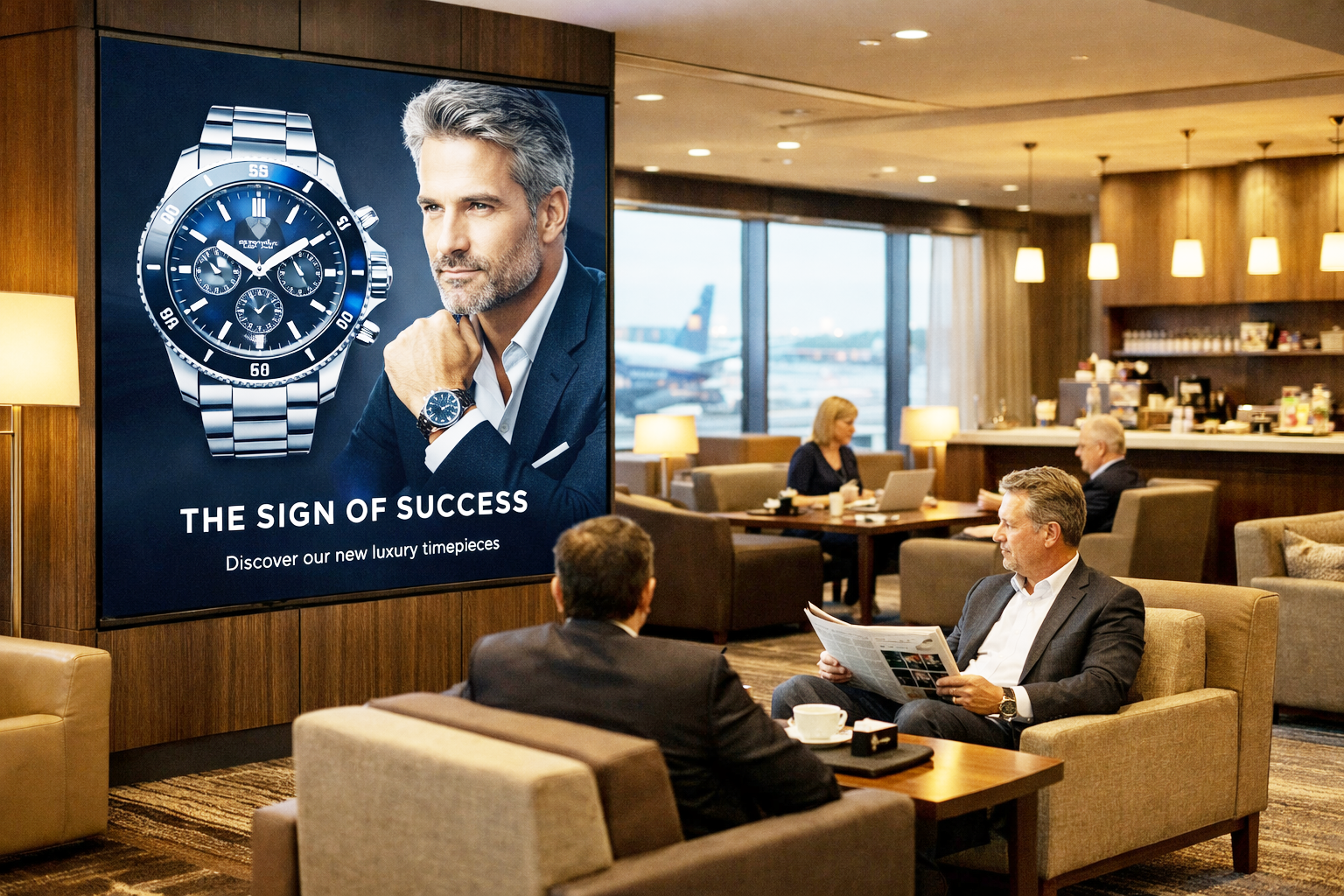
Poor Placement and Delays Affect Airport Campaigns
We help you move faster, access better inventory, and get it right now.
Talk to an ExpertFinal Strategic Verdict
Cologne Bonn Airport is Western Europe's most commercially undervalued diaspora aviation gateway — a 24-hour airport whose Turkish corridor dominance, NRW pharmaceutical and media executive wealth concentration, and Bonn UN civil servant income premium collectively produce an audience whose commercial capability, investment motivation, and purchasing power are systematically obscured by the low-cost carrier association that causes national media planners to bypass CGN in favour of Frankfurt and Munich without conducting the catchment analysis that would reveal what they are missing. The terminal simultaneously concentrates the most capitalised Turkish diaspora community in any European city-pair — three generations of NRW industrial workers, business owners, and professionals who have accumulated German-standard wealth while maintaining active Turkish investment cycles — alongside a pharmaceutical executive class whose Bayer-anchored institutional incomes rival any European industry's compensation benchmarks, a UN civil servant population earning in tax-exempt dollar packages and consuming at global institutional standards, and a Cologne media and advertising elite whose creative industry incomes and international market exposure position them among Germany's most brand-sophisticated professional consumers. CGN's 24-hour licence, its UPS European cargo hub, and its extraordinary Turkish route network frequency make it operationally unique in the German regional airport landscape — and the combination of these commercial and operational distinctions positions the airport for a commercial profile acceleration that will make its current inventory underpricing a short-lived opportunity. For brands in Turkish real estate, digital banking and remittance technology, Islamic banking, international wealth management, premium travel, and Spanish and Portuguese property investment, CGN is not a secondary German buy — it is the primary access point to the country's most commercially underserved diaspora capital audience concentrated within a single terminal that operates around the clock, 365 days a year. Masscom Global brings the Turkish diaspora cultural intelligence, NRW corporate market expertise, and German airport execution capability that international advertisers need to activate at CGN with the precision, speed, and commercial credibility that this extraordinary Rhineland gateway demands.
About Masscom Global
Masscom Global is a premium international airport advertising and media buying agency operating across 140 countries. With deep expertise in airport OOH, premium publications, and high-net-worth audience targeting, Masscom helps brands reach the world's most valuable travellers at the moments that matter most. For advertising packages, media rates, and campaign planning at Cologne Bonn Airport and airports across the globe, contact Masscom Global today.
Frequently Asked Questions
How much does airport advertising cost at Cologne Bonn Airport? Advertising costs at CGN vary based on format (digital screens, static lightboxes, branded corridors, terminal-specific placements across Terminal 1 and Terminal 2), position within the terminal structure, campaign duration, and seasonal demand. The June to September summer diaspora return peak and the November to January Christmas and New Year window attract the highest inventory demand and rate premiums. Trade fair periods — particularly Anuga and Gamescom — deliver concentrated B2B audience premiums that justify targeted campaign investments during these windows. Masscom Global provides current rate cards, German and Turkish-language placement strategy, and campaign package options tailored to your objectives and budget. Contact Masscom for a detailed, market-specific proposal.
Who are the passengers at Cologne Bonn Airport? CGN serves a commercially rich and culturally layered passenger base combining NRW Turkish diaspora returnees traveling to Istanbul, Antalya, and Turkish coastal destinations, Bayer and pharmaceutical sector executives from Leverkusen, Deutsche Telekom and Deutsche Post DHL professionals from Bonn, RTL and media industry travelers from Cologne, UN and international civil servants from Bonn's UN Campus, Cologne trade fair business visitors, German leisure travelers on Mediterranean charter routes, and inbound international tourism visitors for Cologne's Cathedral heritage and Christmas markets. It is Germany's most commercially significant Turkish diaspora aviation audience and one of NRW's primary international business travel gateways.
Is Cologne Bonn Airport good for luxury brand advertising? Yes, with product positioning calibration appropriate to the audience profile. CGN's pharmaceutical executive community, UN civil servant class, and Turkish-German business owner segment collectively represent a commercially capable and premium-conditioned audience whose spending behaviour across travel, automotive, real estate, and lifestyle categories reflects incomes and consumption standards at the upper end of the German and international market range. Turkish cultural traditions around gifting, gold, and premium goods create specific luxury purchasing windows at Eid, during summer return travel, and at Christmas whose commercial intensity for certain luxury categories — jewellery, branded apparel, premium watches — rivals the intensity of more conventionally prestigious airports. CGN is viable for luxury brands positioned in the premium to aspirational luxury range rather than the ultra-luxury segment.
What is the best airport in Germany to reach Turkish diaspora audiences? Germany's Turkish diaspora community is most heavily concentrated in three metropolitan areas: Berlin (1 million+ Turkish-origin residents, served by BER), NRW — Cologne, Düsseldorf, Dortmund (largest state concentration) — served primarily by CGN and DUS, and Stuttgart served by STR. Cologne Bonn Airport delivers Germany's most concentrated single-terminal Turkish diaspora audience by route frequency, diaspora return volume, and Turkish community commercial density within a single metropolitan catchment. For brands specifically targeting Germany's Turkish diaspora — whether in remittance technology, Turkish real estate, Islamic banking, or Turkish market consumer goods — CGN and Düsseldorf together constitute the primary German access points. Masscom Global advises on multi-airport German Turkish diaspora strategies combining CGN, DUS, and BER for comprehensive national community reach.
What is the best time to advertise at Cologne Bonn Airport? The highest-value advertising windows at CGN are the June to September summer peak — particularly July and August when the Turkish diaspora return migration reaches maximum volume and the German professional class's Mediterranean holiday travel concentrates simultaneously — and the November to January Christmas and New Year window, which delivers Germany's most celebrated Christmas market tourism alongside the Turkish New Year return and Germany's peak consumer spending period. The pre-Eid ul Fitr window provides a concentrated Islamic banking, gifting, and Turkish destination advertising moment. Trade fair windows — Anuga in odd years and Gamescom annually in August — deliver concentrated B2B authority audiences. Masscom structures CGN campaigns to capture the full value of each commercially distinct window.
Can international real estate developers advertise at Cologne Bonn Airport? CGN is one of Western Europe's most commercially productive airports for Turkish real estate advertising specifically, and a commercially viable channel for Spanish, Portuguese, UAE, and German domestic property advertising targeting the NRW corporate and Turkish-German community audience segments. The Turkish diaspora's systematic German-earnings reinvestment into Turkish residential and resort property makes CGN's Turkish corridor routes the most commercially motivated Turkish property investor audience in the European airport network. Spanish and Portuguese real estate advertising finds a receptive audience among the NRW professional class's well-established Mediterranean second-home purchasing behaviour. Dubai property advertising reaches a growing and commercially motivated audience among both the Turkish-German business community's Gulf investment interest and the NRW pharmaceutical and corporate executive class's international diversification behaviour.
Which brands should not advertise at Cologne Bonn Airport? Ultra-luxury goods brands requiring an exclusively ultra-HNWI audience environment will find CGN's passenger mix less concentrated at the very highest net worth levels than Frankfurt or Munich's premium terminals. Brands with English-only creative and no German or Turkish language capability will underperform significantly against their placement budget across both the domestic German and Turkish diaspora audience segments for whom language recognition is a baseline signal of market commitment and cultural respect. Hyper-local service businesses without NRW-scale or national operational reach will find the airport's geographically mobile and internationally dispersed audience population poorly matched to their catchment-dependent service delivery model.
How does Masscom Global help brands advertise at Cologne Bonn Airport? Masscom Global delivers end-to-end airport advertising capability at CGN — spanning audience intelligence, German and Turkish-language bilingual campaign strategy, inventory access and placement negotiation across both Terminal 1 and Terminal 2, Turkish diaspora and NRW corporate community-specific creative execution guidance, seasonal timing optimisation for the summer diaspora peak and Christmas market windows, implementation oversight, and post-campaign performance reporting. With operations across 140 countries and specific German Turkish diaspora market expertise, Masscom provides the cultural knowledge, bilingual execution capability, and local market speed that international advertisers need to navigate Cologne Bonn Airport's commercially complex, diaspora-intensive, and trade-fair-layered advertising environment effectively. Contact Masscom Global today.