

Airport at a Glance
| Field | Detail |
|---|---|
| Airport | Chengdu Shuangliu International Airport |
| IATA Code | CTU |
| Country | China |
| City | Chengdu (Sichuan Province) |
| Annual Passengers | Approx. 35 to 40 million (2024 cycle, post Tianfu split) |
| Primary Audience | Western China HNI, tech and aerospace executives, Sichuan business owners, premium leisure travellers |
| Peak Advertising Season | Chinese New Year, Golden Week (October), Mid-Autumn Festival, summer holiday peak |
| Audience Tier | Tier 1 metro-class with concentrated HNI and luxury-consumer pockets |
| Best Fit Categories | Luxury fashion and watches, banking and wealth, B2B technology, real estate, premium automotive |
Chengdu Shuangliu is one of China's most strategically important Tier 1 metro airports, serving the dominant city of Western China and one of the world's most consequential luxury-consumption markets. Chengdu rivals Shanghai and Beijing in luxury retail spend per capita, hosts a deep tech and aerospace executive base, and anchors a metropolitan economy of more than twenty million residents. Following the opening of Tianfu International Airport (TFU), Shuangliu now operates with a more focused traffic mix and remains the strategic urban-side airport for the Chengdu metropolitan core. For advertisers, this is a Tier 1 metro audience environment with distinctive luxury-consumer concentration.
The commercial value of CTU lies in the audience composition. Chengdu's HNI base is among the most luxury-fluent in China, the city is a recognised Tier 1 destination for global luxury-brand investment, and the catchment funnels Sichuan, Chongqing-adjacent, and Western China business owners and senior executives through a strategically positioned terminal. The route network connects directly to Tier 1 Chinese cities and key Asian wealth hubs, which makes CTU one of the most efficient luxury and HNI airports in Western China.
Advertising Value Snapshot
- Passenger scale: Approximately 35 to 40 million annually post-Tianfu rebalancing, with continued recovery and structural growth driven by Chengdu's metro economy and Western China inbound demand.
- Traveller type: Western China HNI and family-business owners, technology, aerospace, and electronics executives, Sichuan luxury-consumer leisure travellers, premium domestic and inbound business travellers.
- Airport classification: Tier 1 metro-class with concentrated HNI and luxury-consumer pockets. The audience composition is among the most luxury-fluent in mainland China, ranking with Shanghai and Beijing for premium category receptivity.
- Commercial positioning: Western China's principal urban-side airport, the strategic complement to Tianfu TFU, and one of the world's most defining luxury-consumption metro gateways.
- Wealth corridor signal: Sits on the China-Hong Kong-Singapore-North America-Europe wealth corridor, with Chengdu HNI and Sichuan family-business owners deploying capital outward into property, education, residency, and global asset diversification.
- Advertising opportunity: Masscom Global delivers structured access to CTU inventory across departure and arrival journeys, with placement strategies built for the high-frequency Western China business commuter and the luxury-fluent HNI flyer. Few airports outside Shanghai and Beijing deliver this concentration of luxury-consumer wealth in mainland China, which makes precise placement and category exclusivity through Masscom commercially decisive.
Airport Advertising is Complex to Get Right
We help you execute faster, with proven results and local insight most planners lack starting now.
Talk to an ExpertCatchment Area and Economic Drivers
Top 10 Cities within 150 km — Marketer Intelligence:
- Chengdu (city): A Tier 1 luxury-consumption metro and Western China's wealth and corporate capital. Audience receptivity skews toward luxury fashion, watches, jewellery, banking and wealth management, and international real estate. Chengdu is consistently ranked among China's top luxury-spend cities, often outperforming larger national metros on per-capita luxury indices.
- Deyang: Industrial city specialising in heavy machinery, aerospace components, and energy equipment. Audience is industrial executives and engineering leadership, relevant for B2B technology, corporate banking, and premium automotive.
- Mianyang: Western China's defence, electronics, and technology hub, hosting major research institutions and electronics enterprises. Audience aligns with B2B technology, banking, and premium consumer technology categories.
- Leshan: Heritage tourism and industrial city with the iconic Leshan Giant Buddha. Audience is mixed regional HNI and inbound cultural-tourism travellers, relevant for premium hospitality, F&B, and travel categories.
- Meishan: Cultural and academic city with growing economic activity along the Chengdu-Meishan corridor. Audience aligns with consumer technology, education, and premium retail.
- Ya'an: Tea-growing and tourism gateway to western Sichuan and Tibetan plateau corridors. Audience is mixed local consumer and inbound premium-tourism, relevant for premium F&B, lifestyle, and travel categories.
- Ziyang and Suining: Mid-tier Sichuan cities with growing residential and consumer markets. Audience is mid-tier consumer and emerging professional, relevant for FMCG, telecom, automotive, and consumer finance.
- Nanchong: Northern Sichuan regional centre with energy and oil-and-gas industries. Audience is industrial executives and emerging consumer audience, relevant for B2B and consumer finance categories.
- Dujiangjuan and Qingcheng Mountain: Premium domestic and inbound tourism cluster with UNESCO heritage and wellness positioning. Audience aligns with premium hospitality, lifestyle, and wellness categories.
- Chongqing (extended catchment): While Chongqing has its own major airport, parts of the Chongqing HNI audience routinely route through Chengdu CTU for specific international and luxury-tied connections, extending the catchment significance for premium and luxury advertisers.
NRI and Diaspora Intelligence:
The dominant outbound-capital community shaping the CTU audience is the Sichuan family-business owner and HNI segment, which functions as one of Western China's most active outbound-investment cohorts. Beyond the domestic business community, smaller but commercially relevant Chinese-American and Chinese-Canadian diaspora returning to ancestral cities in Sichuan, and an emerging Chengdu professional and creative-class community working internationally, move through CTU. International real estate, education, residency, and wealth advertisers find this audience disproportionately valuable, with outbound capital intent that rivals many Tier 1 East China city airports in receptivity.
Economic Importance:
The catchment is anchored by technology and electronics manufacturing, aerospace and defence, automotive and new energy vehicles, financial services, food and beverage industries, tourism and hospitality, and a deep family-business and family-office economy. Each engine produces a distinct audience layer. Technology and aerospace executives respond to corporate banking, B2B technology, and international education. Family-business owners respond to luxury, wealth migration, and international real estate. Tourism and hospitality audiences respond to premium F&B, fashion, and lifestyle categories.
Business and Industrial Ecosystem
- Technology, electronics, and software: Chengdu hosts one of China's largest technology and software clusters, with major operations from global and Chinese tech companies, gaming studios, and software outsourcing firms. Audience is mid-to-senior technology executives and engineering leadership with strong B2B technology, banking, and international education relevance.
- Aerospace, defence, and advanced manufacturing: Chengdu and the broader Sichuan region anchor a significant aerospace and defence industrial cluster, including major aircraft manufacturing and avionics operations. Audience is technical leadership and senior executives, relevant for premium hospitality, B2B, and corporate banking.
- Automotive and new energy vehicles: Chengdu is a major automotive and NEV manufacturing hub, hosting global and Chinese vehicle production. Audience aligns with premium automotive, B2B technology, and corporate hospitality.
- Financial services and wealth management: Chengdu has developed deep private-banking and wealth-management ecosystems serving the local HNI and family-business audience. Audience is HNI principals and family-office representatives, highly relevant for international real estate, residency, and offshore banking.
Passenger Intent — Business Segment:
Business travellers at CTU include technology and software executives, aerospace and defence leadership, automotive and NEV professionals, financial services and asset management leaders, family-business owners and HNI principals, and inbound visiting executives from Tier 1 Chinese cities, Hong Kong, and selected international markets. They travel on weekly to fortnightly cycles and are the most reliable audience for corporate banking, B2B technology, premium hospitality, and international real estate categories.
Strategic Insight:
The business audience at CTU is unusually high quality because Chengdu has emerged as one of China's most attractive Tier 1 cities for global multinational regional headquarters and technology investment. Few Western Chinese airports intercept this density of senior decision-makers, family-business principals, and capital-deploying executives in a single terminal. The luxury-fluent profile of the city's HNI base further amplifies the audience yield, which makes category-defining placements through Masscom strategically valuable, particularly for B2B and luxury brands targeting CXOs and family-office principals.
Tourism and Premium Travel Drivers
- Giant Panda Research Base and Chengdu cultural circuit: Defining global tourism brand association of Chengdu, drawing high-spend international and Tier 1 domestic Chinese HNI travellers. Highly relevant for luxury hospitality, premium retail, and family-anchored luxury categories.
- Sichuan culinary tourism and lifestyle scene: Chengdu is recognised as a UNESCO City of Gastronomy and has built an internationally recognised culinary, café, and lifestyle culture. Highly relevant for premium F&B, spirits, and lifestyle categories.
- Mount Emei, Leshan Giant Buddha, and Jiuzhaigou regional circuit: Heritage and natural tourism cluster drawing premium domestic and inbound international travellers. Relevant for premium hospitality, watches, and travel categories.
- Tibetan plateau gateway tourism: Chengdu is the principal aviation gateway to Tibet and the western Tibetan plateau, drawing premium adventure and cultural tourism with deep discretionary spend. Highly relevant for luxury travel, premium hospitality, and lifestyle categories.
Passenger Intent — Tourism Segment:
Tourists at CTU split into two profiles. The first is the affluent domestic Chinese leisure traveller arriving for Chengdu's culinary, panda, and cultural tourism, primed for premium F&B, jewellery, fashion, and luxury hospitality upgrades. The second is the international cultural and adventure traveller, often combining Chengdu with Tibet, Jiuzhaigou, or Yunnan, with significant discretionary spend on experiences and premium retail. Categories that win at CTU pair brand awareness with point-of-departure conversion offers and arrival-zone destination prompts.
Travel Patterns and Seasonality
- Peak seasons: Chinese New Year (January to February), Qingming (April), Labour Day Golden Week (early May), summer holiday peak (July to August), Mid-Autumn Festival (September to October), and National Day Golden Week (October).
- Traffic volume data: Monthly peaks consistently fall around Chinese New Year and the October Golden Week, with sustained mid-week B2B and corporate volumes throughout the year driven by Chengdu's deep professional economy.
Event-Driven Movement:
- Chinese New Year (January to February): The single highest-yield travel window of the year, driving massive domestic and outbound HNI flows from Chengdu and Western China. Premium F&B, luxury, jewellery, international travel, and wealth migration categories peak.
- National Day Golden Week (October): Major outbound and domestic leisure travel surge. Strong category fit for international real estate, residency programmes, premium hospitality, and luxury.
- Mid-Autumn Festival (September to October): Important gifting and family-travel window. Highly relevant for premium spirits, F&B, jewellery, and luxury retail.
- Labour Day Golden Week (early May): Concentrated short-trip travel surge. Strong relevance for premium hospitality, automotive, and lifestyle categories.
- Chengdu industry conferences and luxury retail events (year-round): Concentrated B2B and luxury-consumer audience inflows during major technology, automotive, and luxury-retail expos. Highly relevant for B2B, banking, luxury, and corporate hospitality categories.
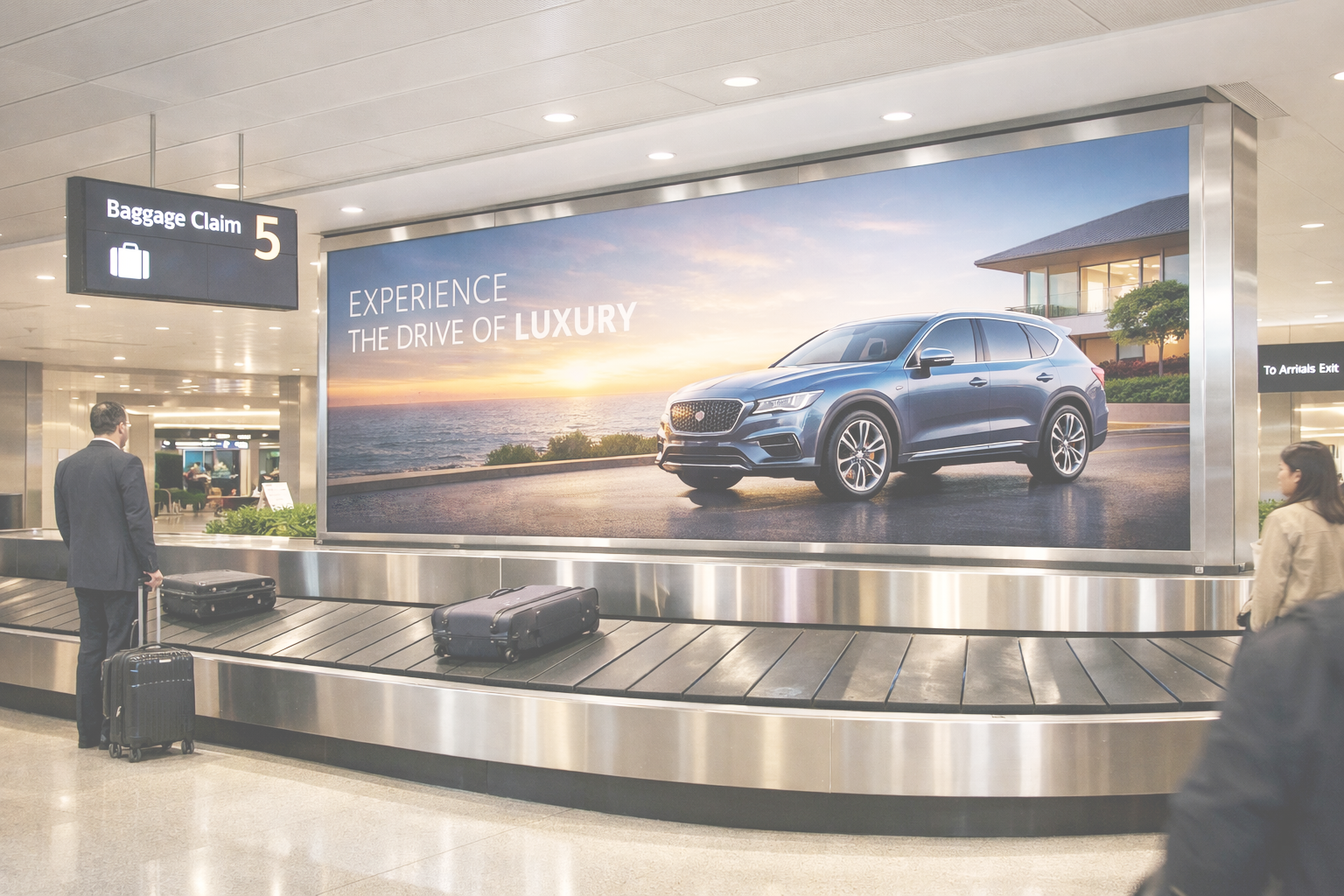
It’s Not Just Where You Advertise - It’s How Fast You Execute
We combine local insight with fast rollout to deliver results for you, now.
Talk to an ExpertAudience and Cultural Intelligence
Top 2 Languages:
- Mandarin Chinese (with Sichuan dialect cultural overlay): The default commercial language across CTU, used by domestic Chinese travellers, business executives, and HNI families. Mandarin creative is essential for all advertiser categories. Cultural attunement to Sichuan sensibilities, including Sichuan's distinctive culinary, artistic, and lifestyle identity, significantly enhances creative resonance.
- English: The operational language for the international business and inbound investor audience moving through Chengdu's multinational regional headquarters and Tier 1 luxury retail ecosystem. Bilingual Mandarin-English creative significantly outperforms single-language placements for premium B2B, banking, luxury, and international real estate categories.
Major Traveller Nationalities:
The dominant nationalities at CTU are Chinese (the largest base, particularly Sichuan residents and Tier 1 city visitors), Japanese and Korean (multinational manufacturing executives and culinary tourism), Singaporean, Thai, and Malaysian (regional Asian business and tourism flows), and selected European and North American (multinational executive and inbound cultural tourism). Creative strategy must account for this multi-nationality blend, particularly for B2B, luxury, and HNI categories.
Religion — Advertiser Intelligence:
- Chinese folk religion, Buddhism, and Taoism (majority): Drives major travel and gifting cycles around Chinese New Year, Mid-Autumn Festival, and Qingming. Sichuan's Buddhist heritage including Mount Emei adds a cultural-religious tourism layer. Highly relevant for premium F&B, spirits, jewellery, and family-anchored advertisers.
- Tibetan Buddhism (cultural and tourism overlay): Chengdu's role as the gateway to Tibet adds a distinctive Tibetan Buddhist cultural-tourism layer relevant for premium adventure travel, hospitality, and cultural categories.
- Confucian cultural values (cultural rather than religious): Shape decision-making across the local HNI family-business community, prioritising legacy, education, and family-network signalling. Among the highest-yield cultural segments for premium education, wealth management, and luxury advertisers.
Behavioral Insight:
The CTU audience is among the most luxury-fluent and globally aware advertiser audiences in mainland China outside Shanghai and Beijing. Chengdu HNI consumers are internationally informed, brand-confident, and decisive in luxury and lifestyle purchases, often leading national trends in premium retail, fashion, and culinary categories. Trust signals, longevity cues, and Mandarin-language clarity perform well, but Chengdu also rewards bold, distinctive, and culturally confident creative more than many other Chinese metros. Successful campaigns at CTU prioritise credibility paired with brand confidence and Sichuan cultural fluency.
Outbound Wealth and Investment Intelligence
The outbound passenger at CTU carries a deep wealth profile that is distinctive among Western Chinese airports. The Sichuan family-business and HNI segment has been deploying capital outward into Hong Kong, Singapore, North America, Australia, and Europe for over a decade, with particular concentration in luxury real estate and luxury consumer categories. The technology and aerospace executive segment overlays a globally mobile professional layer. International real estate, residency, and wealth advertisers find CTU one of the most efficient airports in Western China for outbound HNI intercept.
Outbound Real Estate Investment:
CTU HNI buyers are highly active in Singapore residential property, Hong Kong property, North American real estate (particularly Vancouver, Toronto, Los Angeles, and Seattle), Australian residential particularly in Melbourne and Sydney, London prime residential, Japanese property (Tokyo and Osaka), and emerging interest in Dubai, Bangkok, and Lisbon. Yield-led buyers favour Tokyo, Bangkok, and Dubai. Status-led buyers favour Singapore and London. Tax-efficient diversifiers focus on Singapore, Dubai, and Portugal. International developers across these markets find CTU one of the most efficient Western Chinese airports for outbound HNI intercept.
Outbound Education Investment:
The United States, the United Kingdom, Singapore, Australia, Canada, and Hong Kong are the dominant education destinations for CTU HNI families. Sichuan families allocate significant per-child education budgets, with multi-year planning cycles starting in middle-school years. International boarding schools, universities, and education consultancies find CTU a strategic high-yield intercept airport for both family-led decision flows and student departure flows.
Outbound Wealth Migration and Residency:
Singapore Permanent Residency and Global Investor Programme, Canadian and Australian skilled-migration and investor pathways, Portugal Golden Visa, UAE Golden Visa, US EB-5, and Caribbean citizenship-by-investment programmes are the highest-priority targets for the CTU HNI audience. Greek and Cyprus residency programmes maintain a smaller but consistent niche. Residency advisory firms and second-passport providers find the CTU audience disproportionately receptive, particularly during the Chinese New Year and Golden Week travel windows.
Strategic Implication for Advertisers:
International brands on both sides of the wealth corridor should treat CTU as a top-priority Western China buy with Tier 1 audience yield. The audience is concentrated, luxury-fluent, and globally mobile, and category exclusivity is highly achievable. Masscom Global activates campaigns simultaneously across both ends of the corridor, intercepting the same family on outbound flows from CTU and inbound flows in Singapore, Hong Kong, London, Sydney, or Vancouver.
Airport Infrastructure and Premium Indicators
Terminals:
- CTU operates dual passenger terminals designed for high-capacity domestic and international traffic, with structured zones for premium and HNI passenger flow. Following the Tianfu TFU rebalancing, Shuangliu retains a focused traffic mix with a high-quality urban-side passenger profile.
- The terminal scale is large by global standards but operates with structured premium and luxury-retail zones, producing exceptional advertiser environments for luxury, banking, and premium consumer categories.
Premium Indicators:
- Lounge infrastructure: Multiple lounges including airline-operated, contract, and credit-card lounges servicing business class, premium credit card holders, and frequent-flyer audiences. Lounge dwell creates exceptional capture windows for banking, real estate, and luxury categories.
- Private aviation: Active private and chartered aviation movements given Chengdu's family-business HNI concentration. The HNI audience using these movements is among the deepest-pocket per-trip travellers in mainland China outside Shanghai, Beijing, and Shenzhen.
- Luxury hospitality adjacency: International luxury hotel brands operate extensively across Chengdu, including major flagship properties feeding directly into CTU premium passenger flow. Chengdu hosts one of the deepest concentrations of global luxury hospitality brands in Western China.
- Luxury retail corridor positioning: Chengdu hosts one of mainland China's most active luxury-retail districts, including major flagship boutiques of global luxury brands, directly aligning with the airport's audience profile.
Forward-Looking Signal:
CTU is in an active rebalancing phase post-Tianfu TFU, with continued route network expansion into key Asian and selected European corridors and structural traffic uplift driven by Chengdu's technology, automotive, and luxury-retail growth. Combined with continued multinational regional headquarter expansion and the city's accelerating positioning as a Tier 1 luxury-consumption metro, the trajectory is firmly upward. Advertising rates currently reflect today's volumes, not the forward trajectory. Masscom Global is advising clients to lock long-cycle placements at current rates before route network expansion and incoming international capacity intensify category competition.
Airline and Route Intelligence
Top Airlines:
Sichuan Airlines, China Eastern Airlines, Air China, China Southern Airlines, Chengdu Airlines, Tibet Airlines, Spring Airlines, and selected international carriers operate the bulk of CTU traffic.
Key International Routes:
International operations connect Chengdu to Hong Kong, Taipei, Singapore, Bangkok, Tokyo, Osaka, Seoul, Kuala Lumpur, and selected additional regional Asian and global destinations, with periodic and recovering connectivity to broader international markets. The Asian wealth-hub corridor delivers consistent year-round HNI volume.
Domestic Connectivity:
Beijing, Shanghai, Guangzhou, Shenzhen, Chongqing, Kunming, Xi'an, Sanya, Lhasa, and Urumqi form the dominant domestic spine. Beijing, Shanghai, Guangzhou, and Shenzhen routes deliver the highest decision-maker yield, while Sanya and Lhasa routes carry premium domestic leisure flows.
Wealth Corridor Signal:
The route map confirms CTU's identity as a Western China wealth-corridor airport. The Tier 1 Chinese routes carry corporate and family-business capital. The Hong Kong, Singapore, and Taipei routes carry offshore wealth management and family-office flows. The Tokyo, Seoul, and Bangkok routes carry premium leisure and business mixed traffic. The Lhasa route carries premium adventure tourism and Western China cultural flows. Advertisers can plan campaigns by route segment rather than treating CTU passengers as a uniform audience.
Media Environment at the Airport
- The terminal post-Tianfu rebalancing offers structured premium and luxury-retail zones with strong brand-association quality, giving standout placements through Masscom an exceptional share of voice within the luxury and premium-consumer category in Western China.
- Dwell time is structurally favourable. Business commuters tend to arrive early to navigate security and lounge access, and HNI leisure travellers cluster around premium retail and F&B zones, producing repeat brand exposure across multiple touchpoints.
- The premium environment is reinforced by international hotel brand adjacency, lounge presence, and the Chengdu luxury-fluent HNI flow, which elevates brand association for advertisers in luxury, banking, and international real estate categories.
- Masscom Global delivers structured access to CTU inventory with placement precision built around audience segment, route, and time-of-day, ensuring the right creative reaches the right passenger at the right point in their journey.
Strategic Advertising Fit
Best Fit:
- Luxury fashion, watches, and jewellery intercepting one of mainland China's most luxury-fluent HNI audiences during peak gifting and seasonal cycles.
- International real estate developers targeting Singapore, Hong Kong, North America, Australia, London, and Dubai property buyers from the Sichuan HNI base.
- Banking, wealth management, and family-office advisory brands serving Chengdu family-business owners and family-office principals.
- B2B technology, semiconductor, and aerospace brands intercepting the Chengdu and Sichuan technology and aerospace executive flow.
- Premium automotive and new energy vehicles intercepting the family-business-owner and corporate executive audience.
- International schools and universities focused on UK, US, Singapore, Australian, and Canadian feeder markets.
- Premium spirits and gourmet F&B capturing Chengdu's culinary-fluent consumer base and gifting cycles.
- Residency, second-passport, and Golden Visa programmes servicing Sichuan HNI demand.
Brand Alignment at a Glance:
| Category | Fit |
|---|---|
| Luxury Fashion and Watches | Exceptional |
| International Real Estate | Exceptional |
| Banking and Wealth Management | Exceptional |
| Premium Spirits and Gourmet F&B | Exceptional |
| B2B Technology and Aerospace | Strong |
| Premium Automotive | Strong |
| International Education | Strong |
| Luxury Hospitality | Strong |
| Residency and Second-Passport | Strong |
| Mass-Market FMCG | Moderate |
| Mass-Market Discount Retail | Poor fit |
Who Should Not Advertise Here:
- Mass-market discount retail: The audience profile skews HNI, executive, and luxury-fluent, and discount creative dilutes premium category placements without converting the right segment.
- Mass-market consumer brands without Western China retail availability: Without local retail distribution, brand exposure here generates awareness without conversion.
- Mid-tier mass automotive without HNI positioning: Automotive advertising at CTU works at the premium and luxury end. Mass-market auto creative converts better at Tier 2 and Tier 3 city airports.
Event and Seasonality Analysis
- Event Strength: High
- Seasonality Strength: High
- Traffic Pattern: Multi-Peak with steady metro-business and luxury-consumer spine
Strategic Implication:
Advertisers should weight budgets toward Chinese New Year, the October Golden Week, the Mid-Autumn Festival, and the summer holiday peak, while maintaining a base layer through the year to capture the consistent technology, aerospace, and family-business executive flow. Masscom Global structures campaigns around this rhythm, pairing always-on luxury and B2B placements with seasonal HNI heavy-up bursts during festive peaks, which delivers the highest ROI configuration available at this airport.
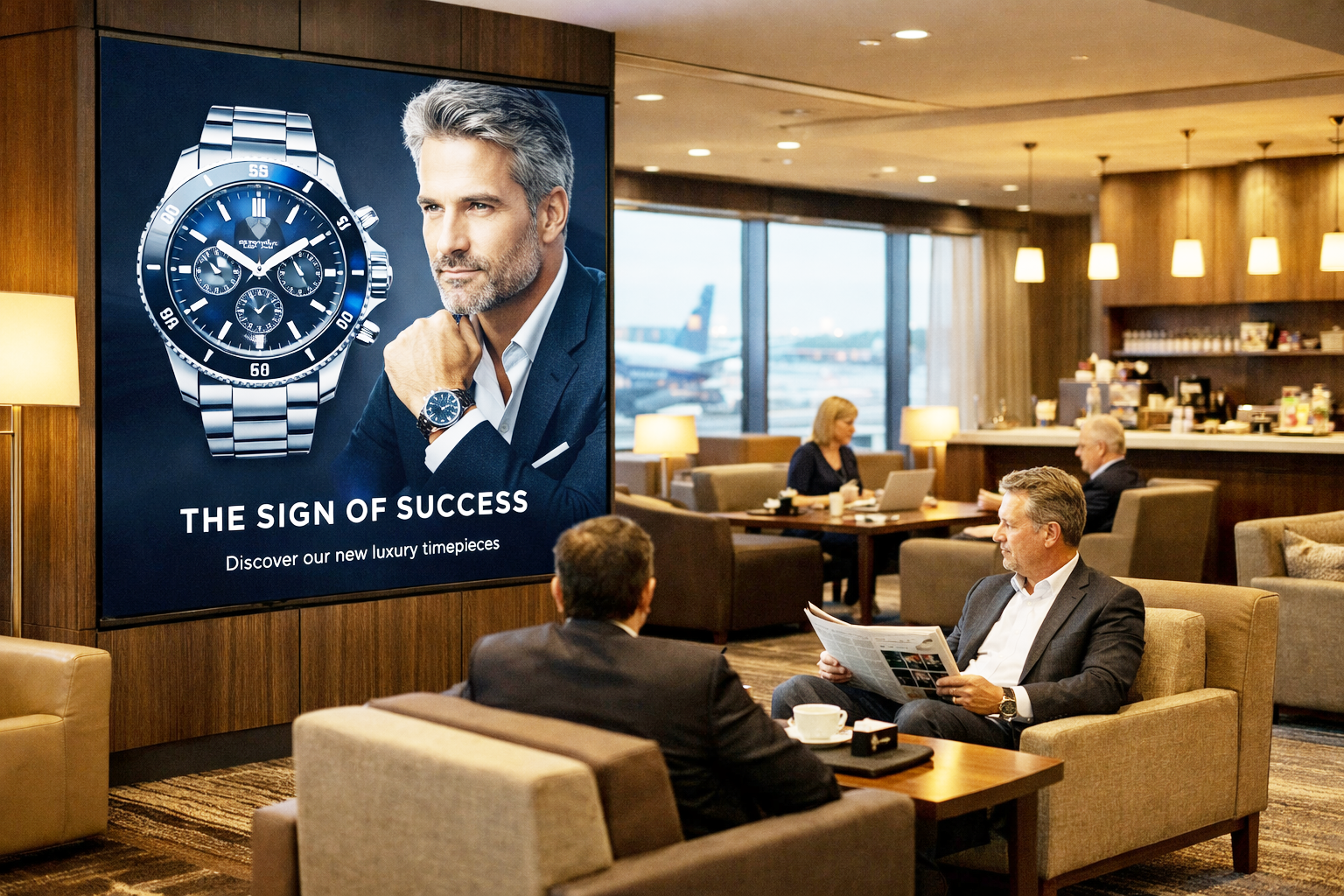
Poor Placement and Delays Affect Airport Campaigns
We help you move faster, access better inventory, and get it right now.
Talk to an ExpertFinal Strategic Verdict
Chengdu Shuangliu is one of the most strategically valuable Tier 1 metro airports in mainland China. The audience composition pairs Western China HNI and family-business owners, technology and aerospace executives, Sichuan luxury-consumer leisure travellers, and inbound international business travellers in a structured premium environment, which is a profile that few airports outside Shanghai and Beijing can match for luxury-consumer fluency. Luxury fashion, watches, jewellery, international real estate developers, banking and wealth brands, B2B technology advertisers, education and residency programmes, and premium consumer categories will see disproportionately high efficiency at CTU, particularly when campaigns are sequenced across Chinese New Year, the October Golden Week, and the Mid-Autumn Festival peaks. Partnering with Masscom Global is the correct decision because the airport rewards precision, and precision here requires intelligence that goes beyond inventory access.
About Masscom Global
Masscom Global is a premium international airport advertising and media buying agency operating across 140 countries. With deep expertise in airport OOH, premium publications, and high-net-worth audience targeting, Masscom helps brands reach the world's most valuable travellers at the moments that matter most. For advertising packages, media rates, and campaign planning at Chengdu Shuangliu International Airport and airports across the globe, contact Masscom Global today.
Frequently Asked Questions
How much does airport advertising cost at Chengdu Shuangliu International Airport? Advertising rates at CTU vary by format, position, campaign duration, and seasonal demand, with significant uplift during Chinese New Year, Mid-Autumn Festival, and the October Golden Week. Departure zones, lounges, arrival corridors, and digital networks each carry distinct rate cards. For current pricing, format availability, and category exclusivity options, contact Masscom Global directly.
Who are the passengers at Chengdu Shuangliu International Airport? CTU serves a high-yield audience of Western China HNI and family-business owners, technology and aerospace executives, Sichuan luxury-consumer leisure travellers, multinational regional headquarters executives, and inbound business and tourism travellers. The audience punches well above the airport's volume in luxury-consumer fluency and capital-deployment relevance.
Is Chengdu Shuangliu International Airport good for luxury brand advertising? Yes, exceptionally so. Luxury fashion, watches, jewellery, premium spirits, international real estate, and wealth management brands perform very well due to the Sichuan HNI base and Chengdu's status as one of mainland China's most luxury-fluent metro markets. Few Chinese airports outside Shanghai and Beijing match CTU for luxury-consumer fit.
What is the best airport in Western China to reach HNWI audiences? Chengdu CTU and Tianfu TFU together deliver the highest concentration of HNWI audiences in Western China. The optimal Western China HNI strategy pairs CTU and TFU through Masscom for full Chengdu metro and Western China wealth-corridor coverage, complemented by Chongqing CKG for adjacent metro reach.
What is the best time to advertise at Chengdu Shuangliu International Airport? The highest-yield windows are the four to six weeks running into Chinese New Year, the October National Day Golden Week, the Mid-Autumn Festival, and the July to August summer holiday peak. A continuous base layer through the year captures the consistent technology, aerospace, and family-business executive flow.
Can international real estate developers advertise at Chengdu Shuangliu International Airport? Absolutely. The Sichuan HNI audience routing through CTU is actively buying property in Singapore, Hong Kong, Vancouver, Toronto, Sydney, Melbourne, London, Tokyo, and Dubai. CTU is among the most efficient airports in Western China to intercept this buyer profile at the point of outbound travel, particularly during the Chinese New Year and Golden Week windows.
Which brands should not advertise at Chengdu Shuangliu International Airport? Mass-market discount retail, mass-market consumer brands without Western China retail availability, and mid-tier mass automotive without HNI positioning are poor fits. The audience is luxury-fluent, family-business owner, and senior executive, and creative needs to align with that profile rather than chase volume.
How does Masscom Global help brands advertise at Chengdu Shuangliu International Airport? Masscom Global delivers airport intelligence, inventory access, creative strategy aligned to language and cultural codes, and full campaign execution at CTU. Our expertise across 140 countries means we activate the same brand consistently on both sides of the wealth corridor, including outbound markets like Singapore, Hong Kong, Vancouver, Sydney, London, and Dubai.