




Airport at a Glance
| Field | Detail |
|---|---|
| Airport | Charlottesville Albemarle Airport |
| IATA Code | CHO |
| Country | USA |
| City | Charlottesville, Virginia |
| Annual Passengers | ~400,000 (2023 estimate) |
| Primary Audience | HNWI DC corridor professionals, UVA alumni and families, Virginia wine and equestrian country visitors |
| Peak Advertising Season | April to June, September to November |
| Audience Tier | Tier 1 (wealth profile-led) |
| Best Fit Categories | Luxury real estate, premium automotive, private wealth management, fine wine and hospitality, international education |
Charlottesville Albemarle Airport is not defined by its passenger volume — it is defined by who those passengers are. CHO sits at the intersection of three of the most commercially potent audience forces in the mid-Atlantic United States: the Washington DC power and policy elite who maintain country estates and second homes in central Virginia, the University of Virginia alumni and academic community whose wealth profile and educational investment pattern are among the most consistent in American higher education, and the Virginia wine and equestrian country visitor who arrives to spend — not to browse. For advertisers targeting a highly educated, deeply affluent, and culturally sophisticated audience, Charlottesville Airport delivers a quality-over-quantity proposition that few airports its size can match anywhere in the country.
The airport's catchment is anchored by a city that consistently ranks among the most educated and highest-income in Virginia, embedded in a region of historic estates, Jeffersonian architecture, Blue Ridge Mountain scenery, and a wine industry that now produces nationally recognised vintages. The traveller moving through CHO has already made high-value decisions before arriving at the terminal — decisions about where to stay, what to drink, what property to inspect, and which educational programme to invest in. Advertisers who are present at this moment intercept a mindset of commitment, not consideration, making CHO one of the most conversion-efficient placements in the US regional airport network.
Advertising Value Snapshot
- Passenger scale: Approximately 400,000 annual passengers. Steady year-on-year growth driven by UVA expansion, rising Virginia wine tourism, and increasing remote-work-driven migration from the DC metro to central Virginia
- Traveller type: DC corridor HNWI professionals and government officials, UVA students and their families, Virginia equestrian and wine country leisure visitors
- Airport classification: Tier 1 by wealth profile — a regional airport serving a catchment with one of the highest concentrations of advanced-degree holders, high-net-worth households, and premium lifestyle consumers in the mid-Atlantic
- Commercial positioning: The gateway to Jefferson Country — Virginia's most prestigious academic, cultural, and wine tourism destination, drawing sustained high-income traffic from the northeastern US seaboard
- Wealth corridor signal: CHO sits directly on the DC-to-Virginia-wine-country wealth corridor, intercepting capital flowing between the most powerful political and financial centre in the United States and its preferred country escape destination
- Advertising opportunity: Masscom Global provides full access to the Charlottesville Airport advertising environment, reaching a deeply qualified HNWI audience at their most receptive — the start or conclusion of a high-value trip to one of America's most culturally and economically distinctive destinations
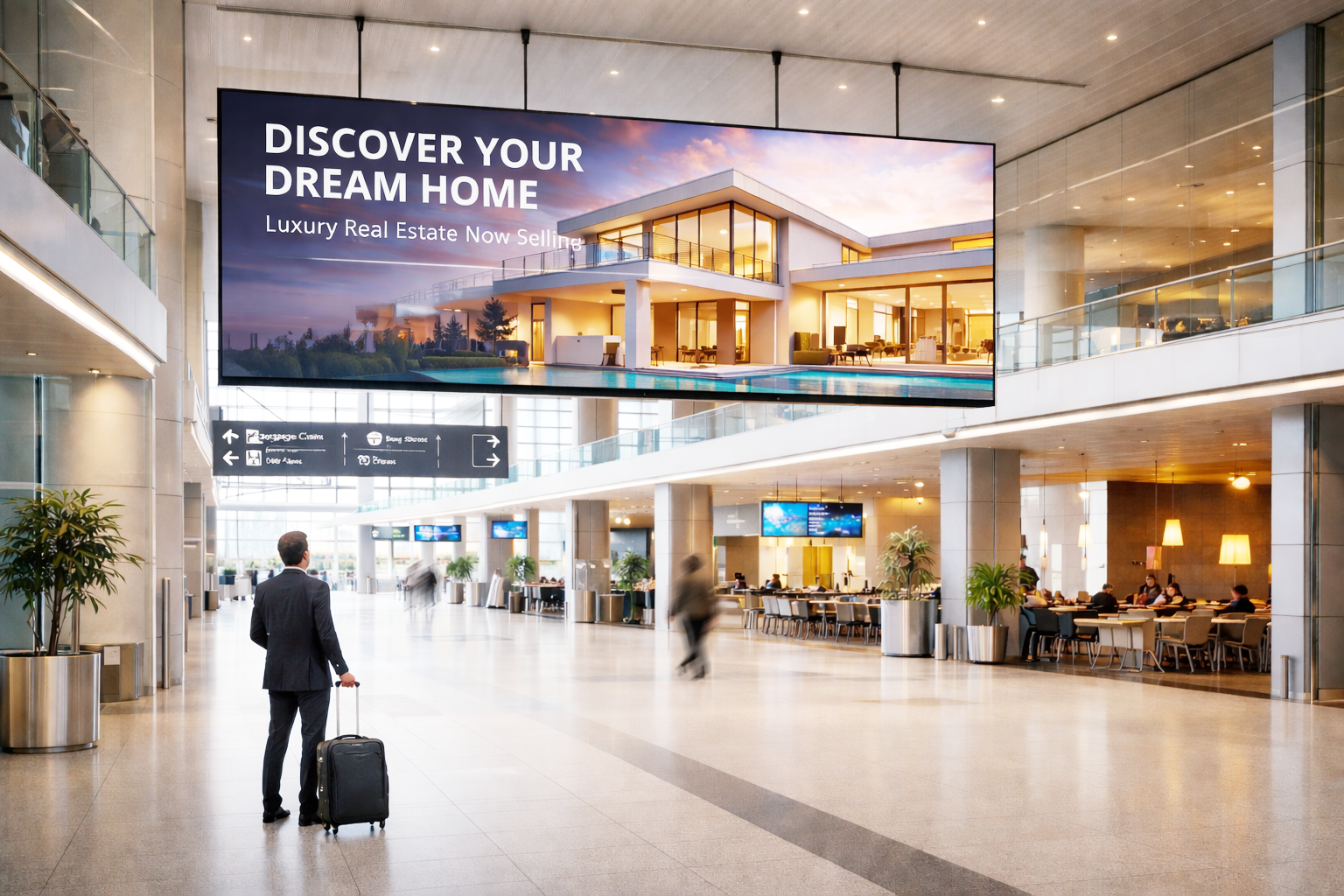
Airport Advertising is Complex to Get Right
We help you execute faster, with proven results and local insight most planners lack starting now.
Talk to an ExpertCatchment Area and Economic Drivers
Top 10 Cities within 150 km — Marketer Intelligence:
- Waynesboro, VA: Positioned at the eastern entrance to Shenandoah National Park, this working professional and outdoor recreation community serves as the primary residential base for hospitality and heritage tourism workers in the Blue Ridge corridor — an audience relevant for automotive, outdoor lifestyle, and regional retail brands.
- Staunton, VA: One of Virginia's most celebrated small cities, with a rapidly gentrifying historic downtown attracting antique collectors, arts patrons, and weekend visitors from the DC metro — a concentrated base of educated, culturally-driven consumers with above-average discretionary spend.
- Harrisonburg, VA: Home to James Madison University and a fast-growing technology and healthcare sector, Harrisonburg produces a dual audience of young educated professionals and established medical and academic community members with strong long-term consumer value.
- Orange, VA: The heart of Virginia horse country, surrounded by some of the most valuable equestrian estates on the East Coast. The Orange catchment audience includes a high concentration of landed gentry, retired military officers, and DC officials with wealth concentrated in real property and investment portfolios.
- Gordonsville, VA: A small but strategically positioned historic town connecting Charlottesville to the northern Virginia and DC corridor — its transit position makes it relevant for ground transportation, convenience, and hospitality brands targeting the inter-city movement audience.
- Culpeper, VA: A growing DC bedroom community with strong real estate appreciation, drawing Northern Virginia families seeking more space and lower cost of living. The Culpeper audience is actively purchasing across home improvement, lifestyle, and financial planning categories.
- Fredericksburg, VA: One of Virginia's most rapidly growing mid-sized cities, positioned between Richmond and DC on the I-95 corridor. Its dual-income professional households, Civil War heritage tourism, and proximity to Marine Corps Base Quantico generate a commercially diverse and financially active consumer base.
- Front Royal, VA: The northern gateway to Shenandoah National Park and the Skyline Drive. Front Royal attracts outdoor recreation, nature tourism, and vineyard visitors from the DC metro — a high-spend leisure audience with strong receptivity to premium travel, wellness, and outdoor gear brands.
- Winchester, VA: A significant northern Shenandoah Valley commercial hub, home to a growing technology and healthcare employer base. Winchester's rising income levels and proximity to the DC metro make it relevant for financial services, automotive, and premium home brands targeting the aspirational professional segment.
- Richmond, VA: Virginia's state capital and primary financial centre, with a concentration of law firms, financial institutions, and state government agencies. Richmond's professional class is a major feeder of UVA alumni and family travel through CHO, making it the most commercially valuable secondary city in the catchment for premium and B2B advertisers.
NRI and Diaspora Intelligence:
Charlottesville does not serve a traditional diaspora or NRI travel corridor. The dominant audience movement is domestic HNWI — primarily Washington DC-area professionals, senior government officials, diplomats, lobbyists, and financial executives who maintain second homes in the Charlottesville area's equestrian and wine country. This segment is augmented by a significant international academic and professional community tied to UVA, where a substantial share of graduate students, faculty, and visiting researchers originate from China, India, South Korea, and Europe. These international academic community members travel home during university breaks, creating predictable outbound flows to East Asia and Europe through CHO's connecting hubs at Charlotte, Philadelphia, Atlanta, and Chicago. International brands with relevance to this academic and professional community — including technology, education, and financial services — should factor this segment into their campaign planning.
Economic Importance:
Charlottesville's catchment economy is driven by three pillars of exceptional commercial quality: the University of Virginia, which is one of the top-ranked public universities in the United States and functions as a year-round engine of academic, medical, and research spending; the Virginia wine and agritourism sector, which has grown into a nationally recognised premium lifestyle destination drawing high-income visitors from across the eastern seaboard; and the DC-corridor second-home and retirement economy, where senior executives, policy makers, and diplomats deploy significant real estate and lifestyle capital into the Charlottesville foothills and horse country. For advertisers, this three-pillar structure means the catchment produces sustained, high-quality commercial audiences across all four quarters of the year, without the single-event dependency that makes some smaller airports commercially unstable.
Business and Industrial Ecosystem
- The University of Virginia's academic medical centre, UVA Health, is one of Virginia's largest employers and generates a dense population of senior physicians, healthcare executives, and medical researchers with above-average income, high insurance penetration, and strong premium spend on travel, real estate, and financial services
- A growing technology and cybersecurity sector in the Charlottesville-Richmond corridor, including multiple federal government contractors, produces a young-to-mid-career professional audience with equity-driven wealth accumulation and strong receptivity to investment, real estate, and premium lifestyle brands
- The Virginia equestrian and agricultural estate economy — concentrated in Keswick, Free Union, Crozet, and Orange County — supports a year-round community of ultra-HNWI landowners whose commercial profile includes luxury property, estate management, premium veterinary and agricultural services, and private banking
- State and federal government and policy institutions, including law firms, lobbying organisations, and diplomatic residences connected to the DC corridor, generate a C-suite and senior-official audience whose spending profile is dominated by premium travel, fine dining, investment real estate, and prestige automotive
Passenger Intent — Business Segment:
Business travellers at Charlottesville Airport are overwhelmingly operating at the senior or principal level. They are not junior employees on overnight trips — they are partners at law firms, department heads at federal agencies, medical directors, university administrators, and private equity managers. Their business purpose at Charlottesville is frequently combined with personal investment: inspecting a potential equestrian property, attending a board dinner at a Keswick estate, or representing institutional interests at UVA. Advertiser categories that intercept this intent most effectively include private wealth management, premium real estate, prestige automotive, and high-end hospitality and dining.
Strategic Insight:
The business audience at Charlottesville Airport operates in what is effectively a dual-purpose travel mode. Unlike pure corporate travel at a city business airport, CHO passengers blend professional obligation with significant personal spend in the same trip. This means they are simultaneously receptive to B2B financial and advisory services messaging and to premium lifestyle, real estate, and hospitality brand communications. Very few airports of CHO's size offer this dual-register commercial value, and it is the defining reason why Charlottesville outperforms its passenger volume on advertiser ROI metrics.
Tourism and Premium Travel Drivers
- Thomas Jefferson's Monticello, the most visited presidential home in the United States, anchors a heritage tourism circuit that draws culturally engaged, well-educated, and high-spending visitors from across North America and internationally — an audience with demonstrated premium lifestyle spend and intellectual brand receptivity
- The Charlottesville and Monticello American Viticultural Area, home to over 40 wineries within a 30-mile radius of the airport, has established Charlottesville as the undisputed capital of Virginia wine tourism, attracting a highly curated leisure audience from the DC metro, New York, and Philadelphia with above-average spend on hospitality, dining, and luxury accommodation
- Shenandoah National Park and the Skyline Drive, accessible within 45 minutes of the airport, generate a year-round outdoor recreation tourism flow from major northeastern cities, with peak autumn foliage traffic ranking among the most commercially concentrated leisure travel windows in the mid-Atlantic calendar
- Keswick Hall, one of the most acclaimed luxury country house hotels in the United States, positioned six miles from the airport, anchors the ultra-premium end of Charlottesville's accommodation market and signals the presence of a resort-level HNWI leisure audience that few Virginia airports outside the Northern Virginia corridor can match
Passenger Intent — Tourism Segment:
Visitors arriving at Charlottesville Airport for leisure have almost universally pre-committed their spend. They have booked Keswick Hall or a Blue Ridge inn, reserved winery experiences along the Monticello Wine Trail, and planned their days around specific cultural or equestrian engagements. They are not browsing options at the airport — they are arriving in a state of excited anticipation about a curated experience they have invested in planning. This psychological state makes them highly responsive to brand messages that reflect the same values as their trip: heritage, craftsmanship, naturalness, sophistication, and premium quality. Fine wine and spirits, luxury skincare, premium automotive, and high-end hospitality brands resonate most powerfully in this context.
Travel Patterns and Seasonality
Peak seasons:
- Spring (April to June): The primary peak. UVA graduation in May drives one of the highest passenger volume weekends of the year, with family groups from across the country arriving via private and commercial charter at CHO. Spring also opens the Virginia wine trail season, triggering a sustained leisure travel peak through June. The Foxfield Races in April and September are premier social events on the Virginia HNWI calendar, bringing the DC and Richmond elite to Charlottesville in concentrated spikes.
- Autumn (September to November): The second peak, defined by the peak of the Virginia wine harvest, autumn foliage tourism along Skyline Drive, and the return of the UVA academic and sporting calendar. October is the single highest-quality tourism month in the catchment, with domestic leisure traffic from the northeast at its annual peak.
- December to January: Holiday travel through CHO's hub connections drives a third commercial window. Families departing for international destinations through Charlotte, Philadelphia, and Atlanta generate significant pre-travel dwell time at the terminal.
- Summer (July to August): A moderate travel period dominated by family leisure, summer academic programmes at UVA, and DC-corridor executive escapes to the Blue Ridge. Lower in volume than spring and autumn but consistent in audience quality.
Event-Driven Movement:
- UVA Graduation (May): The single largest annual passenger volume event at CHO, drawing family groups from across the United States. Parents and guests of UVA graduates represent one of the most concentrated HNWI family audience moments in the US regional airport calendar — premium automotive, travel, financial advisory, and gifting brands benefit enormously from this window.
- Foxfield Races (April and September): Virginia's most celebrated steeplechase event, functioning as a social institution for the DC and Richmond HNWI elite. The Foxfield audience is one of the most fashion-conscious, premium-lifestyle-oriented, and socially engaged in the mid-Atlantic, making it an exceptional alignment moment for luxury apparel, fine champagne, and prestige lifestyle brands.
- Virginia Film Festival (October): A University of Virginia-hosted cultural event drawing filmmakers, arts patrons, and entertainment industry figures. The Film Festival audience skews educated, urban, and culturally premium — ideal for arts patronage, luxury travel, and premium media and technology brands.
- Harvest and Wine Festivals (October): Multiple wine country harvest events across the Monticello Wine Trail bring high-income food and beverage enthusiasts to the Charlottesville catchment in sustained waves throughout October. Premium spirits, gourmet food, luxury accommodation, and experiential travel brands benefit from alignment with this audience.
- UVA Home Football Season (September to November): University of Virginia home football games bring a financially significant alumni and supporter travel surge through CHO, with many attendees arriving from major northeastern cities for weekend games combined with wine country visits.
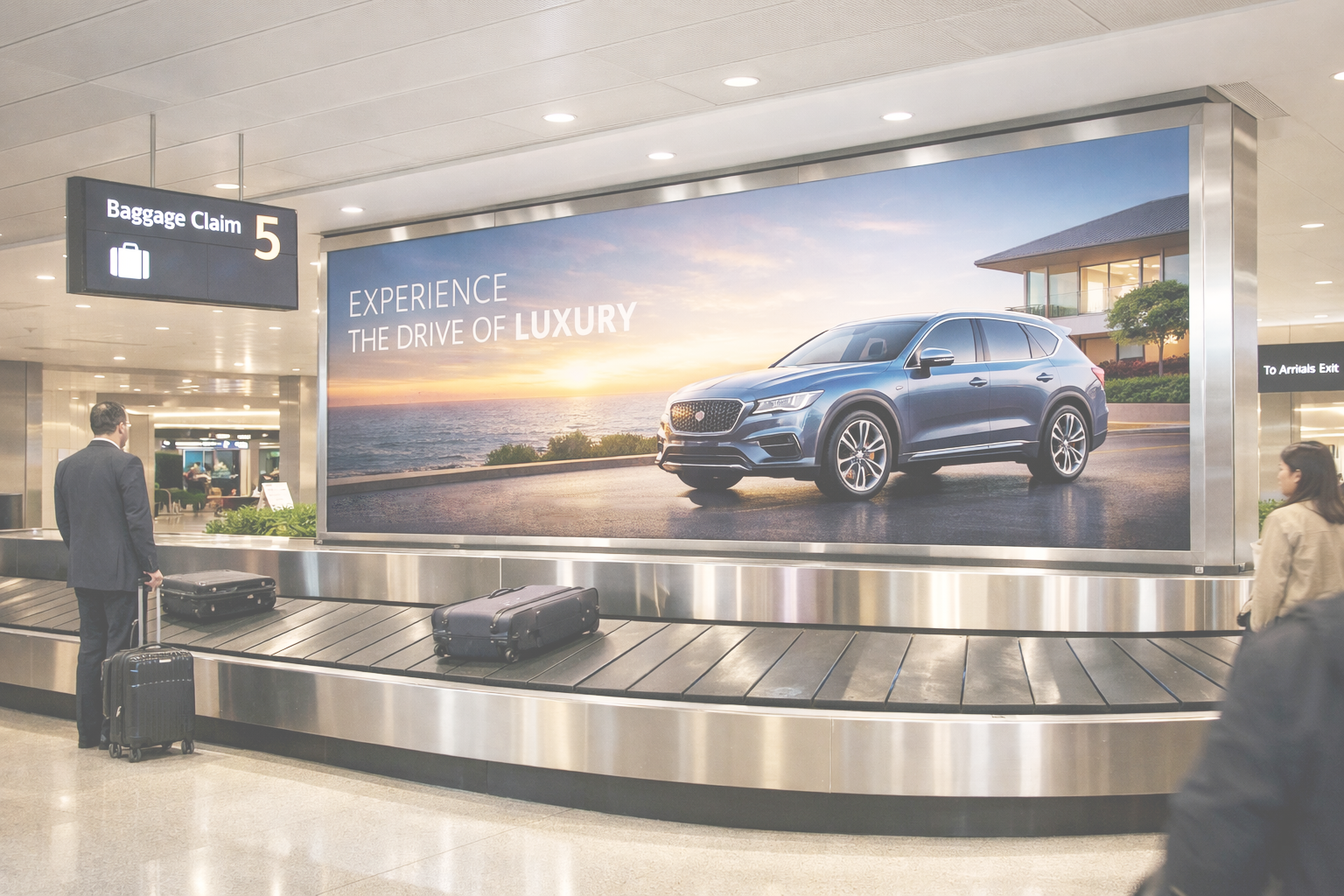
It’s Not Just Where You Advertise - It’s How Fast You Execute
We combine local insight with fast rollout to deliver results for you, now.
Talk to an ExpertAudience and Cultural Intelligence
Top 2 Languages:
- English: The primary language of the overwhelming majority of CHO's traveller base. The audience is highly educated — Charlottesville has one of the highest concentrations of advanced-degree holders of any city its size in the United States — meaning messaging must be intelligent, nuanced, and values-driven to earn sustained engagement. Transactional or mass-market creative will underperform significantly in this environment.
- Spanish: Virginia's Hispanic community, concentrated in the agricultural and service economy of the Shenandoah Valley and the broader DC metro catchment, represents the secondary language audience. Spanish-language creative is relevant for campaigns targeting the broader catchment workforce and family consumer base.
Major Traveller Nationalities:
The dominant nationality at Charlottesville Airport is American, with the heaviest originating flows from the Washington DC metro area (Virginia suburbs, Maryland, the District itself), New York City and the tristate area, Philadelphia, and Atlanta. A meaningful secondary international component is driven by UVA's global student and faculty population, with Chinese, Indian, South Korean, and Western European nationalities represented in significant numbers during academic calendar travel peaks. These international academic community members travel home via CHO for university breaks, creating consistent outbound flows to East Asian and European hubs. For international brands, this academic international layer amplifies the case for advertising at CHO beyond the domestic HNWI audience alone.
Religion — Advertiser Intelligence:
- Protestant Christianity (~45%): Historically dominant in Virginia, with Baptist, Methodist, Episcopal, and Presbyterian communities well represented across the Charlottesville catchment. Christmas and Easter drive the two strongest holiday travel peaks at CHO, with family reunion and gifting behaviour creating significant retail, luxury travel, and premium experience spend windows. The Episcopal tradition specifically is associated with the horse country and plantation estate community and is directly aligned with equestrian, heritage, and classic luxury brand values.
- Catholic (~15%): A significant presence in the Northern Virginia and DC corridor feeder communities, with Lent, Easter, and Christmas driving additional seasonal travel alignment. Catholic university and family education investment patterns are highly relevant for international boarding schools and premium university preparation programmes advertising at CHO.
- No religious affiliation / secular (~30%): A growing segment among younger UVA faculty, tech-sector professionals, and DC transplants. This audience is driven by experience, identity, and social values rather than faith calendar, and responds strongly to purpose-driven premium brands, sustainable luxury, and design-led lifestyle messaging year-round.
Behavioral Insight:
The Charlottesville Airport traveller is a high-trust, high-quality, relationship-oriented consumer. They are not impulse buyers — they invest in brands that align with their sense of identity, which is rooted in education, heritage, taste, and discretion rather than conspicuous wealth display. The UVA alumni connection is commercially significant in this regard: UVA is known for its honour code culture, and the social norms of the Charlottesville community actively reward understated prestige over flashy branding. Advertising messages that lead with heritage, craftsmanship, provenance, and curated exclusivity will consistently outperform loud luxury signalling with this audience. The most effective brands at CHO speak to this audience as a peer, not as a prospect.
Outbound Wealth and Investment Intelligence
The outbound passenger at Charlottesville Airport is a wealth allocator with a distinctly bicoastal and transatlantic mindset. They are frequently deploying capital across multiple geographies simultaneously — a DC lobbyist inspecting a Charlottesville equestrian estate while planning a Tuscany villa purchase and funding a child's Oxford education. This multiplicity of simultaneous investment decisions is the defining commercial characteristic of the CHO audience, and it makes Charlottesville a viable and high-converting channel for advertisers across the full spectrum of wealth management categories, from domestic real estate to international citizenship advisory.
Outbound Real Estate Investment:
Charlottesville's HNWI audience is among the most active domestic and international property buyers in the mid-Atlantic. Domestic outbound real estate investment flows strongly toward Florida (Palm Beach, Naples, and the Sarasota coast for retirement and seasonal second homes), coastal South Carolina (Kiawah Island and Hilton Head for golf and resort properties), and the Adirondacks and Vermont mountain retreat market. Internationally, the Charlottesville HNWI audience has documented investment interest in the United Kingdom (Cotswolds estates, London investment flats), Tuscany and Umbria in Italy (agricultural estate and villa acquisitions), and the French countryside (Provence and Dordogne second homes). The Golden Visa corridor in Portugal is increasingly relevant for DC-corridor professionals seeking EU residency alongside Atlantic lifestyle properties. International developers in any of these markets should treat CHO as a precision acquisition channel for reaching motivated, qualified buyers in a captive airport environment.
Outbound Education Investment:
Charlottesville is one of the most education-focused communities in the United States, and that orientation extends well beyond UVA itself. The catchment produces a strong outbound student flow to secondary boarding schools in New England (Andover, Exeter, Choate, St. Paul's) and to British public schools and universities. Oxford, Cambridge, LSE, and St Andrews attract a disproportionate share of Virginia HNWI student investment, particularly from families with UVA connections who view UK higher education as complementary rather than alternative. Switzerland's Geneva and Zurich-area international schools attract the diplomatic and international business family segment. Parents from the DC-corridor professional class are among the most financially committed per-student spenders on international education, making CHO a high-value acquisition channel for international boarding schools, university preparation consultancies, and student accommodation developers in the UK and Europe.
Outbound Wealth Migration and Residency:
Virginia's HNWI community, particularly the DC-affiliated segment, is among the most globally mobile in the United States. Portugal's restructured Golden Visa fund-investment pathway remains the primary European residency programme of interest, particularly for families seeking EU mobility and Atlantic coastal lifestyle access. Malta's citizenship-by-investment programme attracts the segment seeking full EU citizenship with a Mediterranean base. The UAE's zero-tax residency structure in Dubai is increasingly relevant for the entrepreneurial and technology-sector wealth segment emerging in the DC-Virginia tech corridor. British Overseas Territory residency in the Cayman Islands and BVI represents an established pathway for the legal and financial services community travelling through CHO. Firms offering residency advisory, immigration legal services, and wealth structuring for HNWIs across these programmes will find a pre-qualified, engaged, and financially sophisticated audience at this airport.
Strategic Implication for Advertisers:
International luxury real estate developers, private banking institutions, international education providers, and wealth migration advisors should treat Charlottesville Airport as a precision mid-Atlantic acquisition channel. The audience is modest in volume, exceptional in qualification, and virtually impossible to replicate through digital targeting alone at equivalent cost per qualified contact. Masscom Global activates both the domestic and outbound wealth corridors simultaneously — ensuring your brand is positioned where the capital originates and at the international destinations where it lands.
Airport Infrastructure and Premium Indicators
Terminals:
Charlottesville Albemarle Airport operates a single modern terminal building, renovated to provide a clean, uncluttered regional airport experience that reflects the character of its catchment — understated, quality-driven, and free of the commercial noise that characterises larger hub airports. The terminal handles all commercial and general aviation arrivals through a compact but well-maintained facility that allows advertisers to achieve near-complete terminal coverage without the fragmented placement challenges of multi-terminal megahubs. The passenger journey from kerb to gate is intimate and focused, meaning advertising placements receive sustained attention rather than competing with the overwhelming volume of sensory input at major hub airports.
Premium Indicators:
- FBO services at CHO support a meaningful general aviation complement alongside scheduled commercial operations, confirming the presence of private aircraft users whose wealth profile sits above the already-elevated commercial passenger average
- Keswick Hall, ranked among the top luxury country house hotels in the United States and located six miles from the terminal, represents the apex of the premium accommodation tier that defines the airport's catchment identity and signals the type of guest travelling through CHO
- The UVA connection functions as a built-in premium indicator — parents travelling for graduation or alumni returning for events carry a demographic profile that commercial airports in comparably-sized markets cannot match
- Direct hub connectivity to Charlotte (American), Atlanta (Delta), Philadelphia (American), Chicago O'Hare (United), and New York LaGuardia (Delta) ensures that CHO's audience travels through premium hub environments, creating a brand association ecosystem that extends well beyond the terminal itself
Forward-Looking Signal:
The ongoing growth of the DC-corridor remote and hybrid work migration is driving sustained residential investment in the Charlottesville catchment, raising household income levels and increasing the frequency of personal travel through CHO from a new generation of high-earning professionals who have made Charlottesville their primary residence rather than their retreat destination. UVA's continued expansion of its technology and medical research infrastructure is adding further layers of educated professional and academic wealth to the catchment. Virginia's wine industry is receiving increasing national and international recognition, with several Charlottesville-area estates now attracting international investment from European vineyard operators — a development that will bring new layers of international HNWI traffic through the airport in coming years. Masscom advises clients to establish presence at CHO now, before rising catchment wealth translates into intensified advertising competition for a still-accessible premium inventory environment.
Airline and Route Intelligence
Top Airlines:
- American Airlines
- Delta Air Lines
- United Airlines
Key Routes:
- Charlottesville (CHO) to Charlotte Douglas (CLT): American Airlines hub connection — primary gateway to the Southeast, Caribbean, Latin America, and transatlantic routes
- Charlottesville (CHO) to Philadelphia (PHL): American Airlines hub — primary gateway for transatlantic Europe connections and Northeast US city traffic
- Charlottesville (CHO) to Atlanta Hartsfield-Jackson (ATL): Delta hub — primary Southeast and international gateway
- Charlottesville (CHO) to New York LaGuardia (LGA): Delta — direct link to the tri-state financial and media capital
- Charlottesville (CHO) to Chicago O'Hare (ORD): United hub — Midwest financial sector and transatlantic gateway
- Charlottesville (CHO) to Washington Dulles (IAD): United — Northern Virginia and DC international gateway
Domestic Connectivity:
CHO's route network is a precision instrument for connecting Charlottesville to the five most commercially significant US cities for its audience — New York, Philadelphia, Charlotte, Atlanta, and Chicago. These are not random commercial routes. They are the exact connecting points that matter to the DC-corridor professional, the UVA alumni network, the Virginia wine trade, and the HNWI second-home owner managing assets between multiple cities. The absence of low-cost carrier service at CHO is a quality signal rather than a deficit — it confirms that the airport's commercial model is defined entirely by the premium traveller.
Wealth Corridor Signal:
CHO's route network reveals a predominantly domestic-HNWI audience moving between wealth concentrations on the eastern seaboard and mid-Atlantic. The New York and Philadelphia connections are wealth-transfer routes — carrying financial, legal, and media professionals to and from one of America's most prestigious country retreat destinations. The Atlanta and Charlotte connections serve the Southern wealth circuit — executives and retirees whose capital moves between Sun Belt financial centres and the Virginia hill country. The Chicago connection captures the Midwest business and academic elite with deep UVA ties. Taken together, the route network is a commercial atlas of American HNWI domestic mobility, with Charlottesville at its geographical and cultural centre.
Media Environment at the Airport
- Charlottesville Airport's single compact terminal eliminates the placement fragmentation that reduces advertiser ROI at multi-terminal hub airports — a brand present at CHO achieves near-complete audience coverage with minimal placement complexity, making campaign management efficient and impact measurement precise
- Dwell time at CHO averages 30 to 60 minutes for departing passengers, elevated by the airport's regional scale, which means passengers clear security quickly and spend extended time in the pre-boarding environment — a window that rewards brands willing to invest in rich, content-forward creative executions
- The terminal's understated, quality-driven aesthetic creates a brand association environment where premium and heritage brands feel native rather than intrusive — an important distinction for an audience that actively avoids commercial noise and responds negatively to over-aggressive or mass-market brand environments
- Masscom Global delivers precision inventory access across CHO's terminal environment and associated ground transportation network, structuring placements to intercept the audience at arrival, security, and pre-boarding — the three highest-attention moments in the passenger journey
Strategic Advertising Fit
Best Fit:
- International and domestic luxury real estate: The HNWI second-home and equestrian estate market is the defining commercial characteristic of the Charlottesville catchment. Developers of luxury properties in Virginia, Florida, coastal South Carolina, Tuscany, Provence, and the UK will find a pre-qualified, motivated buyer audience at CHO that is nearly impossible to reach at equivalent cost through digital channels.
- Private wealth management and family office services: An airport serving a catchment of DC-corridor executives, senior government officials, UVA academic and medical leadership, and Virginia landed gentry is a natural precision channel for private banking, investment advisory, estate planning, and family wealth structuring communications.
- Premium and prestige automotive: The Virginia horse country, equestrian estate, and wine country audience is a core purchaser of prestige and luxury vehicles. Porsche, Land Rover, Mercedes-Benz, BMW, and ultra-luxury marques will find an audience at CHO that has already demonstrated its automotive spending capacity through the lifestyle choices that brought it to this airport.
- International education and boarding schools: Charlottesville's education-first cultural values and UVA alignment create one of the most receptive parent audiences in the US for international boarding school and university advertising. UK independent schools, Swiss international schools, and North American prep schools should treat CHO as a strategic enrolment acquisition channel.
- Fine wine and premium spirits: The Virginia wine country context makes wine and spirits brand advertising at CHO uniquely resonant. Visitors already in a discovery and experiential mindset around premium beverages are the ideal audience for domestic and international fine wine, Champagne, and premium spirits brands.
- Luxury wellness, spa, and retreat brands: The Keswick Hall-anchored luxury wellness market in the Charlottesville catchment produces an audience actively investing in high-end health and wellbeing experiences. Skincare, longevity, integrative health, and premium spa product brands will find sustained receptivity in this environment.
- Premium travel and luxury hospitality: Outbound travellers departing CHO for international destinations via hub connections are a pre-qualified audience for five-star hotel brands, luxury cruise lines, private island resort programmes, and ultra-premium travel services.
- Citizenship and residency advisory: The DC-corridor professional class travelling through CHO includes a meaningful segment actively evaluating second-residency and citizenship-by-investment options. Portuguese Golden Visa, Maltese citizenship, and UAE residency advisory firms will find a sophisticated and motivated audience here.
Brand Alignment at a Glance:
| Category | Fit |
|---|---|
| International and domestic luxury real estate | Exceptional |
| Private wealth management | Exceptional |
| International education | Exceptional |
| Prestige automotive | Strong |
| Fine wine and premium spirits | Strong |
| Luxury wellness and spa | Strong |
| Premium travel and hospitality | Strong |
| Mass-market retail | Poor fit |
Who Should Not Advertise Here:
- Budget travel and discount accommodation platforms: The CHO audience has no commercial relationship with price-led travel categories. Discount messaging in this terminal environment creates active negative brand association with an audience that selects its experiences based on quality, not cost.
- Mass-market consumer goods and FMCG: Brands that require high-volume audience scale to generate ROI will find CHO's passenger numbers insufficient to justify investment. This is a precision-over-volume channel, and mass-market consumer brands are structurally misaligned with both the audience profile and the terminal environment.
- Entry-level financial and banking products: Basic checking accounts, mass-market credit cards, and entry-level investment platforms aimed at retail consumers are misaligned with an audience operating at the private wealth and family office tier. These categories will generate negligible engagement and may actively damage brand perception in this context.
Event and Seasonality Analysis
- Event Strength: High
- Seasonality Strength: High
- Traffic Pattern: Dual-Peak (Spring and Autumn)
Strategic Implication:
Advertisers at Charlottesville Airport should anchor their investment around two precision windows — May for UVA graduation and the spring wine trail season, and October for the harvest wine festivals and autumn foliage peak. Within those windows, the Foxfield Races in April and September provide event-level burst opportunities where audience quality and social engagement peak simultaneously. Masscom Global structures CHO campaigns around this dual-peak rhythm, ensuring creative is deployed at exactly the moments when the highest-value audiences are moving through the terminal and dwell time is at its peak.

Poor Placement and Delays Affect Airport Campaigns
We help you move faster, access better inventory, and get it right now.
Talk to an ExpertFinal Strategic Verdict
Charlottesville Albemarle Airport is the most commercially efficient access point to the DC-Virginia HNWI corridor in the US regional airport network. Its combination of an ultra-educated, high-income catchment, a globally recognised wine and equestrian country destination, and the University of Virginia's unmatched alumni wealth engine produces a passenger profile that outperforms its volume across every relevant advertiser metric. The terminal environment is intimate, distraction-free, and aligned with a brand culture of understated premium — the exact environment where heritage luxury, private wealth, real estate, and international education brands achieve their highest conversion efficiency. For advertisers whose business depends on reaching the top quintile of American earners and cultural influencers at the moments they are most receptive to high-value messaging, there is no better mid-Atlantic regional airport than CHO, and no better partner to activate it than Masscom Global.
About Masscom Global
Masscom Global is a premium international airport advertising and media buying agency operating across 140 countries. With deep expertise in airport OOH, premium publications, and high-net-worth audience targeting, Masscom helps brands reach the world's most valuable travellers at the moments that matter most. For advertising packages, media rates, and campaign planning at Charlottesville Albemarle Airport and airports across the globe, contact Masscom Global today.
Frequently Asked Questions
How much does airport advertising cost at Charlottesville Albemarle Airport?
Advertising costs at Charlottesville Airport vary based on format selection, terminal placement position, creative specifications, campaign duration, and seasonal demand windows. Peak periods around UVA graduation in May, the Foxfield Races in April and September, and autumn harvest season in October attract heightened demand for available inventory. Masscom Global provides current rate cards, format recommendations, and bespoke package proposals tailored to your brand objectives and budget. Contact Masscom Global directly for a detailed media plan and current pricing.
Who are the passengers at Charlottesville Albemarle Airport?
Charlottesville Airport serves a highly concentrated HNWI audience drawn from three primary segments: Washington DC-corridor professionals, senior government officials, and diplomats who maintain second homes and equestrian estates in central Virginia; University of Virginia students, faculty, alumni, and their families, representing one of the most educationally and financially elite university communities in the United States; and Virginia wine country and Blue Ridge Mountain leisure visitors arriving from major northeastern cities for premium hospitality and cultural experiences. There is no low-cost carrier service at CHO, meaning the commercial passenger base skews consistently premium across all travel periods.
Is Charlottesville Albemarle Airport good for luxury brand advertising?
Charlottesville Airport is among the best-performing regional airports in the United States for luxury brand advertising, specifically because of its audience quality rather than its volume. The combination of DC-corridor executive wealth, UVA alumni purchasing power, Virginia equestrian and wine country prestige, and a compact distraction-free terminal environment creates conditions where luxury brand creative achieves sustained attention from a pre-qualified audience. For ultra-luxury real estate, prestige automotive, private wealth management, fine wine, and premium lifestyle brands, CHO offers exceptional ROI per contact.
What is the best airport in Virginia to reach HNWI audiences?
For absolute scale, Washington Dulles and Reagan National serve the largest HNWI volumes in Virginia. However, for precision targeting of the most concentrated and commercially qualified HNWI audience in a distraction-free regional airport environment — specifically the DC horse country estate buyer, the UVA alumni family investor, and the Virginia wine country premium leisure traveller — Charlottesville Airport delivers a targeting precision that neither Dulles nor Reagan can match. CHO should be considered the specialist precision buy within any Virginia HNWI media strategy, ideally deployed alongside Dulles or Reagan for complementary reach.
What is the best time to advertise at Charlottesville Albemarle Airport?
The two highest-performance advertising windows at CHO are April through June and September through November. May is the single most concentrated HNWI family audience month, driven by UVA graduation. April and September deliver the Foxfield Races audience — Virginia's most socially prestigious equestrian events. October is the peak of the Virginia wine harvest tourism season, delivering the highest quality leisure audience concentration of the year. The December holiday window provides a third burst opportunity as families travel internationally through CHO's hub connections.
Can international real estate developers advertise at Charlottesville Albemarle Airport?
Charlottesville Airport is a strong and underutilised channel for international real estate developers. The airport's HNWI audience includes some of the most active cross-border property buyers in the mid-Atlantic United States, with documented investment interest in the United Kingdom, Portugal, Italy, France, and Caribbean resort markets. A developer marketing luxury properties in any of these corridors will encounter at CHO a captive, motivated audience in a distraction-free environment — a combination that digital advertising channels cannot replicate at equivalent cost per qualified lead.
Which brands should not advertise at Charlottesville Albemarle Airport?
Budget travel platforms, mass-market FMCG brands, discount retail, and entry-level financial products are structurally misaligned with Charlottesville Airport's audience and terminal environment. Brands requiring high passenger volume to generate ROI will find CHO's scale insufficient. Price-led messaging in this environment actively works against brand perception with an audience whose purchasing decisions are driven entirely by quality, exclusivity, and cultural alignment.
How does Masscom Global help brands advertise at Charlottesville Albemarle Airport?
Masscom Global provides end-to-end capability for airport advertising at Charlottesville Airport — from audience intelligence and campaign strategy through inventory access, creative specification, placement execution, and performance reporting. Our team brings deep knowledge of the Virginia HNWI catchment, the DC-corridor wealth movement, and the specific seasonal and event rhythms that define commercial performance at CHO. We move faster than in-house planning teams, with local access and execution infrastructure that delivers measurable results from the first campaign cycle. Contact Masscom Global today to begin building your presence at one of the mid-Atlantic's most commercially precise airport advertising environments.







