


Airport at a Glance
| Field | Detail |
|---|---|
| Airport | Cape Town International Airport |
| IATA Code | CPT |
| Country | South Africa |
| City | Cape Town |
| Annual Passengers | 10.2 million international (2023) |
| Primary Audience | HNWI leisure travellers, affluent international tourists, senior business executives |
| Peak Advertising Season | November to February, June to August |
| Audience Tier | Tier 1 |
| Best Fit Categories | Luxury goods and lifestyle, international real estate, private banking, premium hospitality |

Cape Town International Airport is the gateway to Africa's most celebrated luxury destination, serving an audience that is qualitatively distinct from any other airport on the continent. With 10.2 million international passengers annually and a Very High HNWI Score, CPT ranks among the top 160 airports globally by commercial value to advertisers. The airport sits at the intersection of premium inbound tourism, outbound wealth migration, and a locally affluent economy, creating a three-dimensional advertising environment that rewards brands with the right positioning and the right partner. For advertisers seeking to reach high-spending audiences in Africa, Cape Town International is the non-negotiable priority buy.
The Western Cape catchment is South Africa's most economically productive per-capita region, anchored by a globally recognised wine industry, an emerging technology sector, and a premium tourism economy that commands international price points. The audiences flowing through CPT include European and North American visitors with committed luxury spend, outbound South African HNWIs actively deploying capital into offshore real estate and residency programmes, and a domestic business class that is among the most financially sophisticated on the continent. No other airport in Sub-Saharan Africa combines inbound luxury tourism with outbound wealth intelligence at this scale. That combination makes CPT a premium dual-directional advertising channel.
Advertising Value Snapshot
- Passenger scale: 10.2 million international passengers (2023), with strong recovery to near pre-pandemic levels and continued upward trajectory
- Traveller type: HNWI leisure travellers, affluent international tourists from Europe and North America, senior corporate executives
- Airport classification: Tier 1. Africa's most premium leisure-led international gateway by audience wealth profile, ranked 158th globally in the Masscom HNWI Airport Universe
- Commercial positioning: Africa's luxury lifestyle and wine tourism capital, drawing the continent's highest-value inbound visitor demographic year-round
- Wealth corridor signal: The CPT corridor links Western Europe, North America, and the Middle East directly to South Africa's premium consumption class and outbound capital movement
- Advertising opportunity: Masscom Global holds access to CPT's full inventory suite, enabling brands to position across the terminal environment with placement precision and campaign intelligence that most media planners cannot independently access

Airport Advertising is Complex to Get Right
We help you execute faster, with proven results and local insight most planners lack starting now.
Talk to an ExpertCatchment Area and Economic Drivers
Top 10 Cities within 150 km — Marketer Intelligence
- Cape Town (metro): South Africa's second-largest metropolitan area and its most internationally connected luxury economy, home to the country's highest per-capita concentration of HNWI residents, premium retailers, and global-facing financial services firms.
- Stellenbosch: The wine capital of Africa and one of South Africa's most affluent residential nodes, where wine industry executives, investment professionals, and high-income academics generate consistent outbound travel to European trade and leisure markets.
- Somerset West: A premium residential corridor with a high density of senior professionals, corporate executives, and semi-retired wealth, producing consistent outbound movement to the UK, UAE, and Mauritius across both leisure and investment categories.
- Franschhoek: An ultra-luxury enclave internationally recognised for its wine estates, French heritage dining, and second-home real estate market, attracting some of South Africa's highest-net-worth residents alongside a significant international buyer and visitor base.
- Paarl: A Winelands commercial hub where agribusiness ownership, wine production, and residential growth combine to produce a mid-to-upper income traveller base with active outbound movement to the UK, Australia, and the Netherlands.
- Bellville: Cape Town's secondary commercial and financial hub, dense with insurance sector headquarters, financial services firms, and corporate offices that generate consistent mid-week business class travel and professional outbound movement.
- Worcester: The inland gateway to the broader Breede Valley wine and agribusiness economy, producing an owner-operator and SME business traveller with active outbound movement to European buyers and trade events.
- Hermanus: A premium coastal town internationally known for whale watching, second-home real estate, and a wealthy retired residential base that generates high-spend leisure travel to Europe, Mauritius, and the UK throughout the year.
- Wellington: A Winelands agricultural and light industrial hub with a growing residential market producing upper-middle income travellers, with strong educational outbound intent for families investing in international schooling and university programmes.
- Strand: An upper-middle class coastal suburb within the Helderberg basin, feeding Somerset West's corporate economy and generating a consistent domestic and regional outbound professional travel stream with above-average spend per trip.
NRI and Diaspora Intelligence
Cape Town does not carry a traditional NRI profile in the South Asian sense, but it operates one of Africa's most commercially relevant diaspora dynamics. The South African diaspora in the UK, Netherlands, Australia, and New Zealand maintains strong ties to Cape Town and generates consistent high-spend inbound traffic, particularly during the December to February summer season. These returning diaspora travellers are brand-loyal, high-spending, and receptive to luxury, financial services, and property advertising. Moving in the opposite direction, the outbound South African HNWI using CPT is increasingly active in investment migration, offshore property acquisition, and second-residency programmes, creating a wealth transfer corridor that international brands can directly intercept at the point of travel. The airport operates as both a homecoming destination and a wealth departure lounge simultaneously, which is a commercially rare dynamic.
Economic Importance
The Western Cape economy is the most diversified and export-oriented of South Africa's nine provinces, with GDP contributions from wine and premium agriculture, financial and professional services, information technology, film and media production, and premium tourism. Cape Town's technology sector has generated a new class of high-income globally mobile professionals who are brand-aware and internationally experienced from early in their careers. The province's per-capita income is among the highest in South Africa, and the consumer economy reflects this clearly, with strong demand for luxury goods, premium financial products, and international real estate. For advertisers, this catchment delivers a rare combination: a locally affluent, brand-literate audience and a globally mobile one using the same airport.
Business and Industrial Ecosystem
- Financial services and insurance: Cape Town hosts the South African operations of major banking groups, private equity firms, asset managers, and insurance conglomerates, generating a senior executive traveller base with premium spend patterns and high receptivity to wealth management and financial services advertising.
- Information technology and Silicon Cape: A rapidly maturing tech startup and corporate tech hub producing a young, high-income, internationally mobile professional class with strong purchasing power, digital brand affinity, and consistent outbound movement to European and North American markets.
- Wine industry and premium agribusiness: South Africa's largest and most internationally recognised wine-producing region employs thousands across professional, ownership, and executive roles, with consistent outbound trade travel to Europe, the US, and Asian wine markets.
- Film, media, and creative production: Cape Town functions as a major international production destination for European and North American advertising and film, attracting high-income creative and production professionals who travel frequently and spend at premium levels throughout their stay.
Passenger Intent: Business Segment
Business travellers through CPT skew toward senior executives, business owners, and professionals in financial services, technology, and the wine and agribusiness sectors. Their primary outbound routes include Johannesburg, London, Frankfurt, Amsterdam, Dubai, and Doha. The business lounge environment and international departures hall are the highest-value intercept points for B2B financial products, executive travel services, premium technology brands, and commercial real estate platforms. These are decision-makers with significant discretionary spend, a high level of brand sophistication, and a receptivity to value-led, intelligence-positioned advertising.
Strategic Insight
The business audience at Cape Town International is commercially valuable beyond its volume because of its quality. The Western Cape economy is built around knowledge industries, financial capital, and export-oriented sectors, which produces an outbound business traveller who is internationally experienced, financially sophisticated, and already consuming premium products across multiple categories. This is an audience that responds to aspiration-led messaging combined with credibility signals, not volume advertising. The airport environment amplifies that dynamic, creating a premium context that rewards brands positioning at the right placement with the right message.
Tourism and Premium Travel Drivers
- Table Mountain and the Cape Peninsula: The anchor attraction of the entire Western Cape tourism economy, drawing international visitors at premium price points from Europe, North America, and increasingly Asia, with a captive audience that has pre-committed significant spend before arrival.
- Cape Winelands: Stellenbosch, Franschhoek, and Paarl collectively form one of the world's great food and wine tourism destinations, attracting affluent food-and-travel enthusiasts who spend significantly on accommodation, fine dining, wine acquisition, and luxury retail during extended stays.
- Hermanus and the Whale Coast: A world-class natural heritage destination generating premium accommodation and guided experience spend, drawing a mature, high-net-worth leisure traveller from the UK, Germany, and Netherlands during the June to November whale season.
- V&A Waterfront and luxury retail precinct: Sub-Saharan Africa's most visited shopping and hospitality destination, drawing HNWI domestic and international visitors who signal committed luxury retail intent before and after their airport journey.
Passenger Intent: Tourism Segment
International tourists arriving through CPT have typically pre-committed substantial spend on accommodation, wine tours, safari extensions, and premium dining before they land in Cape Town. They arrive with high disposable income remaining and strong receptivity to luxury goods, experiences, and lifestyle brand advertising within the terminal environment. European visitors in particular tend to extend their South African visit beyond Cape Town to include the Garden Route and Big Five safari experiences, making them very-high total-spend travellers throughout their journey. Advertiser categories that benefit most include luxury fashion, fine watches, premium automotive, international hospitality, travel insurance, fine wine and spirits, and destination real estate.
Travel Patterns and Seasonality
Peak seasons:
- November to February: Southern Hemisphere summer. Peak local leisure travel, peak European and North American inbound tourism, and highest passenger volumes of the year. The December school holiday drives strong domestic family movement and returning diaspora inbound traffic, producing the single highest-volume and highest-spend window of the year.
- June to August: The European summer holidays drive a concentrated second inbound peak, particularly from the UK, Germany, Netherlands, and France. The Hermanus whale season adds a distinctive HNWI leisure driver that extends the premium international audience presence through the winter months.
- March to May: The Easter period produces strong domestic leisure and family travel, with active outbound movement to Mauritius, UAE, and European city destinations. The Winelands harvest season also peaks, generating trade and lifestyle travel from international wine buyers.
- September to October: A shoulder season that is growing commercially as spring wildflower tourism in the Namaqualand and West Coast regions attracts an increasingly affluent domestic and international nature tourism market.
Event-Driven Movement:
- Cape Town International Jazz Festival (March to April): Africa's largest jazz festival, drawing approximately 40,000 attendees including a significant HNWI domestic audience and international visitors, generating a premium hospitality and lifestyle spend spike across the city and at the airport.
- Cape Winelands Harvest Season (February to April): International wine tourism and trade movement reaches its annual peak, with winery harvest events and international wine media drawing global visitors to Stellenbosch, Franschhoek, and Paarl in concentrated high-spend groups.
- Whale Season, Hermanus (June to November): Peak inbound movement from European and North American wildlife tourism visitors, with the July to September window producing the highest concentration of mature HNWI leisure travellers outside the summer season.
- Cape Town Cycle Tour (March): One of the world's largest timed cycling events, with over 35,000 registered participants and a significant domestic and international support and spectator cohort that is predominantly upper-income and brand-engaged.
- Year-End Festive Season (December to January): The highest-traffic and highest-spend window of the year, with luxury retail, premium hospitality, and lifestyle brand advertising delivering maximum dwell-time exposure to the full domestic and international HNWI audience simultaneously.

It’s Not Just Where You Advertise - It’s How Fast You Execute
We combine local insight with fast rollout to deliver results for you, now.
Talk to an ExpertAudience and Cultural Intelligence
Top 2 Languages:
- English: The primary business, tourism, and media language across the Western Cape, used by all international visitors, the majority of the HNWI domestic audience, and the full corporate and professional class. English-language campaigns operate without friction across both inbound and outbound passenger segments and carry universal reach within this terminal environment.
- Afrikaans: The most widely spoken home language in the Western Cape, used heavily by the wine industry, agricultural, and domestic leisure traveller segments. Afrikaans-speaking audiences represent a significant portion of domestic high-spend passengers and respond positively to culturally resonant, locally informed messaging that signals genuine market understanding.
Major Traveller Nationalities
The dominant international nationalities at CPT directly reflect Cape Town's historical trade and cultural ties with Europe. UK travellers form the single largest international source market, followed by Germans, Dutch, French, and Americans. Australian and New Zealand visitors are a growing segment, reflecting the Southern Hemisphere family and diaspora connection. Gulf state visitors, particularly from the UAE, represent an increasingly significant inbound cohort as direct route frequencies expand. Chinese and Indian inbound tourism, while smaller in current volume, is growing at above-average rates and signals a meaningful audience composition shift over the next five years.
Religion: Advertiser Intelligence
- Christianity (approximately 80%): The dominant faith community across the Western Cape, driving peak travel behaviour at Christmas (December), Easter (March to April), and school holiday windows aligned with the liturgical calendar. The December to January window is the highest-volume domestic travel period of the year, producing the single most valuable advertising season for brands targeting family, leisure, and lifestyle categories. The diversity within the Christian community, spanning Dutch Reformed, Methodist, Catholic, and Pentecostal denominations, means that broad-reach premium positioning outperforms narrow-niche messaging.
- Islam (approximately 8%): The Cape Malay Muslim community in Cape Town is one of the oldest and most culturally established Muslim communities in Africa, with a distinct identity, a cohesive social network, and a commercially active consumer profile. Eid al-Fitr and Eid al-Adha generate outbound travel movement particularly to UAE, Malaysia, Türkiye, and Saudi Arabia, producing a targeted window for halal hospitality, Islamic finance, premium travel, and luxury goods advertising. Ramadan gift-giving and shopping behaviour creates a retail intent signal that runs ahead of the Eid travel peak.
- Judaism (approximately 1%): A small but economically concentrated community among Cape Town's highest income brackets, with strong outbound travel during the High Holidays (September to October), Passover (March to April), and summer. Brands in luxury goods, private banking, international real estate, and premium education find a highly receptive niche audience within this segment that punches well above its population share in terms of spend.
Behavioral Insight
The CPT audience, both domestic and international, is distinguished by a high level of brand literacy and a strong preference for quality-led, experience-oriented communication. South African HNWI travellers are globally well-travelled, financially sophisticated, and resistant to generic or price-led advertising. They respond to campaigns that lead with credibility, aspiration, and intelligent value positioning rather than promotional volume. International visitors arrive with committed spend intent and reward brands that present at the right touchpoints with clear messaging and premium context. Timing, placement precision, and message quality determine campaign success at CPT, and all three variables require the kind of local market intelligence that Masscom Global provides on every engagement.
Outbound Wealth and Investment Intelligence
The outbound passenger at Cape Town International Airport represents one of Africa's most commercially significant wealth profiles for international brands. South African HNWIs, particularly those based in the Western Cape, are globally active in offshore capital deployment, international property acquisition, and investment migration. With currency volatility, domestic political uncertainty, and a structurally high outbound investment intent, the proportion of HNWI travellers at CPT who are actively pursuing offshore financial and real estate options is substantially higher than at comparable airports in other emerging markets. CPT operates not only as a tourism and business gateway but as a wealth transfer corridor, making it a tier-one intercept channel for international financial, real estate, and residency brands.
Outbound Real Estate Investment
South African HNWIs using CPT are active buyers across multiple international property markets. Dubai and the wider UAE lead on investor appeal, driven by tax-free ownership structures, high rental yields, freehold property rights in prime zones, and a hedge against rand depreciation. Portugal remains a high-interest destination for lifestyle buyers pursuing EU access through property investment, with the Non-Habitual Residency regime continuing to attract professionals and entrepreneurs. The UK draws long-term buyers with educational and cultural ties, frequently purchasing to support children enrolled in British universities. Mauritius has emerged as the preferred near-shore investment destination, offering the Integrated Resort Scheme, fiscal incentives, and a residency pathway through real estate investment at accessible price points. Greece's Golden Visa programme is increasingly active among Western Cape investors seeking EU residency at lower entry thresholds than Portugal. International real estate developers targeting South African capital should treat CPT as a primary and underexploited advertising channel.
Outbound Education Investment
The Western Cape produces some of South Africa's highest per-family educational investment. The UK remains the dominant destination for undergraduate and postgraduate study, followed by the Netherlands, Australia, and Canada. Student departures from CPT peak in August to September and January, with accompanying family members representing a premium leisure and retail spend cohort at the airport. Education consultancies, international universities, business schools, and student accommodation brands have a clear and currently underserviced channel opportunity at this airport, with a highly motivated and financially capable audience moving through the departures hall in concentrated seasonal windows.
Outbound Wealth Migration and Residency
Investment migration is an actively growing driver of CPT's outbound passenger movement. South African HNWIs are engaged across a range of programmes: Portugal's NHR and D7 visa regimes, Greece's real estate Golden Visa, Malta's citizenship-by-investment programme, and the UAE's long-term residency and Golden Visa options. Mauritius-based business and retirement residency pathways are particularly attractive to the entrepreneurial and semi-retired Western Cape wealth cohort. The financial advisory, emigration planning, offshore banking, and international insurance categories are currently underrepresented in the CPT advertising environment relative to the scale of the demand signal they could intercept.
Strategic Implication for Advertisers
Any international brand operating on either side of the inbound or outbound wealth corridor through Cape Town International should treat this airport as a strategic priority. Inbound premium hospitality, luxury retail, and experience brands capture a globally affluent tourist audience already committed to spending at destination. Outbound real estate, education, financial services, and residency brands intercept a high-intent, high-net-worth audience at the exact moment of travel-driven decision-making. Masscom Global holds the inventory access, the bilateral market intelligence, and the campaign architecture to activate effectively on both sides of this corridor simultaneously, which is a capability that few media partners in Africa can credibly offer.
Airport Infrastructure and Premium Indicators
Terminals:
Cape Town International Airport operates a single integrated terminal building with distinct domestic and international departures halls. The international terminal handles over 10 million passengers annually across two international piers, with a concentrated retail and hospitality zone in the international departures area designed to retain dwell time and drive spend. The domestic terminal serves the high-frequency Johannesburg corridor and connects Cape Town to South Africa's major metros, processing a predominantly business and upper-middle income domestic passenger base that represents a second distinct advertising audience within the same facility.
Premium Indicators:
- Lounge infrastructure: CPT hosts multiple premium airport lounges including carrier-operated facilities for major international airlines, serving business class and first class passengers who represent the highest-value advertising intercept in the terminal environment and the highest per-capita spend profile in the building.
- Luxury retail footprint: The international departures zone carries a growing premium retail presence including fine wines, luxury fashion, watches, and high-end duty-free beauty, signalling a premium consumer expectation among the departing international audience and creating brand adjacency opportunities for luxury advertisers.
- Proximity to five-star hospitality: The airport is within 20 to 30 minutes of Cape Town's leading five-star hotels across the Atlantic Seaboard, the City Bowl, and the V&A Waterfront precinct, many of which count HNWI international travellers as their primary market and whose guests are moving through this terminal every day.
- Award and quality recognition: Cape Town International has been consistently rated among the best airports in Africa and the Middle East in quality benchmarking, contributing to a premium brand halo effect for advertisers present in the environment.
Forward-Looking Signal
Cape Town International Airport is in an active phase of capacity planning and infrastructure investment, with Airports Company South Africa committed to terminal modernisation to accommodate growing international demand and the expanding long-haul route network. New direct route development is under active discussion, with North American connectivity and expanded Middle East frequency remaining priority corridors. The continued growth of Silicon Cape's technology economy is expected to add a new generation of high-income, internationally mobile professionals to the passenger base across the next five to seven years, strengthening the business traveller demographic further. Masscom Global advises brand partners to establish their CPT presence at current commercial rates, ahead of what will become a significantly more competitive inventory environment as the airport's international profile and premium retail footprint expand.
Airline and Route Intelligence
Top Airlines
British Airways, Emirates, Qatar Airways, KLM Royal Dutch Airlines, Lufthansa, Ethiopian Airlines, Turkish Airlines, Kenya Airways, South African Airways, FlySafair, Airlink
Key International Routes
- London Heathrow and London Gatwick (year-round, multiple weekly frequencies)
- Amsterdam (year-round)
- Frankfurt (year-round)
- Dubai (daily)
- Doha (daily)
- Nairobi (multiple weekly)
- Addis Ababa (multiple weekly)
- Istanbul (multiple weekly)
- Paris (seasonal and year-round frequencies)
Domestic Connectivity
- Johannesburg (OR Tambo): Multiple daily, the highest-frequency domestic route in South Africa by passenger volume
- Durban (King Shaka): Daily
- Port Elizabeth / Gqeberha: Daily
- George: Multiple weekly
Wealth Corridor Signal
The CPT route network is structurally biased toward Europe's wealthiest source markets, with London, Amsterdam, Frankfurt, and Paris collectively representing the largest inbound international passenger cohort. The Dubai and Doha corridors signal both Gulf state inbound tourism and the South African outbound movement toward the UAE's investment, lifestyle, and residency environment. The African feeder routes via Nairobi and Addis Ababa extend the catchment to include East African HNWI travellers transiting through Cape Town's regional position. For advertisers, the route map confirms what the audience data demonstrates: CPT is a bilateral wealth corridor with premium commercial value in both the inbound and outbound directions, and no other airport in Southern Africa replicates this combination at this scale.
Media Environment at the Airport
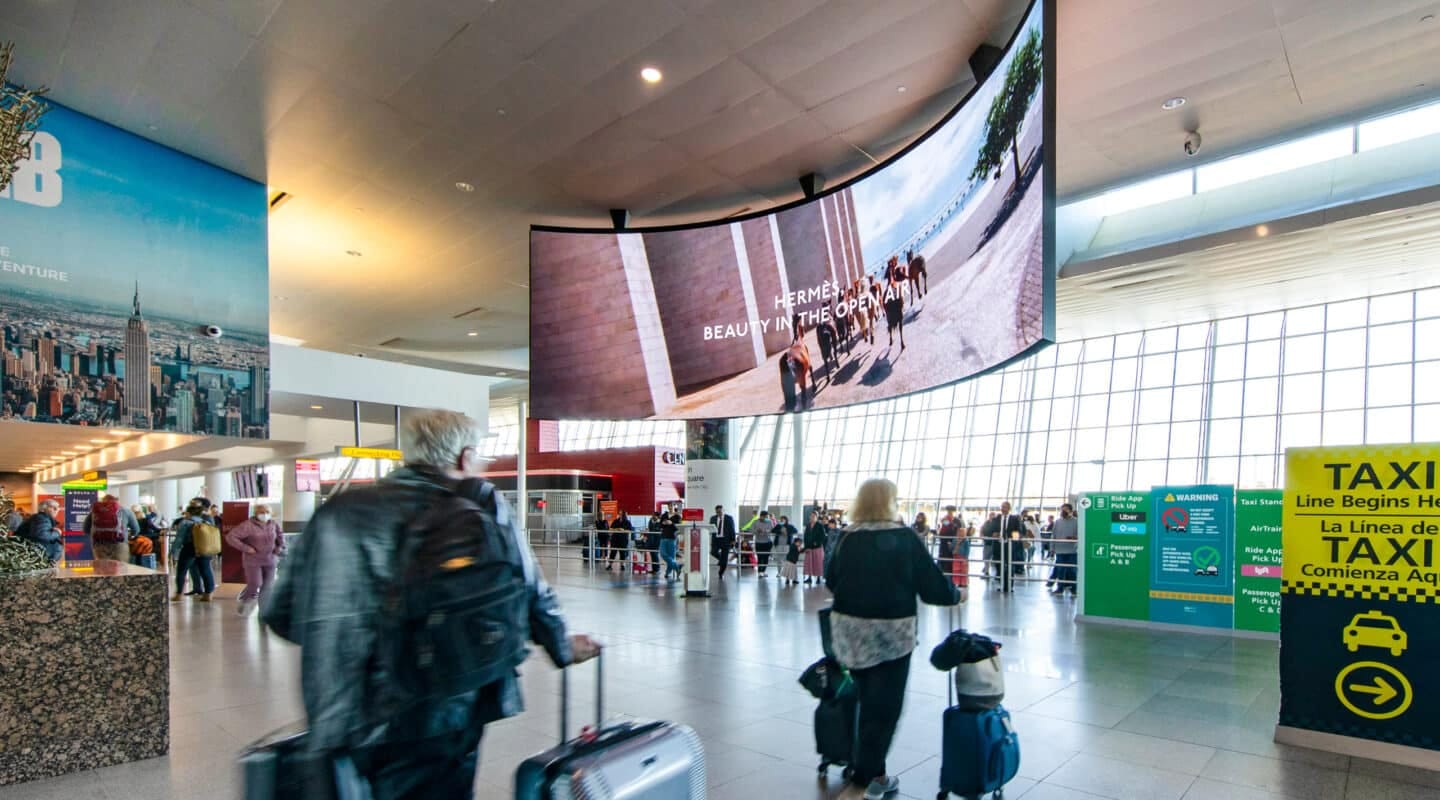
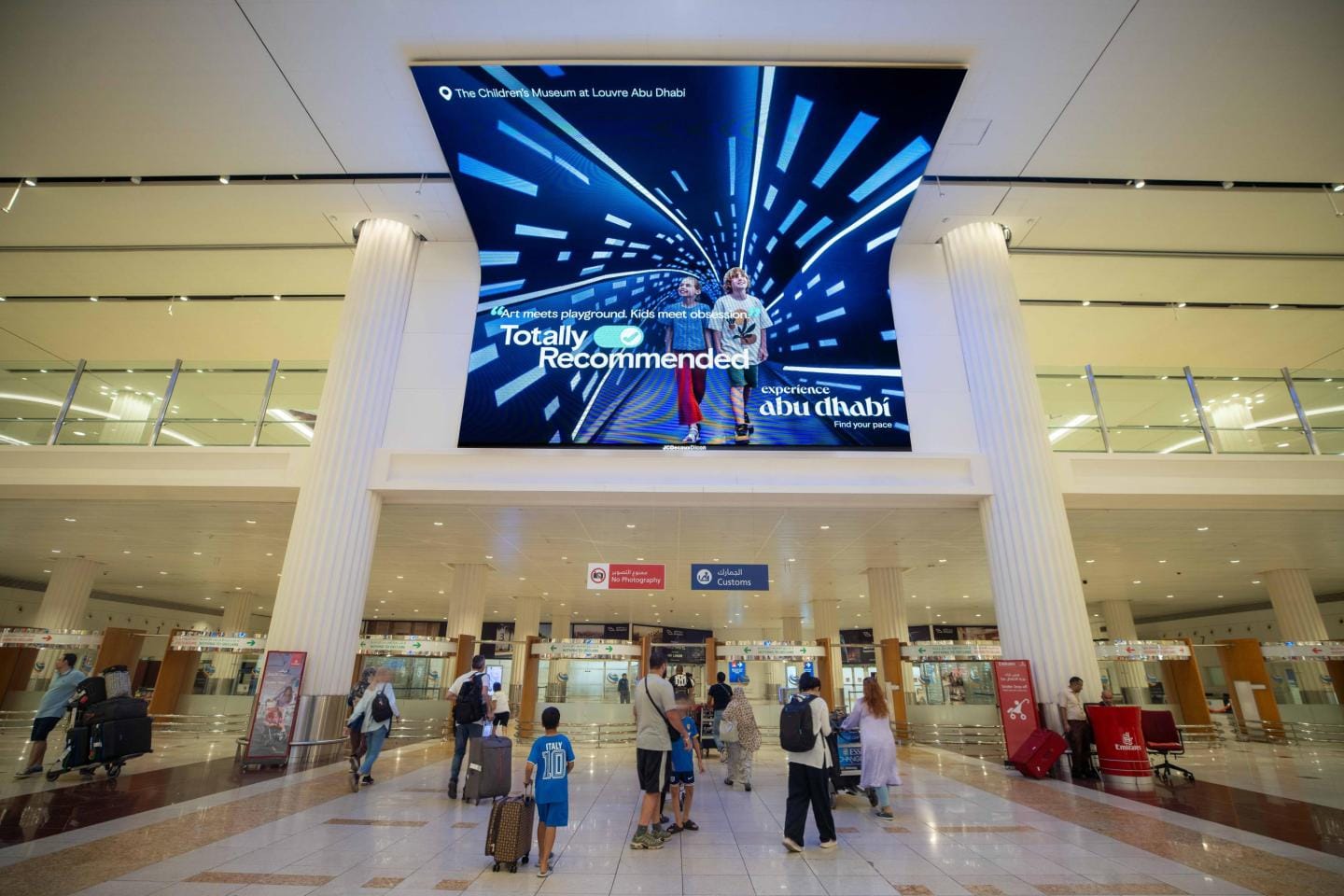
- CPT operates a high-visibility terminal environment where international and domestic dwell times are sufficient to deliver meaningful, repeated brand exposure; international departures in particular produce extended passenger presence across the retail, dining, and lounge zones ahead of long-haul departure windows.
- Dwell time is reinforced by early check-in culture, international security and immigration processing, and a retail and hospitality environment designed to keep passengers within the terminal footprint for significant periods, creating sustained exposure opportunities for well-placed brand assets.
- Cape Town's global identity as a luxury and lifestyle destination creates a brand-elevation halo effect within the terminal itself; premium brands seen at CPT benefit from association with the city's international HNWI credentials and the positive emotional state of passengers moving through one of the world's most celebrated travel destinations.
- Masscom Global's inventory access at Cape Town International covers large-format digital screens, international departure hall placements, retail zone activations, domestic terminal formats, and premium lounge-adjacent positions, enabling full campaign architecture from brand awareness through to purchase intent activation across a single terminal footprint.
Strategic Advertising Fit
Best Fit:
- International luxury real estate developers: The outbound HNWI audience is actively acquiring in UAE, UK, Portugal, Mauritius, and Greece; no channel in Africa delivers more direct access to motivated, financially capable buyers at the precise moment of travel-driven decision-making.
- Premium watches and fine jewellery: Both international tourists with committed luxury spend and domestic HNWI travellers with high brand affinity are concentrated in this terminal; the duty-free environment amplifies purchase intent and shortens the consideration cycle.
- Private banking and wealth management: Senior executives, business owners, and HNWIs actively managing offshore capital and residency transitions are disproportionately present at CPT; the financial services advertising environment here is materially underserviced relative to the audience quality and demand signal.
- International education institutions: Student and family travel creates concentrated seasonal windows for universities, business schools, and education consultancies targeting the Western Cape's high-investment, globally aspirational parent and student market.
- Premium automotive: The domestic HNWI market is brand-loyal, globally informed, and actively purchasing across the premium and ultra-premium segments; airport advertising in this category delivers strong brand recall and consideration lift among the CPT audience.
- Luxury hospitality and lifestyle brands: Hotels, wine estates, safari lodges, private yacht charter, and premium wellness brands benefit directly from the combined inbound HNWI tourism audience and the domestic luxury leisure traveller base moving through this airport year-round.
- Investment migration and residency services: An underexploited but high-value category given the documented scale of outbound South African interest in Golden Visa programmes, second residency, offshore financial structures, and citizenship-by-investment options.
- Premium travel services and insurance: Business and leisure travellers at this income tier consume private concierge, premium travel management, and high-value travel insurance at above-average uptake rates, making this a productive channel for the category.
Brand Alignment at a Glance
| Category | Fit |
|---|---|
| International real estate | Exceptional |
| Luxury goods and watches | Exceptional |
| Private banking and wealth management | Exceptional |
| Premium automotive | Strong |
| International education | Strong |
| Luxury hospitality and lifestyle | Strong |
| Mass market consumer goods | Poor fit |
| Budget financial products | Poor fit |
Who Should Not Advertise Here:
- Mass market FMCG brands without premium positioning: The CPT audience skews sharply toward upper-income and HNWI segments; volume-driven consumer goods campaigns will produce low recall, poor audience alignment, and weak return on investment in this environment.
- Budget travel brands and low-cost airline advertising: The dominant international travel culture at CPT is business class and premium economy; brands positioning exclusively on price will conflict with the audience's self-perception and deliver ineffective messaging in a premium context.
- Entry-level financial and banking products: Basic consumer banking, microfinance, and standard insurance products are fundamentally misaligned with an audience that is actively managing offshore assets, exploring investment migration options, and consuming premium financial services.
Event and Seasonality Analysis
- Event Strength: High
- Seasonality Strength: High
- Traffic Pattern: Dual-Peak
Strategic Implication
Cape Town International Airport operates two distinct high-value advertising windows: the Southern Hemisphere summer from November to February, which delivers peak volume across domestic leisure, family, and inbound international categories simultaneously, and the European summer from June to August, which delivers a concentrated second inbound HNWI tourism peak anchored by the Hermanus whale season and European school holiday travel. Masscom Global structures CPT campaigns to load weight into both seasonal peaks while maintaining a base presence through the shoulder months to capture the high-intent business traveller and outbound investment migrant who moves through this airport year-round at consistently premium audience quality. The December festive window is the single highest-ROI period for luxury, hospitality, lifestyle, and premium consumer brands.

Poor Placement and Delays Affect Airport Campaigns
We help you move faster, access better inventory, and get it right now.
Talk to an ExpertFinal Strategic Verdict
Cape Town International Airport is the most commercially valuable leisure-led airport on the African continent, and by a significant margin. The combination of a Very High HNWI Score, 10.2 million international passengers, a dual-peak seasonal structure, a catchment economy built around financial services, technology, and premium tourism, and one of the most active outbound wealth migration corridors in the emerging world creates an advertising environment that consistently outperforms its passenger volume on every audience quality metric. For luxury brands, international real estate developers, private banks, and premium consumer categories, CPT is not a secondary African market. It is a primary global buy. The bilateral nature of the wealth corridor adds a second commercial dimension that makes this airport uniquely valuable for brands positioned to intercept both inbound premium tourism spend and outbound HNWI capital deployment in a single, unified campaign. Masscom Global holds the inventory access, the market intelligence, and the campaign execution capability to turn that opportunity into measurable brand performance. The question is not whether to advertise at Cape Town International. It is how quickly your brand can be in position before the window tightens.
About Masscom Global
Masscom Global is a premium international airport advertising and media buying agency operating across 140 countries. With deep expertise in airport OOH, premium publications, and high-net-worth audience targeting, Masscom helps brands reach the world's most valuable travellers at the moments that matter most. For advertising packages, media rates, and campaign planning at Cape Town International Airport and airports across the globe, contact Masscom Global today.
Frequently Asked Questions
How much does airport advertising cost at Cape Town International Airport? Airport advertising costs at Cape Town International vary based on format, screen or placement size, terminal position, campaign duration, and seasonal demand. The international departures hall and lounge-adjacent formats command premium rates given their audience concentration, while domestic terminal placements offer broader reach at different price points. Masscom Global provides current rate cards, inventory options, and full campaign cost modelling for CPT based on your brief, budget, and target audience. Contact Masscom Global directly for a tailored proposal.
Who are the passengers at Cape Town International Airport? Cape Town International serves a premium dual audience. Inbound, the airport processes 10.2 million international passengers annually, dominated by European visitors from the UK, Germany, Netherlands, and France who are high-spend leisure travellers with committed budgets for luxury accommodation, fine dining, wine experiences, and premium retail. Outbound, the airport serves South African HNWIs who are among the most financially sophisticated and globally mobile audiences on the continent, actively deploying capital into offshore real estate, education, and investment migration across UAE, UK, Portugal, Mauritius, and beyond. The domestic traveller layer adds a significant volume of upper-income South African professionals and business executives to this base.
Is Cape Town International Airport good for luxury brand advertising? Cape Town International Airport is one of the strongest luxury brand environments on the African continent. The airport carries a Very High HNWI Score in the Masscom Global HNWI Airport Universe, ranking 158th globally. The catchment economy is built around high-income sectors including financial services, technology, wine, and premium tourism. The inbound international audience arrives with substantial committed luxury spend, and the domestic HNWI traveller base is globally brand-literate and actively purchasing across premium categories. For luxury fashion, fine watches, premium hospitality, and high-end lifestyle brands, CPT is an exceptional placement environment.
What is the best airport in South Africa to reach HNWI audiences? South Africa has three internationally significant airports ranked in the Masscom HNWI Airport Universe. Johannesburg OR Tambo International (JNB) carries an Ultra HNWI Score with 15.3 million international passengers and is the primary hub for mining wealth, corporate Africa, and the full Sub-Saharan HNWI market. Cape Town International (CPT) carries a Very High HNWI Score with 10.2 million international passengers and is the premier channel for luxury lifestyle, wine tourism, inbound premium travel, and outbound wealth migration. The two airports serve distinct and complementary audience types. Brands with significant HNWI objectives in South Africa should consider a dual-airport strategy across both, which Masscom Global can structure and execute as a combined buy.
What is the best time to advertise at Cape Town International Airport? CPT operates a dual-peak pattern. The primary peak runs from November to February, capturing domestic family and leisure travel, returning diaspora, and the full inbound European and North American summer tourism wave at its annual high point. December is the single highest-traffic month of the year. The secondary peak runs from June to August, driven by European summer holidays, the Hermanus whale season, and a concentrated inbound HNWI leisure audience. The March to April window is valuable for the Jazz Festival, Winelands harvest season, and Easter travel movement. Year-round presence captures the steady outbound HNWI and business traveller, whose volume and spend quality do not drop significantly in the shoulder months.
Can international real estate developers advertise at Cape Town International Airport? Cape Town International Airport is one of the highest-value channels on the African continent for international real estate developers. The outbound HNWI audience is actively buying property in Dubai, Portugal, the UK, Mauritius, Greece, and Malta, driven by rand hedging, investment migration intent, and lifestyle diversification. Developers targeting South African capital have a direct, high-intent audience moving through this terminal every day of the year. Masscom Global can build campaigns targeting specific departure routes, dwell-time zones, and seasonal investment movement peaks at CPT, positioning your development in front of qualified buyers at the point of travel-driven decision-making.
Which brands should not advertise at Cape Town International Airport? Mass market FMCG brands without a premium positioning tier will find CPT a poor return on investment. The audience skews sharply toward upper-income and HNWI segments, and volume-driven promotional advertising does not align with the consumption mindset or the brand environment of this terminal. Budget travel brands and low-cost airline advertising face a context mismatch, as the dominant travel culture at CPT is business class and premium economy. Entry-level banking, microfinance, and standard consumer insurance products are similarly misaligned with an audience that is actively managing offshore wealth structures and premium financial portfolios.
How does Masscom Global help brands advertise at Cape Town International Airport? Masscom Global provides the full end-to-end capability that airport advertising at CPT requires: audience intelligence and campaign strategy built on verified HNWI data, inventory access across the full terminal footprint, creative placement guidance calibrated to the specific dwell-time patterns and audience flow at this airport, and campaign execution that most independent media planners cannot replicate without local access and established operator relationships. From initial brief through creative placement to performance reporting, Masscom Global manages the complete process with the speed and precision that airport campaigns demand. To begin planning your CPT campaign, contact the Masscom Global team today.