


Airport at a Glance
| Field | Detail |
|---|---|
| Airport | Bagdogra Airport |
| IATA Code | IXB |
| Country | India |
| City | Bagdogra (serving Siliguri, Darjeeling, Sikkim) |
| Annual Passengers | Approximately 4.5 million (FY 2023-24) |
| Primary Audience | Tea industry executives and Darjeeling estate owners, Himalayan tourism visitors, Bhutan and Nepal trade corridor professionals, North Bengal government and defence officials |
| Peak Advertising Season | March to June, September to December |
| Audience Tier | Tier 2 |
| Best Fit Categories | Premium financial services, Real estate, Tea and premium FMCG, Luxury tourism, Education, Healthcare |
Bagdogra Airport is one of India's most commercially distinctive Tier 2 aviation environments, and its commercial distinctiveness is rooted in a geographic reality that no media assessment framework built around city population or regional GDP adequately captures. IXB does not merely serve Siliguri or North Bengal — it serves as the sole aviation gateway for one of the subcontinent's most structurally unique multi-border economic corridors: a narrow territorial strip of Indian land flanked simultaneously by Nepal to the west, Bhutan to the north, Bangladesh to the south, and the gateway to the Northeastern states through the Siliguri Corridor — popularly known as the Chicken's Neck — to the east. Every trader, institutional official, corporate executive, defence professional, and premium tourism visitor whose activity spans this extraordinary convergence of five sovereign territories passes through Bagdogra's terminal. The traveler moving through IXB is, with commercial consistency, either managing tea estate wealth whose global prestige commands a premium that no Indian agricultural product replicates, executing bilateral trade relationships across one of India's most commercially active multi-border intersection zones, arriving to experience Himalayan landscapes whose UNESCO and international tourism recognition drives an increasingly premium leisure economy, or stationed in one of the defence installations whose strategically elevated presence in this border-sensitive corridor generates a consistent above-average-income institutional travel segment. For advertisers in financial services, premium consumer goods, real estate, healthcare, and luxury tourism, IXB delivers an audience whose geographic breadth, commercial authority across multiple national boundaries, and purchasing aspirations calibrated by India's national commercial mainstream substantially exceed what Bagdogra's city-level population metrics would suggest to a planner relying on conventional Tier 2 airport demographic assessment.
The commercial case for advertising at Bagdogra rests on a specific and verifiable convergence that makes IXB unique among India's regional airports. The world's most famous and most expensive tea estates — whose Darjeeling First Flush auction prices regularly set global records, and whose estate-owning and management class constitutes one of India's most concentrated agri-based HNW communities — are accessible only through this terminal. The Kingdom of Bhutan's primary land border crossing at Phuntsholing is within driving distance of IXB, creating a consistent flow of Bhutanese officials, Indian bilateral trade professionals, and premium Bhutan-bound tourists whose routing through Bagdogra makes the terminal the primary Indian aviation interception point for one of Asia's most exclusive and carefully managed tourism economies. Sikkim — India's only fully organic state, whose premium agricultural products, Buddhist heritage tourism, and rapidly growing infrastructure investment pipeline make it one of the subcontinent's most commercially dynamic small-state economies — is accessible exclusively through IXB for its air-connected population. The combination of Darjeeling tea wealth, Bhutan premium tourism, Sikkim organic economy, and the Nepal border trade corridor creates a commercial advertising environment at IXB whose per-traveler financial authority and geographic commercial reach is structurally exceptional within India's Tier 2 airport advertising landscape.
Advertising Value Snapshot
- Passenger scale: Approximately 4.5 million passengers annually (FY 2023-24), with consistent year-on-year growth driven by expanding Himalayan tourism, new route development, and the progressive penetration of air travel into North Bengal's growing middle-class professional population across a five-state and multi-border catchment
- Traveller type: Darjeeling and Dooars tea industry executives and estate owners, Sikkim government officials and organic agri-business professionals, Bhutan-corridor trade and institutional professionals, premium Himalayan and Buddhist circuit tourism visitors, North Bengal and Siliguri commercial business operators, defence and paramilitary officials
- Airport classification: Tier 2 — North Bengal's primary aviation hub serving a multi-border commercial catchment encompassing five sovereign territories and generating a professionally concentrated and commercially aspirational audience whose geographic reach and institutional authority substantially exceeds single-city terminal metrics
- Commercial positioning: India's premier multi-border Himalayan gateway, serving as the sole aviation interception point for the Darjeeling tea economy, the Bhutan-India bilateral corridor, Sikkim's rapidly developing tourism and organic economy, and the Nepal trade crossing — a commercial combination unavailable at any other Indian regional airport
- Wealth corridor signal: Sits on the Bagdogra-Delhi, Bagdogra-Kolkata, Bagdogra-Mumbai, and Bagdogra-Bengaluru corridors — the primary routes connecting North Bengal's tea wealth, Himalayan tourism economy, and Siliguri trade hub to India's national commercial capitals — alongside the Bhutan and Nepal bilateral corridors whose cross-border trade and institutional activity defines IXB's international commercial character
- Advertising opportunity: Masscom Global provides full access to the Bagdogra Airport advertising environment with strategic placements targeting tea industry professionals, Himalayan tourism visitors, Bhutan and Nepal corridor business travelers, and the North Bengal institutional professional class across all high-dwell commercial zones within the terminal.

Airport Advertising is Complex to Get Right
We help you execute faster, with proven results and local insight most planners lack starting now.
Talk to an ExpertCatchment Area and Economic Drivers
Top 10 Cities within 150 km — Marketer Intelligence:
- Siliguri (West Bengal): North Bengal's primary commercial capital and the Chicken's Neck corridor's dominant trade hub, whose position at the confluence of five national borders has made it one of India's most commercially strategic inland cities; the business community based here — spanning wholesale trade, border commerce, logistics, banking, and a growing retail and professional services sector — generates the highest concentration of commercial business travel at IXB and produces the airport's primary domestic professional advertising audience for financial product, trade finance, and premium consumer brand advertising.
- Darjeeling (West Bengal): The world capital of premium tea and one of India's most internationally recognized hill station destinations, whose tea estate ownership and management class constitutes one of the subcontinent's most concentrated agri-based HNW communities and whose tourism economy attracts premium leisure visitors from metropolitan India and internationally; Darjeeling travelers through IXB are disproportionately tea industry professionals with above-average income and investment property behavior and premium leisure tourists whose boutique hotel and heritage accommodation commitment confirms premium consumer qualification.
- Gangtok (Sikkim): The capital of India's only fully organic state and one of the subcontinent's fastest-growing tourism and government service economies, whose senior officials, organic agri-business entrepreneurs, and premium tourism operators travel through IXB as their sole aviation gateway; Gangtok's growing middle-class professional and entrepreneurial community, whose income is increasingly calibrated by Sikkim's expanding private sector, creates a commercially aspirational audience for financial product, education, real estate, and premium consumer advertising at the terminal.
- Kalimpong (West Bengal): A historic hill trade town with a growing organic food, floriculture, and boutique tourism economy, connecting the Bhutan border trade corridor to the North Bengal commercial mainstream; Kalimpong's business community — spanning Bhutan-India bilateral traders, boutique hospitality operators, and an internationally connected art and cultural community — produces a niche but commercially engaged traveler audience with strong premium lifestyle and trade finance advertising receptivity.
- Jalpaiguri (West Bengal): The administrative and commercial hub of North Bengal's Dooars tea and forest economy, hosting district government offices, Dooars tea estate management, and a growing commercial professional class whose travel through IXB sustains a consistent middle-income business and government professional advertising audience for insurance, banking, and premium consumer brand categories.
- Phuntsholing (Bhutan) — bilateral catchment: Bhutan's primary border town and the country's most commercially active bilateral trade gateway, whose Indian and Bhutanese business professionals, government officials, and premium tourism visitors routing through IXB create one of the terminal's most commercially distinctive audience segments — the Bhutan-corridor professional whose bilateral trade relationship generates above-average commercial income and whose premium Bhutan tourism association elevates their lifestyle brand receptivity above the standard North Bengal regional professional baseline.
- Alipurduar (West Bengal): The gateway to the Dooars forest ecosystem and Buxa Tiger Reserve, with a growing eco-tourism and tea industry support economy whose business operators and premium wildlife tourism visitors travel through IXB consistently; this corridor contributes a premium eco-tourism and agri-business audience with strong outdoor lifestyle and trade finance advertising receptivity that complements the Darjeeling-focused tea economy audience from the western catchment.
- Cooch Behar (West Bengal): A historically significant royal heritage town with a growing government administration and education sector, whose district officials, educational institution professionals, and heritage tourism visitors travel through IXB for national institutional engagements; this corridor produces a government professional and heritage tourism audience receptive to insurance, financial product, and premium consumer advertising targeting the aspirational North Bengal professional middle class.
- Paro (Bhutan) — connectivity via Druk Air routing through IXB catchment: Bhutan's only international airport, accessible through road connection from the Phuntsholing border crossing served by IXB's catchment, generates a consistent flow of premium Bhutan-bound international tourists — primarily from India, the United States, Europe, and Japan — whose selection of Bhutan's high-value low-volume tourism model confirms an exceptionally self-selecting premium leisure profile with per-trip spending authority among Asia's highest; these travelers move through the IXB catchment en route to the Bhutan border and represent a commercially exceptional niche audience for ultra-premium lifestyle and luxury travel advertising.
- Kathmandu (Nepal) — indirect catchment via Siliguri-Kakarvitta border crossing: The Nepal border crossing at Kakarvitta near Siliguri brings consistent cross-border trade professional, institutional official, and Nepal-India bilateral commercial traveler flows through the IXB catchment, whose road-to-air transition at Bagdogra creates a commercially engaged bilateral trade audience receptive to trade finance, financial services, and premium consumer brand advertising targeting the Nepal-India commercial corridor's professional traveler base.
NRI and Diaspora Intelligence:
The North Bengali and Gorkha diaspora community spans India's national metropolitan centres and extends internationally to the United Kingdom, Australia, and the Gulf Cooperation Council countries, with a significant concentration of Gorkha-heritage professionals serving in India's military, paramilitary, and government services whose posting cycles generate consistent return travel through IXB. The domestic diaspora — North Bengali and Sikkimese professionals established across India's national commercial capitals — carries metropolitan Indian consumer calibration whose brand expectations substantially exceed what the North Bengal regional supply chain can historically satisfy, creating a returning purchaser psychology at IXB that converts the terminal's commercial environment into a premium brand engagement space for returnees whose mainland India income applies to a visit to an underserved regional market. The Gulf diaspora component — Gorkha community members in the UAE, Qatar, and Saudi Arabia whose remittance relationships with North Bengal families generate consistent return travel through IXB — adds dirham and riyal-denominated income and foreign-market consumer calibration to the inbound diaspora returnee profile, creating an FMCG, financial product, and real estate purchasing intent audience whose commercial behavior mirrors the pattern seen at other Indian regional airports serving Gulf-connected communities.
Economic Importance:
North Bengal and the broader IXB catchment economy operates across four structurally distinct pillars whose combined commercial output generates a traveler quality profile at the terminal disproportionate to the region's representation in West Bengal's aggregate economic metrics. Tea — with the Darjeeling district producing the world's most prestigious and most expensive commercial tea, and the Dooars and Terai producing substantial volumes of the broader Assam-type tea economy — generates an estate-owning and management HNW class whose agri-based wealth concentration, above-average personal income, and premium consumer behavior make them among North Bengal's most commercially valuable advertising audiences. Trade — anchored by Siliguri's position as the primary commercial transit hub for Nepal, Bhutan, Bangladesh, and Northeast India, whose combined bilateral trade flows generate a commercial services, logistics, and wholesale trading professional class of significant aggregate income — sustains the terminal's most consistent year-round business travel segment. Tourism — driven by Darjeeling's globally recognized heritage, Sikkim's organic Buddhist landscape, the Dooars' wildlife safari economy, and the growing Himalayan adventure tourism market — generates an increasingly premium inbound leisure audience from metropolitan India and internationally. Defence and government — with significant Indian Army, Air Force, Paramilitary, and State government institutional presence in North Bengal's border-sensitive corridor — contribute a structured institutional professional travel segment whose above-average household income, premium insurance purchasing, and real estate investment behavior adds commercial depth to IXB's audience across all twelve months of the calendar year.
Business and Industrial Ecosystem
- Darjeeling and Dooars tea industry: The world's most prestigious tea-producing landscape generates the IXB catchment's most commercially elite recurring business travel audience — estate owners, plantation managers, Kolkata and Siliguri auction house professionals, export trading company executives, and specialty tea brand operators whose combined income concentration and premium consumer expectations make them among North Bengal's most commercially valuable advertising audiences for financial product, premium FMCG, and investment property categories.
- Bhutan-India bilateral trade and logistics: Siliguri's role as the primary Indian commercial conduit for the Bhutan bilateral trade relationship — encompassing construction materials, consumer goods, hydropower-related equipment, and agricultural trade — generates a consistent executive and trader professional travel segment at IXB whose bilateral commercial authority and cross-border income spans two sovereign economies and produces a commercially engaged B2B audience for trade finance, logistics services, and corporate banking advertising.
- Sikkim organic agri-business and tourism industry: India's only fully organic state generates a growing class of premium food entrepreneurs, organic agri-business operators, and premium tourism hospitality professionals whose travel through IXB on national connections creates a commercially aspirational and brand-sophisticated audience for premium FMCG, wellness, and investment property advertising targeting North Bengal's most progressive and internationally oriented regional commercial community.
- Siliguri wholesale and logistics trade hub: Siliguri's established role as the distribution and logistics capital of the five-state and multi-border corridor — servicing retailers and traders across Nepal, Bhutan, Northeast India, and North Bengal — generates a large and consistent commercial trader and logistics professional travel segment at IXB whose SME operator income and trade finance requirements create a commercially productive audience for banking, insurance, and B2B trade services advertising.
Passenger Intent — Business Segment:
Business travelers at IXB are primarily operating in tea industry management, bilateral Bhutan-Nepal trade, Siliguri's commercial distribution sector, and state and central government administration. Their routes connect Bagdogra to Delhi, Kolkata, Mumbai, and Bengaluru — corridors defined by institutional relationship management, commercial trade execution, banking and financial services, and government programme implementation rather than by the technology or manufacturing sector travel that characterizes business aviation at India's larger metropolitan airports. The commercial authority concentrated in the tea industry and Bhutan bilateral trade professional segments is particularly significant for advertisers in financial product, trade finance, and premium consumer categories whose relevance to the IXB catchment's most commercially distinctive economic activities is direct and financially productive.
Strategic Insight:
The business traveler at IXB is operating in a commercial environment whose structural uniqueness from India's national commercial mainstream creates an advertising dynamic of exceptional opportunity for precisely positioned brand messaging. The Darjeeling estate owner whose family property spans generations of colonial-era plantation investment carries a wealth profile entirely invisible to standard India market income segmentation tools. The Siliguri bilateral trade executive whose cross-border commercial relationships span Nepal, Bhutan, and Bangladesh simultaneously manages more geopolitical commercial complexity per business trip than any equivalent mainland Indian commercial operator of comparable company scale. For advertisers whose India market strategy has historically defaulted to the top-five metropolitan airports, the IXB business traveler audience represents a commercially underserved, geographically captive, and aspirationally premium audience segment whose purchasing authority is structurally higher than their regional address in North Bengal would suggest to a planner relying on per-capita income metrics rather than per-traveler commercial intent analysis.
Tourism and Premium Travel Drivers
- Darjeeling Heritage and Tea Estate Tourism: One of India's most internationally recognized hill station destinations — whose colonial-era Raj architecture, UNESCO tentative World Heritage listed Toy Train, and the globally celebrated fragrance of first-flush Darjeeling tea create an irreplaceable combination of cultural heritage and premium sensory experience — attracts a self-selecting premium leisure visitor from metropolitan India and internationally whose boutique hotel accommodation and tea estate hospitality commitment signals above-average per-trip spending and strong premium lifestyle, artisan food and beverage, and heritage brand affinity at IXB.
- Sikkim Buddhist Heritage and Organic Tourism Circuit: Sikkim's extraordinary combination of ancient Tibetan Buddhist monasteries, organic mountain agriculture, and Himalayan trekking terrain whose UNESCO Khangchendzonga Biosphere Reserve designation anchors an inbound premium eco-luxury and spiritual tourism market from metropolitan India, Japan, Europe, and the United States whose per-trip spending commitment and premium experience orientation confirms a commercially qualified premium outdoor and sustainable lifestyle audience at IXB.
- Dooars Wildlife and Elephant Safari Tourism: The Terai-Dooars forest ecosystem — encompassing Gorumara National Park, Buxa Tiger Reserve, Jaldapara Wildlife Sanctuary, and the wider Dooars elephant corridor — generates a specialist wildlife and nature tourism audience from metropolitan India whose safari accommodation, expert guide investment, and authentic forest experience spending signals premium outdoor lifestyle brand affinity and above-average per-trip commercial engagement at the terminal.
- Bhutan Premium Tourism Gateway: IXB serves as the primary Indian aviation gateway for road-transiting Bhutan-bound premium tourists whose high-value low-volume tourism model — with mandatory guide fees, minimum daily spend requirements, and limited accommodation capacity — creates one of Asia's most commercially self-selecting premium leisure audiences; Bhutan-bound travelers routing through the IXB catchment have pre-committed to one of the most expensive per-day leisure experiences in Asia, confirming ultra-premium consumer qualification that no other regional North Bengal tourism product replicates.
Passenger Intent — Tourism Segment:
The premium tourist arriving at IXB has made a deliberate and well-researched destination selection whose commercial implications are commercially productive. Whether they are a metropolitan Indian professional booking a Darjeeling heritage homestay and tea estate bungalow experience, a Japanese Buddhist pilgrim connecting to Sikkim's monastery circuit, a European wildlife enthusiast pre-booking Gorumara's forest resorts, or an international traveler transiting through Siliguri on their way to Bhutan's carefully managed tourism economy, every category of this premium tourist audience has pre-committed to above-average accommodation, experience, and specialist guide spending whose financial profile confirms commercial qualification for premium lifestyle, investment property, and luxury experience brand advertising at the terminal. The growing proportion of this audience that combines a Himalayan leisure visit with a property evaluation in Darjeeling's appreciating real estate market or a Sikkim organic food business investment inquiry adds a commercial investment dimension to the tourism visitor profile that amplifies IXB's terminal advertising value for financial services and real estate categories.
Travel Patterns and Seasonality
Peak seasons:
- March to June: The primary spring and early summer peak — driven by Darjeeling's globally celebrated First Flush tea season, whose April and May auction timing generates the highest concentration of tea industry executive travel at IXB during the world's most commercially charged specialty tea trading window — combined with the April-May Himalayan trekking and tourism season and the post-Holi spring leisure travel surge from metropolitan India; this window produces the highest per-traveler premium commercial engagement for tea industry, tourism, financial services, and premium consumer categories simultaneously.
- September to December: The autumn and early winter peak driven by Darjeeling's Second Flush and Autumnal tea seasons, the Himalayan post-monsoon clear weather tourism window, the Diwali and Durga Puja diaspora return cycle, and the beginning of Sikkim's winter mountain landscape premium tourism season; this window concentrates tea industry professional travel, domestic diaspora returnees at maximum festival purchasing intent, and premium international and metropolitan India wildlife and mountain tourism visitors whose combined commercial density makes it IXB's second most commercially productive sustained advertising period.
- October to November: Within the autumn peak, October to November represents the single most commercially concentrated fortnight — when Darjeeling's Autumn Flush tea estates generate the season's final premium auction activity, the Diwali diaspora return concentrates purchasing intent at its annual maximum, and the monsoon's withdrawal opens the Himalayan tourism corridor at its most visually spectacular — creating an advertising window whose emotional and financial engagement density rivals the spring First Flush peak for per-impression commercial value.
Event-Driven Movement:
- Darjeeling First Flush Tea Season (March to May): The world's most celebrated specialty tea harvest window generates an extraordinary concentration of international tea buyers, estate managers, auction house representatives, and specialty tea brand operators at IXB whose combined industry authority and commercial income makes this the most commercially elite business travel window in North Bengal's annual calendar; advertising investment in this window reaches the global tea industry's decision-making class at the precise moment of their maximum commercial engagement with the Darjeeling economy.
- Durga Puja (October): Bengal's most significant and most emotionally charged cultural celebration, generating the Northeast's largest domestic diaspora return travel event as Bengali professionals from across India converge on their home communities; the three to four weeks surrounding Durga Puja create the highest volume diaspora returnee purchasing-intent peak at IXB whose combined emotional and financial engagement across consumer goods, real estate, financial products, and hospitality categories makes it the single most commercially productive week in the North Bengal retail and service economy.
- Rongali Bihu and Spring Festivals (April): The broader Northeast India spring festival calendar, encompassing Bihu, Poila Baisakh, and the Sikkimese Losoong and Saga Dawa Buddhist festivals, generates diaspora returnees and domestic cultural tourism visitors whose festival travel creates a concentrated purchasing-intent peak for lifestyle, consumer, and financial services brands at IXB during the spring peak window.
- Kaziranga-Darjeeling-Sikkim Combined Tourism Season (October to March): The premium combined Himalayan tourism circuit — drawing metropolitan Indian and international visitors who combine Darjeeling, Sikkim, and Dooars wildlife experiences in multi-destination Himalayan itineraries — creates a sustained premium leisure tourism audience at IXB across the full October-to-March dry season window whose combined per-trip spending authority and premium brand receptivity sustains commercial advertising value across the entire six-month peak season rather than concentrating in a single event window.
- Trekking and Adventure Tourism Season (April to June and September to November): The Himalayan trekking calendar's two optimal weather windows generate consistent adventure tourism arrivals at IXB from metropolitan India and internationally whose specialist experience investment, premium outdoor gear purchasing, and boutique mountain lodge accommodation spending confirms premium outdoor lifestyle and adventure brand affinity throughout the spring and autumn trekking seasons.

It’s Not Just Where You Advertise - It’s How Fast You Execute
We combine local insight with fast rollout to deliver results for you, now.
Talk to an ExpertAudience and Cultural Intelligence
Top 2 Languages:
- Bengali: The official state language of West Bengal and the primary spoken and cultural language of the IXB terminal's largest domestic traveler base — encompassing North Bengali professionals, the Kolkata-connected commercial and diaspora community, and the Bengali cultural identity that structures the Durga Puja, Poila Baisakh, and regional festival calendar's most commercially significant travel peaks; Bengali-language advertising at IXB signals deep cultural intelligence and achieves measurably stronger emotional resonance with the domestic Bengali audience whose language identity is among the most strongly held regional cultural markers in India's commercial advertising landscape.
- Hindi: India's national link language and the commercial lingua franca of the IXB terminal's broader multi-regional traveler base — encompassing government officials from non-Bengali northeastern states, mainland Indian business and tourism visitors, defence personnel from national postings, and the pan-India corporate professional class whose North Bengal postings or tourism visits route them through Bagdogra; Hindi-language advertising at IXB reaches the full non-Bengali domestic audience without segmentation and is the appropriate primary register for financial product, insurance, and premium consumer brand messaging targeting the mainland Indian professional traveler whose IXB presence is driven by institutional, commercial, or tourism motivation rather than by Bengali cultural homeland identity.
Major Traveller Nationalities:
The dominant nationality at IXB is Indian — spanning North Bengali residents, Sikkimese and Darjeeling district hill community professionals, and mainland Indian domestic travelers on business, government, or tourism purposes — whose combined commercial profile defines the airport's primary advertising value. The domestic traveler composition is concentrated on the Delhi, Kolkata, and Mumbai corridors whose institutional and commercial professional traffic sustains IXB's year-round business travel base. International travelers form a secondary but commercially disproportionate segment at IXB: Bhutanese nationals and Indian nationals engaged in Bhutan bilateral trade on the Phuntsholing corridor, Nepali nationals and Indian nationals engaged in Kakarvitta border trade on the Nepal corridor, and an inbound international tourism segment whose Bhutan-bound premium travelers, Darjeeling heritage visitors from Japan and Europe, and Sikkim Buddhist circuit pilgrims from East Asian Buddhist-heritage nations collectively produce a per-traveler spending profile substantially above the domestic Indian regional airport average. Bangladesh connectivity adds a bilateral trade and medical tourism segment whose Bangladeshi patients traveling to Siliguri's private hospitals for specialist treatment represent a cross-border health services consumer audience whose medical investment motivation and family accompanying spending contribute commercial value to the terminal's international arrivals environment.
Religion — Advertiser Intelligence:
- Hinduism (approximately 65% in North Bengal): The dominant faith tradition across North Bengal — encompassing Bengali Vaishnavism, Shaktism, and the broader Hindu festival calendar — organizes the Durga Puja, Diwali, Dussehra, and Kali Puja travel peaks that define North Bengal's most commercially significant domestic travel windows at IXB; brands investing in advertising around Durga Puja specifically capture the Bengali diaspora returnee audience at its annual maximum emotional and purchasing-intent engagement — a commercial window whose intensity in the Bengali cultural context is comparable only to Christmas for British diaspora returnees in its combination of emotional homecoming motivation and peak discretionary spending behavior.
- Buddhism (culturally and commercially significant in Sikkim, Darjeeling, Kalimpong, and Bhutan corridor): The Tibetan Buddhist tradition that permeates Sikkim, the Darjeeling district's Nepali and Tibetan community, Kalimpong's Bhutanese-connected population, and the entire Bhutan bilateral corridor creates a distinctive religious-cultural advertising context at IXB whose key festivals — Losoong, Saga Dawa, Tihar, and the monastery festival circuit — generate concentrated travel peaks from the Sikkimese and Bhutan-corridor professional community and premium Buddhist heritage tourism visitors from East Asia and internationally; brands whose creative acknowledges Himalayan Buddhist cultural aesthetics achieve a depth of cultural resonance with this specific audience segment that generic India market advertising templates cannot replicate.
- Islam (approximately 20% in North Bengal, concentrated in southern districts): North Bengal's substantial Muslim community — concentrated in Malda, South Dinajpur, and Murshidabad districts adjacent to the Bangladesh border — generates a consistent Eid Al-Fitr and Eid Al-Adha travel peak at IXB and a year-round Bangladesh-corridor bilateral trade and family connection travel segment whose remittance relationships and cross-border commercial activity makes them commercially receptive to financial services, premium FMCG, and real estate advertising targeting the border corridor's Muslim professional and business community.
- Christianity (significant in Darjeeling district, Gorkha community, and Northeastern states): The Gorkha and hill community's strong Christian presence — particularly in Darjeeling's English-educated middle class and the wider Nepali-heritage professional community — generates a Christmas and Easter travel peak at IXB and sustains a year-round English-language-oriented professional audience whose educational aspiration, military service tradition, and national commercial ambition make them commercially receptive to education, financial services, and premium consumer advertising targeting the aspiring Himalayan foothills professional class.
Behavioral Insight:
The IXB traveler is commercially defined by a dual-aspiration psychology whose most commercially productive feature is the simultaneous experience of regional cultural pride and national commercial ambition. The Darjeeling-origin professional who has established a career in Kolkata or Delhi returns through IXB carrying metropolitan India's consumer calibration applied to a hillside hometown whose natural and cultural heritage generates extraordinary global recognition but whose regional supply chain has historically underdelivered on the premium brand availability that their mainland income now enables them to access. The Siliguri trader whose bilateral business spans three national borders has developed a commercial sophistication — managing rupee, ngultrum, and taka-denominated transactions simultaneously — that places them in a commercially unusual position within India's regional business professional class, combining multi-currency commercial confidence with strong aspirational brand orientation toward the national mainstream whose standards they benchmark against on every Delhi or Mumbai business trip. For advertisers whose India market creative strategy acknowledges the specific commercial geography of the Himalayan foothills — the tea estate heritage, the Bhutan mystique, the mountain landscape identity — rather than deploying generic mainland India templates, IXB delivers engagement depth and brand recall that mass India market advertising frameworks consistently fail to achieve in this distinctive regional context.
Outbound Wealth and Investment Intelligence
The outbound passenger at Bagdogra Airport represents one of India's most commercially underserved regional professional audiences because the investment products, educational opportunities, and premium consumer offerings that match their financial capacity and lifestyle aspiration have historically been marketed through metropolitan India's advertising ecosystem — which reaches them intermittently through national media — rather than through the regional airport commercial environment that captures them at the precise moment of maximum purchasing intent: the departure moment when the tea estate director is flying to Kolkata for the First Flush auction, the Siliguri trader is flying to Delhi for a bilateral trade policy meeting, or the Sikkimese official is flying to Mumbai for a state investment promotion summit. At these moments, the outbound IXB traveler is a commercially activated, financially capable, and brand-engaged professional whose purchasing consideration is concentrated and whose receptivity to well-positioned advertising at the point of travel is structurally higher than at any other moment in their commercial calendar.
Outbound Real Estate Investment:
The North Bengali and Himalayan foothills professional community demonstrates outbound real estate investment behavior concentrated across three distinct corridors. Within Siliguri itself — whose real estate market is among North Bengal's fastest appreciating, driven by expanding commercial infrastructure, the hill tourism corridor's residential demand, and the growing professional residential segment from Gorkhaland Territorial Administration and Sikkim's administrative community — the domestic professional and tea estate wealth class is the primary buyer of premium apartment and commercial property whose advertising at IXB captures these buyers at the precise moment of their travel-funded purchasing planning cycle. In Kolkata — the traditional capital of the Bengal professional and tea trading class — North Bengali professionals and Darjeeling estate families maintain residential and investment property portfolios whose management and acquisition decisions are activated by the consistent Kolkata-routing travel that IXB's route network sustains. In Delhi NCR and Bengaluru — whose premium residential markets attract North Bengal professionals established in national government and corporate careers — the domestic diaspora returnee's property investment consideration is refreshed by every IXB transit whose commercial environment provides the right platform for metropolitan real estate advertising reaching buyers who are on their way to the markets where their intended properties are located.
Outbound Education Investment:
North Bengal and Himalayan foothills families invest in education with a specific intensity driven by the region's historically strong academic culture — particularly within the Darjeeling district's English-medium school network, whose colonial-era educational heritage has produced consistently high academic aspiration across multiple generations — and by the professional income mobility that national-level qualifications provide in a regional economy with fewer local private sector career pathways than India's national commercial mainstream. Delhi's premier educational institutions — IITs, central universities, and management schools — are the primary domestic higher education destination for North Bengal's aspirational professional families whose IXB travel during admission cycles creates a concentrated education advertising audience. Sikkim's growing education investment — reflected in Gangtok's expanding private university sector and the state's progressive integration into India's national educational quality benchmark system — generates a consistent official and institutional travel segment at IXB whose educational policy authority and personal family education investment decisions make them receptive to both institutional education programme advertising and premium education consultancy services. Internationally, Australia, the United Kingdom, and Canada are the primary destinations for North Bengali and Gorkha-heritage students whose internationally ambitious families are among the most educationally invested regional communities in India's Tier 2 catchment areas, and whose outbound travel through IXB creates a consistent and commercially engaged audience for international education programme advertising.
Outbound Wealth Migration and Residency:
The North Bengali and Gorkha professional community's interest in international residency and global mobility is an emerging commercial behavior whose trajectory is accelerating alongside the region's progressive integration into India's national premium consumer and digital economy. Australian and Canadian skilled migration programmes find a commercially receptive audience among the Darjeeling district's English-educated professional class — particularly in nursing, healthcare, and IT sectors — whose language proficiency, professional credentials, and migration network connections through the established UK-Gorkha diaspora create a pre-motivated buyer audience for international residency and skilled migration advisory services at IXB. The UAE's long-term residency programme and the Dubai investment visa find relevance among Siliguri's bilateral trade professional community whose Gulf commercial relationships and cross-border commercial confidence create an awareness of international residency options above the standard Indian Tier 2 professional community baseline.
Strategic Implication for Advertisers:
National and international brands operating across the IXB wealth corridor — including Siliguri and Kolkata real estate developers, Australian, UK, and Canadian education and migration advisory services, premium financial product and insurance providers, luxury tea and Himalayan food and beverage brands, Bhutan and Sikkim premium tourism operators, and premium consumer goods companies whose North Bengal distribution penetration lags their advertising reach — should treat IXB as a primary rather than secondary channel for reaching a commercially underserved multi-border regional professional audience whose purchasing authority, geographic catchment across five sovereign territories, and aspiration calibrated by India's national commercial mainstream makes them among the most commercially productive audiences available at any Tier 2 Indian airport whose advertising market pricing has not yet aligned with its passenger quality profile.
Airport Infrastructure and Premium Indicators
Terminals:
- Bagdogra Airport operates as a civil enclave within an Indian Air Force station, with the civilian terminal building handling both domestic and international commercial passenger operations within a compact structure whose ongoing upgrade investment under the Airport Authority of India's regional connectivity programme is progressively expanding terminal capacity, commercial zone infrastructure, and passenger processing quality to accommodate the North Bengal corridor's rapidly growing air travel demand.
- The terminal's international departures zone, handling services to Dhaka, Paro, and periodic regional international destinations, creates a structurally premium advertising sub-environment whose per-traveler commercial profile — Bhutan-bound premium tourists, Bangladesh bilateral trade professionals, and the growing Southeast Asia outbound traveler segment — substantially exceeds the domestic terminal average and rewards premium placement investment in the international zone above the blended terminal average.
Premium Indicators:
- IXB's military-civil enclave status — operating within an active Indian Air Force station — signals a defence institutional premium to the terminal environment that is absent at purely civilian airports; the Air Force presence generates a consistent high-income defence professional travel segment whose Canteen Stores Department-supported lifestyle and government-income security creates a commercially valuable premium consumer and insurance purchasing audience that sustains year-round commercial advertising value independent of seasonal tourism peaks.
- Darjeeling tea's status as the world's most internationally prestigious and price-per-kilogram premium commercially traded agricultural product — consistently commanding global auction records and generating enthusiastic international buyer travel through IXB's catchment — provides a luxury brand association signal to the terminal's commercial environment that elevates the contextual premium of advertising placements in ways that most Indian Tier 2 regional airports cannot claim through their primary economic identity.
- The Mayfair Darjeeling, Glenburn Tea Estate, Elgin Hotels group, and the expanding boutique heritage accommodation portfolio across the Darjeeling-Sikkim tourism corridor signal a premium hospitality infrastructure that is attracting an increasingly quality-conscious and internationally calibrated inbound leisure visitor whose accommodation selection confirms commercial qualification for premium consumer, lifestyle, and real estate advertising at IXB.
- Sikkim's designation as India's first fully organic state — whose international certification, growing export premium food brand recognition, and sustainable agriculture credentials attract an environmentally motivated HNW consumer audience from metropolitan India and internationally — adds an eco-luxury and organic premium brand association to the IXB catchment's commercial character that aligns strongly with the global trend toward premium sustainable lifestyle brand advertising.
Forward-Looking Signal:
The Indian government's sustained investment in North Bengal's connectivity infrastructure — including the ongoing expansion of IXB's terminal and runway facilities, the Vande Bharat rail corridor investment improving Siliguri's national accessibility, and the progressive opening of new bilateral international routes to Bangladesh and Southeast Asian markets under Act East Policy aviation development — signals a structurally improving commercial environment at IXB over the medium term whose audience quality and passenger volume trajectory are both upward. The central government's accelerating infrastructure investment in Sikkim, Arunachal Pradesh, and the Nepal and Bhutan border corridors under the Border Area Development Programme and bilateral connectivity initiatives is progressively driving commercial and institutional professional travel growth through IXB whose frequency and purchasing authority will expand the terminal's B2B and institutional advertising value above its current tea-and-tourism-anchored commercial foundation. The Gorkhaland Territorial Administration's progressive stabilization and Darjeeling's growing premium tourism investment pipeline — including new boutique heritage properties and the Toy Train UNESCO recognition's international tourism marketing momentum — are collectively elevating the quality of the inbound premium leisure visitor at IXB whose accommodation and experience spending will progressively align the terminal's tourism advertising value with its extraordinary natural and cultural heritage premium. Masscom Global advises clients with an IXB advertising brief to act now, securing premium placements at current market rates in an airport whose audience quality trajectory is among India's most commercially compelling in the Tier 2 landscape and whose advertising market pricing has not yet fully reflected the multi-border commercial authority of the professional audience already moving through it.
Airline and Route Intelligence
Top Airlines:
- IndiGo
- Air India
- SpiceJet
- Vistara (Air India brand integration)
- Akasa Air
- Alliance Air (regional)
- Druk Air (Bhutan connections via Paro)
- Biman Bangladesh Airlines (Dhaka)
Key International Routes:
- Bagdogra (IXB) to Dhaka (DAC) — Biman Bangladesh Airlines and IndiGo; the primary bilateral Bangladesh corridor serving North Bengal-Bangladesh trade and family connections, cross-border medical tourism from Bangladeshi patients accessing Siliguri's private healthcare facilities, and the bilateral institutional professional community whose consistent year-round demand creates a commercially productive international route whose per-traveler commercial intent is driven by trade, healthcare, and family investment rather than leisure motivation
- Bagdogra (IXB) to Paro (PBH) — Druk Air; one of the terminal's most commercially premium international routes despite its modest frequency, carrying Bhutan-bound international premium tourists through the IXB catchment and Bhutanese officials and bilateral trade professionals whose combined per-traveler commercial profile — anchored by Bhutan's high-value low-volume tourism model and the bilateral trade corridor's commercial professional class — elevates this route's per-seat financial authority above virtually any other regional Indian airport's comparable international service
- Bagdogra (IXB) to Bangkok (BKK) — IndiGo and Air India (seasonal); connecting North Bengal's growing Southeast Asian tourism, bilateral trade, and Act East Policy professional traveler community to ASEAN's commercial hub and onward connectivity network, with a passenger profile spanning business trade professionals, premium Thai tourism visitors, and the growing North Bengal outbound tourism market whose Bangkok destination selection confirms above-average disposable income and international commercial orientation
Key Domestic Routes:
- Bagdogra (IXB) to Delhi (DEL) — the highest-frequency and most commercially significant domestic route at IXB, carrying North Bengal's entire senior government, institutional, tea industry, and corporate professional class on the Bagdogra-national capital corridor whose combined passenger commercial authority is the foundation of the terminal's premium advertising value for financial product, insurance, real estate, and premium consumer categories
- Bagdogra (IXB) to Kolkata (CCU) — the primary eastern India hub connection, carrying Darjeeling and Dooars tea industry executives to the Kolkata auction houses and trading companies, agri-business export professionals on their trade finance and regulatory engagements, and the historic North Bengal-Kolkata commercial and cultural relationship's consistent professional travel flow
- Bagdogra (IXB) to Mumbai (BOM) — connecting North Bengal's business and professional class to India's commercial capital, carrying corporate executives, banking professionals, and senior institutional officials whose Mumbai travel encompasses high-stakes commercial and investment decision-making
- Bagdogra (IXB) to Bengaluru (BLR) — the technology and national professional corridor increasingly important as North Bengal and Sikkim's IT sector grows and Bengaluru-posted North Bengali professionals maintain strong homeland connections through consistent IXB return travel
- Bagdogra (IXB) to Guwahati (GAU) — the Northeast India regional hub connection sustaining the commercial and institutional professional relationship between North Bengal's Chicken's Neck corridor and Assam's regional commercial capital, whose combined bilateral economic activity generates consistent inter-hub professional travel
Wealth Corridor Signal:
The IXB route network is commercially revealing in its dual function as both a national institutional capital management corridor and a multi-border bilateral trade execution network. The Delhi and Kolkata routes are the institutional and commercial capital management corridors — the channels through which North Bengal's government procurement authority, tea industry commercial decisions, and financial services relationships are exercised in the national commercial capitals. The Dhaka and Paro routes are the bilateral trade and premium tourism corridors — connecting IXB's catchment to Bangladesh's trade relationship and to Bhutan's uniquely premium tourism economy through the most commercially meaningful international bilateral aviation infrastructure available at any North Bengal regional airport. Together, these routes define IXB not as a standard Tier 2 Indian domestic hub but as the aviation infrastructure of a multi-border commercial economy whose bilateral trade authority, premium agricultural wealth, and Himalayan tourism premium justify an advertising audience quality assessment substantially above what a single-city population-based media valuation would produce.
Media Environment at the Airport
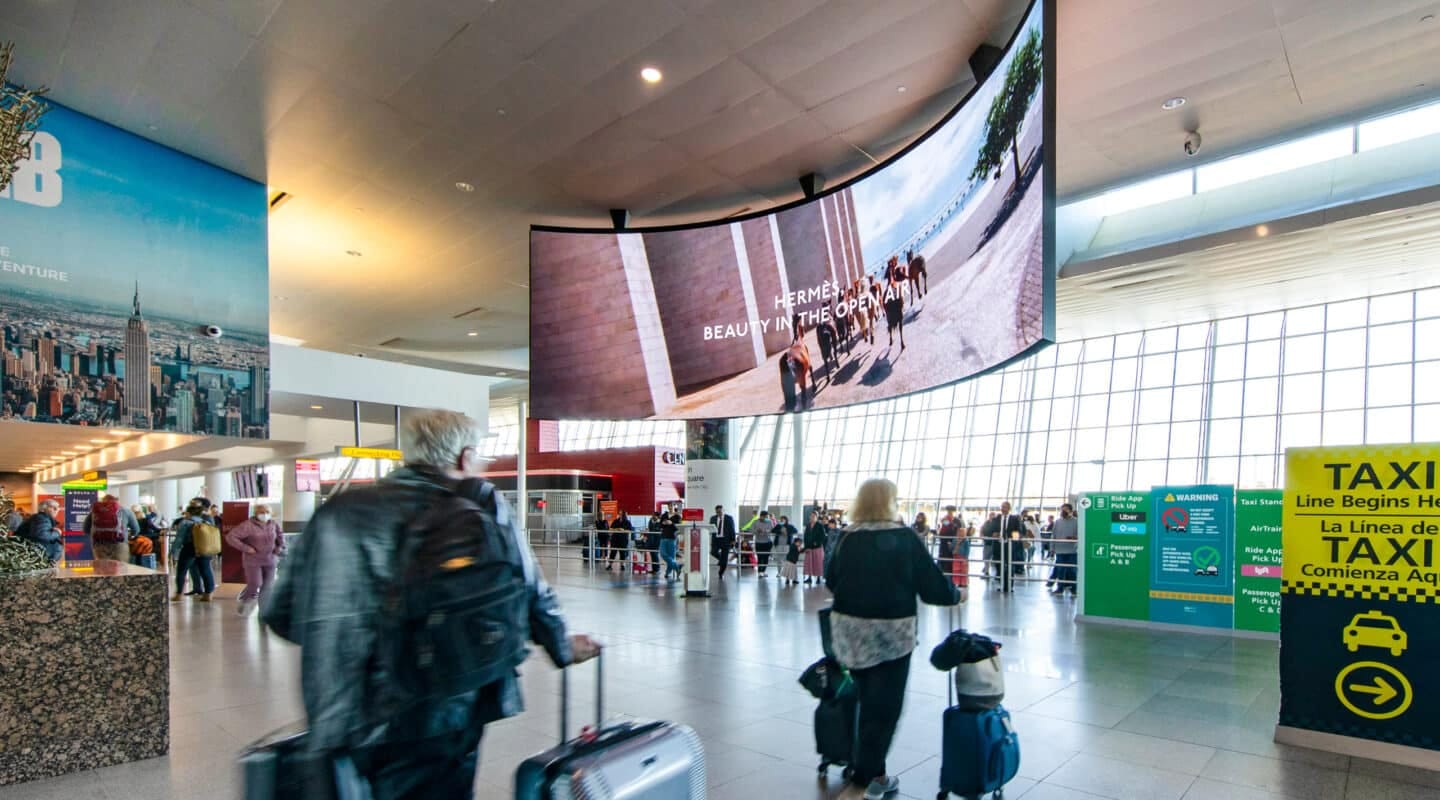
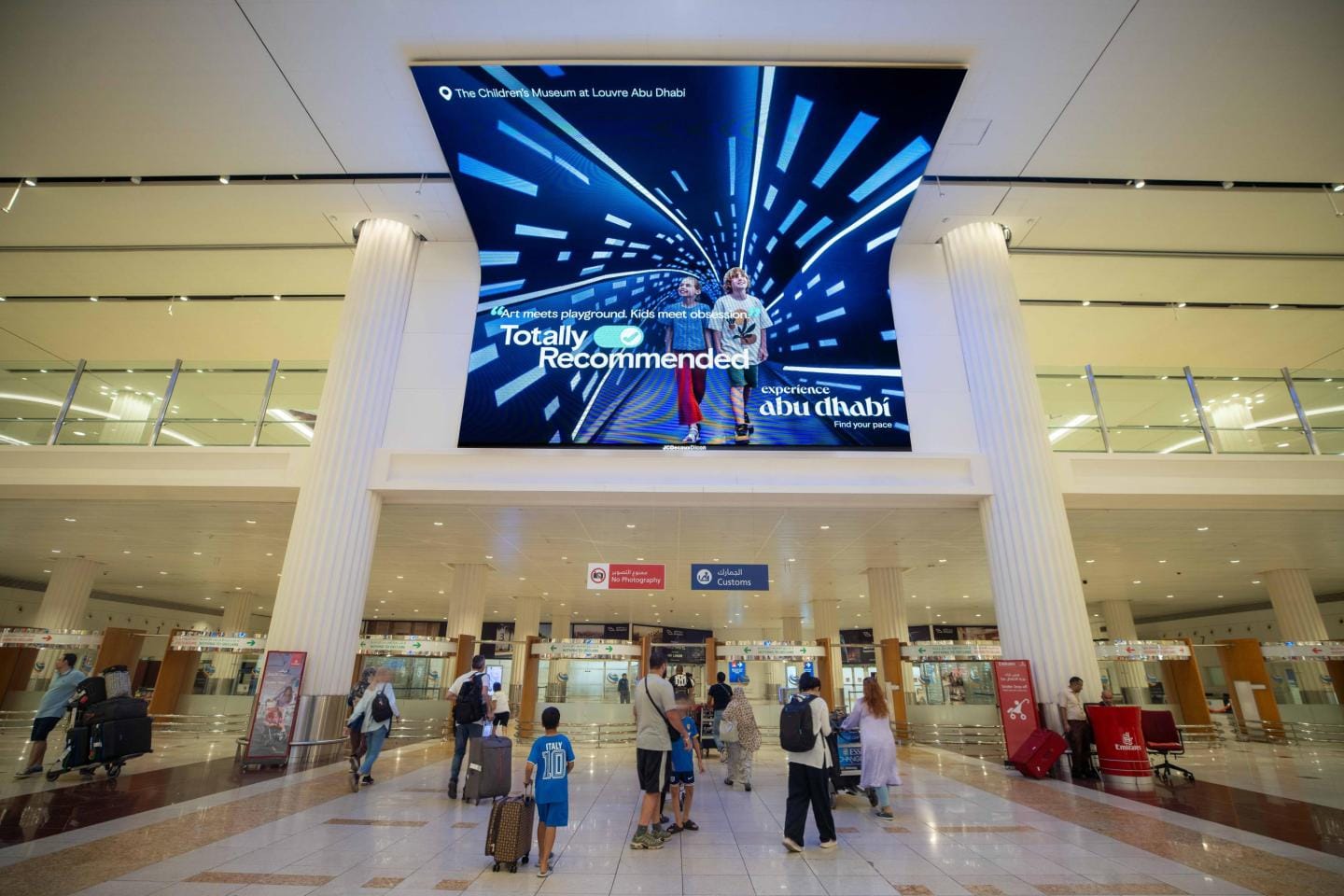
- Bagdogra Airport operates in one of India's most commercially underexploited major regional airport advertising environments — the North Bengal and Himalayan foothills corridor's historical relative distance from India's national advertising mainstream has meant that IXB's terminal has received disproportionately lower brand advertising investment than its passenger quality and multi-border commercial authority justify, creating a low-clutter environment where premium brand placements command significantly greater visual and cognitive attention from a commercially engaged professional and tourist audience than equivalent placements in the saturated advertising ecosystems of Kolkata, Delhi, or Mumbai airports achieve per impression.
- Dwell time at IXB is sustained by the security screening and check-in protocols associated with an airport handling full-service domestic wide-body and international operations whose passenger processing infrastructure, while progressively being upgraded, creates a commercial contact window whose duration per traveler benefits premium advertising categories requiring sustained brand message engagement rather than momentary impression contact.
- The terminal's combined domestic and international passenger flow — where the Darjeeling tea estate director, the Sikkim government official, the Bhutan-bound Japanese premium tourist, the Siliguri bilateral trader, and the metropolitan India wildlife tourism visitor move through the same commercial zones — creates a media environment whose audience diversity within a compact physical space rewards advertisers investing in multilingual, multi-audience creative strategies that acknowledge the specific commercial motivations of North Bengal's extraordinary multicultural and multi-border traveler composition.
- Masscom Global provides full-service advertising access at Bagdogra Airport, covering terminal placements across domestic and international departure zones, arrivals corridors, and baggage claim areas, with campaign management and creative execution delivered through Masscom's India and South Asia regional networks and specifically calibrated to the Bengali and Gorkha cultural identity, multi-border commercial context, and Himalayan tourism and tea economy audience that defines IXB's commercially distinctive character.
Strategic Advertising Fit
Best Fit:
- Premium financial services and insurance: The tea industry HNW and estate-owning community, Siliguri's bilateral trade professional class, defence and government officials, and the North Bengal professional services sector collectively produce at IXB one of India's most commercially concentrated regional financial product advertising audiences outside the top-five metropolitan airports; life insurance, wealth management, mutual funds, home loans, and premium banking products achieve strong resonance with an audience whose institutional income security, agri-business wealth concentration, and growing financial product sophistication make them among India's most commercially receptive Tier 2 regional airport audiences for financial advertising.
- Real estate — Siliguri, Darjeeling, Kolkata, and metro India: The North Bengali and Himalayan foothills professional community is among India's most actively property-investing regional communities, with outbound investment spanning Siliguri's premium residential market, Darjeeling's appreciating heritage property sector, Kolkata's investment property corridor, and Delhi NCR; developers operating across all four markets find at IXB a commercially engaged, travel-activated buyer audience whose property investment consideration is consistently refreshed by the travel cycle that routes them through the terminal multiple times per year.
- Darjeeling tea, premium FMCG, and artisan food and beverage brands: The world's most prestigious tea-producing landscape creates at IXB the subcontinent's most commercially authentic environment for premium tea, artisan food, and luxury food and beverage brand advertising — reaching an audience whose tea industry professional expertise and premium agricultural product affinity is unmatched at any other Indian airport and whose brand receptivity to quality-positioned food and beverage advertising is structurally elevated by their daily professional engagement with the world's most premium commercial tea economy.
- Himalayan tourism, eco-luxury, and premium heritage travel: Premium domestic and international tourism brands targeting Darjeeling's heritage market, Sikkim's Buddhist and organic tourism circuit, the Dooars wildlife safari economy, and the Bhutan premium gateway find at IXB a pre-qualified inbound leisure audience whose deliberate Himalayan destination selection confirms both above-average spending commitment and premium experience brand receptivity across wildlife, nature, cultural heritage, and sustainable luxury advertising categories.
- Healthcare and wellness — Siliguri private hospitals and medical services: Siliguri's rapidly growing private healthcare sector — anchored by Medica North Bengal Clinic, Apollo and Narayana network presences, and the expanding regional medical infrastructure serving both domestic North Bengal patients and Bangladeshi medical tourists — creates a healthcare advertising environment at IXB that reaches patients, families, and medical professionals in active healthcare decision-making whose terminal dwell time converts into health services and insurance brand engagement at above-average conversion rates.
- International and domestic education: North Bengal's strong academic culture and its Gorkha community's exceptional educational aspiration — reinforced by Darjeeling district's English-medium school network and the Sikkim University system's growing national profile — makes IXB one of India's most commercially productive regional airports for education advertising targeting families whose investment motivation is both culturally embedded and financially funded at the tea industry, defence, and government income levels that define the terminal's primary professional audience.
- Bhutan and Sikkim premium tourism and organic lifestyle brands: The Bhutan-bound premium tourist and the Sikkim organic agriculture enthusiast represent two of IXB's most commercially self-selecting premium audience categories whose combined brand values — extraordinary natural exclusivity, Buddhist cultural heritage, organic sustainability — create a commercially receptive environment for sustainable luxury, premium wellness, conservation-aligned investment, and authentic cultural experience brand advertising whose values mirror the deliberate premium selectivity that defines both the Bhutan and Sikkim tourism proposition.
Brand Alignment at a Glance
| Category | Fit |
|---|---|
| Premium financial services and insurance | Exceptional |
| Real estate — Siliguri, Darjeeling, and metro India | Exceptional |
| Darjeeling tea and premium food and beverage | Exceptional |
| Himalayan and eco-luxury tourism | Strong |
| Healthcare and medical services | Strong |
| International and domestic education | Strong |
| Ultra-budget commodity categories | Poor fit |
Who Should Not Advertise Here:
- Ultra-budget commodity brands and price-led mass market categories: While IXB's audience spans a commercial spectrum broader than a purely HNW airport, the terminal's highest advertising ROI is concentrated in the premium and aspirational professional tiers; commodity-positioned and price-led advertising achieves limited engagement in an environment where the dominant purchasing psychology among the tea industry, government, and institutional professional audience is defined by quality aspiration and brand recognition rather than price sensitivity.
- Brands without Hindi, Bengali, or Nepali language capability: Given the multilingual complexity of the IXB catchment — spanning Bengali, Hindi, Nepali, Tibetan, and multiple northeastern language communities — single-language English-only campaigns without South Asian language adaptation will structurally fail to achieve the cultural resonance and purchasing intent activation that the IXB domestic audience's multilingual commercial psychology requires for effective conversion across financial, consumer, and real estate advertising categories.
- Products without North Bengal distribution or service accessibility: Brands advertising at IXB whose products or services are unavailable or inaccessible within the North Bengal, Sikkim, and Darjeeling market will generate awareness without conversion; advertisers should ensure their regional distribution or digital accessibility is established before investing in terminal advertising whose commercial engagement the regional supply chain must be positioned to fulfill.
Event and Seasonality Analysis
- Event Strength: High
- Seasonality Strength: High
- Traffic Pattern: Dual-Peak (March to June First Flush and spring tourism peak, September to December post-monsoon and Durga Puja diaspora peak) with a year-round defence, government, and tea industry professional travel base
Strategic Implication:
IXB's commercial calendar is governed by two powerful and commercially distinct peak dynamics that advertisers must plan around simultaneously. The March-to-June spring peak — anchored by Darjeeling's globally celebrated First Flush tea season and the Himalayan spring tourism and trekking window — concentrates the terminal's most commercially elite tea industry professional and premium Himalayan tourism audiences at maximum density, creating the most commercially productive sustained advertising window for tea industry B2B, premium consumer, financial services, and tourism categories. The September-to-December autumn and early winter peak — driven by the post-monsoon Kaziranga-Darjeeling-Sikkim tourism corridor's optimal weather window, the Durga Puja and Diwali diaspora return cycle, and the Second Flush tea auction calendar — creates a second commercially exceptional purchasing-intent concentration whose emotional and cultural engagement intensity from the Bengali diaspora's Durga Puja return rivals the spring peak's commercial density from a different but equally valuable audience motivation. Masscom Global structures IXB campaigns around both peaks and the year-round defence, tea industry, and government professional base between them, ensuring clients capture the full commercial cycle of North Bengal's gateway audience rather than investing only at the single seasonal maximum that surface-level calendar analysis would identify.

Poor Placement and Delays Affect Airport Campaigns
We help you move faster, access better inventory, and get it right now.
Talk to an ExpertFinal Strategic Verdict
Bagdogra Airport is India's most commercially undervalued multi-border regional gateway, and the commercial case for this assessment is built on a structural combination that no other Indian Tier 2 airport can replicate: the world's most prestigious tea estates as the primary HNW economic engine, the Kingdom of Bhutan's premium tourism gateway as the most commercially self-selecting leisure audience filter in Asia, a five-sovereign-territory bilateral trade corridor as the B2B commercial backbone, and the Himalayan foothills' extraordinary natural and cultural heritage as the magnet that attracts metropolitan India's most premium and internationally oriented leisure travelers — all concentrated in a single terminal whose advertising market pricing has not yet aligned with the financial caliber and geographic breadth of the professional audience it delivers. The Darjeeling estate director whose family wealth spans generations of colonial-era plantation investment, the Siliguri bilateral trader whose commercial authority spans rupee, ngultrum, and taka-denominated transactions across three national borders, the Bhutan-bound Japanese premium tourist whose daily spend commitment represents Asia's most deliberately expensive tourism model, and the Kolkata-returned Bengali professional whose Durga Puja homecoming concentrates the subcontinent's most emotionally charged annual purchasing-intent window — each passes through IXB, and each represents a commercially underserved audience whose per-traveler purchasing authority is structurally higher than the conventional Tier 2 Indian airport assessment framework would identify. For financial services brands whose India market strategy has historically underweighted the tea economy's HNW concentration, for real estate developers whose Siliguri and Darjeeling residential pipelines serve a buyer class invisible in aggregate per-capita regional income statistics, for premium FMCG and artisan food and beverage companies whose Darjeeling and Himalayan brand heritage creates a uniquely authentic advertising context at IXB, and for international education and migration advisory services whose target buyer — the English-educated Gorkha or Bengali professional with international academic aspiration and funded educational investment commitment — is more accessible and more commercially motivated at IXB than at any comparable Indian Tier 2 terminal, Bagdogra is not a supplementary regional consideration. It is the primary commercial channel for reaching a commercially underserved, professionally concentrated, and geographically extraordinary audience at the most strategically positioned multi-border aviation hub in India's Himalayan foothills. Masscom Global delivers the access, regional cultural intelligence, and multilingual execution capability to activate that channel at the level North Bengal's exceptional professional and HNW audience commands.
About Masscom Global
Masscom Global is a premium international airport advertising and media buying agency operating across 140 countries. With deep expertise in airport OOH, premium publications, and high-net-worth audience targeting, Masscom helps brands reach the world's most valuable travellers at the moments that matter most. For advertising packages, media rates, and campaign planning at Bagdogra Airport and airports across the globe, contact Masscom Global today.
Frequently Asked Questions
How much does airport advertising cost at Bagdogra Airport?
Advertising costs at Bagdogra Airport vary depending on format type, placement position within the domestic or international terminal zones, campaign duration, and seasonal demand — with premium pricing during the March-to-June First Flush tea season and Himalayan tourism peak and the September-to-December post-monsoon and Durga Puja diaspora return window when commercial density and purchasing intent concentration are at their highest. There is no universal rate applicable across all formats and positions, and investment levels reflect the specific commercial value of high-dwell placements in the departure and arrivals zones that concentrate IXB's tea industry professional, institutional government, and premium tourism audience most effectively. Contact Masscom Global for a current rate schedule and a tailored media proposal aligned to your campaign objectives and target audience profile at IXB.
Who are the passengers at Bagdogra Airport?
The IXB passenger base is anchored by five commercially distinct and commercially productive segments. The first is the Darjeeling and Dooars tea industry professional — estate owners, plantation managers, auction house executives, and export traders — whose agri-based HNW wealth concentration makes them among North Bengal's most commercially valuable recurring business travel audiences. The second is the multi-border bilateral trade professional — the Siliguri-based commercial operator and logistics executive whose cross-border commercial authority spans Nepal, Bhutan, Bangladesh, and Northeast India simultaneously. The third is the North Bengal government and defence official whose institutional income security, defence canteen purchasing access, and government professional status creates a consistently above-average-income B2B and consumer audience at IXB year-round. The fourth is the premium Himalayan tourism visitor — from metropolitan India and internationally — whose deliberate selection of Darjeeling, Sikkim, the Dooars, or Bhutan confirms premium experience investment and above-average per-trip spending commitment. The fifth is the domestic diaspora returnee — the Bengali and Gorkha professional whose mainland India career carries metropolitan consumer calibration back to North Bengal through IXB at each festival and family reunion return.
Is Bagdogra Airport good for luxury brand advertising?
IXB is specifically well-suited for premium brand advertising in categories aligned with the airport's dominant audience motivations — tea industry wealth, Himalayan tourism premium, and multi-border commercial aspiration. The Darjeeling estate-owning class carries an agri-based wealth profile whose premium consumer expectations are calibrated by India's national commercial mainstream but whose regional access to premium branded products has historically been limited, creating high-conversion potential for premium FMCG, financial services, and lifestyle brands whose product quality matches what this audience encounters in Kolkata or Delhi. The Bhutan-bound international tourist and the Sikkim-bound premium eco-luxury traveler represent globally calibrated premium leisure audiences whose brand expectations are set by European or Japanese premium consumer standards and whose IXB transit creates an advertising contact opportunity for luxury travel, sustainable lifestyle, and premium experience brands. For premium brands with North Bengal distribution and a genuine brand story connected to the Himalayan foothills' extraordinary heritage — tea, nature, culture, sustainability — IXB delivers an authentically resonant advertising context that no metropolitan Indian airport can replicate.
What is the best airport in North Bengal to reach HNW and business audiences?
Bagdogra Airport is North Bengal's sole commercial airport with domestic wide-body and international terminal capability, making it structurally the only commercial advertising environment through which the entire North Bengal and multi-border Himalayan corridor's senior professional, institutional, and HNW audience passes on their national and international travel. Smaller airstrips at Cooch Behar and Balurghat serve limited regional routes but do not concentrate the institutional, tea industry, and bilateral trade professional class at the seniority and commercial authority level that IXB achieves through its Delhi, Kolkata, Mumbai, Dhaka, and Paro connectivity. For brands targeting North Bengal's HNW and institutional professional audience, IXB is not one of several options — it is the single commercial advertising environment that delivers the full regional professional spectrum in one terminal.
What is the best time to advertise at Bagdogra Airport?
The highest-value sustained advertising window at IXB is March through June, when Darjeeling's First Flush tea season concentrates the world's most prestigious specialty tea industry's commercial decision-making class at IXB simultaneously with the Himalayan spring tourism peak and the pre-monsoon business activity completion cycle. The second high-value window runs from September through December, capturing the post-monsoon wildlife tourism season opening, the Durga Puja diaspora return's maximum emotional and purchasing-intent concentration, and the Second Flush tea auction professional travel cycle. Year-round campaigns benefit from the structurally consistent defence, government, and bilateral trade professional travel that sustains IXB's institutional advertising value across all twelve calendar months regardless of seasonal peaks.
Can international real estate developers advertise at Bagdogra Airport?
Yes, and IXB offers real estate advertising access to multiple buyer profiles across both domestic investment and outbound premium property categories. Siliguri and Darjeeling residential developers benefit from a consistently present professional and institutional audience whose active property investment in North Bengal's premium residential corridors is driven by the same income security and regional aspiration that routes them through IXB on their regular institutional travel. Kolkata, Delhi NCR, and Bengaluru developers benefit from the North Bengali domestic diaspora professional audience whose outbound investment property consideration in those cities is consistently activated by travel that begins and ends at IXB. International developers targeting the Bhutan and Nepal corridor's bilateral trade professional community — whose cross-border commercial confidence and growing disposable income creates emerging appetite for cross-border property investment — find a niche but commercially motivated audience among IXB's international route passengers.
Which brands should not advertise at Bagdogra Airport?
Ultra-budget commodity brands, price-led FMCG categories without premium tier positioning, and brands whose India market distribution excludes North Bengal from their service territory are structurally misaligned with IXB's highest-ROI advertising environment. The terminal's commercial value is concentrated in the premium and aspirational professional tiers of the tea industry, institutional government, and bilateral trade sectors whose purchasing motivations are defined by quality aspiration rather than price minimization. Brands whose advertising creative is not adapted for Bengali, Hindi, or Nepali language engagement will structurally fail to achieve the cultural resonance and purchasing intent activation that IXB's multilingual domestic audience requires for effective commercial conversion across the financial, consumer, and real estate categories that the terminal's professional audience most actively engages.
How does Masscom Global help brands advertise at Bagdogra Airport?
Masscom Global provides end-to-end advertising services at Bagdogra Airport, from audience intelligence and strategic media planning through to inventory access, multilingual creative alignment in Bengali, Hindi, Nepali, and English, and full campaign execution across domestic and international terminal zones. Our India and South Asia regional teams understand the IXB tea industry corridor, the multi-border bilateral trade professional audience, the defence and government institutional traveler profile, the Bhutan and Sikkim premium tourism segment, and the Bengali diaspora's Durga Puja return cycle in depth, and structure campaigns that are precisely timed to the First Flush tea season and spring tourism peak, the post-monsoon Durga Puja and wildlife tourism window, and the year-round institutional professional travel base that defines IXB's commercial calendar.