

Airport at a Glance
| Field | Detail |
|---|---|
| Airport | Hartsfield-Jackson Atlanta International Airport |
| IATA Code | ATL |
| Country | United States of America |
| City | Atlanta, Georgia |
| Annual Passengers | 108.1 million (2024) |
| Primary Audience | Corporate executives, Fortune 500 business travellers, Southern HNWI leisure travellers, transit connecting passengers |
| Peak Advertising Season | May to September, November to January |
| Audience Tier | Tier 1 |
| Best Fit Categories | Luxury Goods, Premium Financial Services, Automotive, International Real Estate, Technology Brands |
Hartsfield-Jackson Atlanta International Airport handled 108.1 million passengers in 2024, the second-highest total in its history and more than any other airport on earth. That figure represents 796,224 takeoffs and landings, a 2.6% increase in operations year-on-year, and a cargo growth of 6% — all from a single airport that has led global passenger rankings every year since 1998 with one exception. ATL's general manager has publicly committed to reaching 125 million annual passengers within five years, cementing Atlanta's position not merely as currently the world's busiest airport but as one structurally building toward a scale no other hub has yet approached.
What makes ATL commercially exceptional for advertisers is the convergence of three distinct value streams within one terminal complex. The first is the Delta mega-hub — the world's largest airline hub by available seat miles, operating over 968 daily departures in summer 2025, offering 41,000 daily premium seats, and reaching 215 destinations across six continents. The second is the originating audience of metro Atlanta itself: a metropolitan area of over 6.2 million people, home to 16 Fortune 500 company headquarters, the 10th-largest urban economy in the United States, and one of the fastest-growing major cities in the country. The third is the unmatched transit volume — millions of connecting passengers moving between US domestic destinations and the international network, exposed to advertising during dwell periods that can stretch to two or three hours.
Advertising Value Snapshot
- Passenger scale: 108.1 million in 2024 — the world's busiest airport, targeting 125 million within five years; 796,224 aircraft operations annually
- Traveller type: Delta SkyTeam premium corporate frequent flyers, Fortune 500 executive business travellers originating in metro Atlanta, connecting domestic-to-international passengers, premium leisure travellers on Latin American, Caribbean, and European routes
- Airport classification: Tier 1 — the world's highest-volume passenger airport and Delta's primary global hub, anchoring a Southeast US economy that generates USD 66 billion in direct annual airport economic impact
- Commercial positioning: The definitive hub-and-spoke gateway for the Eastern United States, Latin America, the Caribbean, and the African continent — providing connectivity no other US airport matches on these corridors
- Wealth corridor signal: ATL sits at the commercial crossroads of the world's largest domestic aviation market and the most strategically expanding international corridors — Africa, Latin America, and the emerging Middle East routes
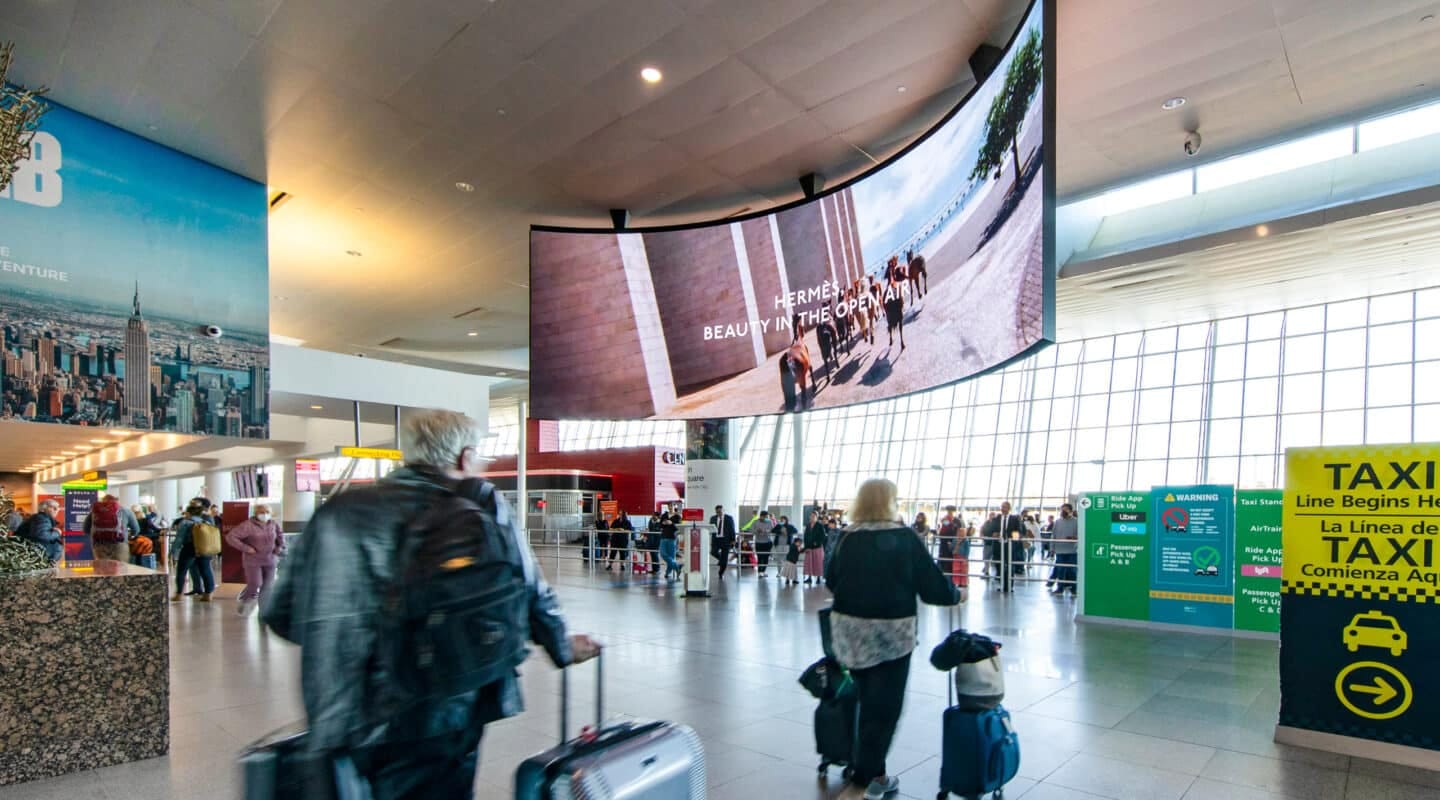
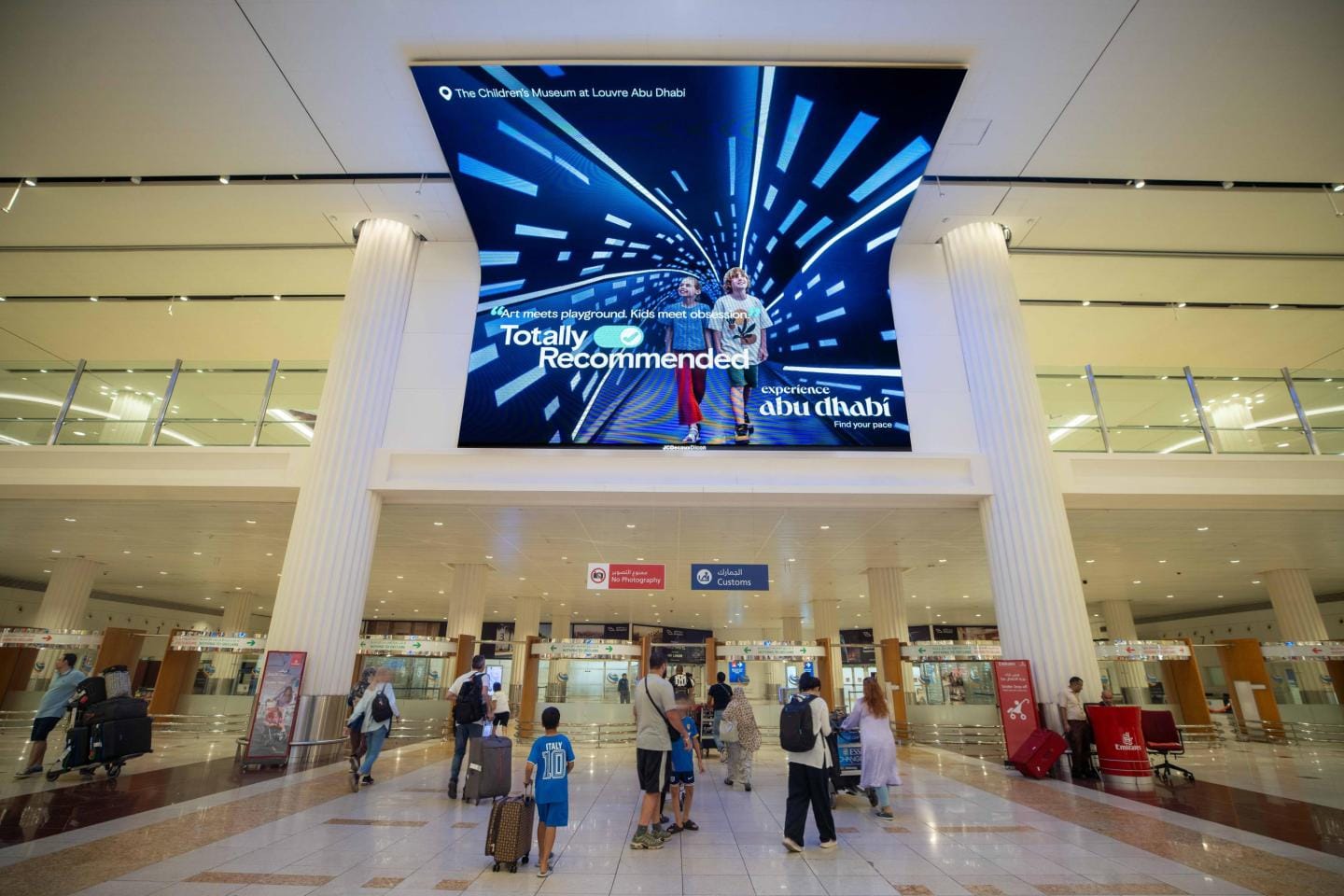
- Advertising opportunity: Masscom Global provides precision access to ATL's multi-terminal advertising environment, positioning brands across the Delta premium concourse ecosystem, the international terminal, and the domestic departure corridors — reaching 108 million passenger interactions annually with the US and global audiences that matter most.
Airport Advertising is Complex to Get Right
We help you execute faster, with proven results and local insight most planners lack starting now.
Talk to an ExpertCatchment Area and Economic Drivers
Top 10 Cities within 150 km — Marketer Intelligence
- Atlanta (city proper and metro): The 10th-largest urban economy in the United States, home to 16 Fortune 500 headquarters, a metro population of over 6.2 million growing by over 60,000 annually, and a corporate executive class that constitutes one of the most commercially active outbound business travel audiences in the American South
- Alpharetta (~40 km north): Georgia's designated "Technology City" and home to over 700 technology companies including major operations for Microsoft, Honeywell, and NCR Atleos — its high-income tech professional community is one of the most frequent business class travellers departing ATL on international routes, particularly to Europe and Asia
- Sandy Springs and Buckhead corridor (~15 km north): The wealthiest residential and corporate corridor in the Southeast, housing the Atlanta headquarters of Mercedes-Benz USA, Porsche Cars North America, and a concentration of private equity and investment management firms — its ultra-HNWI residential base drives premium leisure travel on ATL's European and Caribbean corridors at the highest spending levels in the catchment
- Marietta and Kennesaw (~30 km northwest): Home to Lockheed Martin's aircraft development operations and a major defence and aerospace manufacturing base — its senior engineering and executive workforce generates consistent international business travel on ATL's European defence and government route corridors
- Macon (~135 km south): The second city of central Georgia, an agricultural, healthcare, and logistics hub whose business leadership travels through ATL as the sole viable long-haul international departure point for the central Georgia corridor — a reliable, repeat-visit catchment audience for financial services and insurance advertisers
- Gainesville (~75 km northeast): The poultry processing capital of the United States and home to a large and growing Latin American workforce community — its food industry executives travel internationally to Europe for trade, while its large Mexican and Central American diaspora population drives ATL's Latin American route demand
- Dalton (~130 km north): The self-described "Flooring Capital of the World," producing approximately 80% of all carpet manufactured in the United States — its industrial manufacturing executive class travels through ATL to European and Asian trade shows, supply chain partners, and investment meetings
- Rome, GA (~85 km northwest): A regional healthcare and manufacturing hub anchored by Floyd Medical Center and several mid-sized industrial employers — its professional and business-owner class uses ATL as the access point to national and international markets, making it a catchment audience for financial services, B2B technology, and premium automotive brands
- Cartersville (~65 km northwest): A growing industrial and logistics corridor on the I-75 corridor, hosting manufacturing operations for a range of international companies drawn by Georgia's business-friendly tax environment — its plant managers and operations directors travel through ATL for corporate meetings and global supply chain work
- Anniston, AL (~140 km west): A defence and manufacturing centre in the northeastern Alabama corridor, home to significant US military and federal government contracting operations — its government and defence professional community uses ATL as the closest major international airport for international travel
NRI and Diaspora Intelligence
Atlanta hosts one of the most commercially significant and diverse diaspora communities in the American South. The Indian-American community is concentrated in Alpharetta, Johns Creek, and Duluth — constituting one of the largest South Asian professional concentrations outside California, generating strong demand on ATL's direct routes to Delhi and Mumbai through Air India and Delta connections. The Nigerian and broader West African community in Atlanta is one of the largest in the United States, driving consistent demand on Delta's direct Lagos route and making ATL the preferred gateway for business travel between Atlanta and Nigeria's commercial capital. The Ethiopian and East African community — particularly concentrated around the I-85 Buford Highway corridor — generates significant demand on Ethiopian Airlines' direct Addis Ababa service, one of the most commercially distinctive routes at ATL. The Latin American diaspora, particularly from Mexico and Central America, is a major driver of ATL's Caribbean and Latin American route network, with large communities in Gwinnett County and the broader metro area. All of these diaspora communities represent returning travellers with international purchasing power and financial service needs that make ATL a high-value diaspora-audience airport.
Economic Importance
Atlanta's economic story in 2024 is one of structural corporate dominance combined with rapid population-driven expansion. The metro area's 16 Fortune 500 headquarters — including Home Depot (#24), UPS (#47), Delta Air Lines (#70), Coca-Cola (#97), Southern Company (#161), Norfolk Southern (#346), and Intercontinental Exchange (#361) — generate a senior executive travel class whose average trip value is among the highest of any domestic US metro. More than 75% of all Fortune 1000 companies maintain a presence in metro Atlanta, creating an employer base that supports consistent premium business travel year-round. Georgia's corporate tax rate of 5.19% in 2025, combined with the world's most connected airport at the centre of the metro, has made Atlanta one of the fastest-growing major corporate relocation destinations in the United States. Porsche Cars North America, Mercedes-Benz USA, and dozens of European and Asian corporate entities have established US headquarters here, adding international executive inbound travel to ATL's commercial advertising audience.
Business and Industrial Ecosystem
- Financial technology and payments: Atlanta is the self-described "FinTech Capital of the World," processing approximately 70% of all US payment transactions through companies including Intercontinental Exchange, Global Payments, NCR Atleos, Fiserv, and hundreds of FinTech startups — generating a mobile, globally connected professional audience at ATL's Delta Sky Club and premium concourse environments
- Logistics and supply chain: UPS, one of the world's largest logistics companies, is headquartered in Atlanta, along with the world's busiest cargo airport operations at ATL — the logistics executive and operations management community generates consistent national and international travel through ATL to the supply chain corridors of Europe, Asia, and Latin America
- Automotive and advanced manufacturing: The Southeast US has become America's automotive manufacturing heartland, with Mercedes-Benz USA and Porsche Cars North America headquartered in Atlanta and major assembly plants for Kia, Hyundai, Rivian, and others within the catchment — producing a globally mobile management and engineering audience on ATL's European and Korean routes
- Film and entertainment ("Hollywood of the South"): Georgia leads the United States in feature film and television production volume, with Marvel Studios, major streaming platform productions, and hundreds of productions filmed in metro Atlanta annually — generating consistent entertainment industry travel through ATL between Atlanta, Los Angeles, London, and New York
Passenger Intent — Business Segment: The ATL business traveller is one of the most commercially diverse in US aviation. At one end are the C-suite executives of Fortune 500 companies in Delta One business class on transatlantic and trans-Pacific corridors. At the other is the small business owner and sales professional using ATL's unmatched domestic frequency to reach any US city multiple times daily. In the middle is the FinTech professional, the supply chain director, the automotive executive, and the entertainment industry traveller — all of whom share a dependence on ATL's frequency, reliability, and global reach that no other airport in the American South can replicate.
Strategic Insight: ATL's business advertising value is simultaneously about scale and specificity. The sheer volume — over 100 million passengers per year — guarantees impression delivery at any media planning target. But the specificity of the catchment — the Southeast US's most concentrated corporate executive audience, departing on Delta's most commercially curated premium product — ensures that brand placements in the right environments reach the decision-maker tier that premium and B2B advertisers require. Few airports in the world offer both simultaneously.
Tourism and Premium Travel Drivers
- Atlanta's world-class urban tourism: Atlanta's major attractions — the Georgia Aquarium (the world's largest by total water volume), the National Center for Civil and Human Rights, the Martin Luther King Jr. National Historic Site, the CNN Studio Tour, the College Football Hall of Fame, and the Mercedes-Benz Stadium — collectively draw millions of inbound visitors annually through ATL, producing a consistent premium leisure inbound audience from Europe, Asia, and across the US
- Caribbean and Latin America leisure corridor: ATL is the dominant US departure point for Caribbean leisure travel, with Cancun, Montego Bay, Punta Cana, and Barbados among its highest-volume international routes — departing passengers on these routes carry premium resort budgets, luxury travel insurance spend, and destination retail intent
- The Southeast's outdoor and resort belt: Within 150 km of ATL lie the Blue Ridge Mountains, Lake Lanier, and the Cherokee County resort corridor — generating significant inbound leisure tourism through ATL from the Midwest and Northeast, with visitors arriving to access the Southeast's growing premium outdoor hospitality market
- College football and sports events: The SEC — the most commercially powerful collegiate athletic conference in the United States — draws tens of millions of fans through ATL every autumn for games at Georgia, Georgia Tech, and across the broader Southeast, creating recurring sports tourism peaks of nationally significant scale
Passenger Intent — Tourism Segment: ATL's outbound leisure passengers on Caribbean, Mexican, and European routes are a high-spending, emotionally activated consumer audience. They have pre-committed to significant resort, cruise, or European travel expenditure and arrive at the terminal in a spending-receptive state. Inbound leisure visitors to Atlanta have already budgeted for premium hotel stays, restaurant experiences, and entertainment — particularly the large group of international conference and convention visitors who use Atlanta as a convention destination served by the Georgia World Congress Center, one of the largest convention facilities in the United States.
Travel Patterns and Seasonality
Peak seasons:
- Summer (May to September): ATL's highest-volume period, driven by the combination of family vacation travel on Latin American and Caribbean routes, the European leisure season on transatlantic departures, and peak business travel before August corporate calendar slowdowns — July historically reaches approximately 10 million passengers, making it ATL's single busiest month
- Thanksgiving and Christmas holiday season (late November through January): The second major peak — driven by one of the largest holiday travel surges in US aviation, including diaspora community homecoming flows, family reunion travel across domestic routes, and the year-end executive retreat and luxury resort season on Caribbean and international destinations
- College football season (September to January): ATL's unique seasonal driver — the SEC schedule generates consistent weekly sports travel surges from across the Southeast, concentrating fans with high discretionary hospitality spending through the airport every weekend from September through the January College Football Playoff
Event-Driven Movement
- Super Bowl (when hosted in Atlanta, typically January-February): Atlanta has hosted multiple Super Bowls at Mercedes-Benz Stadium and is a regular candidate for future events — when hosted, the Super Bowl generates one of the single-highest short-term passenger and HNWI concentration events in US aviation, with private aviation, luxury hospitality, and premium brand spending peaking at extraordinary levels
- Masters Golf Tournament (April, Augusta, GA): The most commercially exclusive golf event in the world, held 160 km from ATL and overwhelmingly accessed through the Atlanta airport — Masters patrons are among the highest-income, highest-spending, most brand-engaged sports audiences in the United States, arriving through ATL in late March and early April in concentrated, predictable windows
- SEC Championship Game (December, Atlanta): The premier annual event in college football's most commercially powerful conference, drawing 70,000-plus attendees and tens of thousands of additional visitors into Atlanta's hotel and hospitality ecosystem — ATL handles the concentrated inbound and outbound surge across two intense peak days
- Atlanta Film Festival and Entertainment Industry Calendar (spring and autumn): Georgia's position as the US film production leader generates a consistent entertainment industry conference and production travel cycle through ATL, connecting Los Angeles, New York, London, and Atlanta in a year-round commercial travel rhythm
- Major conventions at Georgia World Congress Center (year-round): Atlanta's convention infrastructure — anchored by one of the five largest convention centres in the US — generates over 1 million convention visitor arrivals through ATL annually, providing consistent premium B2B and professional audience peaks throughout the calendar year
It’s Not Just Where You Advertise - It’s How Fast You Execute
We combine local insight with fast rollout to deliver results for you, now.
Talk to an ExpertAudience and Cultural Intelligence
Top 2 Languages
- English: The dominant language of ATL's originating catchment and the entire US domestic transit network — the world's most commercially powerful consumer language, representing an audience whose aggregate discretionary spending defines global luxury, automotive, technology, and financial services markets
- Spanish: The second language of ATL's catchment and of a significant share of its international passenger base, reflecting the large Latin American diaspora in metro Atlanta and the dominant language of ATL's highest-frequency international corridors — Mexico City, Cancun, Bogota, Lima, San Jose, and Panama City collectively form ATL's most active international route cluster, making Spanish-language advertising commercially relevant across a significant passenger segment
Major Traveller Nationalities
American nationals are the overwhelming majority at ATL — reflecting both the originating Atlanta metro audience and the enormous domestic connecting transit flow that characterises the hub's operational model. The airport's international audience, however, is among the most geographically diverse of any US hub. Canadian nationals on the Toronto route are the single largest non-US international group. Mexican nationals are a high-frequency segment on ATL's multiple daily Mexico City and Cancun services. British nationals travel on the London Heathrow corridor served by Delta and Virgin Atlantic. French and Dutch nationals transit the Air France and KLM services that are part of Delta's transatlantic joint venture. South Korean nationals use ATL's Korean Air daily nonstop — the only direct Korea-Southeast US connection. Nigerian nationals represent the most commercially distinctive diaspora group, travelling on Delta's daily Lagos nonstop. Indian nationals form a growing segment on US-India services. Ethiopian nationals and the broader East African diaspora are represented on Ethiopian Airlines' Addis Ababa service.
Religion — Advertiser Intelligence
- Protestant Christianity (approximately 52%): The South is the most Protestant region of the United States, and metro Atlanta is its commercial capital — ATL's departure halls carry the South's evangelical, Baptist, and non-denominational Christian community in concentrated peaks around Christmas and Easter, with spending behaviour characterised by gift-giving, family reunion travel, and charitable giving that peaks in December and April. The Masters golf audience is disproportionately Southern Protestant, adding a second, highly premium spending layer to the April travel window.
- Black church tradition (significant within Protestant total): Atlanta is the historic centre of Black America's cultural, academic, and religious life — home to four historically Black colleges and universities (Spelman, Morehouse, Clark Atlanta, Morris Brown) and the birthplace of Dr. Martin Luther King Jr. The Black church tradition drives a community calendar of travel around Easter, homecoming weekends at HBCUs, and family reunion seasons, with a professionally accomplished, brand-engaged audience that is significantly underserved by national advertising campaigns.
- Catholicism (approximately 10%): A growing segment in metro Atlanta, driven by the large Latin American diaspora and a significant number of European corporate relocatees — particularly relevant for the Christmas, Easter, and Advent travel windows, with a culturally brand-aware consumer base across the premium FMCG, automotive, and financial services categories.
- Islam (approximately 5%): Atlanta's Muslim community — encompassing Somali, Bosnian, South Asian, and African-American Muslim populations — generates consistent travel on ATL's Africa, Middle East, and South Asia corridors, with Ramadan and Eid travel windows producing concentrated peaks that align with the premium consumer spending activation period of the Islamic calendar.
- Hinduism (approximately 4%): Concentrated in Alpharetta, Johns Creek, and Duluth, the Hindu professional community generates high-value India travel and festival-period domestic travel — Diwali in October-November and the summer wedding season are peak windows for premium FMCG, jewellery, and financial service brand engagement within this community.
Behavioral Insight: The Atlanta traveller is defined by a distinctly Southern variant of American ambition — commercially sophisticated, hospitality-oriented, brand-loyal, and increasingly cosmopolitan. The growth of Atlanta as a global corporate hub has layered a New York-standard executive audience over a Southern consumer base that values quality, relationship-built brands, and premium experiences. The result is an airport audience that is simultaneously deeply community-rooted and globally engaged — responsive to brand stories that connect international prestige with Southern values of family, achievement, and authentic quality.
Outbound Wealth and Investment Intelligence
The outbound passenger at ATL encompasses a broader economic spectrum than any other major US hub, precisely because of the airport's dual identity as both an originating premium market and the world's largest transit hub. The originating Atlanta HNWI audience — concentrated in Buckhead, Sandy Springs, Alpharetta, and the affluent northern suburbs — is deploying capital into Caribbean and Mediterranean real estate, European education, and wealth management programmes at a rate that reflects the steady appreciation of Atlanta's corporate executive wealth base. The transit audience, moving from domestic US cities to international destinations through ATL's connecting infrastructure, adds a secondary commercial layer that dramatically increases advertiser reach beyond the metro area.
Outbound Real Estate Investment: The Atlanta HNWI audience directs outbound real estate investment primarily toward the Caribbean — particularly the Bahamas, Cayman Islands, Turks and Caicos, and Barbados — driven by ATL's extensive direct and one-stop connectivity to these markets and the combination of lifestyle appeal, USD-denominated assets, and favourable tax structures. Mexico's Pacific coast (Los Cabos, Puerto Vallarta) and the Riviera Maya are secondary real estate markets for the Atlanta premium leisure audience, given the frequency and low cost of direct ATL-Mexico services. Portugal and Spain attract the aspirational European property buyer within Atlanta's growing tech and finance executive class. Caribbean and Mediterranean resort developers find an audience at ATL that is not only financially capable of investment but has already demonstrated the intent to travel to those markets repeatedly.
Outbound Education Investment: Atlanta's status as a major university city — anchored by Georgia Tech, Emory University, and the HBCU cluster — means the outbound student travel audience at ATL is both large and academically ambitious. UK universities, particularly Russell Group institutions, attract Atlanta's premium academic families, with the Buckhead and Sandy Springs private school community generating a consistent late-August UK departure wave. European study-abroad programmes, Swiss hospitality schools, and international MBA programmes in France, Spain, and Germany attract Atlanta's corporate executive class for graduate education. International education consultancies and universities marketing to US premium families find a directly motivated audience at ATL in the August-September and January academic departure windows.
Outbound Wealth Migration and Residency: Portuguese Golden Visa and Spanish residency programmes attract Atlanta's European-oriented HNWI audience seeking EU access for post-retirement lifestyle and tax diversification. Caribbean citizenship-by-investment programmes — St Kitts and Nevis, Antigua, Grenada — are actively pursued by Atlanta's legal, financial, and entertainment sector wealthy class seeking second passport optionality. As Atlanta's corporate executive population grows in response to Fortune 500 relocations, the appetite for international residency and asset diversification programmes is structurally increasing.
Strategic Implication for Advertisers: ATL offers a unique two-tier advertising proposition. The originating Atlanta HNWI and corporate executive audience is a precision target for premium brand and investment product campaigns. The transit audience — passengers from domestic US cities connecting through ATL to international destinations — is an additive mass-premium reach layer that amplifies campaign delivery to a national US audience without requiring multiple airport placements. A brand advertising at ATL effectively reaches both the Southeast's most commercially active corporate catchment and a nationwide cross-section of American premium travellers simultaneously. Masscom Global structures campaigns to exploit both layers in a single, coordinated ATL media investment.
Airport Infrastructure and Premium Indicators
Terminals and Concourses:
- Main Terminal: The primary check-in, security, and ground transportation hub for all domestic and international passengers — a high-traffic environment generating maximum brand impressions across the airport's full passenger volume
- Concourses A through F: A, B, C, D, and E serve domestic and shorter-haul international operations across Delta's domestic network; Concourse F is the international terminal handling all long-haul international arrivals and departures, with dedicated customs, immigration, and international retail and dining
- The underground Automated People Mover connecting all concourses is one of the world's busiest airport rail systems, moving millions of connecting passengers daily through a high-dwell-time corridor with concentrated brand exposure potential
- Delta's premium concourse environment hosts the Delta Sky Club flagship lounge, Delta One premium cabin boarding, and the Delta Polaris product — concentrating the airport's highest-income travellers in a defined, accessible advertising environment
Premium Indicators:
- Delta operates 41,000 daily premium seats from ATL — a 9% year-on-year increase in 2025 — signalling continuous investment in the premium cabin audience that constitutes the highest-value advertising target at the airport
- Mercedes-Benz Stadium, Porsche Cars North America headquarters, and the Ritz-Carlton Buckhead within the catchment confirm that ATL's corporate and leisure base supports ultra-premium brand engagement
- Delta Sky Club flagship lounge at Concourse B and additional Sky Club locations across concourses provide enclosed, extended dwell-time environments for premium format advertising targeting the frequent flyer elite audience
- The airport's commitment to reaching 125 million annual passengers within five years — backed by terminal modernisation, sustainability programmes, and smart technology investment — confirms a trajectory of sustained premium infrastructure upgrade
Forward-Looking Signal: ATL's management has publicly committed to terminal modernisation, capacity expansion, and smart technology investment as part of the push toward 125 million annual passengers. Delta simultaneously committed to its largest-ever schedule from ATL in summer 2025 — 968 daily flights, 215 destinations, 1.1 million weekly seats — including new routes to Naples, Brussels, Barbados, and Curacao. A planned Delta nonstop to Riyadh would open direct access to the Saudi capital, adding a commercially significant Middle East corridor to ATL's network for the first time. The airport's cargo operations grew 6% in 2024, reflecting the parallel freight expansion that accompanies passenger growth at scale. Masscom Global advises brands to establish premium ATL advertising positions now, while the airport is in active growth phase and before the completion of planned infrastructure investments drives rates to reflect the fully upgraded environment.
Airline and Route Intelligence
Top Airlines: Delta Air Lines (primary hub, approximately 70% market share, world's largest hub by available seat miles), Southwest Airlines (focus city), Frontier Airlines, Spirit Airlines, WestJet, Air Canada, Aeromexico, Copa Airlines, Turkish Airlines, Qatar Airways, Etihad Airways, Ethiopian Airlines, Air France, KLM, Virgin Atlantic, Korean Air, British Airways, Lufthansa — 27 airlines total serving 246 non-stop destinations in 55 countries across all 50 US states.
Key International Routes: Toronto (top international route by frequency, Air Canada and Delta daily), Cancun (Delta's second-highest international route by volume), London Heathrow (Delta and Virgin Atlantic, daily), Mexico City (Aeromexico and Delta, daily), Paris CDG (Air France and Delta, daily), Amsterdam (KLM and Delta, daily), Seoul Incheon (Korean Air and Delta, daily nonstop — the only direct Southeast US-Korea connection), Istanbul (Turkish Airlines, daily), Doha (Qatar Airways, daily), Abu Dhabi (Etihad, daily), Lagos (Delta, daily direct — one of only two US airports with direct Nigeria service), Addis Ababa (Ethiopian Airlines, direct — the primary gateway for Atlanta's East African diaspora and pan-African business travel), Panama City (Copa Airlines), Buenos Aires (Delta, seasonal), Santiago de Chile (Delta, seasonal), Montego Bay, Punta Cana, Nassau — and new routes including Naples and Brussels in summer 2025.
Domestic Connectivity: Orlando, New York-LaGuardia, Washington National, Dallas-Fort Worth, Chicago-O'Hare, Miami, Los Angeles, San Francisco, Boston, and every major US city served at multiple daily frequencies — ATL's domestic frequency makes it the fastest route from the Southeast to any US destination, giving every major US city a tangible stake in ATL's advertising audience.
Wealth Corridor Signal: ATL's route map is simultaneously a map of American domestic commerce and the world's most strategically positioned emerging market connections. The London and Paris corridors carry the transatlantic financial and luxury audience. The Seoul and Tokyo corridors carry the Asia-Pacific business and technology investment audience. The Lagos and Addis Ababa corridors make ATL the undisputed US gateway to Sub-Saharan Africa — a continent whose growing commercial class is underserved by US airport advertising and whose outbound travel through ATL is expanding rapidly. The Latin American dominance — Cancun, Mexico City, Panama City, Buenos Aires, and dozens of Caribbean routes — positions ATL as the hemisphere's connectivity hub for brands serving both the outbound US premium leisure market and the inbound Latin American business and investment audience.
Media Environment at the Airport
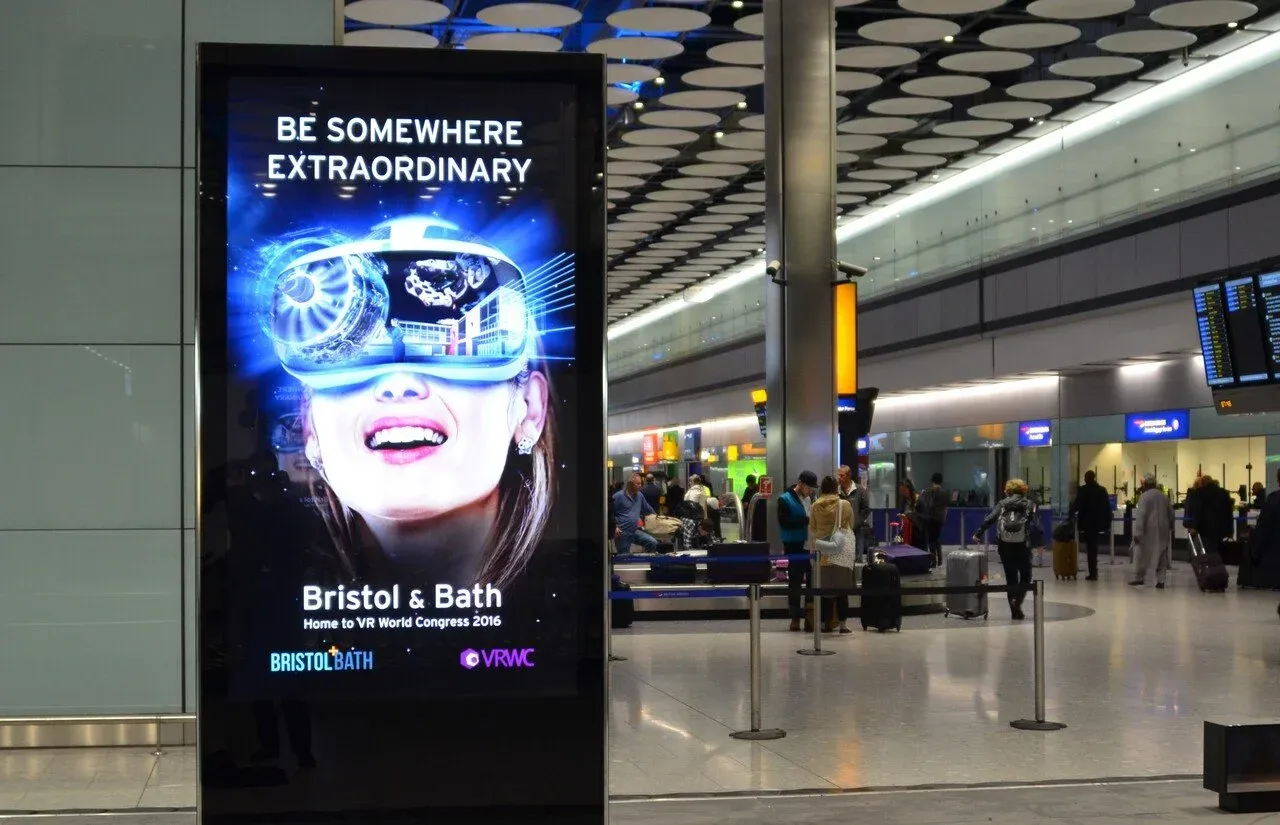
- With 108 million annual passengers generating approximately 300,000 daily passenger movements, ATL delivers the highest total brand impression volume of any single airport in the world — a scale advantage that is unmatched in out-of-home advertising at any price point
- The Underground People Mover corridor connecting all concourses functions as a captive, high-frequency brand exposure channel, with every connecting passenger — estimated at over 50% of total volume — passing through multiple times per journey in an enclosed environment with zero visual escape from advertising formats
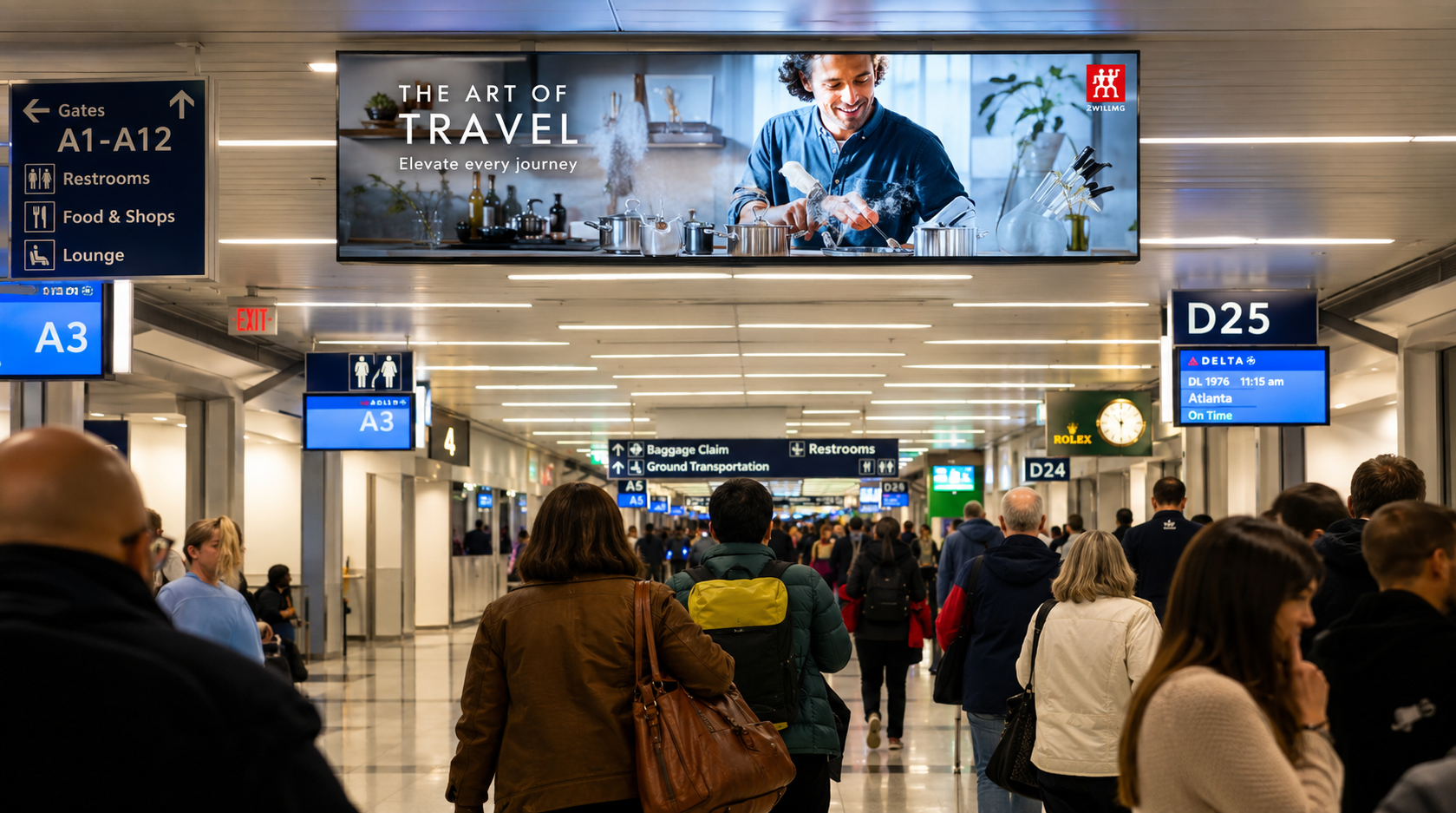
- Delta's premium concourse infrastructure — Sky Club lounges, Delta One check-in, and the Polaris product corridor — concentrates the airport's highest-income and highest-frequency travellers in defined environments where brand messages are delivered to attentive, dwell-time-extended audiences whose average household income significantly exceeds the ATL average
- Masscom Global provides strategic access to ATL's full advertising inventory ecosystem — from high-volume main terminal and people mover formats to premium lounge adjacencies and international terminal placements — with the planning intelligence and execution capability to optimise campaign positioning across the world's largest airport audience
Strategic Advertising Fit
Best Fit:
- Premium automotive: The Southeast US is America's fastest-growing premium automotive market, and metro Atlanta is its commercial epicentre — Mercedes-Benz USA and Porsche Cars North America are headquartered in the catchment, and the corporate executive and HNWI audience departing ATL represents the highest-income domestic US car buyer segment in the South
- Luxury goods and premium fashion: The Buckhead and Sandy Springs residential community represents the South's most established luxury retail consumer base — ATL's premium cabin audience for luxury watches, jewellery, and fashion brands mirrors the spending profile of comparable audiences at JFK and LAX
- Financial services and FinTech: Atlanta's position as the global FinTech capital generates a professional audience that is simultaneously a consumer of financial products and a producer of them — consumer banking, investment platforms, wealth management, and B2B FinTech brands find a uniquely receptive and informed audience at ATL
- International real estate (Caribbean, Mediterranean, Portugal): Atlanta's growing HNWI executive class is actively purchasing in the Caribbean and Southern Europe — resort developers and luxury real estate advisors from the Bahamas, Cayman Islands, Portugal, and Spain find a motivated buyer audience at ATL on the very routes that serve their properties
- Telecommunications and technology brands: Atlanta's tech sector — anchored by Alpharetta's technology corridor, Georgia Tech's research ecosystem, and the presence of major tech company operations — produces a digitally sophisticated, premium-spending professional audience at ATL that is among the most receptive to technology brand messaging of any US airport catchment
- Premium consumer packaged goods and spirits: The South's distinctive food, beverage, and lifestyle culture — combined with the corporate and celebrity entertainment sector concentrated in metro Atlanta — creates a premium FMCG and spirits audience whose brand loyalty and lifestyle aspirations make ATL an effective environment for premium consumer brand campaigns
- Travel insurance and premium hospitality (Caribbean and Latin America focus): ATL's dominant Latin American and Caribbean leisure route network serves departing passengers who have already committed to significant resort and travel expenditure — travel protection, luxury hotel, and resort brands find a directly activated, pre-spending audience on these departure corridors
Brand Alignment at a Glance:
| Category | Fit |
|---|---|
| Premium Automotive | Exceptional |
| Financial Services and FinTech | Exceptional |
| International Real Estate | Exceptional |
| Luxury Goods | Strong |
| Technology Brands | Strong |
| Premium FMCG and Spirits | Strong |
| Ultra-Luxury Flagship (highest tier) | Moderate |
| Mass-Market Commodity Brands | Poor fit |
Who Should Not Advertise Here:
- Ultra-luxury flagship brands requiring exclusively ultra-HNWI volume: While ATL's premium cabin audience is substantial, the sheer scale of 108 million passengers means that ultra-luxury brands requiring the purity of a predominantly HNWI audience will find ATL's broader mass-transit profile dilutes their targeting precision — supplementing ATL with more exclusive format placements (lounge-only, premium terminal adjacencies) mitigates this, but brands requiring 100% HNWI audience control may find JFK or EWR more structurally aligned
- Brands with no Southeast US market, Latin American, or Africa presence: ATL's unique geographic identity — the South, Latin America, and Africa — means brands whose product is entirely irrelevant to these commercial corridors will find catchment-to-conversion alignment weak
- Budget and cost-conscious consumer services messaging: The premium positioning required to justify ATL advertising rates, combined with the broadly upwardly mobile income profile of the catchment, makes cost-messaging structurally misaligned with the environment's brand association premium
Event and Seasonality Analysis
- Event Strength: High
- Seasonality Strength: High
- Traffic Pattern: Sustained high-volume with summer and holiday dual peaks
Strategic Implication: ATL's advertising calendar is structured around two dominant commercial peaks and a year-round business travel baseline that sustains consistent premium audience delivery across all twelve months. The summer transatlantic and Latin American leisure season from May through September delivers the highest concentration of premium outbound leisure travellers — luxury resort, automotive, real estate, and premium FMCG brands should concentrate creative investment and premium formats in this window. The Thanksgiving through New Year period delivers the highest emotional spending activation of the year, with returning family travellers, holiday gift purchasers, and luxury new-year-resort travellers all concentrated in the terminal simultaneously. The Masters Tournament window in early April provides a uniquely concentrated ultra-HNWI audience moment with no equivalent at any other US airport. Masscom Global structures ATL campaigns around this rhythm — year-round base presence in Delta Sky Club and premium concourse environments for B2B and financial brands, seasonal concentration in domestic departure halls and international terminal for consumer and leisure brands during the peak windows.
Poor Placement and Delays Affect Airport Campaigns
We help you move faster, access better inventory, and get it right now.
Talk to an ExpertFinal Strategic Verdict
Hartsfield-Jackson Atlanta International Airport is not just the world's busiest airport — it is the world's most structurally irreplaceable aviation asset. No other airport combines the domestic reach of ATL's hub-and-spoke monopoly over the Southeast United States with the international connectivity of Delta's 66-destination global network, the originating wealth of a metro economy home to 16 Fortune 500 headquarters, the cultural gravity of America's most prominent Black cultural and academic capital, and the emerging market gateway of direct Africa, Latin America, and Caribbean routes that define US aviation's most commercially dynamic growth corridors. At 108 million passengers in 2024 and a publicly committed trajectory to 125 million within five years, ATL is the only airport in the world where a brand can simultaneously reach the South's Fortune 500 C-suite, the national US premium consumer base through the transit network, the fastest-growing Latin American and African outbound audiences in US aviation, and the domestic leisure market at a scale no other hub approaches. For premium automotive brands, FinTech companies, Caribbean real estate developers, financial service providers, and consumer brands seeking to anchor their US advertising strategy in the world's highest-volume aviation environment, ATL is the definitive buy. Masscom Global delivers the intelligence, inventory access, and campaign precision to convert that unmatched scale into measurable commercial performance.
About Masscom Global
Masscom Global is a premium international airport advertising and media buying agency operating across 140 countries. With deep expertise in airport OOH, premium publications, and high-net-worth audience targeting, Masscom helps brands reach the world's most valuable travellers at the moments that matter most. For advertising packages, media rates, and campaign planning at Hartsfield-Jackson Atlanta International Airport and airports across the globe, contact Masscom Global today.
Frequently Asked Questions
How much does airport advertising cost at Hartsfield-Jackson Atlanta International Airport? Advertising costs at ATL vary significantly based on format type, concourse location, dwell-zone positioning, campaign duration, and seasonal demand. Premium lounge adjacencies and Delta One boarding corridor placements command higher rates reflecting the concentrated HNWI audience; high-volume main terminal and people mover formats deliver mass-scale impression delivery at competitive CPM. The summer peak and holiday season carry seasonal uplifts. Masscom Global provides current rate cards, format recommendations, and full campaign cost proposals tailored to your brand tier and objectives — contact us for a detailed package.
Who are the passengers at Hartsfield-Jackson Atlanta International Airport? ATL serves three commercially distinct audiences simultaneously. The originating Atlanta metro audience includes Fortune 500 corporate executives, FinTech and technology professionals, entertainment industry travellers, and an affluent suburban consumer class in Buckhead, Sandy Springs, and Alpharetta. The transit connecting audience — estimated at over half of ATL's total volume — represents a national cross-section of American premium travellers moving between domestic US cities and international destinations. The international audience includes British, French, South Korean, Mexican, Nigerian, and Ethiopian nationals among the most commercially distinctive groups.
Is Hartsfield-Jackson Atlanta International Airport good for luxury brand advertising? ATL is effective for accessible luxury and aspirational premium brands with genuine Southeast US market relevance. The airport's premium cabin infrastructure — Delta One, Delta Sky Club, and 41,000 daily premium seats — concentrates a high-income audience for luxury automotive, watches, premium spirits, and financial services. For pure ultra-luxury brands requiring exclusively ultra-HNWI audience environments, supplementing ATL's premium formats with lounge-specific placements is advisable. The volume of ATL makes it a strong awareness and consideration-stage platform for any luxury brand building Southeast US market presence.
What is the best airport in the US Southeast to reach business travellers? ATL is definitively the only answer. As the world's busiest airport and Delta's global mega-hub, it is the mandatory gateway for every business traveller originating in the Southeast and for the enormous connecting flow of national US executives transiting through Atlanta to international destinations. No other airport in the South approaches ATL's frequency, reach, or premium cabin concentration for the business traveller audience.
What is the best time to advertise at Hartsfield-Jackson Atlanta International Airport? The two highest-impact consumer advertising windows are the summer transatlantic and Latin American leisure season (May through September) and the Thanksgiving through New Year holiday period (late November through early January). For premium and ultra-HNWI targeting, the Masters Golf Tournament window in early April delivers a uniquely concentrated high-income audience with no US airport equivalent. For B2B and corporate brands, year-round Sky Club and premium concourse presence captures the consistent executive travel flow that operates at ATL 52 weeks a year.
Can international real estate developers advertise at Hartsfield-Jackson Atlanta International Airport? Yes, and ATL offers one of the strongest Caribbean and Latin American real estate advertising audiences in US aviation. Atlanta's HNWI class is actively purchasing in the Bahamas, Cayman Islands, Turks and Caicos, Barbados, and Mexico's Pacific coast — and ATL's direct routes to these markets mean developers can advertise to buyers at the precise moment of departure for properties they are actively considering. Masscom Global structures campaigns to reach this audience on both the outbound Atlanta and inbound destination sides of these routes.
Which brands should not advertise at Hartsfield-Jackson Atlanta International Airport? Budget and price-sensitive consumer brands will find the ATL advertising investment structurally misaligned with their messaging and audience requirements. Ultra-luxury flagship brands needing pure HNWI audience environments without mass-market dilution will find the sheer volume of ATL challenging without strategic placement curation — a Masscom Global recommendation in such cases would be a combined ATL premium format and dedicated lounge-only strategy to isolate the target tier. Industrial B2B brands outside the technology, logistics, or financial sectors that define ATL's corporate catchment will find sector audience density insufficient to justify the investment.
How does Masscom Global help brands advertise at Hartsfield-Jackson Atlanta International Airport? Masscom Global provides end-to-end airport advertising services at ATL — from audience intelligence and concourse-by-concourse format strategy through to placement booking, creative guidance, and campaign performance review. We understand the unique operational structure of the world's busiest hub, including the distinction between originating audience formats and transit-corridor placements, and we advise clients on the combination of environments that achieves their specific reach and frequency objectives. For multi-market campaigns, we coordinate ATL placements with complementary buys at London Heathrow, Amsterdam, Seoul Incheon, Lagos, and Addis Ababa to reach the same executive and affluent consumer audience at both ends of ATL's most commercially valuable international corridors. Contact us to begin.