
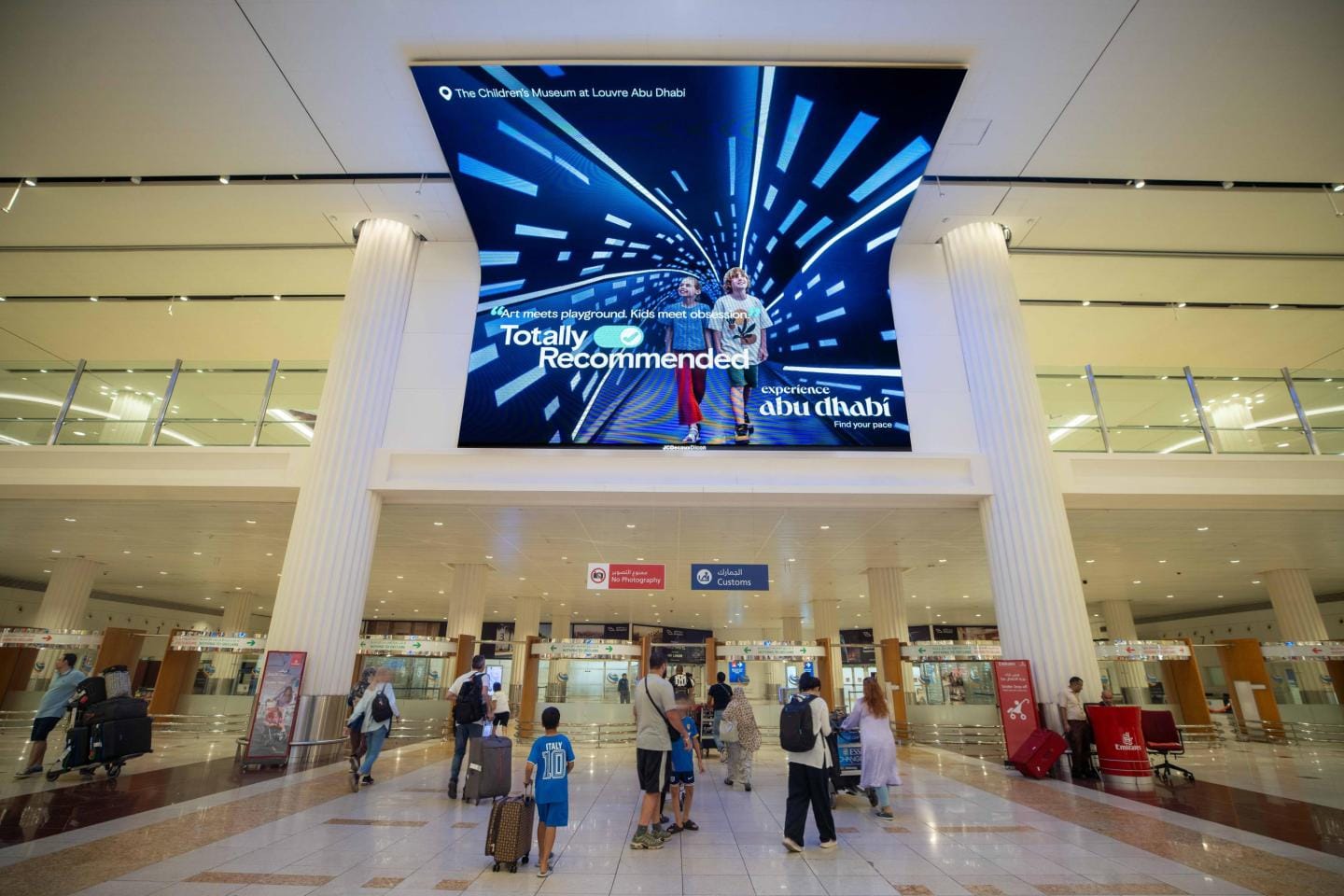



Ninoy Aquino International Airport serves as the primary aviation gateway to Manila and the Philippines. The airport handles approximately 48 million passengers annually, positioning it as one of Southeast Asia’s key international and domestic hubs.
Traffic composition reveals important commercial value. NAIA operates as the main international entry point into the Philippines while also carrying substantial domestic volume connecting Manila to major provincial cities.
As the central gateway to Metro Manila, the country’s political, financial, and commercial core, NAIA delivers consistent exposure to business owners, overseas Filipino travelers, multinational executives, tourism flows, and a rapidly expanding middle and upper income segment.
Terminal Level Strategy Matters
Ninoy Aquino International Airport operates four active passenger terminals. Placement decisions are not interchangeable. Each terminal carries a different audience profile and campaign implication.
Terminal 1
Terminal 1 primarily handles international carriers.
Key characteristics include:
• Long haul international arrivals and departures
• Significant overseas Filipino worker traffic
• Strong Middle East, North America, and Asia Pacific connectivity
• Extended dwell time due to international processing procedures
This terminal supports global remittance services, financial institutions, telecom brands, travel insurance providers, and international consumer brands targeting cross border travelers.
Terminal 2
Terminal 2 is largely dedicated to Philippine Airlines, operating both domestic and international routes.
Key characteristics include:
• Concentrated national carrier passenger base
• Strong domestic business travel
• Regional international connectivity
For brands targeting corporate Filipino executives, SME owners, and frequent domestic flyers, this terminal provides focused exposure within a loyal carrier ecosystem.
Terminal 3
Terminal 3 is one of the airport’s largest and most modern facilities, serving both domestic and international airlines.
Key characteristics include:
• High passenger throughput
• Mix of full service and low cost carriers
• Strong retail and commercial footprint
• Broad income demographic range
Terminal 3 delivers scale and frequency. It supports national consumer campaigns, fintech brands, e commerce platforms, banking institutions, and technology services targeting both professionals and upwardly mobile travelers.
Terminal 4
Terminal 4 handles mostly domestic and regional operations.
Key characteristics include:
• Short haul domestic routes
• High frequency provincial connectivity
• Cost efficient carrier operations
This terminal supports tourism campaigns, FMCG brands, telecom providers, and services targeting broad domestic travel audiences.
Book Your Free Expert Consultation Today
Book NowPremium Lounges: High Value Micro Environments
NAIA features multiple airline operated premium lounges concentrated primarily within Terminals 1, 2, and 3.
These environments concentrate:
• Business class travelers
• Frequent flyers
• Corporate executives
• High spending international passengers
Campaigns placed within or adjacent to lounge corridors operate in a significantly different value bracket compared to general terminal placements.
For private banks, wealth management firms, luxury automotive brands, high end property developers, and international education institutions, lounge adjacency provides a more refined audience filter inside the broader airport environment.
Seasonal Traffic Intelligence
For media planners managing quarterly budgets and launch windows, NAIA traffic patterns create measurable timing advantages.
Peak Travel Periods
Passenger movement increases during:
• Holy Week travel season
• Summer vacation months
• Christmas and year end travel
• Major national holidays
These periods combine domestic family travel with international inbound and outbound flows, intensifying exposure across security areas, departure halls, and baggage claim zones.
Holiday Surge Windows
Christmas and New Year Period
This represents one of the highest passenger concentration periods annually.
Large volumes of overseas Filipinos return home, driving elevated international arrival traffic alongside domestic movement.
Short duration, high impact campaigns placed during this window benefit from dense passenger throughput and extended dwell time.
Geographic Advantage
NAIA sits within Metro Manila, the Philippines’ primary economic region.
The airport provides direct access to:
• Makati Central Business District
• Bonifacio Global City
• Ortigas Center
• Major multinational headquarters
• High income residential districts
As the core gateway to the country’s financial and commercial elite, NAIA strengthens campaign positioning for brands targeting corporate leaders, investors, entrepreneurs, and international partners operating in the Philippine market.
Book Your Free Expert Consultation Today
Book NowStrategic Perspective
Ninoy Aquino International Airport offers scale, strong international connectivity, concentrated domestic reach, and exposure to both business and diaspora driven travel flows.
Terminal level placement decisions directly influence campaign positioning, audience quality, and brand perception.
For brands planning Southeast Asia expansion, national product launches, remittance and fintech positioning, or B2B visibility within the Philippine market, NAIA remains one of the most commercially strategic airport advertising environments in the country.
Inventory within premium terminals and high traffic corridors does not remain available indefinitely, particularly during major holiday windows.
Proper terminal selection and seasonal timing determine whether a campaign simply appears or commands attention.
What’s Included in Every Airport Advertising Campaign
✅ 100% Campaign Execution Guarantee
✅ Free Campaign Strategy Consultation
✅ 48-Hour Turnaround Post-Creative Approval
✅ Real-Time Reporting & Performance Dashboards