

Airport at a Glance
| Field | Detail |
|---|---|
| Airport | Apia Faleolo International Airport |
| IATA Code | APW |
| Country | Samoa (Independent State of Samoa) |
| City | Apia |
| Annual Passengers | Approximately 200,000-243,000 (243,191 departing in 2025); total international visitor arrivals 131,000-140,000 annually |
| Primary Audience | New Zealand and Australian Samoan diaspora returnees (income average USD 90,710 per household), Pacific development and diplomatic professionals, US Samoan community, CHOGM 2024 diplomatic legacy audience |
| Peak Advertising Season | June to September (dry season, peak tourism); November to January (Samoan Christmas — diaspora return season) |
| Audience Tier | Tier 1 Specialist — diaspora-powered Pacific gateway with above-average per-visitor income profile |
| Best Fit Categories | Financial services and remittances, Pacific diaspora consumer brands, premium New Zealand and Australian goods, development finance, hospitality and tourism, mobile payments and fintech |
Apia Faleolo International Airport does not serve a typical tourism catchment. It serves a nation whose economic lifeline is the global Samoan community — more than 100,000 Samoans scattered across New Zealand, Australia, the United States, and the broader Pacific, whose remittances account for 24-33% of Samoa's GDP and who account for over half of all international visitor arrivals. The average household income of Samoa's international visitors — measured by the 2024 International Visitor Survey — stands at USD 90,710. This is not a budget travel market. This is a diaspora of New Zealanders and Australians of Samoan heritage earning Western incomes and returning home for family celebrations, fa'alavelave (ceremonial obligations), and holiday visits with a spending commitment — USD 1,410 in-country per trip over 10-11 nights — that delivers some of the highest per-visitor spending yields in the Pacific Islands.
In October 2024, Samoa hosted the Commonwealth Heads of Government Meeting (CHOGM) — becoming the first Small Island Developing State from the Pacific to do so — welcoming heads of government from all 56 Commonwealth member countries through Faleolo Airport and placing Samoa on the global diplomatic map with a prestige investment that generated new infrastructure (including a dedicated regional terminal at APW), elevated the country's international profile, and confirmed that this airport is not merely a domestic Pacific gateway but a venue of genuine sovereign international significance. Tourism contributes 20% of Samoa's GDP and is growing year-on-year. Samoa's nominal GDP crossed USD 1 billion for the first time in 2023. For advertisers targeting the Pacific's most economically active diaspora, the most loyal and repeat-travel visitor audience in the region, and the development finance professional class that sustains this nation's growth, Apia Faleolo Airport is the only intercept available.
Advertising Value Snapshot
- Passenger scale: 243,191 departing passengers in 2025; total international visitor arrivals approximately 131,000-140,000 annually; average visitor household income of USD 90,710 confirms the above-average income profile of the diaspora-led visitor audience
- Traveller type: New Zealand Samoan diaspora (56% of visitors), Australian Samoan diaspora (29%), US Samoan community including Hawaii (5-8%), Pacific development and diplomatic professionals, CHOGM legacy diplomatic visitors
- Airport classification: Tier 1 Specialist — the sole international gateway for a sovereign Pacific nation, serving the most remittance-active and diaspora-connected tourism market in the Pacific Islands
- Commercial positioning: The Pearl of the Pacific's single gateway — serving a visitor base whose loyalty rate (92% say they will return, 96% recommend Samoa) and per-trip spending (USD 1,410 in-country) confirms a deeply committed, high-repeat, premium-yield audience
- Wealth corridor signal: The Samoa-New Zealand and Samoa-Australia corridors carry the Pacific's most well-established diaspora wealth transfer channels — remittances of 24-33% of GDP flow through the families whose members pass through this terminal in both directions
- Advertising opportunity: Masscom Global structures APW advertising campaigns to intercept the diaspora returnee in arrivals (carrying Western income and spending intention) and the departing Samoan in the departures hall (with remittance, investment, and lifestyle purchase decisions ahead); the CHOGM legacy diplomatic and development professional audience provides a secondary year-round campaign layer
Airport Advertising is Complex to Get Right
We help you execute faster, with proven results and local insight most planners lack starting now.
Talk to an ExpertCatchment Area and Economic Drivers
Top 10 Communities and Destinations within the Samoa Catchment — Marketer Intelligence:
- Apia city: The capital of Samoa, approximately 35 km east of the airport, with an urban population of approximately 35,000 and a greater Apia region of 80,000. Apia is the commercial, governmental, and cultural hub of the country — home to all major government ministries, the Central Bank of Samoa, foreign missions, ADB and World Bank field offices, and the concentrated professional and business owner class whose international travel through APW drives the airport's year-round business travel baseline.
- Faleolo and Mulifanua corridor: The immediate airport zone and the gateway to the Savai'i Island ferry terminal, approximately 5 km east of APW. The Mulifanua Wharf handles inter-island ferry services to Savai'i, making this corridor the primary overland transit zone for the entire western Samoa catchment. Local villages in this corridor — Satuimalufilufi, Leulumoega, and Faleolo itself — represent the communities most directly served by the airport's economic activity.
- Savai'i Island: The larger of Samoa's two main islands, accessible by daily ferry from Mulifanua (5 km from the airport), Savai'i is the most traditional, least commercialised, and culturally richest destination in Samoa. Savai'i's village communities — presided over by their matai (titled chiefs) — are the living centres of fa'a Samoa and draw cultural tourists, returning diaspora, and development workers whose travel to Savai'i begins at APW. The island's volcanic landscape, ancient star mounds (Pulemelei), and deep-sea fishing tradition represent Samoa's most premium eco-cultural offering.
- South coast beach corridor (Lalomanu and Aleipata): The south-east coastline of Upolu hosts Lalomanu Beach — consistently rated among the Pacific's most beautiful beaches — and the Aleipata Islands offshore. This premium leisure corridor draws international visitors and returning diaspora for beach-focused resort stays that generate disproportionately high in-destination spending relative to visitor volume.
- To Sua Ocean Trench: One of Samoa's most globally recognised natural attractions — a natural saltwater swimming hole of extraordinary beauty, accessible by private transfer from the airport — draws a consistent premium eco-tourism and photography audience whose per-visit spending on guide services, accommodation, and cultural experiences is above the Samoa average.
- Vailima and Mount Vaea: The residential hillside above Apia, home to the Robert Louis Stevenson Museum (Vailima, where the author of Treasure Island spent his final years and whose residence and burial site is maintained as a cultural museum) and the site of the new Moanalei Villas luxury boutique development. This corridor draws premium heritage tourists and returning Kiwi and Australian visitors with literary heritage connections.
- Piula Cave Pool and north-east coast: The freshwater cave pool beneath the Piula Methodist Theological College, the Fagaloa Bay rainforest, and the north-east coastline offer premium eco-tourism and nature swimming experiences that draw international visitors seeking Samoa's natural landscape beyond beach resort activities.
- Apia waterfront and central market: The Apia port, fish market, and commercial waterfront is the commercial heart of the city — where cruise ship passengers, day visitors from American Samoa, and returning diaspora engage in market shopping and local food spending that makes this area commercially significant for FMCG, food and beverage, and retail brands advertising in the APW arrivals zone.
- American Samoa corridor (Pago Pago, PPG): A 30-minute flight east (via Samoa Airways and Talofa Airways), Pago Pago in American Samoa is both a business and family destination for Samoans whose extended family networks span both nations. This inter-Samoa corridor generates a structured commuter and VFR travel flow through APW whose audience is closely connected to the broader Samoan diaspora's US income base and lifestyle standards.
- Palolo Deep Marine Reserve and reef experiences: Palolo Deep, located off the Apia waterfront, is Samoa's premier marine conservation area and snorkelling destination — combining accessibility (20 minutes from the airport) with strong marine biodiversity for a premium eco-tourism audience whose in-water experience motivations align with conservation brand and premium marine sports brand advertising.
NRI and Diaspora Intelligence:
Samoa's diaspora is one of the largest per-capita in the world, and its commercial significance for APW's advertising proposition cannot be overstated. There are more Samoans living outside Samoa than inside it — an estimated 200,000+ in New Zealand (approximately 3-4% of NZ's total population), 80,000+ in Australia, and 200,000+ in the United States (including Hawaii and the US mainland), compared to Samoa's resident population of approximately 220,000. These diaspora communities maintain extraordinarily strong cultural and financial connections to the islands — 80% of Samoan households receive remittances from family abroad, and remittances constitute 24-33% of national GDP. The diaspora visitor to APW is not a casual tourist. They are fulfilling fa'alavelave — the sacred obligation of Samoan family and community connection — by returning for weddings, funerals, fa'amatai investitures (chiefly title ceremonies), church anniversaries, and Christmas. They arrive with New Zealand or Australian income levels and spend accordingly: USD 1,410 per trip in-country over 10-11 nights. Financial services, consumer electronics, fashion, and remittance platform brands advertising at APW are targeting precisely the interface where Western diaspora income meets Pacific island community obligation.
Economic Importance:
Samoa's nominal GDP exceeded USD 1 billion for the first time in 2023 — a milestone driven by the dual engines of tourism recovery (20% of GDP) and remittances (24-33% of GDP). The economy grew 8% in 2023 and the ADB projected 11% growth for 2024 — extraordinary numbers for a Pacific Island state, partially attributable to CHOGM preparations and hosting but also reflecting structural tourism and remittance recovery. Australia and New Zealand are Samoa's largest bilateral development partners, and Japan and China are major infrastructure investors — sustaining a permanent professional development community in Apia whose travel through APW for bilateral meetings, project assessments, and conference attendance creates a year-round professional traveller audience that is distinct from the diaspora and leisure segments.
Business and Industrial Ecosystem
- Government and public administration: The Samoan government employs a significant proportion of the country's formal workforce — all senior ministers, permanent secretaries, and government-to-government liaison officers whose international travel for Pacific Forum, Commonwealth meetings, ADB board sessions, and bilateral visits flows through APW on a consistent schedule
- Tourism and hospitality: As a 20%-of-GDP sector, tourism sustains a network of resort operators, fale accommodation owners, tour operators, and cultural experience providers whose marketing and supply chain relationships with New Zealand, Australian, and Fijian tourism networks generate regular commercial travel through APW
- Development finance and aid administration: ADB, World Bank, DFAT (Australia), MFAT (New Zealand), JICA (Japan), and Chinese development programme teams sustain a permanent professional development community in Apia whose travel creates a year-round professional audience at APW for development finance, enterprise technology, and professional services brand advertising
- Fishing and maritime industry: Samoa's tuna-rich Exclusive Economic Zone sustains commercial fishing licensing revenue and a maritime services sector whose professional staff transit APW for regional fisheries meetings, vessel registry transactions, and international negotiations
Passenger Intent — Business Segment:
The business traveller at APW is overwhelmingly flying to Auckland or Brisbane — the two cities where Samoa's most important bilateral relationships, development partner offices, and diaspora commercial networks are concentrated. They are government officials, NGO programme managers, development finance consultants, and Samoan business owners managing export and import relationships across the Tasman. This audience is internationally mobile with limited frequency compared to a major hub airport but carries the institutional budgets and professional decision-making authority that make them commercially relevant for financial services, professional services, and enterprise technology brands at the airport's departure zone.
Strategic Insight:
APW's commercial value is not conventional airport advertising value — it is cultural gateway value. The Samoan diaspora travelling through this airport is engaged in acts of deep cultural significance: fulfilling family obligations, attending community ceremonies, and reinforcing the ties that sustain both the diaspora community's Pacific identity and the island economy's financial lifeline. Brands that acknowledge and respect this cultural context — rather than treating APW as a generic leisure airport — achieve brand resonance at Faleolo that earns loyalty from one of the Pacific's most cohesive and brand-committed community markets.
Tourism and Premium Travel Drivers
- Fa'a Samoa cultural immersion: The fa'a Samoa (Samoan way) — expressed through village fono (council meetings), ava ceremonies, traditional dance (siva Samoa), and the architecture of the open-air fale — is Samoa's single most distinctive tourism proposition and the primary driver of the diaspora's 27% VFR travel motivation. Cultural brands that engage with fa'a Samoa's aesthetic and values will find an audience at APW that is uniquely receptive because the culture itself is what has brought them home.
- Natural attractions: To Sua Ocean Trench, Lalomanu Beach, Piula Cave Pool, and Savai'i's volcanic landscape collectively position Samoa as the Pacific's premier authentic natural beauty destination — drawing a premium eco-tourism and photography audience from New Zealand, Australia, and Europe whose holiday motivation is experience quality over resort infrastructure.
- Robert Louis Stevenson Museum: The Vailima residence of the author of Treasure Island, who called Samoa home for the last four years of his life and is buried on Mount Vaea above Apia, draws a premium literary and heritage tourism audience from the UK, USA, and Commonwealth countries whose cultural motivation is highly aligned with premium heritage brand advertising.
- CHOGM 2024 legacy: The Commonwealth Heads of Government Meeting hosted by Samoa in October 2024 generated infrastructure investment, upgraded hotel stock, and a prestige positioning that is attracting a new wave of government and business conference tourism that has materially expanded the professional audience at APW beyond its pre-CHOGM level.
Passenger Intent — Tourism Segment:
The international visitor at Apia Faleolo Airport has made one of the most intentional travel decisions in the Pacific region. A USD 90,710 average household income, a 96% recommendation rate, and a 92% return intent rate confirm an audience whose relationship with Samoa is not transactional but deeply committed. They are not here because Samoa was cheap or convenient — they are here because of family, culture, beauty, and loyalty. This emotional foundation creates an advertising environment where brands that communicate authentically about value, family, community, and quality earn lasting brand preference from an audience that will carry those preferences back to Auckland, Sydney, or Honolulu.
Travel Patterns and Seasonality
Peak seasons:
- June to September (Dry Season — Tourism and VFR Peak): The primary travel window for New Zealand and Australian diaspora and holiday visitors — school holiday periods in both countries align with Samoa's best weather conditions, generating the year's highest visitor concentration. The Auckland-Apia route operates at maximum frequency, and Fiji Airways' hub connectivity through Nadi is at peak capacity.
- November to January (Samoan Christmas and New Year — Diaspora Return): The most culturally significant travel window in the Samoan calendar. The weeks surrounding Christmas and the fa'ataunu'u (New Year celebration) generate the single largest diaspora return movement of the year — families who have saved throughout the year specifically for this homecoming, arriving with Christmas gifts, remittance cash, and full suitcases of Auckland or Sydney consumer goods. This is APW's highest per-passenger consumer spending window.
- October (CHOGM diplomatic legacy): The October CHOGM and its annual diplomatic calendar legacy create a concentrated professional and governmental travel period in the months surrounding major Pacific Forum and Commonwealth meetings.
Event-Driven Movement:
- White Sunday / Lotu Tamaiti (second Sunday of October): Samoa's most important children's celebration, equivalent in cultural significance to Christmas for Samoan families, generating a diaspora return wave of parents and grandparents coming home specifically for this church-centred family event — a concentrated emotional and financially active arrivals window for consumer goods and gift brands
- Independence Day (June 1): Samoa's national day generates moderate diaspora travel and is celebrated with cultural performances, traditional sports, and community gatherings that draw both domestic and international community attendance
- Pacific Games and Va'a (outrigger canoe) Regattas (periodic): The International Va'a Federation World Distance Paddling Regatta — hosted in Apia in 2023 with teams from 17 countries — and periodic Pacific Games hosting generate concentrated sports tourism arrivals through APW that create a distinct premium athletic and community audience window
- fa'alavelave (ongoing throughout year): The Samoan cultural institution of communal obligation — where extended family networks gather for weddings, funerals, title investitures, and church anniversaries — creates year-round unpredictable but commercially significant travel spikes as diaspora family members return for major ceremonial events. These are often the highest-spend visits of any traveller's Samoa journey.
- CHOGM 2024 and Commonwealth Secretariat legacy visits (October, annual): Following Samoa's hosting of CHOGM in October 2024, annual commemorative and follow-up diplomatic visits maintain a structured professional audience window each October at APW for development finance, government affairs, and diplomatic services brand advertising.
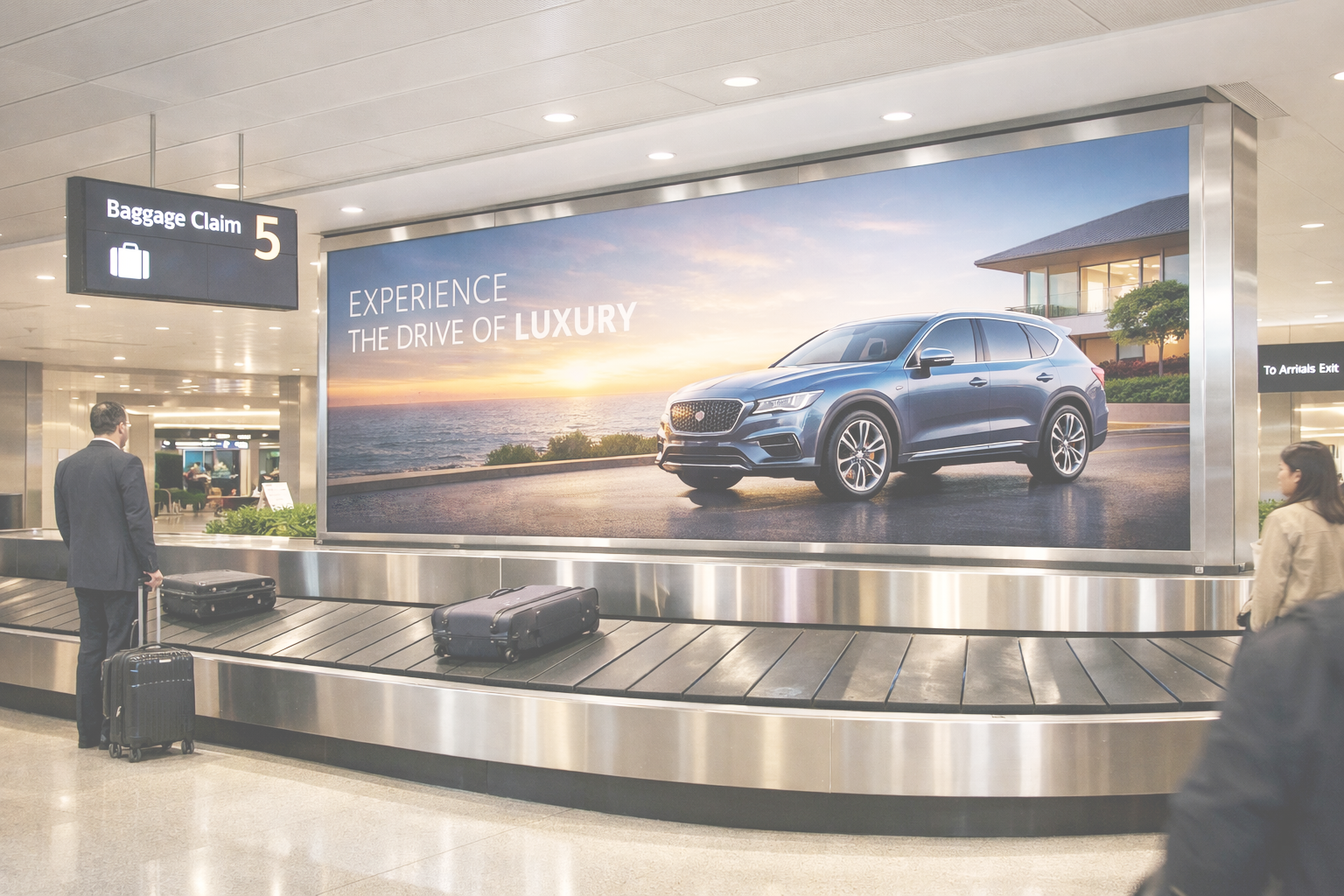
It’s Not Just Where You Advertise - It’s How Fast You Execute
We combine local insight with fast rollout to deliver results for you, now.
Talk to an ExpertAudience and Cultural Intelligence
Top 2 Languages:
- Samoan: The heart language of the Samoan diaspora and the entire resident population of the islands. Samoan-language advertising at APW signals profound cultural respect — it speaks directly to the emotional and familial motivation that drives virtually every visitor through this terminal. The Samoan diaspora in New Zealand and Australia maintains Samoan as a home language across multiple generations, and seeing their language honoured at the airport gateway of their homeland creates brand warmth that English-only advertising cannot achieve.
- English: The official co-language of Samoa and the working language of all international visitors, development professionals, and government staff at the airport. English-language advertising at APW reaches the full international and professional audience, and for New Zealand and Australian diaspora visitors — who are bilingual English-Samoan — English advertising that incorporates Samoan cultural values and imagery achieves the highest combined engagement.
Major Traveller Nationalities:
New Zealand dominates APW's international visitor profile with 42-56% of all arrivals — reflecting the size and economic significance of the New Zealand Samoan community, which at 200,000-plus is one of New Zealand's largest Pacific Islander groups and a defining community in Auckland's urban fabric. Australia contributes 26-29%, anchored by the 80,000-plus strong Australian Samoan community concentrated in Sydney, Melbourne, and Brisbane. The United States — primarily the Samoan American community in Hawaii, California, and Utah, plus the US Territory of American Samoa — contributes 5-8% of arrivals and the Pacific's highest per-head spending visitors given the US income levels of the community. European visitors — UK, Germany, France — represent a small but growing premium holiday segment attracted by Samoa's natural beauty and cultural authenticity.
Religion — Advertiser Intelligence:
- Christianity (approximately 98% of the Samoan population): Samoa is one of the world's most devoutly Christian nations, and faith is not merely a personal conviction but a public, communal, and daily expression of fa'a Samoa. The national motto — "Samoa is founded on God" — is embedded in the constitution. Church membership and attendance are near-universal, and the church calendar — White Sunday, Christmas, Easter, church anniversaries, and the weekly Sabbath (Sunday, when most businesses and transport operate on reduced schedules) — directly shapes Samoa's travel and commercial patterns. Advertising that acknowledges Samoa's Christian identity and values will achieve brand trust and recall far beyond what secular messaging can generate. Brands in financial services, insurance, and community-facing consumer goods that align with Christian family values find APW's passenger audience exceptionally receptive.
- The Church of Jesus Christ of Latter-day Saints (LDS/Mormon): Samoa has one of the highest per-capita LDS membership rates in the world, and the LDS community's strong institutional structure, youth mission programme, and extensive US-Pacific community connections generate a structured travel flow between Samoa, Utah, Hawaii, and the US mainland through APW. LDS institutional brands, BYU-Hawaii educational connections, and LDS community-facing financial services will find this audience highly concentrated and deeply loyal.
Behavioral Insight:
The Samoan diaspora traveller at APW is defined by a behavioral paradox that is commercially significant: they carry Western incomes and consumer expectations — mobile banking, loyalty programmes, premium goods preferences — but return to an island where community, family, and tradition override individual consumption as the primary value framework. Their spending at APW is therefore highest in two moments: arrival (when they are bringing gifts, goods, and cash from New Zealand or Australia) and departure (when they are purchasing last-minute Samoan goods and experiences to take home, and when remittance decisions for the year ahead are being finalised). Brands that intercept the diaspora visitor in both the arrivals and departures hall at APW — with messaging that respects the cultural journey they are making rather than treating them as generic Pacific tourists — will build brand loyalty that extends into the diaspora communities of Auckland, Sydney, and Los Angeles where these same people are active consumers year-round.
Outbound Wealth and Investment Intelligence
The outbound traveller at Apia Faleolo Airport is primarily a Samoan departing for New Zealand, Australia, or the United States — either as a returning diaspora member after a home visit, a seasonal worker departing for the PALM or RSE scheme, a government official on bilateral travel, or a student leaving for university. The commercial dynamics of this outbound flow are commercially significant precisely because of its diaspora character: Samoan seasonal workers departing for Australia or New Zealand are committing to an income-generation period whose remittance flows will sustain family members left behind, and their financial services, insurance, and mobile banking decisions at the point of departure represent high-value product acquisition moments.
Outbound Real Estate Investment:
Samoa's land tenure system — where customary land accounts for approximately 81% of land and cannot be sold — substantially limits domestic property investment by the diaspora and instead redirects investment to New Zealand and Australian residential property. Auckland and South Auckland (with their large Samoan communities), South-West Sydney, and Brisbane's western suburbs are the primary markets for diaspora Samoans' Australian and New Zealand property purchases. New Zealand and Australian property developers and mortgage brokers whose products serve first and second-generation Pacific Islander buyers should treat APW's departures hall as a direct channel to this investment-intent audience at the moment they are returning to their adopted homes to pursue property goals.
Outbound Education Investment:
Samoa's government and middle-class families invest significantly in New Zealand, Australian, and US tertiary education for their children — with the National University of Samoa providing domestic options, but New Zealand universities (particularly Victoria University of Wellington, Auckland University of Technology, and Massey University) and Pacific-connected US institutions (BYU-Hawaii, particularly for the LDS community) receiving strong student flows from Samoa. The National University of Samoa and regional training programmes also draw inbound students through APW from Tokelau, American Samoa, and Pacific neighbours, creating a bidirectional academic travel audience that is commercially relevant for educational institution advertising.
Outbound Wealth Migration and Residency:
Samoa participates in New Zealand's Samoan Quota (up to 1,100 permanent residents annually), the Pacific Engagement Visa (Australia), and the PALM/RSE seasonal work schemes. As of November 2025, 2,550 Samoan workers were in Australia under PALM, with New Zealand's RSE scheme adding additional thousands annually. These departing seasonal workers represent APW's most concentrated outbound financial services audience — they are leaving for income generation with specific remittance commitments to families, and their banking, mobile money, and insurance product decisions are made at or just before the point of departure. Fintech and remittance platform brands, Pacific-focused insurance products, and the banks that serve Pacific Island communities in New Zealand and Australia have a direct, high-intent audience in APW's departures hall.
Strategic Implication for Advertisers:
APW's wealth corridor is primarily the Samoa-New Zealand and Samoa-Australia remittance and diaspora travel axis. The airport does not generate large-scale outbound HNI investment flows in the conventional sense — instead, it generates something commercially more unusual: a diaspora loyalty corridor whose financial decisions (remittances, property purchase, insurance, mobile banking) are made within the terminal environment at moments of maximum cultural and emotional engagement. Brands that understand this emotional commercial context — and position their messaging at the intersection of Western financial services and Pacific family obligation — will achieve brand adoption rates at APW that no digital or general market advertising can replicate.
Airport Infrastructure and Premium Indicators
Terminals:
- Main international terminal: Upgraded over the past decade through WST175 million (USD 65 million) in investment, including WST150 million in the latter half of the last decade to handle widebody aircraft. The terminal accommodates Boeing 777, Airbus A330, and Boeing 787 Dreamliner operations — premium full-service aircraft configurations that reflect the investment New Zealand and Australian carriers make in this route given the high-yield diaspora passenger profile. The arrivals hall includes a duty-free shop, currency exchange, and car rental facilities.
- New regional terminal (2024): Built specifically ahead of CHOGM 2024 at a cost of WST25 million (USD 9 million), the new regional terminal handles smaller aircraft and eased congestion in the main terminal during the Commonwealth summit. This new facility represents Samoa's most recent aviation infrastructure investment and signals the government's commitment to sustainable capacity growth.
- Single runway capacity: The 3,000-metre runway at Faleolo accommodates all major widebody aircraft types — a significant competitive advantage for a Pacific Island airport of this passenger volume, enabling Air New Zealand and Fiji Airways to operate their premium widebody configurations on the Auckland and Pacific hub routes.
Premium Indicators:
- CHOGM 2024 hosting status: Samoa's October 2024 hosting of the Commonwealth Heads of Government Meeting — attended by 56 member nations' heads of government — elevated APW's international profile and physical capability to levels unprecedented in its history. New Zealand donated state-of-the-art security screening equipment to APW specifically for CHOGM, improving the terminal's security infrastructure permanently.
- Air New Zealand widebody service: Air New Zealand's commitment to direct Auckland-Apia service using widebody aircraft — increased by 13,000 additional seats for the November 2024-March 2025 summer season — confirms that the airline's own revenue management team has determined that the diaspora and premium leisure market on this route justifies premium aircraft deployment. This is a commercial validator for APW's above-average per-head spending profile.
- Fiji Airways hub connectivity: Fiji Airways — operating up to 11 departures per week from APW — provides Apia with connectivity through Nadi to the Pacific's broadest international network, including connections to Los Angeles, San Francisco, Hong Kong, and Singapore. This connectivity makes APW commercially relevant to the US Samoan community (through the LA/SF connection) and to the broader Pacific professional audience whose travel requirements extend beyond the Auckland and Brisbane corridors.
- Samoa's CHOGM infrastructure legacy: The diplomatic and governmental infrastructure built for CHOGM — including expanded hotel capacity (2,000 land-based accommodation units secured, plus 1,000 cruise liner rooms), upgraded road and telecommunications infrastructure, and new conference facilities at the Faleoloi Airport hotel precinct — has permanently expanded APW's capacity to host professional and diplomatic traffic beyond pre-CHOGM levels.
Forward-Looking Signal:
Samoa's departure tax increase — from WST65 to WST180 (USD 67) from March 2026 — reflects the Airport Authority's investment in sustained infrastructure improvement and signals confidence that the diaspora and tourism market's price inelasticity supports continued capacity investment. The Moanalei Villas luxury boutique development — seven boutique villas with private infinity pools overlooking Apia harbour — represents Samoa's first purpose-built ultra-premium accommodation, signalling a deliberate move toward attracting higher-yield visitors beyond the diaspora VFR market. Tourism Samoa has active media buying programmes in both New Zealand and Australia (with agencies tendered for 2025-2026), confirming structured marketing investment that will sustain and grow APW's international visitor volumes. Masscom advises brands to establish their APW advertising presence now — the combination of infrastructure legacy from CHOGM, the luxury accommodation pipeline, and the departure tax revenue being reinvested into terminal upgrades signals an airport on a commercial improvement trajectory whose advertising inventory is most efficiently acquired before competitive demand increases.
Airline and Route Intelligence
Top Airlines:
Fiji Airways (largest by departures, approximately 11/week), Air New Zealand, Qantas, Samoa Airways (national carrier, inter-Pacific and American Samoa routes), Virgin Australia, Talofa Airways (American Samoa corridor)
Key International Routes:
Auckland (37% of APW departures, highest frequency and most commercially significant route — Air New Zealand and Fiji Airways), Brisbane (Qantas and Fiji Airways, approximately 5 flights/week), Nadi/Fiji (Fiji Airways hub, with onward connections to Los Angeles, San Francisco, Sydney, Hong Kong, Singapore, and 24 Pacific destinations), Pago Pago/American Samoa (Samoa Airways and Talofa Airways, inter-Samoa corridor), Honolulu (seasonal, critical for US Samoan community connectivity)
Domestic Connectivity:
No domestic passenger flights currently operate within the Independent State of Samoa — inter-island travel between Upolu and Savai'i is served exclusively by the Mulifanua-Salelologa ferry service, with the ferry terminal located 5 km from APW. Regional turboprop services to Samoa's outlying islands and atolls are operated on a charter basis.
Wealth Corridor Signal:
The Auckland-Apia route is the most emotionally and commercially significant air corridor in the Pacific Islands — it carries the largest per-capita remittance community of any comparable Pacific Island route, and its passenger profile (average household income USD 90,710, 10-11 night average stay, 92% return intent) confirms that the route's passengers are among the Pacific's most loyal and highest-value repeat travellers. The Brisbane-Apia corridor delivers a secondary high-spend Australian Samoan audience. The Nadi hub — connecting APW to the US, Asia, and Pacific via Fiji Airways — creates a structural platform for the US Samoan community and European premium visitor to access Samoa without requiring direct long-haul service from APW. The American Samoa corridor carries a structured inter-Samoa community and business travel flow that sustains APW's domestic regional significance beyond its international routes.
Media Environment at the Airport
- APW's compact single-terminal environment creates the highest advertising capture rate in Samoa — every international and domestic passenger passes through the same building, with zero opportunity to bypass the arrivals hall duty-free zone or the departures lounge commercial areas
- The diaspora returnee arriving at Apia Faleolo is in a state of emotional peak — they are home, they are with family, they are fulfilling the obligations and connections that define their Pacific identity. This emotional register — unique to diaspora gateway airports — creates brand impressions of extraordinary depth and durability; advertising at APW is not reaching a passive transit audience but an active, emotionally engaged community whose brand memories from this airport are carried back to Auckland, Sydney, and Los Angeles
- The CHOGM 2024 security infrastructure upgrades — including New Zealand-donated screening equipment — have permanently elevated the terminal's operational quality and the professional standards of the passenger processing environment, improving the commercial environment for premium brand advertising placement
- Masscom Global structures APW campaigns to address both the emotional arrival moment (duty-free zone, arrivals hall) and the strategic departure moment (departures lounge, pre-flight remittance and financial decisions) — with creative guidance that respects fa'a Samoa, acknowledges the Christian community values of the audience, and communicates in both Samoan and English for maximum cultural resonance
Strategic Advertising Fit
Best Fit:
- Financial services and remittance platforms: APW is the point where the Samoa-New Zealand and Samoa-Australia remittance relationship is most physically concentrated — departing seasonal workers committing to remittance transfers, returning diaspora managing family cash distributions, and development donors assessing financial infrastructure needs all converge in this terminal. Banks and fintech platforms serving Pacific Island communities in New Zealand and Australia, mobile money operators, and insurance product providers will find APW's departures hall a structurally superior channel to any digital platform for reaching this audience at peak financial decision intensity.
- New Zealand and Australian consumer brands targeting Pacific communities: The 56% New Zealand and 29% Australian origin of APW's international visitors means that Auckland-based and Sydney-based brand campaigns that extend to APW achieve continuity advertising to the same diaspora audience in their home country and at their spiritual home airport — creating a brand presence that is reinforced at both ends of the most important personal journey these consumers make each year.
- Premium tourism accommodation and experience brands: Samoa's new luxury tourism positioning — anchored by Moanalei Villas, Lalomanu Beach eco-resorts, and the post-CHOGM hotel stock — is attracting a premium holiday visitor whose APW arrival is the starting point for a high-spend, high-satisfaction itinerary. Luxury accommodation, premium eco-tour operators, and premium hospitality brands will find a defined and growing audience at APW's international arrivals zone.
- Pacific development finance and multilateral organisations: ADB, World Bank, Commonwealth Secretariat, DFAT, MFAT, and JICA professional staff transit APW with structured regularity — making the airport an effective channel for professional services, enterprise technology, and development sector brand advertising targeting the Pacific's multilateral professional community.
- Christian faith-based and community organisations: Samoa's near-total Christian demographic and the particularly strong presence of LDS, EFKS (Congregational), and Catholic communities creates a defined faith-aligned audience for church-based financial products, faith-branded consumer goods, and community organisation brands whose values resonate with the Samoan Christian community both at home and in the diaspora.
- Mobile payments, banking, and Pacific fintech: The Pacific's most remittance-dependent economy sustains constant demand for efficient, low-cost money transfer, mobile banking, and family finance management tools — and the audiences who make these product decisions are concentrated at APW in the moments before departure (seasonal workers) and after arrival (returning diaspora distributing family funds).
Brand Alignment at a Glance:
| Category | Fit |
|---|---|
| Financial services and remittance platforms | Exceptional |
| NZ and Australian consumer brands for Pacific communities | Exceptional |
| Christian faith-aligned community brands | Exceptional |
| Premium tourism accommodation and experience | Strong |
| Pacific development finance and NGO services | Strong |
| Mobile payments and Pacific fintech | Strong |
| Mass-market Western lifestyle brands without Pacific connection | Poor fit |
Who Should Not Advertise Here:
- Mass-market Western lifestyle brands without Pacific cultural relevance: APW's audience is defined by cultural identity — fa'a Samoa — rather than aspiration toward Western lifestyle models. Brands that communicate through Western status signals without acknowledging Pacific identity will generate low recall and potential cultural friction with an audience for whom community and tradition outrank individual status
- Urban commercial real estate in markets distant from NZ and Australia: Property investment advertising that is not connected to the New Zealand, Australian, or Pacific Island property markets where the Samoan diaspora actually invests will find no audience alignment at APW
- Luxury fashion and metropolitan prestige brands: The Samoan visitor's spending priorities are family, community, and shared cultural experience — not personal luxury display. Premium metropolitan fashion and status luxury brands are misaligned with the communal, family-first value system that defines APW's audience
Event and Seasonality Analysis
Event Strength: Very High (White Sunday, Christmas diaspora return, fa'alavelave year-round) Seasonality Strength:High (dry season June-September, diaspora Christmas November-January) Traffic Pattern: Dual-Peak (Dry Season Tourism + Diaspora Christmas) with Year-Round VFR Base
Strategic Implication:
APW's advertising calendar has two distinct peak periods that require different creative strategies. The June-to-September dry season peak serves the premium leisure and VFR travel audience — New Zealand and Australian Samoans taking winter school holidays in the warmth of Samoa, international eco-tourists exploring the natural attractions, and development professionals coordinating mid-year programme reviews. The November-to-January Christmas and White Sunday peak is the highest-value commercial window in the Samoan calendar — returning diaspora with gifts, cash, and consumer goods from New Zealand and Australia, creating an arrivals hall audience whose spending intensity is unmatched at any other time of year. Masscom structures APW campaigns as year-round always-on investments for financial services and diaspora community brands, with seasonal burst investment in the Christmas window for consumer goods, remittance services, and premium hospitality brands. The CHOGM diplomatic legacy creates a structured October professional audience window for development finance and government services brands.

Poor Placement and Delays Affect Airport Campaigns
We help you move faster, access better inventory, and get it right now.
Talk to an ExpertFinal Strategic Verdict
Apia Faleolo Airport is the commercial gateway of one of the Pacific's most extraordinary diaspora stories — a nation of 220,000 people whose overseas community is larger than its resident population, whose average international visitor earns USD 90,710 per household, and whose cultural bonds of fa'a Samoa are so strong that 92% of visitors say they will return and 96% recommend Samoa to others. No other Pacific Island airport serves an audience whose loyalty, spending commitment, and cultural cohesion makes them this commercially distinct. The CHOGM 2024 legacy has elevated APW's international profile, upgraded its infrastructure, and attracted Samoa's first purpose-built luxury boutique accommodation to the island. Tourism is 20% of GDP and growing. Remittances — flowing through the families whose members pass through this terminal — are 24-33% of GDP. The departure tax investment is funding further terminal improvement. Every piece of data points in the same direction: this is an airport whose audience quality has always outpaced its volume, and whose commercial value for the right brand categories — financial services, diaspora community brands, remittance platforms, Christian faith-aligned products, and Pacific development finance — is structurally irreplaceable. Masscom Global activates APW's full advertising potential, reaching the Samoan diaspora at the most emotionally meaningful aviation moment of their year and positioning your brand at the intersection of Pacific identity, Western income, and community obligation that no other Pacific gateway in the world creates.
About Masscom Global
Masscom Global is a premium international airport advertising and media buying agency operating across 140 countries. With deep expertise in airport OOH, premium publications, and high-net-worth audience targeting, Masscom helps brands reach the world's most valuable travellers at the moments that matter most. For advertising packages, media rates, and campaign planning at Apia Faleolo International Airport and airports across the globe, contact Masscom Global today.
Frequently Asked Questions
How much does airport advertising cost at Apia Faleolo International Airport? Advertising at APW is structured as bespoke placement given the airport's compact single-terminal environment and its unique commercial value as the primary gateway for one of the Pacific's most economically active diaspora communities. Rate structures reflect the seasonal peaks of the dry season (June-September) and the Christmas diaspora return window (November-January), with the Christmas peak commanding premium pricing given the exceptionally high per-passenger spending intensity of the returning diaspora audience. Contact Masscom Global for current APW placement options and a campaign proposal aligned to your brand category.
Who are the passengers at Apia Faleolo International Airport? APW's approximately 200,000-243,000 annual passengers are dominated by the New Zealand Samoan diaspora (56% of international visitors), Australian Samoan diaspora (29%), and US Samoan community including Hawaii (5-8%), with an average household income of USD 90,710 — well above Pacific Island average visitor income levels — reflecting the New Zealand, Australian, and American earnings base of the diaspora. Average in-country spending of USD 1,410 over 10-11 nights confirms a high-yield, highly loyal audience. Development professionals, government officials, and CHOGM legacy diplomatic visitors add a secondary professional audience layer.
Is Apia Faleolo Airport good for luxury brand advertising? Yes, for specific luxury categories aligned with Pacific cultural values. Premium eco-resort accommodation, luxury cultural experience operators, and premium food and hospitality brands targeting the growing high-yield holiday segment find APW effective. The USD 90,710 average household income of the visitor base confirms above-average purchasing power. Brands that position luxury through the lens of Pacific authenticity — natural beauty, family connection, cultural experience — will outperform brands that communicate through Western metropolitan status signals.
What is the best airport in the Pacific Islands to reach the Samoan diaspora? Apia Faleolo Airport is the only answer. No other airport concentrates the Samoan diaspora at the moment of their most emotionally significant annual journey — returning home to Samoa from New Zealand, Australia, and the United States. The diaspora member at APW is not a passing transit passenger; they are fulfilling fa'a Samoa, the Samoan way, in its most complete expression. For brands building genuine community relationships with Pacific Island families in New Zealand, Australia, and the USA, APW provides an irreplaceable intercept point that no major hub airport in Auckland or Sydney can replicate with this cultural specificity.
What is the best time to advertise at Apia Faleolo Airport? The November-to-January Christmas and White Sunday diaspora return season is the single highest-intensity commercial window — returning diaspora arrive with accumulated Western incomes and gifts, creating the year's highest per-passenger spending moment. The June-to-September dry season delivers the premium leisure and VFR travel audience at its most concentrated. Year-round investment is appropriate for financial services, remittance, and community-facing brands whose audience arrives and departs consistently across all seasons.
Can international financial services brands advertise at Apia Faleolo Airport? Yes — and this is one of APW's strongest commercial categories. Samoa's economy is 24-33% dependent on remittances, and the departing seasonal worker and the arriving diaspora returnee are both at critical financial decision moments in the terminal. Banks serving Pacific Island communities in New Zealand and Australia, mobile money and remittance platforms, insurance product providers, and Pacific-focused fintech companies will find APW's arrivals and departures zones their most targeted single advertising environment in the Pacific.
Which brands should not advertise at Apia Faleolo Airport? Mass-market Western consumer brands that communicate through generic aspiration without acknowledging Pacific cultural identity will generate low recall and potential cultural disconnect at APW. Urban commercial real estate and metropolitan lifestyle luxury brands are misaligned with the community and family values that define the APW audience. Industrial and resources-sector B2B brands have no meaningful audience alignment with an airport whose commercial identity is built on diaspora family connection, community tourism, and cultural exchange.
How does Masscom Global help brands advertise at Apia Faleolo International Airport? Masscom Global structures APW advertising as culturally informed, diaspora-aware campaigns that acknowledge fa'a Samoa's community values, the Christian identity of the Samoan people, and the dual-language (Samoan and English) creative requirement for maximum audience engagement. We align placement to the Christmas diaspora peak, the dry season tourism window, and the CHOGM diplomatic legacy calendar, with inventory access across APW's arrivals duty-free zone, departures lounge, and terminal approaches. Contact Masscom Global to plan your Apia Faleolo Airport campaign.