


Airport at a Glance
| Field | Detail |
|---|---|
| Airport | Nnamdi Azikiwe International Airport |
| IATA Code | ABV |
| Country | Nigeria |
| City | Abuja |
| Annual Passengers | Approximately 4 million (2022-23) |
| Primary Audience | Federal government officials, oil sector executives, diplomatic corps, National Assembly members |
| Peak Advertising Season | October to January, April to June |
| Audience Tier | Tier 1 |
| Best Fit Categories | International real estate, luxury goods, financial services, international education, oil sector B2B |
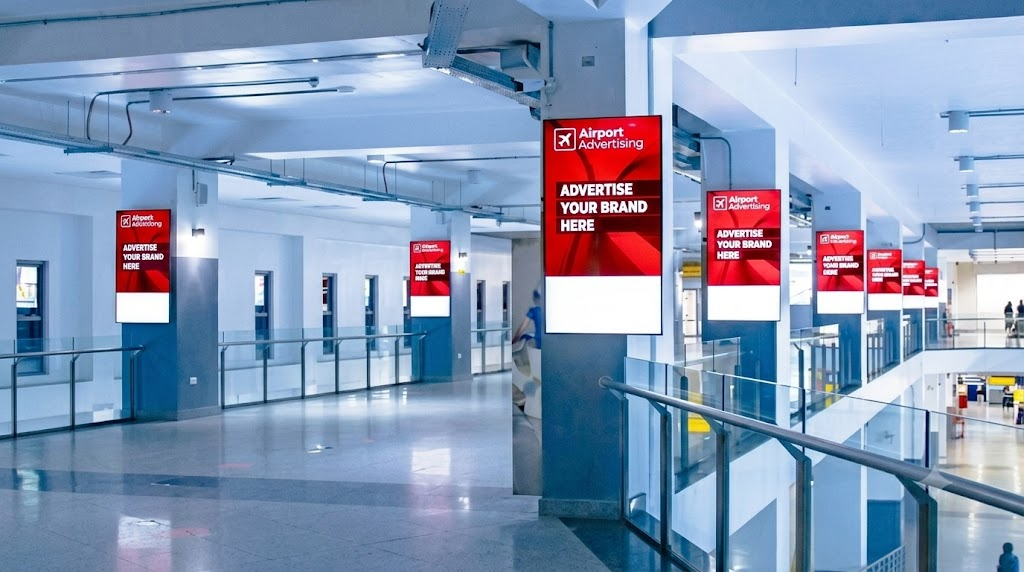
Nnamdi Azikiwe International Airport is not Nigeria's busiest airport. It is Nigeria's most consequential one. While Lagos commands the commercial volume, Abuja commands the power — and in Nigeria, power and wealth are operationally inseparable. The ministers who sign billion-dollar infrastructure contracts, the senators who shape the regulatory environment that governs Africa's largest economy, the NNPC Limited executives who manage the continent's most significant oil production asset, the generals who command West Africa's most capable military, and the ambassadors of over 100 foreign missions all transit through ABV as their primary international gateway. For advertisers who understand that access to decision-making authority is more commercially valuable than access to transaction volume, this airport delivers what no other channel in West Africa can replicate.
Abuja was designed from an empty plateau in Nigeria's geographic centre to function as a neutral federal capital that neither Lagos nor any regional capital could dominate — and it has succeeded beyond its planners' intentions. The city now houses the National Assembly with 469 elected legislators, every federal ministry and major regulatory agency, the headquarters of NNPC Limited and the Central Bank of Nigeria, the full diplomatic corps, the military high commands, and a premium real estate market where Maitama District properties routinely trade at prices comparable to prime Central London. The airport that serves this city serves an audience defined not by income alone but by institutional authority — and in Nigeria, institutional authority at this level comes with purchasing power that is among Africa's highest by any commercial measure.


Advertising Value Snapshot
- Passenger scale: Approximately 4 million annually (2022-23), with ABV functioning as Nigeria's second busiest airport and the primary gateway for the country's most institutionally authoritative audience, regardless of national passenger volume rankings
- Traveller type: Federal ministers and permanent secretaries, National Assembly members, NNPC and oil sector executives, Central Bank and financial regulatory officials, senior military officers, foreign ambassadors and diplomatic staff, international NGO leadership, Nigerian HNWI business families conducting government-adjacent commercial activity
- Airport classification: Tier 1 — national capital hub with the highest concentration of political authority and institutional purchasing power in West Africa's airport network, operating as the gateway to Africa's largest economy by GDP
- Commercial positioning: Nigeria's federal power gateway, anchoring the country's legislative, executive, and diplomatic infrastructure and serving as the primary international departure point for an audience whose individual decisions shape trillion-naira budget allocations, regulatory frameworks, and national commercial policy
- Wealth corridor signal: Positioned at the intersection of the Nigeria-UK political and diaspora corridor, the Abuja-Dubai wealth transfer channel, and the Nigeria-USA diplomatic and education route — three overlapping flows that encode Nigeria's most significant outbound capital movements
- Advertising opportunity: Masscom Global activates across ABV's full inventory environment with the Nigeria market expertise, local execution capability, and international brand intelligence needed to maximise commercial return in Africa's most politically charged and institutionally concentrated airport audience
Airport Advertising is Complex to Get Right
We help you execute faster, with proven results and local insight most planners lack starting now.
Talk to an ExpertCatchment Area and Economic Drivers
Top 10 Cities within 150 km — Marketer Intelligence:
- Suleja (Niger State): The immediate northwestern satellite of Abuja and a rapidly expanding residential and commercial city absorbing the capital's overflow population, with a growing middle-class household base whose members work in Abuja's federal institutions and consume at the capital's premium standard — a commercially active catchment with strong demand for housing finance, vehicle financing, and consumer electronics as the urban professional population scales.
- Gwagwalada (FCT): Home to the University of Abuja and one of the FCT's most established satellite settlements, producing a dense concentration of academic professionals, university administrators, and a student population whose families across Nigeria's south-southwest make regular travel decisions through ABV — strong demand for education finance, technology products, and financial services from an audience in active upward mobility.
- Keffi (Nasarawa State): A strategically positioned commercial town on the Abuja-Lafia highway serving as the northeastern gateway to the FCT, with a growing trading and construction business class that supplies goods and services to Abuja's perpetually expanding infrastructure and real estate market — an audience with accumulating commercial wealth and strong receptiveness to banking, insurance, and property investment products.
- Nasarawa (Nasarawa State capital): A state capital with an active government and civil service community whose proximity to Abuja makes its senior officials frequent ABV users for state-federal liaison travel, combining a structured government salary class with a landowning and agro-commercial business community that is beginning to deploy accumulated rural wealth into urban investment products.
- Lafia (Nasarawa State): The most commercially developed city in Nasarawa State and a regional agro-food processing hub whose business owners and state government officials travel through ABV for federal engagement and international connections — a catchment with above-average agricultural land wealth, a growing formal financial services penetration rate, and strong aspiration for children's international education.
- Minna (Niger State capital): A politically significant state capital producing a senior government officer class with regular ABV usage for interstate and international travel, combined with an agro-commercial and granite mining business community whose accumulated asset wealth is increasingly directed toward Abuja real estate investment and formal banking products as Niger State's proximity to the capital drives urban spillover development.
- Kuje (FCT): A southwestern FCT area council headquarters with a significant population of federal civil servants in lower and middle grades whose households represent the base of ABV's domestic passenger pyramid — a mass-scale aspirational consumer audience with consistent demand for affordable banking, insurance, and mobile financial products, relevant for brands that need Abuja reach beyond the premium tier.
- Abaji (FCT): A largely agricultural southwestern FCT area bordering Kogi State, with cashew and yam farming families whose land wealth is transitioning into commercial real estate speculation along the Abuja-Lokoja expressway corridor — a long-cycle but high-potential audience for rural-to-urban investment products as infrastructure improvement accelerates the southern FCT's integration into Abuja's premium property market.
- Lokoja (Kogi State): Positioned at the historically significant confluence of the Niger and Benue Rivers, Lokoja's political and commercial class uses ABV as their primary aviation gateway, combining a state capital government audience with a trading and cement-industry business community whose commercial relationships with Abuja's contractors and procurement networks make them active consumers of financial, real estate, and automotive products at capital city price points.
- Kaduna (Kaduna State): Nigeria's third city and the north's most significant industrial and commercial hub, whose senior government officials, business executives, and affluent families increasingly use ABV rather than Kaduna's own airport for international travel on prestige routes to London, Dubai, and Istanbul — an overflow premium audience with textile industry wealth, banking sector executive incomes, and strong outbound education investment in UK and Canadian universities, who arrive at ABV having already made the decision to travel at the highest service level available.
NRI and Diaspora Intelligence:
The Nigerian diaspora is one of the world's largest and most economically productive, estimated at over 17 million individuals globally, with major concentrations in the United Kingdom, the United States, Canada, Italy, and Germany generating remittances exceeding $20 billion annually — among Africa's highest. The Abuja-connected segment of this diaspora is qualitatively distinct from the broader Nigerian overseas population. These are the children and grandchildren of federal civil servants, military officers, senators, and government contractors who grew up in Abuja's planned residential districts and were sent abroad for university education, many remaining in London, Houston, Washington DC, and Toronto as professionals and entrepreneurs while maintaining active family and commercial ties to the capital. This audience earns in sterling and dollars, invests in London and Dubai property, sends remittances directly into Nigeria's premium real estate market, and returns through ABV during Nigerian public holidays and political events with purchasing power calibrated to Western consumer markets rather than naira income benchmarks. For international real estate developers, luxury brands, and financial services targeting West Africa's highest-income diaspora segment, the ABV departure and arrival hall is the most concentrated access point in Nigeria for this audience.
Economic Importance:
Abuja's economy is structurally defined by two forces that are mutually reinforcing and simultaneously create Nigeria's highest per-capita institutional income concentration. The first is the federal government's annual budget, consistently among Africa's largest, whose allocations, contracts, and expenditures are decided, approved, and disbursed through institutions headquartered in the capital — creating a permanent class of budget-adjacent wealth holders whose commercial activity is inseparable from their proximity to government. The second is the oil sector's administrative nerve centre: NNPC Limited's corporate headquarters, the Department of Petroleum Resources, and every major international oil company's government relations and regulatory affairs offices are in Abuja, making the capital the point at which Nigeria's hydrocarbon revenues are governed and allocated. For advertisers, this translates into a market where the top five to ten percent of ABV's audience commands spending power comparable to HNWI audiences in Gulf cities — and where premium airport advertising reaches that concentrated segment with no equivalent access channel in Nigeria outside Lagos.
Business and Industrial Ecosystem
- NNPC Limited and the full hydrocarbon regulatory apparatus — including the Nigerian Upstream Petroleum Regulatory Commission, the Nigerian Midstream and Downstream Petroleum Regulatory Authority, and the offices of international oil companies including TotalEnergies, Shell, Chevron, ExxonMobil, and ENI — generate Nigeria's most financially capable institutional audience in Abuja, with executives traveling to London, Houston, Aberdeen, and the Gulf on project, regulatory, and partnership schedules
- The National Assembly's 469 elected members and their extensive support staff, combined with the full cabinet of federal ministers and thousands of senior permanent secretaries and directors across 30-plus ministries and agencies, create a permanent political economy class whose institutional purchasing authority and personal consumption patterns are shaped by access to government budgets, oil revenues, and foreign currency allocations at levels inaccessible to any comparable professional class in West Africa
- The Central Bank of Nigeria, Securities and Exchange Commission, Federal Inland Revenue Service, Economic and Financial Crimes Commission, and all major financial regulatory bodies are headquartered in Abuja, concentrating Nigeria's financial governance elite in a single airport catchment — an audience of economic policy-makers whose personal financial sophistication, international regulatory connections, and HNWI consumption patterns make them among the most valuable B2B and premium consumer targets in the country
- Nigeria's international development and NGO sector — including USAID, the World Bank Group, the UN system, DFID successor programmes, and hundreds of bilateral and multilateral development agencies with Abuja country offices — produces a professionally diverse, internationally mobile, dollar-compensated expatriate and Nigerian staff audience whose consumption behaviour reflects Western market conditioning and international salary benchmarks
Passenger Intent — Business Segment:
Business travelers at ABV are drawn predominantly from the federal government and regulatory agencies, the oil and gas sector, the diplomatic and development community, financial services, real estate development, and the professional services firms that support government-adjacent commercial activity. They travel to London for government and investor relations, to Dubai for procurement meetings and personal investment management, to Doha and Istanbul for regional connectivity, to Washington DC for AGOA and US government engagement, and to Johannesburg for African continental business. Advertiser categories that intercept them most effectively include international real estate, wealth and portfolio management, premium business travel, luxury goods positioned around institutional status and global connectivity, B2B financial and legal services, and premium automotive brands.
Strategic Insight:
The business audience at ABV holds a commercial characteristic unique in sub-Saharan African airport advertising: a significant proportion of its highest-income travelers are individuals whose net worth is directly linked to their proximity to the Nigerian state rather than solely to private sector enterprise. This creates an audience with extraordinary income volatility awareness, a deep preference for hard assets and international capital preservation, and a well-established pattern of converting government-adjacent wealth into international real estate, foreign currency savings, and offshore financial structures as rapidly as liquidity allows. Brands offering international real estate, citizenship-by-investment programmes, wealth management services, and cross-border financial products will find ABV's departure hall one of the most commercially motivated audiences for these categories in all of Africa.
Tourism and Premium Travel Drivers
- Aso Rock, the monolithic granite outcrop that serves as both the presidential villa's visual identity and one of Abuja's most photographed natural landmarks, anchors the capital's emerging cultural tourism identity and draws domestic visitors from across Nigeria who use Abuja as their capital city experience destination alongside government visits
- Zuma Rock, a 725-metre inselberg rising dramatically from the plain on the Abuja-Kaduna road approximately 30 km north of the capital, functions as a natural heritage landmark drawing domestic leisure travelers from Lagos and Port Harcourt, whose premium accommodation choices in Abuja contribute to the capital's five-star hotel occupancy and airport retail spending
- Gurara Falls in Niger State, approximately 100 km from Abuja, offers a developing ecotourism and leisure destination attracting upper-income Abuja residents and visiting government officials for weekend retreats, contributing to a growing domestic premium leisure tourism demand that is purchasing outdoor goods, travel accessories, and premium hospitality products through the airport environment
- Abuja's own premium leisure and hospitality infrastructure — anchored by international five-star hotels including the Transcorp Hilton, Sheraton, Radisson, and Nicon Luxury — functions as a tourism draw in itself, hosting major African Union summits, ECOWAS meetings, international investor conferences, and OPEC-adjacent energy events that bring high-spending international delegations through ABV on concentrated event-driven schedules
Passenger Intent — Tourism Segment:
Tourism-oriented travelers at ABV split between high-spending inbound international visitors attending government events, energy sector conferences, and diplomatic engagements, and domestic leisure travelers from Lagos, Port Harcourt, Kano, and other Nigerian cities who fly to Abuja for the capital's premium hospitality and entertainment infrastructure. Inbound conference and event attendees from Africa and beyond arrive with institutional expense accounts and premium purchasing intent concentrated into short-duration stays, making them highly receptive to luxury retail, premium food and beverage, and branded goods messaging in the airport environment. International hospitality brands, luxury retail, technology goods, and premium fashion advertisers benefit from the combination of event-driven inbound traffic and domestic leisure travel at this airport.
Travel Patterns and Seasonality
Peak seasons:
- October to January: Nigeria's Independence Day on October 1 opens a major domestic travel and national celebration window, followed by the intensive National Budget presentation season (typically November) that concentrates Nigeria's entire political and financial class in Abuja simultaneously, flowing into the Christmas and New Year festive season when diaspora returnees from the UK and USA arrive with maximum purchasing power and festive spending intent
- April to June: The midyear National Assembly legislative session intensity peak, combined with post-Easter resumption of international business travel, generates sustained premium passenger volume as the political cycle drives intense Abuja-to-Lagos and Abuja-to-international route activity among Nigeria's government and business class
- Ramadan to Eid ul Fitr (date varies annually — Lunar calendar): Pre-Ramadan Umrah pilgrim departures from Abuja's large Muslim government and business community, combined with the Eid travel surge, create a commercially concentrated window with elevated spending on Islamic fashion, gifting, and devotional products
- Eid ul Adha (date varies annually — Lunar calendar): A second major passenger peak driven by Hajj pilgrim departures, family travel within and beyond Nigeria, and the most significant consumer spending event of the year for Nigeria's Muslim-majority northern catchment, with elevated activity across apparel, food, jewellery, and livestock trading in the Abuja-Niger-Nasarawa corridor
Event-Driven Movement:
- Budget Season and National Assembly Sessions (September to December): Nigeria's annual budget presentation to the National Assembly, typically in October or November, concentrates the country's entire cabinet, legislative leadership, business lobby, and international investor community in Abuja simultaneously — creating a five to eight week window of extraordinary institutional audience density at ABV that has no equivalent event-driven concentration at any other Nigerian airport
- Nigerian Independence Day (October 1): National Day celebrations in Abuja generate strong inbound travel from Nigeria's commercial, cultural, and political elite based in Lagos and other cities, alongside foreign government delegations attending the national celebration — a premium multi-nationality audience window with high institutional purchasing authority
- ECOWAS and African Union Summits (Multiple dates): Abuja's role as host city for West African regional summits and a frequent African Union consultative venue brings heads of state, foreign ministers, and senior government delegations from across Africa through ABV on concentrated diplomatic schedules, delivering extraordinary institutional decision-making authority in concentrated short windows
- Hajj Season (Dhul Hijjah — approximately June to July annually): ABV handles significant Hajj embarkation traffic from Nigeria's Muslim federal government and northern business community, generating a pre-departure audience in a state of peak religious and emotional engagement with strong receptiveness to Islamic banking products, travel accessories, premium prayer goods, and premium dates and food brands
- Democracy Day (June 12): Nigeria's Democracy Day national holiday generates domestic travel and capital city celebration activity, with the National Assembly and presidential administration's full programming drawing elite domestic and foreign visitors into Abuja's hotel and hospitality ecosystem through ABV
- Christmas and New Year (December to January): The largest diaspora return window of the year, delivering UK and USA-based Nigerians with maximum sterling and dollar purchasing power into the terminal environment alongside outbound Abuja residents departing for Dubai, Istanbul, and European leisure destinations — the single most commercially productive window for luxury goods, real estate, and premium consumer brand advertisers at ABV
It’s Not Just Where You Advertise - It’s How Fast You Execute
We combine local insight with fast rollout to deliver results for you, now.
Talk to an ExpertAudience and Cultural Intelligence
Top 2 Languages:
- English: Nigeria's official language and the universal commercial and government medium at ABV, spoken fluently by the airport's entire formal professional, political, and diplomatic audience — English-language campaigns achieve total reach across the terminal's highest-income segments and are the non-negotiable primary register for any brand seeking penetration into the federal government, oil sector, and diplomatic community audience
- Hausa: The dominant language of northern Nigeria and the most widely spoken African language in West Africa, functioning as the everyday social and commercial language of Abuja's large northern Nigerian population — civil servants, legislators, military officers, traders, and transport workers from the northern states who form a significant proportion of ABV's domestic passenger base engage most authentically with brands that acknowledge Hausa cultural identity, particularly in consumer goods, banking, and lifestyle categories
Major Traveller Nationalities:
Nigerian nationals dominate ABV's passenger profile, subdivided into the Abuja-based federal government and institutional class, Lagos-based business and financial sector executives traveling to Abuja for government engagement, northern Nigerian political and business leaders from Kano, Kaduna, and Sokoto using ABV for international connections, and diaspora returnees from the United Kingdom and the United States. Inbound international travelers include diplomatic staff from over 100 foreign missions in Abuja, World Bank, IMF, and UN system officials conducting Nigeria country program reviews, oil sector expatriates rotating through international energy company Nigeria operations, Chinese nationals connected to infrastructure and construction project management, and West African regional delegates attending ECOWAS and inter-governmental meetings. Campaign creative at ABV must operate in a prestige register that matches the institutional authority of the audience — this is not a market where generic or aspirational-entry-level brand messaging converts effectively, because the audience's self-image is already defined by achieved authority rather than aspired access.
Religion — Advertiser Intelligence:
- Islam (approximately 55% of FCT population, dominant in northern catchment): The dominant faith across Abuja's northern Nigerian population base, the federal civil service's Muslim majority drawn from states including Kano, Sokoto, Kaduna, and Kebbi, and the national legislature's northern Muslim bloc — Eid ul Fitr generates the largest consumer spending peak of the year for apparel, gifting, food, and jewellery; Eid ul Adha drives significant livestock transaction activity and charitable financial product engagement; Ramadan creates a sustained 30-day window of elevated Islamic banking, halal food and beverage, and devotional product consumption; Hajj and Umrah seasons produce a concentrated pre-departure audience of deeply engaged pilgrims with maximum receptiveness to Islamic finance, prayer goods, and premium travel accessories; Nigeria is one of the world's top 10 Hajj-sending countries annually, and Abuja's federal government and business Muslim community generates disproportionate high-income pilgrim traffic through ABV
- Christianity (approximately 45% of FCT population, dominant in southern Nigerian catchment): A commercially active Christian majority drawn primarily from Igbo, Yoruba, Edo, and Middle Belt Nigerian communities who are heavily represented in Abuja's professional and business class — Christmas generates the year's highest diaspora return traffic and domestic consumer spending event across electronics, fashion, food, and gifting; Easter drives a secondary domestic travel and consumer spending peak; Nigeria's vibrant Pentecostal megachurch culture, centred on institutions like RCCG and Winners Chapel with large Abuja congregations, creates a prosperous born-again Christian business community with active real estate investment behaviour, international education expenditure, and strong brand engagement with premium financial and consumer goods
Behavioral Insight:
The ABV audience makes purchasing decisions through a framework shaped by institutional status awareness, peer community comparison within highly visible professional hierarchies, and a risk consciousness rooted in Nigeria's documented experience of currency volatility, political cycle disruption, and macroeconomic uncertainty. The preference for hard assets — international real estate, gold, dollar-denominated accounts, and foreign-currency investments — is not a cultural affectation but a commercially rational response to decades of naira depreciation, making international asset-focused advertisers uniquely well-positioned at this terminal. The political economy audience responds most strongly to brand messaging that signals security, global status alignment, and institutional credibility — brands that position around stability, legacy, and international prestige consistently outperform those leading with innovation or disruption narratives in this environment.
Outbound Wealth and Investment Intelligence
The outbound passenger at Nnamdi Azikiwe International Airport represents one of Africa's most structurally motivated and commercially capable wealth-deployment profiles. Nigeria's macroeconomic conditions — naira volatility, inflation, and the periodic regulatory uncertainty of a government-dependent economy — have driven the country's HNWI and upper-professional class toward international asset accumulation as the foundational wealth preservation strategy. The Abuja variant of this profile is distinct from Lagos: where Lagos produces trade and entrepreneurial wealth, Abuja produces government-adjacent and oil-sector institutional wealth — and this type of capital deploys with particular urgency into international hard assets, residency optionality, and education investment because the political cycle creates unpredictable income disruption that the private sector does not face to the same degree. The result is an outbound passenger base that is not occasionally deploying capital internationally but structurally committed to doing so as a permanent financial management practice.
Outbound Real Estate Investment:
The United Kingdom — specifically London — is the dominant outbound real estate market for ABV's HNWI audience, driven by a combination of the deep cultural and educational familiarity of Nigeria's elite with British institutions, the prestige signal of prime Central London property ownership within Nigeria's political and business community, and the practical utility of UK property as a base for children in British universities. Nigerians are consistently ranked among the top international buyer nationalities in prime Central London, with areas including Mayfair, Kensington, Chelsea, and Westminster recording significant Nigerian transaction volumes. The UAE — specifically Dubai — has emerged as an active parallel market, driven by the dirham's dollar peg, the tax-free investment environment, and the accessibility of the Emirates as an alternative residency and investment base for Nigerians facing complexity in UK banking and financing. Turkey's citizenship-by-investment programme has attracted meaningful Nigerian HNWI capital from Abuja's business and political community, offering a Turkish passport in exchange for a $400,000 property investment with European travel access as the return. Portugal's Golden Visa through investment funds remains an actively discussed option among Abuja's diplomat-adjacent and financial regulatory professional class, and Canada's real estate market draws Nigerian investment from families with children enrolled in Canadian universities. International real estate developers advertising at ABV are reaching an audience whose property investment motivation is structurally embedded, multi-market, and driven by forces that will continue regardless of global market conditions.
Outbound Education Investment:
The United Kingdom is the overwhelming preference for higher education investment among ABV's political and institutional elite class, driven by the colonial-era institutional alignment of Nigeria's professional class with British university brands, the specific prestige signal of Oxbridge, LSE, and Russel Group credentials within Nigeria's government and legal elite, and the growing post-study work visa improvements that have increased UK attractiveness for Nigerian students. London, Edinburgh, Manchester, Birmingham, and Nottingham receive the highest Nigerian student flows from the Abuja catchment. The United States has accelerated as an active parallel destination, with Ivy League and leading US research university admissions increasingly pursued by Abuja's political and oil sector families whose children's international career ambitions extend beyond the Commonwealth. Canada has grown substantially as a destination aligned with post-study immigration pathways and lower tuition benchmarks relative to the UK and USA. For international universities, foundation programme providers, and education consultancies, ABV's pre-departure environment delivers parents who are committing to six to eight year education investment cycles encompassing secondary school placement, undergraduate, and postgraduate programs — a sustained commercial relationship with the school-selection family that begins at the airport and extends through multiple tuition payment cycles.
Outbound Wealth Migration and Residency:
Nigeria's HNWI and upper-professional class has demonstrated among the highest levels of second-residency and citizenship-by-investment programme engagement in sub-Saharan Africa, driven by passport mobility needs, wealth protection imperatives, and the desire to secure children's international career access outside Nigeria's politically variable environment. The UK Tier 1 and Innovator visa routes, alongside the UK National Interest pathway, have historically attracted the highest Nigerian HNWI uptake. Portugal's Golden Visa, particularly through the fund route, has been actively taken up by Nigeria's financial services and government-adjacent business community. Turkey's citizenship-by-investment programme has attracted growing numbers of ABV's Muslim business community given the cultural alignment and European travel access the Turkish passport provides. Cyprus's investment programme, despite its suspension, demonstrated the depth of Nigerian HNWI demand for EU residency access. The UAE's long-term residency visa programmes are the most operationally useful for Nigerians with active Gulf commercial relationships. Firms offering residency advisory, citizenship planning, and wealth migration services will find ABV's business lounge and international departure environment among the highest-density access points for motivated prospects in all of West Africa.
Strategic Implication for Advertisers:
International brands on both sides of Nigeria's wealth corridor — those entering the Abuja premium consumer market and those offering real estate, residency, and education products to its outbound capital class — should treat ABV as a simultaneous dual-directional channel. The same terminal handles inbound international brands seeking federal capital market penetration and outbound Nigerian HNWI capital seeking London, Dubai, and Canadian investment opportunities within the same dwell window. Masscom Global activates campaigns targeting both flows with the Nigeria market intelligence, local execution capability, and placement precision that this commercially complex and institutionally unique market demands.
Airport Infrastructure and Premium Indicators
Terminals:
- Nnamdi Azikiwe International Airport operates through an integrated terminal complex with separate domestic and international wings, with the international terminal serving all outbound and inbound international traffic through a defined commercial corridor — the terminal has undergone phased infrastructure investment including a new international terminal section and ongoing modernisation of retail and commercial facilities that are progressively improving the premium brand placement environment
- The domestic terminal handles Nigeria's busiest intra-national route — the Abuja-Lagos corridor — which moves the country's combined political and commercial elite back and forth between the capital and business hub on a daily schedule, creating a high-frequency domestic dwell environment that delivers ABV's richest audience in the shortest cycle time of any route in Nigeria's aviation network
Premium Indicators:
- Business class lounges operated by Air Peace, the Transcorp airport lounge, and international carrier lounge access facilities concentrate ABV's highest-income 10 to 15 percent in a controlled premium environment, with the Abuja international departure lounge delivering extended dwell time and heightened commercial receptivity for lounge-adjacent advertising placements that reach Nigeria's political and oil sector elite in a pre-departure relaxed state
- The Transcorp Hilton Abuja, Sheraton Abuja Hotel, Nicon Luxury Hotel, and the Radisson Blu — all within 10 to 20 minutes of ABV — position the airport within one of Africa's most expensive five-star hotel corridors, where room rates and conference facilities signal an institutional spending standard consistent with the ABV audience's daily commercial environment
- ABV's role as the primary aviation gateway for State House, the National Assembly, and the full diplomatic corps means that VIP and government protocol aviation operations transit the terminal infrastructure regularly — the presence of visiting heads of state, African Union delegations, and senior international ministerial missions creates a consistent ambient institutional authority signal that elevates the brand association environment beyond what raw passenger volume metrics convey
- The airport's national monopoly over Abuja's international air connectivity means that every international departure from Nigeria's federal capital passes through a single terminal — there is no second international airport for the federal capital, creating complete audience capture for well-positioned campaigns and making early inventory securing critical during high-demand political and festive calendar windows
Forward-Looking Signal:
Nigeria's aviation sector liberalisation agenda, new bilateral air service agreements with European, Gulf, and Asian markets, and planned terminal expansion investment at ABV are expected to increase both international route frequency and passenger diversity over the coming years. Air Peace's expanding international network from Abuja — including the London route which restored direct Nigerian carrier access to the UK — has introduced domestic competition on premium international routes that will progressively shift more high-income Nigerians from the Lagos hub routing to direct Abuja international departures. The completion of Abuja's ongoing infrastructure projects, including the second runway project and terminal modernisation, will increase commercial advertising inventory and dwell environment quality simultaneously. Masscom Global advises brands planning West Africa campaigns to establish ABV advertising positions now, before the route expansion and infrastructure completion that will accelerate both audience growth and inventory competition at this strategically irreplaceable airport.
Airline and Route Intelligence
Top Airlines:
Air Peace, Arik Air, Ibom Air, United Nigeria Airlines, British Airways, Emirates, Qatar Airways, Turkish Airlines, Ethiopian Airlines, RwandAir, ASKY Airlines, EgyptAir, Royal Air Maroc, Kenya Airways, South African Airways
Key International Routes:
- London Heathrow (British Airways, Air Peace) — multiple weekly, the primary diaspora and HNWI route encoding Nigeria's deepest political and commercial UK connection
- Dubai (Emirates, Air Peace) — multiple weekly, the primary Gulf investment and leisure corridor for Abuja's HNWI class
- Doha (Qatar Airways) — several times weekly, transit connectivity to Asia, Europe, and African regional markets
- Istanbul (Turkish Airlines) — daily, reflecting both transit connectivity and growing citizenship investment and real estate interest
- Addis Ababa (Ethiopian Airlines) — daily, primary continental hub connecting Abuja to East Africa, Southern Africa, and the Asian market via the Star Alliance network
- Kigali (RwandAir) — several times weekly, growing East-West African business corridor
- Cairo (EgyptAir) — several times weekly, northern Africa connectivity and Hajj-Umrah transit routing
- Casablanca (Royal Air Maroc) — several times weekly, Francophone Africa connectivity and European transit access
- Lomé (ASKY Airlines) — several times weekly, West African regional business and transit connectivity
- Nairobi (Kenya Airways) — East African business and diplomatic corridor
Domestic Connectivity:
Lagos (LOS) — multiple daily on the Nigeria's busiest air route, the Abuja-Lagos political-commercial shuttle; Port Harcourt (PHC), Kano (KAN), Enugu (ENU), Owerri (QOW), Calabar (CBQ), Benin (BNI), Maiduguri (MIU), Jos (JOS), Yola (YOL) — connecting all regional capitals to the federal seat of government on schedules dictated by the National Assembly legislative calendar and ministerial travel cycles
Wealth Corridor Signal:
The ABV route network encodes Nigeria's capital flows with commercial specificity. The London route is the primary wealth management, diaspora family, and elite education corridor — it moves Nigeria's most politically connected families between the capital and their children's schools, investment advisors, and property managers in a weekly cycle. The Dubai route carries Nigeria's HNWI investment capital in the direction of the Gulf's premier property and tax-free commercial environment. The Istanbul route reflects growing citizenship investment and real estate interest among Abuja's Muslim business community. The Addis Ababa connection positions Abuja within the continental business network that Ethiopian Airlines has built into Africa's most comprehensive aviation web. The domestic Lagos shuttle is commercially unique — it is the only intra-national route in sub-Saharan Africa where both ends of the journey deliver Tier 1 HNWI audience density, moving political power and commercial wealth between Nigeria's twin capitals in a daily cycle that makes the Lagos-Abuja corridor collectively one of Africa's most commercially valuable aviation assets.
Media Environment at the Airport
- ABV's terminal structure concentrates advertising exposure within a defined international and domestic corridor where the complete high-income audience moves through sequential commercial touchpoints — check-in, security, retail concourse, and boarding gate approaches — enabling campaign strategies that build brand recall across multiple impression moments within a single journey and deliver frequency without geographic dispersion
- Dwell times at ABV are extended by the international terminal's processing protocols and the cultural travel behaviour of Nigeria's political class, which routinely arrives at the airport well in advance of departure to manage the social and protocol dimensions of high-visibility public travel, regularly producing 90 to 150 minutes of active commercial dwell in the international hall
- The domestic Abuja-Lagos shuttle creates a commercially unique high-frequency dwell environment where Nigeria's combined political and business elite traverses the same terminal multiple times per month — making ABV one of the few airports in Africa where campaign frequency through a single terminal placement approaches the recall impact of a multi-market out-of-home buy
- Masscom Global provides comprehensive ABV inventory access, campaign strategy, creative execution management, placement optimisation, and post-campaign performance intelligence, giving international brands the full-service capability to plan and activate in Nigeria's federal capital airport market with the local expertise and execution speed that this institutionally complex and commercially high-stakes market requires
Strategic Advertising Fit
Best Fit:
- International real estate developers (UK, UAE, Turkey, Canada, Portugal): ABV's HNWI and political class is among the most active international property buyer audiences in Africa, with established buying behaviour in London and Dubai, growing interest in Istanbul and Lisbon, and the structural motivation of naira volatility making international hard asset acquisition a permanent financial strategy rather than an occasional investment decision
- Luxury goods (watches, jewellery, leather goods, premium fashion, spirits): Nigeria's political and oil sector elite is one of Africa's highest-profile luxury consumer communities, with established brand familiarity across Rolex, Patek Philippe, Louis Vuitton, Hermès, and comparable tier brands — ABV intercepts this audience in a premium airport environment that supports luxury brand positioning and delivers the status-aligned context that luxury creative requires
- Financial services and wealth management: The concentration of NNPC executives, senior civil servants, and legislators with government-adjacent wealth creates a motivated audience for international portfolio management, dollar-denominated savings instruments, offshore banking solutions, and wealth migration planning — financial brands with a credible international institutional identity find ABV one of Africa's most commercially productive access points
- International education (UK, USA, Canada, Australia): ABV's political and institutional elite class generates one of Nigeria's highest per-capita outbound student flows to Western universities, and the families committing to these journeys pass through this terminal in active selection and payment mode — the airport intercepts both students and fee-paying parents simultaneously at maximum decision readiness
- Premium automotive: Nigeria's political and business class is West Africa's most brand-conscious premium vehicle market, with European makes including Mercedes-Benz, BMW, Land Rover, and Porsche functioning as visible status markers within Abuja's institutional hierarchy — ABV delivers this audience in a premium environment consistent with the brand positioning these manufacturers require
- B2B oil, energy, and professional services: The concentration of NNPC Limited executives, oil major government relations officers, energy regulatory officials, and international legal and financial advisory firms using ABV makes it one of the few consumer airports in West Africa where genuine B2B energy sector and professional services advertising produces direct commercial returns, particularly during regulatory review and budget season travel peaks
- Islamic banking and Shariah-compliant financial products: The large northern Nigerian Muslim professional community at ABV, combined with the Hajj and Umrah season's concentrated pilgrim audience, creates a commercially receptive environment for Islamic banking, sukuk, takaful insurance, and halal investment products that has few equivalents in West African airport advertising
- Citizenship and residency advisory services: The structural demand for international mobility options among Nigeria's HNWI class — driven by passport utility needs, wealth protection, and educational pathway securing — makes citizenship-by-investment and residency planning services a commercially natural fit for ABV's pre-departure environment
Brand Alignment at a Glance:
| Category | Fit |
|---|---|
| International real estate | Exceptional |
| Luxury goods | Exceptional |
| Financial services and wealth management | Exceptional |
| International education | Strong |
| Premium automotive | Strong |
| B2B oil and energy sector services | Strong |
| Islamic banking and financial products | Strong |
| Citizenship and residency advisory | Strong |
| Mass-market FMCG | Poor fit |
Who Should Not Advertise Here:
- Mass-market FMCG brands (low unit value): The cost of premium airport inventory at ABV cannot be justified by categories with sub-unit transaction economics and no direct connection to the travel, investment, or high-net-worth context of the terminal's dominant institutional audience
- Budget and discount-led retail brands: ABV's audience identity is defined by institutional status and achieved authority — budget positioning conflicts fundamentally with the commercial self-image of Nigeria's political, military, and oil sector elite and actively undermines brand equity in an environment where the audience expects premium signals as a baseline
- Brands without credible international institutional identity: Nigeria's political class is sophisticated in its evaluation of international brand legitimacy — brands without recognisable global institutional credentials, verifiable international operations, or credible professional service track records will find ABV's audience resistant to engagement, regardless of how the campaign is structured
Event and Seasonality Analysis
Event Strength: Very High Seasonality Strength: High Traffic Pattern: Political-Cycle Driven with Festive and Religious Seasonal Overlay
Strategic Implication:
ABV's commercial calendar is uniquely shaped by the Nigerian political cycle in a way that no other African airport replicates — the National Assembly's legislative sessions, the annual budget presentation window, Democracy Day, and Independence Day create recurring periods of extraordinary institutional audience concentration that have no equivalent in private-sector-driven airport markets. Advertisers at ABV should structure annual media investment around the October to December window as the mandatory primary presence period, when the budget season, Independence Day, Hajj season arrivals, and Christmas diaspora return combine to deliver ABV's most commercially intense audience concentration. The April to June midyear session window delivers a secondary premium business audience peak. Masscom Global builds ABV campaigns calibrated to this political-cycle and festive rhythm, ensuring brands are present at the moments when Nigeria's most institutionally capable audience passes through the terminal in maximum commercial concentration.
Poor Placement and Delays Affect Airport Campaigns
We help you move faster, access better inventory, and get it right now.
Talk to an ExpertFinal Strategic Verdict
Nnamdi Azikiwe International Airport is the only airport in Africa where the legislative, executive, military, diplomatic, and oil sector authority of the continent's largest economy converges at a single terminal — and for international advertisers, that institutional concentration is a commercial asset without parallel in West African airport advertising. This is where Nigeria's budget is approved, its oil revenues are governed, its foreign policy is executed, and its HNWI capital is most actively seeking international real estate, education, and residency investment. The audience at ABV does not merely have disposable income — it has policy authority, institutional purchasing power, and the structural motivation to internationalise capital that only Nigeria's unique macroeconomic environment produces at this scale. Brands in international real estate, luxury goods, financial services, international education, premium automotive, and B2B energy services that partner with Masscom Global to activate at ABV are positioning themselves in front of Africa's most institutionally powerful consumer audience at the terminal through which that audience's entire international commercial life must pass. There is no alternative channel for this audience in Nigeria. There is no second international airport for the federal capital. The window is this terminal, and Masscom Global is the partner to fill it.
About Masscom Global
Masscom Global is a premium international airport advertising and media buying agency operating across 140 countries. With deep expertise in airport OOH, premium publications, and high-net-worth audience targeting, Masscom helps brands reach the world's most valuable travellers at the moments that matter most. For advertising packages, media rates, and campaign planning at Nnamdi Azikiwe International Airport and airports across the globe, contact Masscom Global today.
Frequently Asked Questions
How much does airport advertising cost at Nnamdi Azikiwe International Airport? Advertising costs at ABV vary based on format (digital screens, static lightboxes, branded corridor zones, arrival hall placements), position within the terminal, campaign duration, and seasonal demand. The October to December budget and festive season window, Independence Day period, and Eid windows attract the highest inventory demand and corresponding rate premiums given ABV's single-airport monopoly over Abuja's international audience. The domestic terminal's Lagos shuttle corridor commands separate premium pricing reflecting its daily frequency and Tier 1 audience density. Masscom Global provides current rate cards, placement strategy recommendations, and campaign package options calibrated to your budget and commercial objectives. Contact Masscom for a detailed, market-specific proposal.
Who are the passengers at Nnamdi Azikiwe International Airport? ABV serves a commercially exceptional audience combining federal ministers and permanent secretaries, National Assembly senators and representatives, NNPC Limited executives, Central Bank of Nigeria officials, Nigerian military high command, the diplomatic corps of over 100 foreign missions, World Bank and UN system professionals, international oil company government relations executives, diaspora returnees from the UK and USA, and Lagos-based HNWI business executives transiting through Abuja for federal government engagement. It is Nigeria's most institutionally authoritative airport audience and one of Africa's highest HNWI concentrations per passenger.
Is Nnamdi Azikiwe International Airport good for luxury brand advertising? Yes, with strong commercial justification. Nigeria's political and oil sector elite are among Africa's most brand-conscious luxury consumers, with established purchasing behaviour across European watchmakers, French luxury houses, premium automotive brands, and fine jewellery — spending patterns shaped by government-adjacent wealth, oil sector incomes, and intensive UK and UAE luxury retail conditioning from frequent international travel. The diaspora returnee audience arrives from London and New York with Western luxury brand familiarity and sterling or dollar purchasing power. ABV's environment supports premium brand positioning in a way that is consistent with the audience's commercial self-image.
What is the best airport in Nigeria to reach HNWI audiences? Murtala Muhammed International Airport in Lagos delivers the highest passenger volume and access to Nigeria's commercial and trading capital audience — the entrepreneurs, bank CEOs, and business dynasty families of Africa's largest private sector. Nnamdi Azikiwe International Airport delivers a qualitatively distinct HNWI profile — government authority, oil sector institutional power, legislative influence, and political economy wealth — that Lagos cannot replicate. For brands targeting Nigeria's decision-making political class, regulatory elite, and government-adjacent HNWI audience, ABV is the primary access point. Masscom Global advises on combined Lagos-Abuja campaign strategies that capture both the commercial wealth and the political authority dimensions of Nigeria's HNWI market simultaneously.
What is the best time to advertise at Nnamdi Azikiwe International Airport? The highest-value advertising window at ABV is the October to December period, when the National Budget presentation season, Independence Day celebrations, Hajj returnee traffic, and Christmas diaspora returns combine to create Nigeria's most commercially concentrated airport audience period. The April to June midyear legislative session window delivers the second premium business travel peak. Eid windows and Democracy Day provide additional high-concentration audience moments. Masscom structures ABV campaigns around the political cycle rhythm and festive calendar overlay to ensure brands are present during the windows of maximum institutional audience concentration.
Can international real estate developers advertise at Nnamdi Azikiwe International Airport? ABV is one of Africa's most productive airports for international real estate advertising. The London and Dubai markets are the primary acquisition targets for Nigeria's HNWI class, with ABV's political and oil sector audience among the most consistently active buyer segments in prime Central London and Dubai's premium residential market. Turkey's citizenship-by-investment programme has attracted growing ABV audience uptake. The structural motivation for international property investment among this audience — driven by naira volatility and the desire to protect accumulated wealth in dollar and sterling-denominated hard assets — means this is a buyer audience whose investment intent is permanent rather than cyclical. Masscom Global has placed international real estate campaigns across Nigeria's airport network and brings specific insight into the creative register and investment product framing that converts most effectively with this audience.
Which brands should not advertise at Nnamdi Azikiwe International Airport? Mass-market FMCG brands with low unit values and no premium positioning cannot justify ABV's airport inventory cost against the audience ROI, given the mismatch between sub-unit transaction economics and the premium media environment pricing the airport's audience quality commands. Budget and discount-led retail brands are fundamentally misaligned with an audience whose commercial identity is defined by achieved institutional status and premium consumption as a social signal — budget positioning produces negative brand association in this context. Brands without verifiable international institutional credibility or track record will find ABV's sophisticated, internationally experienced audience resistant to engagement regardless of creative investment.
How does Masscom Global help brands advertise at Nnamdi Azikiwe International Airport? Masscom Global delivers end-to-end airport advertising capability at ABV — spanning audience intelligence, campaign strategy development, inventory access and placement negotiation, creative execution management, implementation oversight, and post-campaign performance reporting. With operations across 140 countries and specific Nigeria and West Africa market expertise, Masscom provides the commercial intelligence, local execution speed, and international brand experience that advertisers need to operate confidently in Nigeria's federal capital airport environment. For brands entering Nigeria's premium market for the first time or expanding existing campaigns from Lagos to Abuja, Masscom eliminates the complexity of Nigeria's media ecosystem, reduces rollout time, and ensures placement precision that maximises commercial return at the gateway to Africa's most politically consequential city. Contact Masscom Global today.