

Tokyo Haneda Airport is Japan's busiest airport and one of the world's most extraordinary commercial aviation environments. In 2024, it served 85.7 million passengers — an average of 234,000 every single day — making it the second-busiest airport in Asia after Dubai International, and one of only a handful of airports globally to approach 100 million annual passengers. This is not a transit hub built on layover mathematics. It is the primary gateway in and out of the world's third-largest metropolitan economy, a $2.2 trillion urban region home to 298,300 millionaires that ranks Tokyo as Asia's wealthiest city and the world's third-richest. Every international departure from Haneda is made by a traveller leaving a city whose household financial assets total JPY 2,141 trillion. Every international arrival is an inbound visitor coming to a destination that set a new record of 36.9 million foreign tourists in 2024, whose collective spending of ¥8.1 trillion made inbound tourism Japan's second-largest export sector — ranking above steel and below automobiles alone.
Haneda's competitive advantage for advertisers is its proximity and its audience character. Unlike Tokyo's other international gateway, Narita International Airport (60 km from central Tokyo), Haneda is 15 km from the heart of the city, served by express trains to Shinagawa in 13 minutes, and the preferred airport of Japan's most commercially valuable travellers: the Japanese business executive, the senior corporate principal, and the premium international visitor whose journey begins and ends in central Tokyo. Skytrax has awarded Haneda a five-star rating for 12 consecutive years and ranked it third in the world in 2025 — recognition of an airport whose operational precision, cultural depth, and passenger experience reflects the standards Japan's own consumer culture demands.
Advertising Value Snapshot
- Passenger scale: 85.7 million in 2024, up 4.1% year-on-year; Japan's busiest airport and Asia's second-busiest; 22% of Japan's total international passenger share; averaging 234,000 daily passengers; the only airport in Asia to have exceeded 100 million airline seats scheduled by carriers in a single year (110 million in 2024 per OAG)
- Traveller type: Japanese domestic HNWI professionals, senior corporate executives, premium inbound tourists (36.9 million to Japan in 2024 — a record), Asian business travellers on short-haul regional routes, and the full spectrum of Japan's 127 million domestic consumers connecting through the country's primary aviation gateway
- Airport classification: Tier 1 — Skytrax World's Best Airport rank 3rd globally in 2025; 5-Star Airport rating for 12 consecutive years; second-busiest in Asia; Japan's national aviation hub
- Commercial positioning: Tokyo is Asia's wealthiest city with 298,300 millionaires; the Greater Tokyo Area produces $2.2 trillion in GDP; Japan attracted 400 net HNWI inflows in 2024 — its first appearance in Henley & Partners' top 10 global HNWI migration destinations
- Wealth corridor signal: HND anchors Tokyo's wealth corridors to London, Paris, New York, Singapore, Hong Kong, and Sydney — the routes through which Japan's most commercially consequential individuals and inbound premium spenders move
- Advertising opportunity: Masscom Global provides brands with access to Haneda's extraordinary dual audience — the outbound Japanese HNWI and corporate executive, and the record-setting inbound international visitor — with the cultural intelligence required to communicate with precision in Japan's exceptionally discerning consumer environment
Airport Advertising is Complex to Get Right
We help you execute faster, with proven results and local insight most planners lack starting now.
Talk to an ExpertCatchment Area and Economic Drivers
Top 10 Cities within 150 km — Marketer Intelligence
- Tokyo (Marunouchi, Minato, Shibuya, Shinjuku): The seat of Japan's government, the headquarters of Japan's most significant corporations — Toyota, Sony, SoftBank, Mitsubishi UFJ, Nomura Holdings, Rakuten — and home to 298,300 millionaires; the senior executives, institutional investors, and HNWI principals of these organisations travel regularly through Haneda, representing a concentrated premium B2B and UHNWI audience whose commercial decisions shape entire sectors; with a city-level GDP of $800 billion and an economy ranking second globally among individual cities, Tokyo's business community is among the most commercially consequential airport audiences in Asia
- Yokohama (Kanagawa Prefecture): Japan's second-largest city and a major industrial, shipping, and commercial hub 30 km south of central Tokyo; Yokohama's corporate community — including Nissan's global headquarters — contributes regular premium business travel through Haneda; Yokohama's affluent residential areas house many of Tokyo's HNWI families who access Haneda for international travel, and the city's port economy generates a constant senior logistics and trade executive audience
- Kawasaki (Kanagawa Prefecture): A major industrial and technology city between Tokyo and Yokohama, headquarters of Fujitsu and home to significant pharmaceutical, chemical, and electronics manufacturing; Kawasaki's senior technical and commercial executives travel through Haneda on both domestic and international routes, contributing a B2B technology and industrial audience
- Chiba City (Chiba Prefecture): The prefectural capital of Chiba, approximately 40 km east of central Tokyo, with a significant financial and commercial sector; Chiba is also home to Makuhari Messe, one of Japan's largest convention centres, generating regular corporate event traffic through Haneda
- Saitama City: The capital of Saitama Prefecture and a growing commercial centre directly north of Tokyo, home to multiple corporate headquarters including domestic financial institutions; Saitama's professional commuter community and business sector generate regular business travel through Haneda
- Yokosuka (Kanagawa Prefecture): The base of the US Navy's 7th Fleet and home to significant defence and technology industries; the senior military officials, defence contractors, and Japanese government principals associated with the US-Japan alliance travel regularly through Haneda, contributing an internationally connected B2B audience
- Atsugi (Kanagawa Prefecture): A Kanagawa city with a significant aerospace and technology industrial base, including the Honda Aircraft facility and multiple defence sector operations; the technical and commercial executives of this industrial cluster travel through Haneda regularly
- Narita and Chiba corridor: Although Narita Airport handles much of the long-haul international volume, the commercial zone between Narita and central Chiba contributes business travel to Haneda via domestic connections; the logistics and warehousing community around Narita-Chiba adds a supply chain executive audience
- Tsukuba (Ibaraki Prefecture): Japan's science city, approximately 60 km from central Tokyo, home to the University of Tsukuba, the National Institute of Advanced Industrial Science and Technology (AIST), and dozens of research centres; the academic, scientific, and technology entrepreneur community of Tsukuba travels through Haneda for international academic conferences, technology trade shows, and R&D partnerships, representing a globally connected knowledge-economy audience
- Odawara and Hakone (Kanagawa Prefecture): The gateway to the Hakone resort region, home to some of Japan's most celebrated ryokan (traditional inns) and onsen resorts; the HNWI Japanese consumer who travels to Hakone for leisure also uses Haneda for international travel, and the luxury hospitality operators of the region are productive B2B advertising targets for premium hospitality brands
NRI and Diaspora Intelligence
Japan's expatriate and diaspora advertising dynamic at Haneda has a distinct character. The inbound diaspora consists primarily of Nikkei (Japanese diaspora) communities from Brazil, the US, and Hawaii returning to Japan — a high-frequency, culturally embedded audience. The international resident community in Tokyo — approximately 550,000 registered foreign nationals — is concentrated in Minato, Shinjuku, and Shibuya, and is dominated by Korean, Chinese, and Western corporate professionals. The Chinese HNWI inflow is accelerating: Japan entered Henley & Partners' top-10 global HNWI immigration destinations in 2024 for the first time, driven by an accelerating trend of Chinese HNWIs relocating to Tokyo, attracted by the yen's weakness, Japan's rule of law, and its safety and quality of life. Singapore is Japan's largest foreign real estate investor in 2024, and the corresponding investment advisory and property management sector is generating a new class of international business travel through Haneda.
Economic Importance
The Greater Tokyo Area produces approximately $2.2 trillion in GDP — equivalent to the combined output of Italy or Canada — representing 32% of Japan's entire national economy. Tokyo city alone generates a GDP of approximately $800 billion, placing it second globally among individual cities, behind only New York. Japan's household financial assets total JPY 2,141 trillion, among the largest pools of personal savings and investment capital in the world; the government's active policy of directing these assets into capital markets — through initiatives such as the Nippon Individual Savings Account (NISA) programme — is creating a new era of Japanese retail and institutional investment activity that flows through Haneda's business audience every day. For advertisers, the practical implication is that Tokyo's corporate leadership — the executives of Toyota, Sony, SoftBank, Mitsubishi UFJ, and their peers — are among the most high-profile commercial advertising targets in Asian aviation, and Haneda is the one airport they pass through daily.
Business and Industrial Ecosystem
- Corporate headquarters and financial institutions: Tokyo is the headquarters city for Japan's most globally significant corporations across automotive (Toyota, Honda, Nissan), electronics (Sony, Panasonic, Hitachi), finance (Mitsubishi UFJ, Nomura, Daiwa), technology (SoftBank, Fujitsu, NEC, Rakuten), and consumer goods (Shiseido, Kao, Unilever Japan); the senior executives of these companies are among the most consistent and commercially valuable business travellers at Haneda, using the airport's direct connections to London, Paris, New York, and Singapore for investor relations, M&A meetings, and global business development
- Technology and innovation sector: Tokyo is Japan's primary technology and startup ecosystem, with significant activity in fintech, robotics, AI, and e-commerce; the World Athletics Championships will be held in Tokyo in September 2025, reinforcing the city's event appeal; SoftBank's Vision Fund, Sony Ventures, and a growing cohort of international venture capital firms based in Tokyo generate senior investment executives at Haneda on transcontinental routes
- Pharmaceutical and biomedical: Japan hosts the headquarters of Takeda, Astellas, Daiichi Sankyo, and Eisai alongside the regional headquarters of global pharmaceutical companies; their R&D and commercial leadership travel through Haneda to international research conferences, FDA interactions, and partnership reviews
- Luxury and premium consumer brands: Japan's domestic luxury goods market is one of the most significant in the world, with Japanese consumers among the most brand-loyal and quality-focused in Asia; the senior commercial directors of Louis Vuitton, Hermès, Chanel, Rolex, and their Japanese retail partners constitute a productive premium brand B2B audience at Haneda
- Inbound tourism and hospitality sector: Japan's record ¥8.1 trillion in inbound tourist spending in 2024 has created a thriving inbound tourism services economy; the hotel operators, tour companies, and luxury hospitality brands servicing the premium inbound segment are a growing B2B advertising audience at Haneda, as are the inbound tourists themselves as they arrive and depart
Passenger Intent — Business Segment
The Japanese corporate executive travelling through Haneda is engaging in a qualitatively different type of business travel from the Gulf sovereign official or the Singapore family office principal. Japan's business culture of consensus-based decision-making, long-term relationship orientation, and deep institutional loyalty means that the senior Japanese executive at Haneda is typically maintaining relationships that have been built over years, managing international subsidiaries, or representing Japan's most globally embedded corporations in meetings that carry multi-year commercial significance. Brand advertising at Haneda that demonstrates an understanding of Japanese quality standards and long-term institutional value — rather than short-term commercial pressure — performs exceptionally well with this audience.
Strategic Insight
Haneda's strategic significance for advertisers has been fundamentally transformed by Japan's record-breaking inbound tourism surge. The 36.9 million international visitors who came to Japan in 2024 — spending an average of ¥227,000 per person — arrived primarily through Haneda and Narita, with Haneda handling 22% of Japan's international passenger share. This creates two distinct and commercially powerful advertising opportunities operating simultaneously in the same terminal: the outbound Japanese HNWI carrying decades of brand loyalty and domestic wealth outward, and the inbound international visitor arriving with extraordinary cultural curiosity, discretionary budget, and a deep desire to engage with Japan's premium craft, food, luxury, and retail ecosystem. Masscom identifies Haneda as the single most important airport in Asia-Pacific for brands whose value proposition sits at the intersection of Japanese excellence and global HNWI aspiration.
Tourism and Premium Travel Drivers
- Cherry blossom season (sakura): Japan's most commercially powerful tourism event, generating the year's most intense concentration of premium inbound visitors through Haneda every March to April; Tokyo saw a 42% increase in local and foreign tourists in early 2024 compared to 2019, with Haneda serving as the primary arrival point for the international visitors who come specifically for sakura; the inbound tourist during cherry blossom season has the highest pre-committed experience spend of any Japanese travel window — Japanese tea ceremonies, luxury ryokan stays, premium sake dinners, and high-end gift shopping all peak simultaneously
- Tokyo as Japan's premier destination: Every year, Tokyo hosts the largest share of Japan's inbound tourists — the prefecture records the highest international visit rate in Japan, attracting approximately 48.6% of all inbound visitors; the city's luxury hospitality infrastructure — the Palace Hotel, Aman Tokyo, Park Hyatt, The Peninsula, Mandarin Oriental — anchors premium accommodation spend; Michelin-starred restaurants (Tokyo has more Michelin stars than any other city in the world), premium department store retail (Isetan Shinjuku, Matsuya Ginza, Mitsukoshi), and traditional crafts (Ginza galleries, Nakameguro ateliers) make Tokyo the world's most sophisticated high-spend destination for the discerning HNWI traveller
- World Athletics Championships Tokyo 2025 (September): Tokyo hosted the World Athletics Championships in September 2025, generating a substantial concentrated flow of international athletes, officials, and sports executives through Haneda; this event reinforces Japan's calendar of world-class events that drives premium inbound tourism
- Osaka World Expo 2025 (April to October): Running from April to October 2025 approximately 500 km from Tokyo, Osaka's World Expo is attracting approximately 28.2 million visitors with 10% from overseas; many international Expo visitors combine their trip with time in Tokyo, generating additional premium inbound traffic through Haneda during the Expo season
- Japanese craft, culture, and experiential tourism: The fastest-growing inbound tourism category at Haneda is the premium experiential traveller — the American or Australian visitor flying business class to Japan for a private sake brewery tour in Kyoto, a bespoke omakase dinner at a starred Tokyo restaurant, a weeklong ceramics retreat in Mashiko, or a luxury ryokan circuit from Tokyo to Hakone; this traveller arrives through Haneda with the highest per-person trip budget of any inbound segment and the strongest appetite for premium advertising that connects them with authentic Japanese quality
Passenger Intent — Tourism Segment
The inbound premium tourist arriving at Haneda is arriving in a country that they have chosen for its quality — not its value. Japan in 2024 is not a budget destination despite the yen's weakness. The European or American HNWI who books a JPY 80,000 per night room at the Aman Tokyo and a JPY 50,000 omakase dinner at Narisawa does so because Japan offers an experience of quality, refinement, and cultural depth that no other country delivers at the same intensity. This traveller's receptivity to premium brand advertising at Haneda is among the highest in Asian aviation — they are arriving with open-minded discovery intent and substantial discretionary budget, in a terminal whose Japanese design, food, and retail offer is itself a premium brand experience that pre-conditions their purchasing mindset.
Travel Patterns and Seasonality
Peak seasons:
- Cherry blossom season (late March to early April): Haneda's most commercially unique seasonal window; the international inbound premium tourism surge combined with Japanese domestic sakura-viewing travel creates peak passenger volumes and the year's most intense luxury retail and premium Japanese goods advertising environment; international visitors arrive pre-committed to high-spend cultural experiences
- Golden Week (late April to early May): Japan's most concentrated domestic travel surge — four national holidays in seven days — when virtually the entire population travels simultaneously; Haneda handles an extraordinary concentration of outbound leisure travel from Tokyo's HNWI and professional community to Hawaii, Paris, Singapore, and Sydney, combined with inbound tourism from East Asian travellers; the advertising environment in this window captures Tokyo's most affluent families in the act of international leisure travel
- Obon (mid-August): Japan's second major domestic travel holiday, when families across the country return to ancestral homes; Haneda processes a massive domestic flight surge combined with outbound international travel from Tokyo residents, creating a high-volume audience window particularly relevant for domestic Japanese consumer brands and seasonal retail
- Year-end and New Year (late December to early January): Haneda's third peak, driven by international outbound holiday travel by Tokyo's professional and HNWI families, combined with the return of overseas Japanese nationals for New Year; the Christmas-New Year window is commercially relevant for luxury gifting, premium food and spirits, and international hospitality brands
- Summer (July to August): A sustained outbound leisure peak as Tokyo families travel internationally; Hawaii, Europe, and Southeast Asia are the dominant destinations, with high-value family leisure spend profiles that align with premium accommodation, international education, and luxury consumer goods advertising
Event-Driven Movement
- Cherry blossom season (late March to April, annual): The year's most commercially unique advertising window — global cultural cachet meets extraordinary inbound tourist concentration; Japan's sakura fever generates more premium inbound tourism through Haneda in its four to six week peak than almost any other single cultural phenomenon in Asian aviation
- Golden Week (late April to early May): Japan's most concentrated travel surge; every Tokyo HNWI family, corporate executive, and professional is in active travel mode simultaneously; outbound luxury leisure spend peaks; advertising in this window reaches the maximum density of Tokyo's highest-spending travellers in a single short window
- World Athletics Championships Tokyo 2025 (September 2025): Generated an international sports executive and premium spectator audience at Haneda not available in most years; international sporting event windows at Haneda are commercially productive for premium hospitality, sports technology, and prestige brand advertising
- Osaka World Expo 2025 (April to October 2025): Created a prolonged inbound visitor surge that generated Tokyo-Osaka multi-city trips, increasing Haneda's inbound international audience across the full six-month window; international Expo visitors extending their trip to Tokyo constitute a concentrated premium tourism audience
- Deaflympics Tokyo 2025 (November 2025): Additional sporting event generating international visitors through Haneda with a community-oriented audience profile
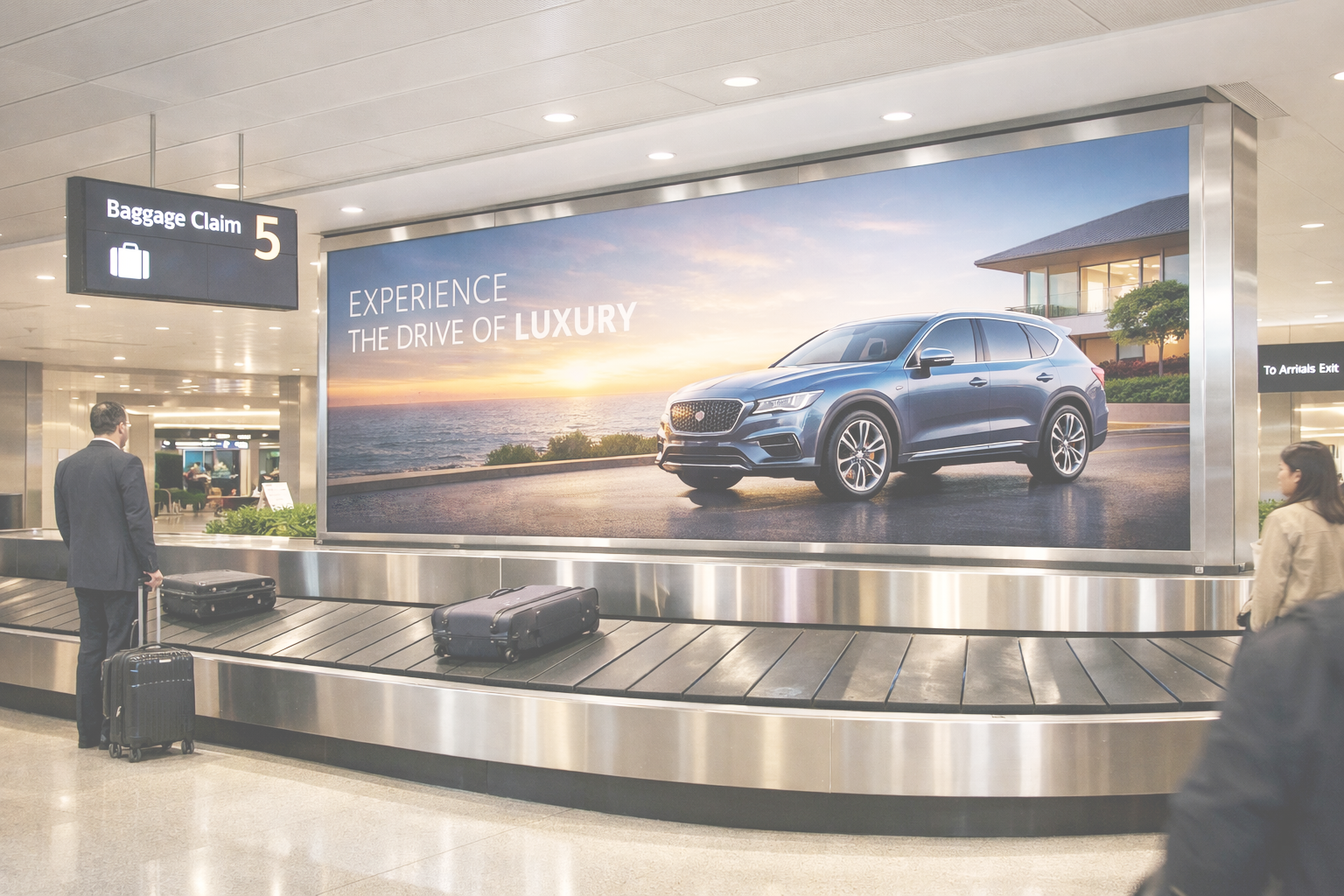
It’s Not Just Where You Advertise - It’s How Fast You Execute
We combine local insight with fast rollout to deliver results for you, now.
Talk to an ExpertAudience and Cultural Intelligence
Top 2 Languages
- Japanese: The language of every domestic passenger and the primary communication preference of the Japanese corporate executive, HNWI traveller, and Japanese consumer at Haneda; Japanese-language creative at Haneda is not optional — it is a fundamental requirement for reaching the airport's dominant audience, and the quality standards of Japanese consumers mean that weak or generic Japanese creative will actively harm brand perception; effective Japanese-language advertising must be authored with native cultural fluency, not translated from English concepts
- English: The international business language used by Japan's multinational executives, the communication medium of the 36.9 million inbound international visitors arriving through Haneda, and the primary creative language for the growing community of Chinese HNWI Japanese residents who use English as a business lingua franca; bilingual Japanese-English creative captures the full commercial audience at Haneda across domestic and international segments
Major Traveller Nationalities
Japan's record 36.9 million inbound visitors in 2024 were led by South Korea (8.82 million, approximately 24%), China (6.98 million, 18%), and Taiwan (6.04 million, 15%) — with China's recovery nearly doubling 2023 volumes and surpassing pre-pandemic levels by 6%. Haneda's 22% share of Japan's international passenger volume gives it a proportional slice of this extraordinary inbound surge, concentrated particularly on high-value markets like the US (fourth-largest inbound market with strong growth), Australia, UK, France, and Singapore. The Chinese inbound traveller is commercially significant not only for volume — spending ¥1.73 trillion in total, 21.3% of all inbound tourist spending — but for brand appetite: Chinese HNWI and affluent visitors to Japan are among the most active luxury duty-free purchasers in Asian aviation, with Japanese cosmetics, precision crafts, electronics, and designer goods accounting for a large share of their shopping basket.
Religion — Advertiser Intelligence
Japan's religious profile is not a primary commercial constraint in the way it is in Gulf markets, but it carries specific cultural implications for advertising. Shinto and Buddhist traditions — each claimed by approximately 70% of Japanese people, often simultaneously — shape the cultural calendar and consumer behaviour in commercially relevant ways. New Year (Oshōgatsu, January 1–3) is the most sacred time in the Japanese calendar — a period of family homecoming, gift exchange (otoshidama), and the first temple visit (hatsumode); New Year advertising should reflect the renewal and gratitude themes of the season rather than Western Christmas consumer energy. Obon in August is a Buddhist ancestral memorial season when families return home — the travel patterns of Obon are commercially relevant but the advertising tone should respect the reflective character of the holiday.
Behavioral Insight
The Japanese consumer is the most demanding audience in global advertising. Japan's culture of monozukuri — the craft of making things with excellence — has produced a consumer who evaluates every brand touchpoint against an implicit standard of quality that brands from less demanding markets rarely anticipate. At Haneda, which itself embodies Japanese precision in its operational quality, brands that demonstrate mastery, craftsmanship, and long-term thinking consistently outperform brands whose advertising relies on status signalling or aspirational lifestyle images alone. The inbound international visitor at Haneda is in a mirror-opposite state: they have come to Japan precisely because they want to experience the country that produces this standard of quality, and their brand receptivity is extraordinarily high — they are genuinely curious, culturally open, and well-resourced. Masscom builds Haneda campaigns that understand this asymmetry — depth for the domestic audience, discovery for the inbound — and calibrates creative to both simultaneously.
Outbound Wealth and Investment Intelligence
Tokyo's 298,300 millionaires represent Asia's largest single-city HNWI population, with 6,445 ultra-high-net-worth individuals holding at least $30 million — making Tokyo fourth globally in UHNWI concentration after New York, Hong Kong, and Los Angeles. Outbound capital flows from Tokyo follow a pattern shaped by Japan's corporate culture rather than pure wealth management diversification: the Japanese executive's international investments are typically driven by corporate international expansion rather than personal wealth migration, and the Japanese HNWI's real estate investments abroad are concentrated in markets perceived as culturally compatible and quality-oriented. Hawaii is the most consistently popular international residential real estate market for Japanese buyers. London and Paris attract Japanese HNWI buyers for luxury apartments and investment property. Australia — particularly Sydney and Melbourne — is receiving growing investment from Tokyo's professional community, driven partly by the Singapore-based family offices whose principals have Japanese corporate relationships.
Outbound Real Estate Investment
Japanese HNWI outbound real estate investment follows different patterns from other Asian HNWI communities, primarily because Japan's own property market — particularly central Tokyo — remains a high-quality and appreciating asset class that absorbs substantial domestic wealth. International investments concentrate on Hawaii (Waikiki and Maui luxury property are traditional destinations for Japanese HNWI families), Australia (Sydney and Melbourne for education corridors and lifestyle investment), and London (Mayfair and Knightsbridge properties for Japan's most globally embedded corporate families). Singapore has become a growing destination for Japanese investment following the Japanese yen's weakness, with Singapore offering stability and capital gains opportunities for outward-looking Tokyo professionals. Japanese institutional investors are also active in global commercial real estate through J-REITs with international holdings.
Outbound Education Investment
Japan's affluent families invest in elite domestic education through competitive entrance examination systems, but the most internationally oriented families send children to British boarding schools (Winchester, Eton, Harrow, and Wycombe Abbey all have significant Japanese populations), US east coast universities, and Australian universities in Sydney and Melbourne. The international school circuit in Tokyo — with British School in Tokyo, Deutsche Schule Tokyo, the American School in Japan (ASIJ), and many others — generates a regular flow of international school staff, visiting parents, and student exchange travel through Haneda that constitutes a productive education sector advertising audience. For inbound education, Japan's JASSO scholarship programme brings thousands of international students through Haneda annually.
Outbound Wealth Migration and Residency
Japan's recent appearance on Henley & Partners' top-10 HNWI immigration destinations in 2024 — with 400 net millionaire inflows driven primarily by Chinese HNWIs choosing Tokyo as a safe haven — signals a new phase in the city's wealth positioning. Japan's Golden Visa programme and the Premium Investor Visa are attracting the first wave of Chinese wealthy migrants, and the quality of Tokyo's schools, healthcare, and public safety infrastructure makes it one of the most compelling residential destinations in Asia for ultra-HNWIs from China seeking geopolitical diversification. Conversely, outbound Japanese HNWI migration to Singapore, Australia, and the UAE has historically been modest, as the quality of life in Tokyo remains among the world's highest. The residency advisory and immigration consultancy category is commercially relevant at Haneda primarily for the inbound Chinese HNWI audience.
Strategic Implication for Advertisers
Japan's distinctive consumer culture — the most quality-conscious, brand-loyal, and craft-aware in the world — means that the advertisers who perform best at Haneda are those whose product quality can withstand Japanese scrutiny. A Swiss watchmaker advertising at Haneda is competing against the Japanese consumer's detailed knowledge of horology. A French luxury goods brand is speaking to an audience that has visited its Paris flagship. A Scottish whisky brand is addressing consumers whose knowledge of barrel ageing and grain origin rivals the distillery's own masters. This audience is not impressed by aspiration — it is impressed by expertise. Masscom builds Haneda campaigns that lead with depth, craftsmanship, and institutional authority, and translates that into commercial outcomes for the brands prepared to meet Japan's standard.
Airport Infrastructure and Premium Indicators
Terminals
Haneda operates three passenger terminals. Terminal 1 (nicknamed "Big Bird") is the primary base for Japan Airlines and associated carriers handling domestic routes, with observation decks and the JAL Sakura Lounge. Terminal 2 serves All Nippon Airways' domestic operations and, since March 2024, has hosted an expanded international section with 26 international departing flights daily including routes to New York, London, Paris, Bangkok, Singapore, and Sydney — reducing the transfer burden for domestic-to-international connections to just 55 minutes minimum. Terminal 3, the dedicated international terminal, is the commercial heart of Haneda's international operation, housing the Edo Koji area (a 4th-floor Edo-period streetscape with Japanese restaurants, craft shops, and cultural retail), multiple airline lounges including JAL Sakura, ANA, Delta, Cathay Pacific, and TIAT, extensive duty-free retail, and the Villa Fontaine Premier and Royal Park hotels directly connected to the terminal. A fourth satellite terminal is expanding capacity for international operations.
Premium Indicators
- Five-Star Airport, 12 consecutive years — Skytrax: No airport in the world has maintained Skytrax's five-star rating with the same consistency as Haneda; this record signals an operational standard that defines the premium context every advertiser at the airport inherits by association; advertising at a five-star airport is not merely placement — it is brand association with a quality standard that Japan has spent decades perfecting
- Skytrax rank 3rd globally in 2025: Behind only Singapore Changi and Hamad International, Haneda's 2025 global ranking confirms it operates at the apex of the world's airport experience; the premium ambient context this creates for advertising is commercially significant
- Edo Koji cultural streetscape (Terminal 3): The 4th-floor Edo-period market in Terminal 3 — modelling the streets of Edo-era Tokyo, featuring the Nihonbashi bridge replica, traditional Japanese restaurants, craft shops, and cultural retail — is one of the most distinctive and commercially effective airport retail environments in Asia; brands present in or adjacent to the Edo Koji environment benefit from the deepest cultural contextualisation available at any airport
- Haneda Airport Garden (connected to Terminal 3): A multi-purpose development directly connected to Terminal 3 housing the Villa Fontaine Premier luxury hotel, a spa, a bus terminal, restaurants, and entertainment facilities; this integrated premium hospitality environment creates an extended dwell zone that expands the airport's commercial canvas beyond the terminal itself
- ANA 5-Star rating (11 consecutive years): ANA's consistent Skytrax 5-Star airline recognition — maintained for 11 years — confirms that the in-air premium product delivered through Haneda matches the airport's own quality standard; the business and first class passengers of ANA represent one of the most consistently high-value advertising audiences in Asian aviation
Forward-Looking Signal
Haneda's capacity trajectory is driven by Japan's government target of 60 million annual international visitors by 2030 — more than 60% above the 2024 record of 36.9 million. Achieving this target requires sustained expansion of Haneda's international slot allocation, route network, and terminal infrastructure. ANA has already announced international operations at 108% of FY2024 levels for FY2025, with three new European routes from Haneda — Milan, Stockholm, and Istanbul — launched in FY2024. American Airlines resumed JFK-Haneda services in 2024. The ongoing development of Haneda Airport Garden, the Terminal 4 satellite expansion, and Japan's policy-driven aviation liberalisation agenda all signal that Haneda's international profile will grow substantially through the decade. Masscom advises brands to establish advertising presence at Haneda now — ahead of the 2030 inbound tourism target's full realisation, and before increasing slot utilisation drives premium inventory scarcity and rate appreciation.
Airline and Route Intelligence
Top Airlines
ANA/All Nippon Airways (5-Star airline, Haneda hub), Japan Airlines (5-Star airline, Haneda hub), Peach Aviation (ANA LCC subsidiary), Air Japan (ANA international LCC), Skymark, Air Do, Solaseed Air, StarFlyer; international carriers: Delta Air Lines, American Airlines (JFK-HND resumed 2024), British Airways, Air France, Lufthansa, KLM, Finnair, Air Canada, Cathay Pacific, Korean Air, Asiana, Air China, Singapore Airlines, Thai Airways, Malaysia Airlines, Qantas, Air New Zealand, Virgin Australia, Philippine Airlines, Air India
Key International Routes
- London Heathrow (ANA daily, British Airways)
- Paris Charles de Gaulle (ANA daily, Air France)
- Frankfurt (ANA daily, Lufthansa)
- Munich (ANA resumed 2024)
- Milan (ANA — new route launched FY2024)
- Stockholm (ANA — new route launched FY2024)
- Istanbul (ANA — new route launched FY2024)
- New York JFK (ANA, Delta, American Airlines — AA resumed 2024)
- Los Angeles (ANA, Delta)
- San Francisco, Seattle, Chicago, Washington D.C., Houston, Vancouver (ANA from T3)
- Sydney and Melbourne (ANA, Qantas)
- Singapore (ANA)
- Bangkok (ANA, Thai Airways)
- Hong Kong (Cathay Pacific)
- Seoul Gimpo and Incheon (ANA, JAL, Korean Air, Asiana)
- Shanghai Hongqiao and Pudong, Beijing (ANA, JAL, Air China, China Eastern)
- Taipei Songshan (ANA, JAL, EVA Air, China Airlines)
Domestic Connectivity
Haneda's domestic network — operated primarily by ANA (Terminal 2) and JAL (Terminal 1) — connects Tokyo to every major Japanese city including Sapporo, Osaka (Itami), Nagoya, Fukuoka, Naha (Okinawa), Hiroshima, Nagasaki, and regional airports throughout the archipelago. The domestic network is commercially relevant for advertisers because it extends Haneda's reach far beyond the Greater Tokyo Area: a senior executive from Osaka or Fukuoka connecting to an international departure through Haneda is accessing the international terminal's full advertising environment during their domestic-to-international transfer, making Haneda the effective national advertising platform for Japan's entire corporate traveller community.
Wealth Corridor Signal
ANA's and JAL's combined long-haul route network from Haneda maps the geography of Japan's most commercially important international business relationships. The London route carries Japan's most globally embedded corporate executives — the heads of Toyota's Europe operations, JAL's bilateral trading relationship managers, Mitsubishi UFJ's London treasury team — who travel with the frequency and commercial authority of the most valuable B2B advertising targets in Asian aviation. The New York routes carry the institutional investment relationships between Tokyo's asset managers and Wall Street, and the M&A advisory relationships that drive Japan's outbound foreign direct investment. The Sydney and Paris routes carry the HNWI leisure and cultural travel of Tokyo's most discerning premium consumers. Every route from Haneda is a commercial intelligence map of Japan's international wealth and business relationships.
Media Environment at the Airport
- Terminal 3's combination of Edo Koji cultural retail, internationally recognised airline lounges, extensive duty-free, and the connected Haneda Airport Garden creates one of the most commercially layered advertising environments in Asian aviation — a terminal where cultural authenticity, premium consumer behaviour, and exceptional dwell time converge
- The Terminal 2 international expansion (26 international departures daily from March 2024) has created a new advertising zone in what was previously a purely domestic terminal, giving campaigns access to ANA's premium international audience before they reach Terminal 3 — a media segmentation opportunity unique to Haneda
- Japanese consumer culture's extreme attentiveness to environmental quality means that the precision and cultural appropriateness of advertising creative at Haneda carries higher commercial leverage than at most airports globally; a well-crafted Japanese-language campaign at Haneda will outperform generic English creative by a disproportionate margin
- Masscom Global provides end-to-end campaign execution at Haneda — with Japanese-language creative advisory, cultural compliance review, terminal-specific placement strategy, seasonal campaign timing, and performance reporting that connects media investment to commercial outcomes
Strategic Advertising Fit
Best Fit
- Luxury goods and premium Japanese retail: The most natural advertising category at Haneda, reaching both the Japanese HNWI consumer whose luxury brand sophistication is among the deepest in the world and the inbound international tourist arriving with specific intent to purchase Japanese crafts, cosmetics, and premium goods; duty-free, Japanese cosmetics (Shiseido, SK-II), premium whisky (Yamazaki, Hakushu, Nikka), traditional crafts, and high-end fashion are all exceptionally well-aligned with the Haneda audience
- Premium automotive: Japan's car culture and brand loyalty — particularly for domestic brands and German luxury — make Haneda an exceptional environment for luxury automotive advertising; Lexus, Toyota's flagship and Japan's primary HNWI vehicle brand, alongside Mercedes-Benz, BMW, and Porsche, reach both the outbound Japanese executive and the inbound international visitor who recognises Japanese automotive excellence
- International real estate — inbound and outbound: The inbound Chinese HNWI now choosing Japan as a relocation destination creates a new real estate advertising opportunity that did not exist before 2023; simultaneously, the outbound Japanese HNWI's Hawaii, London, and Australian property interests create sustained demand for international real estate advertising; Japan-focused developers, Tokyo luxury residential developers, and international property platforms all have commercially productive Haneda audiences
- Premium technology and electronics: Japan's technology ecosystem — from Sony and Fujitsu to SoftBank and Rakuten — generates a senior technology executive audience that is among the most analytically sophisticated in Asia; enterprise software, cloud platforms, and precision manufacturing technology brands will find a technically informed B2B audience that evaluates on capability rather than marketing alone
- Luxury hospitality and destination travel: The inbound international visitor arriving through Haneda is choosing Japan for its extraordinary hospitality culture; premium ryokan groups, luxury hotel brands, super-premium culinary tourism, and ultra-luxury destination experiences (Aman properties, private sake brewery tours, bespoke kimono fittings) are all highly aligned with the airport's inbound premium leisure audience
- Premium healthcare and wellness: Japan's healthcare quality and longevity culture have made medical tourism from China, South Korea, and Southeast Asia a growing inbound sector; simultaneously, Japan's own ageing HNWI population generates demand for premium health screening, longevity medicine, and premium wellness brands; Haneda is the gateway for both flows
- Financial services and investment platforms: Japan's JPY 2,141 trillion in household assets, the government's NISA programme encouraging retail investment, and the senior institutional investors of Tokyo's financial district all create a productive financial services advertising audience; private banking, asset management platforms, and retirement planning services will find a financially engaged and asset-rich audience at Haneda
Brand Alignment at a Glance
| Category | Fit |
|---|---|
| Luxury goods and premium Japanese retail | Exceptional |
| Premium automotive | Exceptional |
| Luxury hospitality and experiential travel | Exceptional |
| Premium technology and electronics | Strong |
| International real estate (inbound and outbound) | Strong |
| Premium healthcare and wellness | Strong |
| Financial services and investment platforms | Strong |
| Mass-market consumer goods | Poor fit |
Who Should Not Advertise Here
- Brands without Japanese cultural intelligence: Japan's consumer standard is not aspirational — it is institutional; brands whose creative fails to meet the quality expectations embedded in Japanese cultural norms will underperform relative to their investment at Haneda; generic Western luxury creative translated mechanically into Japanese will often actively damage brand perception
- Mass-market FMCG and value retail: Haneda's premium ambient standard and its HNWI-concentrated domestic audience make mass-market consumer goods advertising commercially inefficient; the investment required for quality placements at Haneda cannot be recovered by mass-market campaign economics
- Brands with no Japan market relationship: Japanese consumers' brand loyalty and deep product knowledge mean that first-exposure advertising at Haneda without supporting retail and service infrastructure in Japan is unlikely to convert; Haneda works best for brands that already have a Japan presence and are deepening their relationship with an audience that already knows them
Event and Seasonality Analysis
- Event Strength: High (cherry blossom season, Golden Week, World Athletics 2025, Osaka Expo 2025, Obon, year-end)
- Seasonality Strength: Very High (four clearly defined peak windows with structural audience shifts between windows)
- Traffic Pattern: Multi-Peak (cherry blossom, Golden Week, summer/Obon, year-end) with Very Strong Year-Round Domestic Corporate and HNWI Base
Strategic Implication
Haneda's commercial calendar is Japan's cultural calendar in miniature — the travel patterns of 85.7 million annual passengers follow the rhythms of a society that structures its year around festivals, seasons, and communal rituals with remarkable consistency. Cherry blossom season is the year's highest-premium inbound window. Golden Week is the year's most concentrated domestic outbound window. Obon is a domestic travel surge with a reflective cultural character. The year-end is a premium family outbound travel and gifting window. Between these peaks, the year-round domestic corporate and HNWI audience creates a structural floor that justifies sustained campaign investment for B2B and premium consumer categories whose audience flows are independent of the leisure calendar. Masscom structures Haneda campaigns to harvest each seasonal peak with appropriate creative while maintaining continuous brand presence for the year-round premium audience that the airport's 234,000 daily passengers reliably delivers.
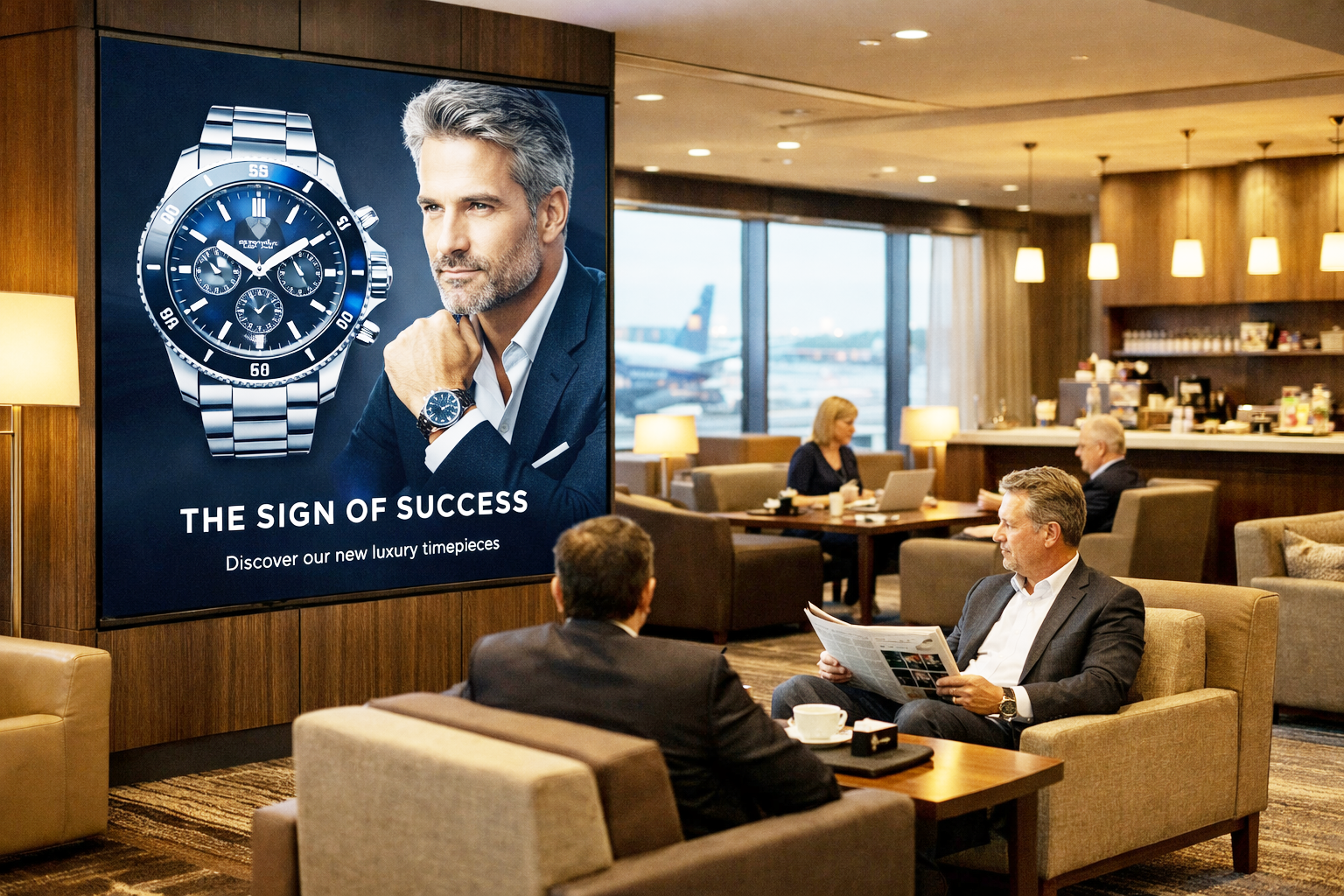
Poor Placement and Delays Affect Airport Campaigns
We help you move faster, access better inventory, and get it right now.
Talk to an ExpertFinal Strategic Verdict
Tokyo Haneda Airport is the gateway to the most quality-conscious consumer culture in the world, operating in the world's third-largest metropolitan economy, serving an all-time record inbound tourism surge that made Japan's visitor spending the second-largest export sector in the national economy in 2024. With 85.7 million passengers, Asia's largest single-city millionaire population at 298,300, and a five-star airport standard maintained for 12 consecutive years, Haneda occupies a unique position in global aviation: it is simultaneously the primary hub for Japan's most commercially valuable domestic corporate and HNWI audience, and the primary arrival point for the 36.9 million international visitors who chose Japan as their destination in 2024 for its unmatched quality, culture, and craft. The brands that understand Japan's commercial culture — that lead with depth rather than aspiration, with mastery rather than status — will find Haneda one of the most commercially potent airport advertising environments in Asia. The brands that apply generic global luxury templates to Japan's most discerning audience will waste their investment. Masscom Global understands the difference, and provides the cultural intelligence, placement precision, and Japanese-market expertise to convert Haneda's extraordinary audience into measurable commercial results for brands prepared to meet Japan's standard.
About Masscom Global
Masscom Global is a premium international airport advertising and media buying agency operating across 140 countries. With deep expertise in airport OOH, premium publications, and high-net-worth audience targeting, Masscom helps brands reach the world's most valuable travellers at the moments that matter most. For advertising packages, media rates, and campaign planning at Tokyo Haneda Airport and airports across the globe, contact Masscom Global today.
Frequently Asked Questions
How much does airport advertising cost at Tokyo Haneda Airport?
Advertising costs at Haneda vary by terminal, placement zone, format, campaign duration, and seasonal demand. Terminal 3's international environment commands premium pricing for its globally mobile audience. Cherry blossom season (March to April) and Golden Week (late April to early May) reflect peak demand premiums consistent with the exceptional audience concentration these windows deliver. The Terminal 2 international section's continued expansion is creating new premium inventory. Masscom Global provides current rate intelligence and placement recommendations tailored to campaign objectives. Contact Masscom for a tailored rate card and campaign proposal.
Who are the passengers at Tokyo Haneda Airport?
Haneda's passenger profile divides into two commercially complementary tiers. The domestic tier — Japan's corporate executives, HNWI professionals, and the full spectrum of Japanese consumers — represents one of the most quality-conscious and brand-loyal audiences in Asian aviation, drawn from Tokyo's 298,300 millionaires and the Greater Tokyo Area's $2.2 trillion economy. The international tier reflects Japan's record 36.9 million inbound visitor year in 2024 — premium leisure tourists from the US, Europe, Australia, China, Korea, and Taiwan arriving with high per-person spending intent and extraordinary cultural curiosity.
Is Tokyo Haneda Airport good for luxury brand advertising?
Haneda is one of the most commercially productive airports in the world for luxury brand advertising, with important cultural requirements. Japan's consumer culture — the most quality-discerning in Asia — means that luxury advertising performs best when it demonstrates genuine product mastery rather than aspirational lifestyle imagery. The cherry blossom season window, the Golden Week outbound leisure peak, and the year-round premium inbound tourism audience all deliver high-concentration luxury brand relevance, provided the creative meets Japan's implicit quality standard.
What is the best airport in Japan to reach the HNWI and corporate audience?
Haneda is the unambiguous choice. Its proximity to central Tokyo, its preference among Japan's most senior corporate executives, and its direct connections to London, New York, Paris, and Singapore make it the primary channel for reaching Tokyo's 298,300 millionaires, the executive leadership of Japan's most globally significant corporations, and the premium international business audience that uses Tokyo as a regional hub. Narita handles more long-haul volume in absolute terms but lacks Haneda's proximity advantage and premium business travel concentration.
What is the best time to advertise at Tokyo Haneda Airport?
Cherry blossom season (late March to April) is the year's highest-premium inbound window and the most culturally charged advertising environment at the airport. Golden Week (late April to early May) is the most concentrated domestic outbound window. The summer (July to August) is the largest volume leisure period. Year-end (late December to early January) captures the premium family outbound and gifting window. Year-round B2B campaigns are viable given the structural consistency of Haneda's corporate and HNWI travel base.
Can international real estate developers advertise at Tokyo Haneda Airport?
Haneda is increasingly productive for international real estate developers for two distinct reasons. The growing Chinese HNWI community relocating to Tokyo creates an inbound real estate demand that did not exist before 2023, and developers of Tokyo luxury residential property can reach this new audience directly through Haneda's Terminal 3 environment. Simultaneously, the outbound Japanese HNWI's established interest in Hawaii, London, Sydney, and Melbourne properties creates a persistent demand for international property advertising among Tokyo's departing premium travellers.
Which brands should not advertise at Tokyo Haneda Airport?
Brands without genuine Japanese cultural intelligence, mass-market FMCG brands, and any advertiser whose creative relies on generic Western luxury conventions without Japan-specific calibration should approach Haneda with caution. Japan's consumer culture actively penalises advertising that fails to meet its quality standards. The investment in Haneda premium placements requires creative that can withstand the scrutiny of the most quality-conscious consumer audience in the world. Masscom advises on cultural compliance and brand-market fit before recommending Haneda campaigns.
How does Masscom Global help brands advertise at Tokyo Haneda Airport?
Masscom Global provides complete campaign capability at Haneda: Japanese-language creative advisory and cultural compliance review; audience intelligence on both the domestic Japanese HNWI and corporate segments and the inbound international tourist profile; terminal-specific placement strategy across Terminal 3 (international) and the expanding Terminal 2 international section; seasonal campaign timing calibrated to cherry blossom, Golden Week, Obon, and year-end travel patterns; and performance reporting connecting media investment to commercial outcomes. For international brands without deep Japan market experience, Masscom removes complexity and ensures campaigns perform at the standard Japan's audience demands. Contact Masscom today to discuss a campaign at Tokyo Haneda Airport or across its global network spanning 140 countries.