

Airport at a Glance
| Field | Detail |
|---|---|
| Airport | Hong Kong International Airport |
| IATA Code | HKG |
| Country | Hong Kong SAR, China |
| City | Hong Kong (Chek Lap Kok) |
| Annual Passengers | 53.1 million (2024), 54.9 million (FY2024/25) |
| Primary Audience | Hong Kong UHNWIs and family office principals, mainland China HNWIs accessing international markets, global transit business travellers, premium inbound leisure and corporate visitors |
| Peak Advertising Season | Chinese New Year (January/February), summer (July to August), October to January |
| Audience Tier | Tier 1 |
| Best Fit Categories | Private banking and wealth management, luxury goods and watches, international real estate, premium automotive, luxury travel and hospitality |
Hong Kong International Airport stands apart in the Asia-Pacific aviation landscape because of a combination of advantages that no competitor replicates. It is the world's busiest international cargo airport — a title it has held for 14 of the past 15 years — handling 4.9 million tonnes of freight in 2024, equivalent to 45% of Hong Kong's total external trade value. It is among Asia's foremost international passenger hubs, handling 53.1 million passengers in 2024 with 34.3% year-on-year growth, connecting over 200 destinations across 140 airlines. And it is the financial super-connector of the Greater Bay Area — an 87-million-person economic zone with a combined GDP of RMB 14.5 trillion ($2.1 trillion) that has produced Hong Kong's role as the primary international gateway for one of the world's most dynamic wealth creation ecosystems.
The airport's commercial premium is defined by a layering of three distinct audience tiers. The domestic Hong Kong audience includes over 12,500 ultra-high-net-worth individuals — those with at least $10 million in net wealth — and a wealth management market where assets under management reached HK$35 trillion in 2024, up 13% year-on-year. The mainland China channel produces the world's most commercially valuable cross-border wealth audience: over 470,000 HNWIs from mainland China access international financial markets via Hong Kong, and the city's Capital Investment Entrant Scheme attracted 339 applications in its first year from investors each committing at least HK$30 million. The international transit tier — Cathay Pacific's global network combined with oneworld connections — routes long-haul business and premium leisure travellers across the world's most commercially productive transit corridor. No single airport in Asia delivers these three tiers in one terminal at HKIA's scale.
Advertising Value Snapshot
- Passenger scale: 53.1 million in 2024, up 34.3% year-on-year; 54.9 million in FY2024/25, up 21.6%; the Three-Runway System commissioned November 2024 has boosted annual capacity by 50%, with the airport targeting 120 million passengers by 2035
- Traveller type: Hong Kong UHNWI and family office principals, mainland Chinese HNWIs accessing international markets, global long-haul transit passengers via Cathay Pacific, inbound premium leisure and business visitors to Hong Kong
- Airport classification: Tier 1 — the world's busiest cargo airport, ranked ninth globally by international passenger traffic in 2024, and the primary international aviation hub for the Greater Bay Area's 87 million residents and $2.1 trillion economy
- Commercial positioning: Hong Kong ranked third in the Global Financial Centres Index in 2024, first globally in economic freedom, and third most competitive economy globally by IMD; assets under management in the city's wealth management sector reached HK$35 trillion in 2024
- Wealth corridor signal: HKG anchors the Hong Kong-London, Hong Kong-New York, Hong Kong-Sydney, and Hong Kong-Singapore wealth management and capital deployment corridors — the routes that China's wealthiest individuals use to access the world's most liquid financial markets
- Advertising opportunity: Masscom Global provides brands with the intelligence and access to reach Hong Kong's extraordinary wealth management and international business audience at Asia's most important financial super-connector airport — with placement precision across Terminal 1's premium environment and the Three-Runway System's expanded capacity
Airport Advertising is Complex to Get Right
We help you execute faster, with proven results and local insight most planners lack starting now.
Talk to an ExpertCatchment Area and Economic Drivers
Top 10 Cities within 150 km — Marketer Intelligence
- Hong Kong (Central, Admiralty and Peak): Asia's third-largest financial centre, home to the Hong Kong Stock Exchange, over 12,500 UHNWIs, 46 private banks, and HK$35 trillion in assets under management; the executives, fund managers, family office principals, and senior bankers working in Central and Admiralty represent one of the most concentrated premium B2B and HNWI audiences in Asia-Pacific aviation
- Shenzhen: Immediately across the border, Shenzhen is China's technology capital, headquarters of Huawei, Tencent, DJI, and BYD, with a city GDP of approximately $489 billion in 2023 making it the GBA's largest single mainland economy; Shenzhen's technology billionaires and senior corporate executives access international capital markets and international travel through HKIA, making them among the highest-value B2B and UHNWI audiences at this airport
- Guangzhou: The GBA's second mainland hub, with a diverse economy spanning trade, manufacturing, automotive (GAC Group), and financial services; Guangzhou's merchant class and corporate leadership travel through HKIA for international business, luxury goods acquisition, and international education, representing a high-frequency premium consumer audience
- Dongguan: The manufacturing heartland of the GBA with a population over 10 million and a dense ecosystem of electronics, furniture, and consumer goods manufacturers; senior owners and executives of Dongguan's export-oriented manufacturing companies access international banking, shipping, and supply chain services through HKIA, producing a productive B2B trading and finance audience
- Foshan: A major manufacturing and ceramics city with a rapidly growing financial sector; Foshan's business owner class — many of them first-generation entrepreneurs who have built businesses on GBA export growth — are active wealth management clients and international real estate investors who pass through HKIA regularly
- Macau: The world's most productive gaming economy by revenue density, with a per capita GDP among the highest in the GBA; the casino executives, VIP gaming operators, and luxury hospitality professionals of Macau transit through HKIA for regional and international travel, creating a premium leisure and hospitality industry audience
- Zhuhai: Connected to HKIA via the Hong Kong-Zhuhai-Macau Bridge (36 km), Zhuhai is a growing technology and biomedical city and the direct beneficiary of HKIA's acquisition of 35% of Zhuhai Airport's shares; the AAHK-Zhuhai partnership specifically opens HKIA's catchment to Zhuhai's professional and corporate population, expanding the airport's accessible audience in the western GBA corridor
- Huizhou: An industrial and petrochemical city in the eastern GBA that contributes manufacturing sector and energy industry business travel through HKIA; the senior executives of Huizhou's CNOOC-linked petrochemical operations represent a productive B2B advertiser audience for financial services and premium business products
- Zhongshan: A consumer goods and household appliance manufacturing city with a strong entrepreneurial SME culture; Zhongshan's business owner community travels regularly through HKIA for trade shows, banking, and supplier meetings, contributing a mid-market business travel audience
- Jiangmen: A historic Cantonese city with a large overseas diaspora community — the ancestral home of a significant proportion of the Chinese diaspora in North America, Australia, and Southeast Asia; Jiangmen residents travel through HKIA to visit family internationally, creating a diaspora remittance and property investment travel segment that is commercially relevant for international real estate and financial products
NRI and Diaspora Intelligence
Hong Kong's diaspora dynamic is commercially unique in Asia. The city is simultaneously a diaspora destination — attracting mainland Chinese wealth seeking international financial access — and a diaspora origin point, with a significant overseas Hong Kong and Cantonese community in the UK, Canada, Australia, and the US that maintains active financial, property, and family ties with the city. The BNO visa programme has catalysed a sustained movement of Hong Kong residents to the UK, creating a bidirectional property investment and family visit travel flow through HKIA that is commercially relevant for UK real estate, international schools, and financial services advertising. Mainland Chinese HNWI capital flows through Hong Kong as an offshore wealth management destination, with Hong Kong and mainland Chinese investors together accounting for approximately two-thirds of the city's private wealth and private banking assets under management.
Economic Importance
Hong Kong's economy is defined by its dual role as Asia's pre-eminent international financial centre and the GBA's international services gateway. The city ranks third globally in the Financial Centres Index, seventh globally in trading volume, and manages HK$35 trillion in wealth management assets — more than the GDP of most G20 nations. The GBA's combined $2.1 trillion economy in 2024 is comparable to Spain or Australia, with Hong Kong serving as the region's international financial, legal, and professional services hub. The 22 GBA companies in the 2024 Fortune Global 500 — including Tencent, Huawei, BYD, HSBC, and AIA — all rely on Hong Kong for international capital access, legal services, and talent recruitment. For advertisers, the practical implication is that HKIA's catchment generates a density of high-income professional, entrepreneurial, and institutional travellers that has no equivalent in the Asia-Pacific outside of Singapore, and which is uniquely positioned to channel mainland China's wealth through an internationally accessible financial gateway.
Business and Industrial Ecosystem
- Financial services and wealth management — Hong Kong CBD: Hong Kong's banking sector includes 46 private banks as of 2024, with J.P. Morgan, HSBC Private Banking, UBS, Goldman Sachs, Credit Suisse (now UBS), Citi Private Bank, Deutsche Bank, and Credit Agricole all maintaining substantial private banking operations; the senior professionals of these institutions, their HNWI clients, and the fund managers of Hong Kong's expanding family office sector are among the airport's most commercially valuable daily travellers
- Technology sector — Shenzhen and GBA: Tencent, Huawei, DJI, BYD, and the GBA's broader technology ecosystem produce a generation of technology billionaires and senior executives who access international capital, partnerships, and markets through HKIA; this audience is among the fastest-growing UHNWI travel segment in Asia and represents exceptional upside for premium automotive, wealth management, and luxury lifestyle advertising
- Cathay Pacific Group and aviation ecosystem: The Cathay Pacific Group — comprising Cathay Pacific, HK Express, and Cathay Cargo — is investing HK$100 billion over seven years in fleet expansion, lounge upgrades, and digital capability; its executives, operational staff, and the suppliers and partners of the world's busiest cargo hub ecosystem contribute a significant professional travel audience at HKIA
- DHL, FedEx, UPS and global logistics: HKIA's status as the world's busiest cargo airport has concentrated the Asia-Pacific regional hub operations of every major global logistics company on the airport island; DHL's Central Asia Hub — its largest infrastructure investment in the Asia-Pacific region — is at HKIA; the senior operations and commercial executives of these logistics networks represent a productive B2B professional services audience
Passenger Intent — Business Segment
HKIA's business traveller divides into three commercially distinct profiles. The first is the Hong Kong-based financial professional — the private banker at HSBC, the fund manager at a GBA-connected family office, the Cathay Pacific executive — who travels internationally on wealth management, client relationship, and business development objectives. The second is the mainland Chinese HNWI using Hong Kong as a financial transit point — accessing international markets, attending family office roadshows in London or New York, or reviewing offshore property portfolios in Sydney or Vancouver. The third is the international corporate executive connecting through Hong Kong on Cathay Pacific's long-haul network — the European asset manager visiting Singapore, the American technology executive heading to Shenzhen, the Australian miner connecting to Shanghai. All three tiers share the characteristic of high dwell time in a premium terminal and active receptivity to brands that match their commercial and lifestyle ambitions.
Strategic Insight
HKIA's role as the bridge between mainland China's wealth and the world's capital markets is its defining commercial attribute. Approximately 470,000 mainlanders hold wealth above $10 million, and Hong Kong is the primary portal through which that wealth accesses international investment. The airport's terminal environment is the physical space where that transition happens — where the mainland Chinese HNWI moves from the GBA into the international financial system. Brands positioned at HKIA that understand and serve this specific audience dynamic — private banking, wealth management, international real estate, luxury goods — will find a conversion environment with no parallel in Asia.
Tourism and Premium Travel Drivers
- Hong Kong city's luxury and lifestyle proposition: One of Asia's most internationally sophisticated cities, Hong Kong offers Michelin-starred restaurants, luxury retail on Canton Road and Causeway Bay, the International Finance Centre and Elements luxury malls, premier art and cultural venues, and a hotel portfolio anchored by the Peninsula, Mandarin Oriental, Four Seasons, and Rosewood; the inbound premium tourist arrives through HKIA with significant pre-committed luxury spend
- Art Basel Hong Kong: One of Asia's most commercially significant premium events, Art Basel Hong Kong annually draws ultra-HNWI art collectors, gallerists, and cultural investors from around the world; the March timing creates a concentrated ultra-luxury audience window at HKIA that is exceptionally productive for prestige brands and international real estate advertising
- Hong Kong Sevens (Rugby): One of Asia's most celebrated international sporting events, attracting a premium corporate hospitality audience from across the region; the Hong Kong Sevens creates a concentrated international executive audience at HKIA in March or April that is commercially relevant for premium lifestyle, financial services, and luxury brand advertising
- SKYTOPIA Airport City Development: AAHK's SKYTOPIA vision — unveiled in January 2025 — transforms the airport island into a world-class destination integrating entertainment, art creation and trading, yacht tourism, popular culture, and premium dining; the 11 Skies development incorporating 570,000 sq ft of wealth management, wellness, and luxury office space is already operational, creating a premium commercial ecosystem adjacent to the terminal that elevates the airport's brand association for every advertiser present
- AsiaWorld-Expo: Hong Kong's premier convention and exhibition centre, located directly on the airport island, draws major international trade shows, concerts, and corporate events that bring concentrated B2B and premium leisure audiences through HKIA's terminal environment
Passenger Intent — Tourism Segment
Inbound tourists at HKIA have pre-committed to premium expenditure across luxury retail, fine dining, premium accommodation, and cultural experiences. Hong Kong's compact geography means that the airport is the single entry point for all international visitors — there are no alternative regional airports serving the premium inbound market. Art Basel collectors have budgeted for significant art acquisition; corporate hospitality guests at the Sevens have entertainment allowances their offices are funding; the luxury leisure tourist from Singapore or Tokyo has reserved a table at a Michelin three-star restaurant. The airport's terminal environment intercepts these committed spenders at the highest-attention moment in their visit, when they have arrived with spending intent fully activated.
Travel Patterns and Seasonality
Peak seasons:
- Chinese New Year (January to February): HKIA's most significant traffic peak, driven by the global Chinese diaspora's home visit travel, luxury gifting spend, and Hong Kong residents' international holiday travel; this window delivers the year's highest Chinese consumer spending intent and the strongest gifting category advertising performance
- Summer (July to August): The year's highest passenger volume period, with peak days exceeding 170,000 passengers in 2024; outbound Hong Kong family leisure travel to Europe, Japan, Australia, and the Americas, combined with inbound tourism from mainland China during summer school holidays, creates a sustained premium leisure audience
- October to January (autumn and winter events): Art Basel Hong Kong preparation season, Hong Kong Rugby Sevens, the Christmas and New Year travel peak, and the year's highest cargo throughput season create a sustained commercial advertising environment
- Year-round cargo traffic: HKIA's cargo operations — 4.9 million tonnes in 2024 — operate continuously with no seasonal trough; the logistics and supply chain executive audience at the airport is a year-round advertising opportunity for B2B brands
Event-Driven Movement
- Art Basel Hong Kong (March): One of the world's premier art fairs in one of Asia's most commercially important art markets; the ultra-HNWI collectors, gallerists, and art advisors arriving through HKIA for this event represent the highest concentration of UHNWI audience at the airport in any single week of the year
- Hong Kong International Rugby Sevens (March to April): A premiere corporate hospitality event attended by senior executives from across the region's financial services, legal, and business sectors; the premium corporate audience flying into HKIA for the Sevens is exceptionally receptive to luxury lifestyle, premium financial services, and prestige brand advertising
- Chinese New Year (January to February): The most culturally significant travel event in Asia, generating HKIA's highest passenger peaks and the year's most intense luxury gifting advertising environment; the Chinese consumer's pre-holiday spending intent is uniquely activated in this window
- Hong Kong Fashion Week and luxury retail events (January and July): Hong Kong's biannual Fashion Week attracts luxury brand buyers, designers, and retail executives through HKIA; combined with the city's permanent luxury retail ecosystem, this creates a sustained fashion and lifestyle brand advertising relevance at the airport
- HKIA cargo peak season (October to December): The global e-commerce and Christmas logistics rush concentrates the world's cargo operations through HKIA; the logistics executives and global supply chain professionals flowing through the airport in this window represent an exceptional B2B technology and professional services advertising audience
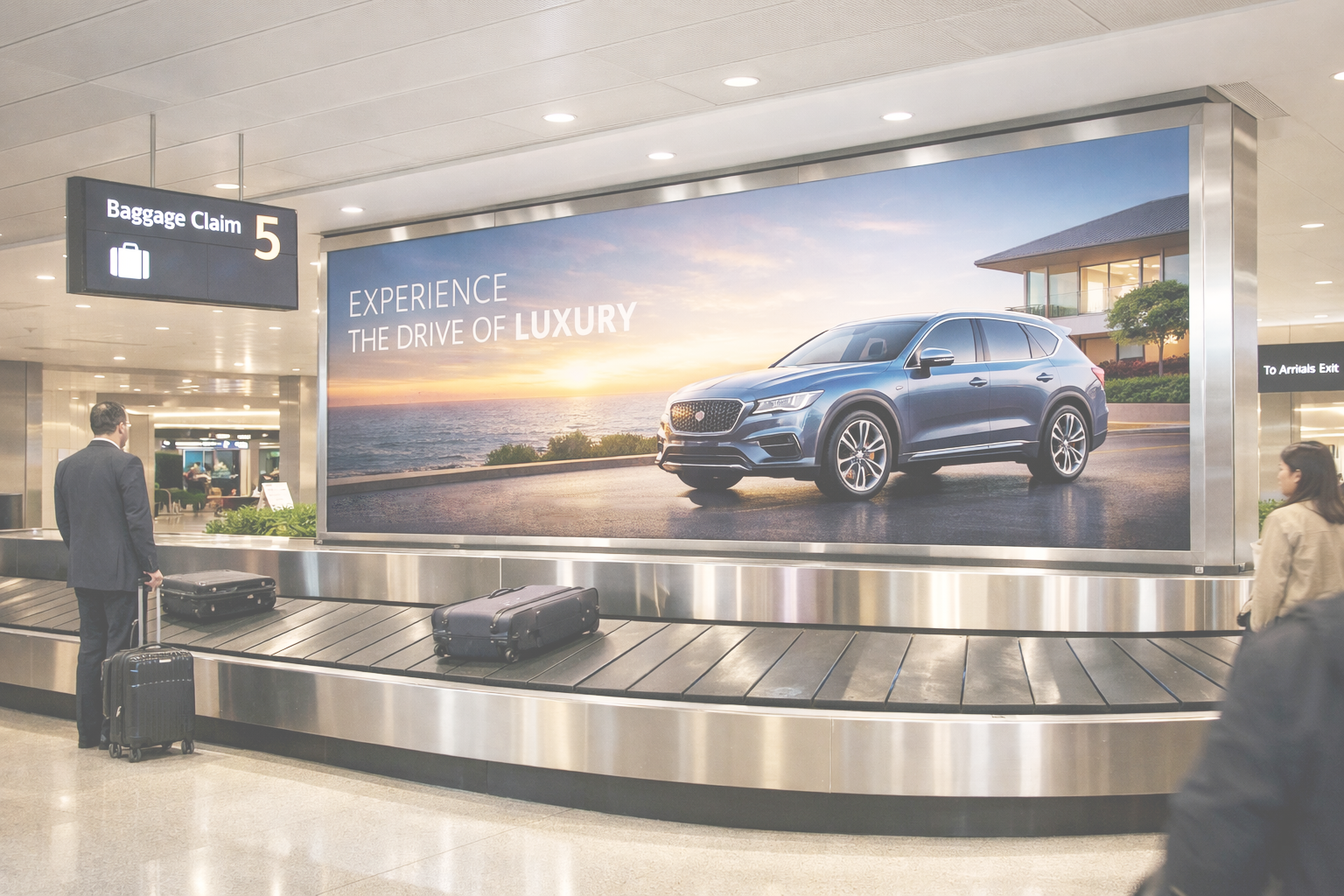
It’s Not Just Where You Advertise - It’s How Fast You Execute
We combine local insight with fast rollout to deliver results for you, now.
Talk to an ExpertAudience and Cultural Intelligence
Top 2 Languages
- Cantonese: The native language of Hong Kong's local population, the language of the Cantonese diaspora community across the UK, Canada, Australia, and Southeast Asia, and one of the primary communication languages of the GBA's Guangdong Province; Cantonese creative at HKIA signals cultural belonging and brand authenticity for the airport's local HNWI audience and the overseas Cantonese visitor returning home
- English: The operational language of Hong Kong's financial and legal sector, the communication medium of the international transit audience, and the primary business language for the multinational corporate community whose executives transit through HKIA on Cathay Pacific's global network; Hong Kong's rule of law tradition and international financial centre status make English the natural language of professional trust and institutional brand communication
Major Traveller Nationalities
HKIA's nationality composition reflects its role as a super-connector at the intersection of mainland China, Asia-Pacific, and global aviation. Hong Kong SAR residents form the largest single domestic segment — professional, affluent, and internationally mobile. Mainland Chinese travellers are the second largest group and the highest-growth segment, representing both outbound leisure and business travel and the critical HNWI wealth management channel. Japanese, Korean, Taiwanese, Singaporean, and Southeast Asian travellers transit through HKIA on Cathay Pacific's regional network with high frequency. British, Australian, Canadian, and US nationals connect to and from Hong Kong for business, family visits, and premium tourism. Indian professionals and business owners — a significant community in Hong Kong's financial sector — contribute regular business travel on the South Asia routes. This nationality diversity makes HKIA one of the most globally composite advertising environments in Asia.
Religion — Advertiser Intelligence
- Buddhism and Taoism (approximately 27% combined): The primary religious traditions of the Hong Kong Chinese population; the Lunar New Year is the most commercially significant religious-cultural event of the year, activating extraordinary gifting, premium food, luxury goods, and family-oriented spending across the full Chinese consumer demographic; Mid-Autumn Festival (September to October) is the second major gifting peak, commercially relevant for premium mooncake, gift sets, and luxury retail brands
- Christianity (approximately 12%): Primarily the Western expatriate and Filipino communities, plus a significant proportion of Hong Kong's educated professional class; the Christmas and Easter windows are commercially relevant for this segment, aligning with HKIA's peak travel periods
- Other beliefs and non-religious (approximately 61%): The predominantly pragmatic and commercially oriented Hong Kong consumer who bases purchasing decisions on quality, prestige, and value — a highly brand-aware audience that responds to category authority and product excellence
Behavioral Insight
The Hong Kong HNWI is among the most financially sophisticated consumers in Asia. Educated in international universities, accustomed to global travel, and operating in the world's most transparent financial markets, they evaluate brands on the depth of their expertise and the specificity of their relevance rather than on mass-market appeal. The mainland Chinese HNWI accessing international markets through HKIA is in a state of active capital deployment — their time in Hong Kong is purposeful, their agenda is financial, and their receptivity to premium wealth management, property investment, and international lifestyle brands is at its highest precisely in the airport environment. The international transit passenger connecting through Hong Kong on Cathay Pacific has a premium expectation that has been calibrated by the airline's world-class business class product — and they carry that expectation into the terminal advertising environment. For advertisers at HKIA, the common thread across all three audience tiers is quality and precision over volume and frequency.
Outbound Wealth and Investment Intelligence
Hong Kong's outbound wealth dynamic is driven by three concurrent flows: the domestic HNWI's international portfolio diversification across London, New York, Singapore, and Sydney; the mainland Chinese HNWI's offshore wealth management and international asset acquisition through Hong Kong as a gateway; and the GBA entrepreneur class's expansion of business interests into global markets. Hong Kong's Capital Investment Entrant Scheme — requiring a minimum HK$30 million investment — drew 339 applications in its first year from individuals seeking Hong Kong residency as an international financial gateway, and this channel is growing. Meanwhile, the BNO visa programme has generated a sustained two-way property and financial investment flow between Hong Kong and the UK, creating a bilateral wealth corridor that is unique in Asian aviation.
Outbound Real Estate Investment
Hong Kong HNWIs and mainland Chinese investors using Hong Kong as a capital gateway have deep-rooted preferences for London prime property — with HSBC Private Banking, Standard Chartered, and local Hong Kong wealth managers all running active London prime residential mandates for their Chinese and Hong Kong client base. Canada (Vancouver and Toronto), Australia (Sydney, Melbourne, and Brisbane), Singapore, and Japan are the secondary real estate markets for this audience. The UK BNO visa programme has created a sustained new demand channel for affordable UK property — particularly in Manchester, Birmingham, and Scottish cities — that supplements the traditional prime London market. International real estate developers and investment platforms targeting Asian HNWI capital should regard HKIA as one of the top three airports in the world for their category.
Outbound Education Investment
Hong Kong and mainland Chinese families using Hong Kong as an international gateway invest heavily in UK, Canadian, Australian, and US education. UK boarding schools — particularly in the South-East of England — have a long-established Hong Kong and Cantonese parent community. Oxford, Cambridge, LSE, Imperial College, and UCL are the preferred UK university destinations. Canadian schools in Vancouver and Toronto attract the Cantonese diaspora community. Australian universities in Sydney and Melbourne receive significant Hong Kong and GBA student enrolments. Education consultancies, UK boarding schools, and international university admissions advisers will find at HKIA one of Asia's most committed and financially capable parent audiences for their category.
Outbound Wealth Migration and Residency
Hong Kong's residency and immigration landscape is commercially distinctive. The BNO visa UK pathway has created a sustained flow of Hong Kong residents establishing UK residency with property purchase and school enrolment as primary motivating activities. The Capital Investment Entrant Scheme is attracting mainland Chinese HNWIs into Hong Kong through HK$30 million+ investment commitments. Singapore's Global Investor Programme continues to attract Hong Kong and GBA HNWIs seeking a regional second base. Canada and Australia operate investor immigration programmes that are actively marketed to the Hong Kong HNWI community. The combined result is that immigration advisory, premium residency consultancy, and second passport services are consistently commercially relevant advertising categories at HKIA.
Strategic Implication for Advertisers
HKIA is simultaneously the world's most productive single-airport channel for international real estate developers targeting Asian capital, the most important private banking marketing environment in Asia outside of Singapore, and the primary B2B gateway for the GBA's $2.1 trillion economy. Brands on both sides of the Hong Kong wealth corridor — the London developer targeting Chinese buyers, the Swiss private bank reaching HNWI family offices, the UK boarding school recruiting from Hong Kong's professional class — should treat HKIA as a non-negotiable media buy. Masscom builds campaigns that intercept this audience at both the domestic Hong Kong HNWI level and the mainland Chinese wealth management level simultaneously.
Airport Infrastructure and Premium Indicators
Terminals
Terminal 1 covers 570,000 square metres and is one of the largest airport terminal buildings in the world, with 88 boarding gates across its four-concourse layout. The Three-Runway System — fully commissioned in November 2024 — has increased the airport's operational capacity by 50%, expanding from two to three runways each measuring 3.8 km. Terminal 2 is currently undergoing major expansion and is expected to reopen in 2025, adding new concourse space and connecting to the T2 Concourse via an automated people mover. The expansion brings HKIA's total infrastructure to a scale capable of handling 120 million passengers annually by 2035.
Premium Indicators
- Cathay Pacific's multi-lounge ecosystem: Cathay Pacific operates some of the world's most celebrated airport lounges at HKIA, including The Wing (First Class), The Pier (Business Class), The Deck, The Cabin, and The Bridge; The Wing First Class is undergoing extensive renovation with a targeted reopening in late 2025 or early 2026; the combined lounge footprint — described by frequent travellers as hotel-quality destinations in their own right — signals a first and business class audience density at HKIA that is among the highest of any Asian hub
- SKYTOPIA Airport City — 11 Skies and beyond: The SKYTOPIA development integrates 570,000 sq ft of premium office space for wealth management, wellness, and medical services with entertainment, art trading, luxury dining, and a planned 600-berth marina; 11 Skies is a direct adjacency to the terminal and creates a premium commercial ecosystem that elevates brand association for every advertiser in the HKIA environment
- World's busiest cargo airport: For the 14th time since 2010, HKIA was named the world's busiest international cargo airport in 2024; this distinction signals the presence of global logistics infrastructure and the senior supply chain executives of DHL, FedEx, UPS, and their counterparts at HKIA on a daily basis
- AsiaWorld-Expo on the airport island: Direct terminal connectivity to one of Asia's premier event and convention centres creates an integrated business events and entertainment audience that is commercially accessible through HKIA's advertising environment without additional transit
Forward-Looking Signal
HKIA's forward trajectory is defined by three parallel and funded expansions. The Three-Runway System — commissioned November 2024 — has already boosted capacity by 50% and will support the airport's path to 120 million annual passengers by 2035. Terminal 2's expansion, expected to open in 2025, is adding new concourse space, retail, and F&B outlets that will improve dwell environments and advertising inventory across the airport. The SKYTOPIA Airport City development — encompassing art trading, yacht tourism, entertainment, and premium wellness — is transforming HKIA from a functional hub into a destination in its own right, increasing the quality and duration of audience engagement within the airport environment. AAHK's acquisition of 35% of Zhuhai Airport's shares and its Dongguan Logistics Park expansion signal the deepening of HKIA's GBA integration, further expanding its accessible catchment audience over the next decade. Masscom advises clients to establish advertising presence at HKIA ahead of Terminal 2's reopening and the SKYTOPIA development's full commercial launch — these milestones will transform the airport's retail and advertising landscape and intensify competition for premium inventory.
Airline and Route Intelligence
Top Airlines
Cathay Pacific (primary hub carrier and oneworld hub), HK Express, Hong Kong Airlines, Greater Bay Airlines, Air Hong Kong (cargo), Cathay Cargo, Air China, China Eastern Airlines, China Southern Airlines, Emirates, Singapore Airlines, Qantas, British Airways, Japan Airlines, Korean Air, Thai Airways, Garuda Indonesia, Ethiopian Airlines, Air France, Lufthansa, United Airlines, American Airlines (codeshare)
Key International Routes
- London Heathrow (multiple daily Cathay Pacific services — the primary UK HNWI and BNO visa corridor)
- Sydney and Melbourne (Cathay Pacific; high-frequency Australian route used by Cantonese diaspora and HNWI investors)
- Dallas/Fort Worth (Cathay Pacific, launched April 2025) and New York JFK
- Singapore (highest frequency regional connection)
- Tokyo Narita and Osaka (dense Japan connectivity)
- Seoul Incheon (Korean route)
- Sydney, Brisbane, and Melbourne (Australian connections)
- Vancouver (Hong Kong Airlines resumed)
- Bangkok, Kuala Lumpur, Jakarta, Manila (Southeast Asian connectivity)
- Mainland China network: Beijing, Shanghai, Guangzhou, Chengdu, Shenzhen (extensive GBA and China domestic connectivity)
Domestic and Regional Connectivity
HKIA provides ferry services to nine GBA ports — allowing passengers to reach the airport directly from mainland GBA cities without passing through Hong Kong immigration — and is connected to Macau and western GBA via the Hong Kong-Zhuhai-Macau Bridge, fundamentally expanding its accessible catchment beyond the territory's physical boundaries.
Wealth Corridor Signal
Cathay Pacific's route network maps the geography of Hong Kong's wealth flows with precision. The London Heathrow route is the primary channel for UK BNO property investment, private schooling, and London prime real estate transactions. The Sydney and Melbourne routes serve the Cantonese-Australian diaspora's property investment, family visit, and retirement planning activities. The Singapore route carries the bilateral family office and private banking client flow between Asia's two premier wealth management centres. The North America routes — New York and the newly launched Dallas — serve the US-based institutional investment relationships that Hong Kong's financial sector maintains with Wall Street and Silicon Valley. Every route in Cathay Pacific's network is a wealth management corridor in at least one direction, and the executives, bankers, and family office principals using those routes represent the most commercially productive audience at any Asian hub.
Media Environment at the Airport
- Terminal 1's 570,000 square metre footprint — one of the world's largest airport terminals — creates a media canvas of exceptional scale and diversity; the terminal's four concourses and extended departure dwell environment provide sustained brand exposure for premium campaigns targeting the full departure cycle from check-in through gate
- Cathay Pacific's lounge ecosystem — with The Wing First Class undergoing renovation to a new world-leading standard — signals a first and business class audience density that justifies premium placement adjacent to lounge zones; the lounge-adjacent environment carries the associative context that Cathay's world-class product has built over decades of premium aviation brand leadership
- SKYTOPIA's art trading, entertainment, and premium dining infrastructure will transform the airport island into an extended dwell environment where the relationship between travel and lifestyle commerce is seamlessly integrated — early advertisers in this environment are establishing brand presence at the intersection of Asia's most important travel hub and its most ambitious airport city development
- Masscom Global provides end-to-end campaign execution at HKIA, with local market intelligence on Hong Kong's HNWI consumer culture, the mainland Chinese wealth management audience's specific brand preferences, and the international transit passenger's premium expectations — combining placement precision with cultural intelligence to deliver campaigns that perform at the level this audience's quality demands
Strategic Advertising Fit
Best Fit
- Private banking and wealth management: Hong Kong's HK$35 trillion AUM, 46 private banks, and 12,500 UHNWIs make HKIA the most concentrated wealth management advertising environment in Asia outside of Singapore; the airport is the physical transition point where mainland Chinese HNWIs enter the international financial system, and where Hong Kong-based family offices depart for London and New York roadshows
- Ultra-luxury goods and watches: Hong Kong is one of the world's premier luxury retail markets; the Cathay Pacific first and business class audience, the Art Basel collector arriving in March, and the GBA technology billionaire transiting through the terminal are among the most reliably luxury-engaged consumer audiences in Asian aviation; the airport's retail environment — further elevated by the SKYTOPIA development — creates a luxury adjacency that reinforces rather than introduces brand preference
- International luxury real estate: The Hong Kong and mainland Chinese HNWI appetite for London prime property, Australian real estate, Canadian property, and Singapore freehold assets is structural and persistent; HKIA is the single airport in Asia where the buyer, the capital, and the travel intention are most frequently co-located; international developers will find conversion rates at HKIA exceptionally high relative to their investment
- Premium automotive: Hong Kong's HNWI community maintains extremely strong premium and ultra-luxury automotive preferences; Rolls-Royce, Bentley, Porsche, and Lamborghini are all commercially relevant, with the GBA technology and financial sector producing a growing generation of tech billionaires whose automotive preferences index strongly toward electric ultra-luxury vehicles including Porsche Taycan and the Mercedes-EQ range
- International education — elite schools and universities: The structural commitment of Hong Kong and Cantonese diaspora families to UK, Canadian, and Australian education is deeply embedded; UK boarding school admissions consultants, Russell Group and G8 universities, and student accommodation platforms will find at HKIA a parent audience of exceptional financial commitment and international educational ambition
- Premium hospitality and luxury travel: Hong Kong's international travel-hungry HNWI population books consistently at the world's best hotels; luxury resort groups, ultra-premium safari operators, and private island destinations targeting the Asian HNWI leisure traveller should treat HKIA as a top-three global airport for their category
- Logistics technology and supply chain — B2B: The world's busiest cargo airport is home to the senior logistics executives of DHL, FedEx, UPS, and their global counterparts; ERP, WMS, autonomous warehouse technology, and supply chain visibility platforms will find a uniquely receptive and commercially qualified B2B audience at HKIA
Brand Alignment at a Glance
| Category | Fit |
|---|---|
| Private banking and wealth management | Exceptional |
| Ultra-luxury goods and watches | Exceptional |
| International luxury real estate | Exceptional |
| Premium automotive | Strong |
| International education | Strong |
| Premium hospitality and luxury travel | Strong |
| Logistics technology and B2B supply chain | Strong |
| Mass-market consumer goods | Poor fit |
Who Should Not Advertise Here
- Mass-market FMCG and value retail brands: HKIA's premium terminal environment and HNWI-weighted audience profile create a brand dissonance risk for mass-market consumer goods; the cost-per-impression at premium HKIA placements cannot be justified by mass-market campaign objectives
- Budget travel and low-cost carrier brands: Cathay Pacific and the premium terminal environment define the brand context at HKIA; cost-positioning travel advertising creates confusion in an environment where the ambient quality signal is premium
- Brands without China cultural intelligence: Hong Kong is Asia's most cosmopolitan international city, but it is also deeply embedded in Chinese cultural values and consumer preferences; brands whose creative strategy applies generic Western luxury conventions without Chinese cultural adaptation will consistently underperform relative to their investment at HKIA
Event and Seasonality Analysis
- Event Strength: Very High (Art Basel, Rugby Sevens, Chinese New Year, cargo peak season)
- Seasonality Strength: High (Chinese New Year peak, summer leisure peak, October-March business and event season)
- Traffic Pattern: Dual-Peak (Chinese New Year and summer leisure; year-round cargo and wealth management stability)
Strategic Implication
HKIA's commercial calendar is anchored by two peaks and a constant base. Chinese New Year is the year's most important single advertising window — gifting, luxury retail, and premium food and beverage categories should treat this period as their primary campaign investment. The summer leisure peak (July to August) delivers maximum passenger volume with a premium leisure spending audience. The Art Basel and Sevens window in March creates the year's highest UHNWI concentration. Year-round campaigns are viable and commercially efficient for private banking, wealth management, and B2B logistics categories whose audience flows are structurally consistent regardless of the leisure calendar. Masscom structures HKIA campaigns across these layers simultaneously — event-specific creative for the peak windows, sustained brand authority messaging for the year-round wealth and B2B audience — achieving both maximum ROI at peak moments and continuous brand presence during the airport's constant premium base traffic.
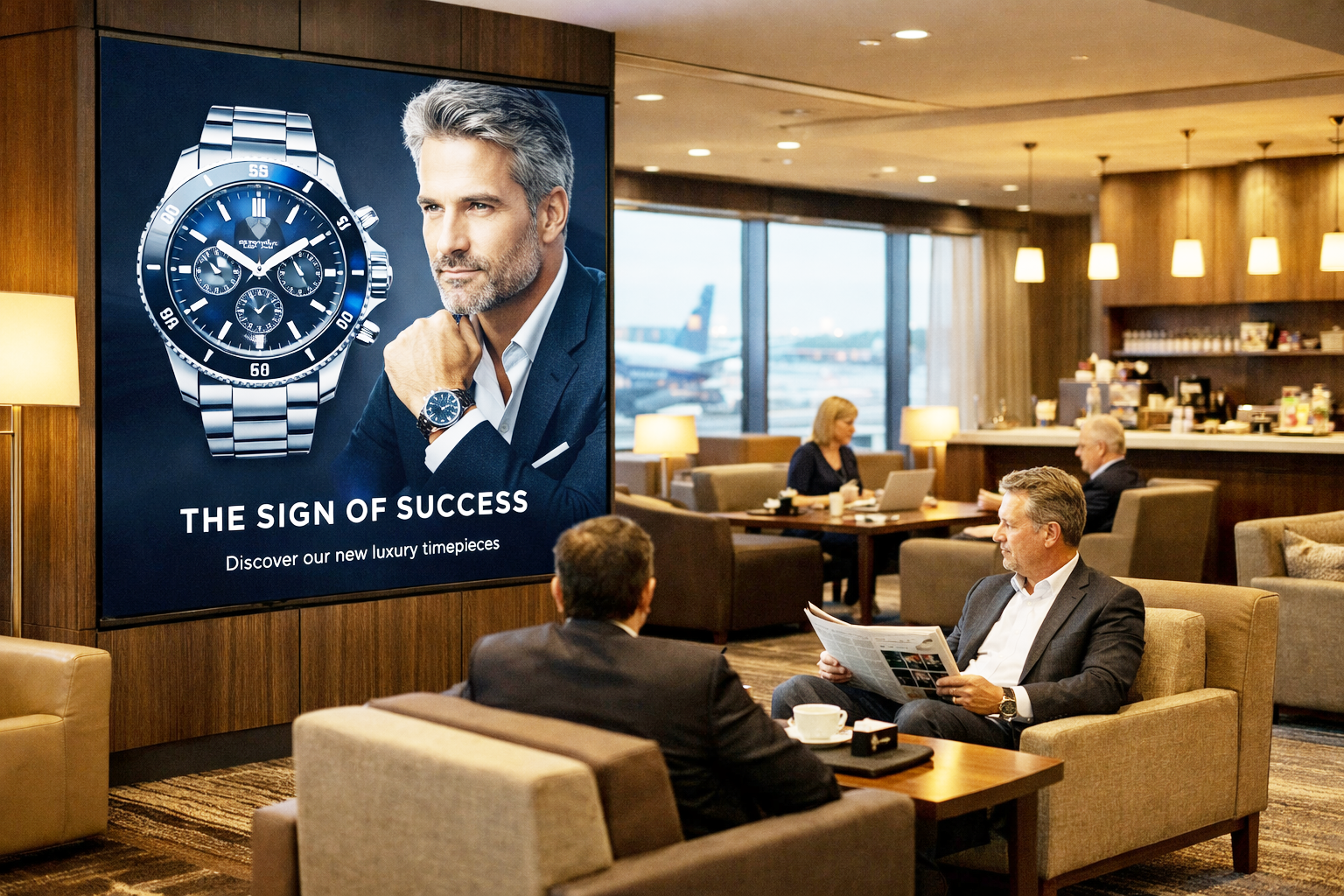
Poor Placement and Delays Affect Airport Campaigns
We help you move faster, access better inventory, and get it right now.
Talk to an ExpertFinal Strategic Verdict
Hong Kong International Airport is the most commercially multidimensional airport in Asia. It is simultaneously the world's busiest cargo hub, the primary international gateway for the GBA's $2.1 trillion economy, home to 12,500 UHNWIs and HK$35 trillion in assets under management, and the single transit point through which mainland China's 470,000 HNWIs access the world's international capital markets. The Three-Runway System commissioned in November 2024 has expanded capacity by 50%, positioned the airport to reach 120 million annual passengers by 2035, and set the stage for AAHK's SKYTOPIA Airport City transformation — which will make the airport island a destination in its own right for luxury, art, yachting, and premium commerce. Cathay Pacific's HK$100 billion investment over seven years, including upgraded world-class lounges and 100+ new aircraft, will deepen the airport's premium passenger experience and attract an even more commercially valuable transit audience. The brands that invest at HKIA today — in private banking, luxury goods, international real estate, premium automotive, and international education — are reaching the most financially sophisticated and internationally mobile consumer audience in Asia, at the precise moment they enter or exit the world's most important cross-border wealth management corridor. Masscom Global provides the cultural intelligence, market access, and execution capability to ensure that investment converts into measurable commercial results.
About Masscom Global
Masscom Global is a premium international airport advertising and media buying agency operating across 140 countries. With deep expertise in airport OOH, premium publications, and high-net-worth audience targeting, Masscom helps brands reach the world's most valuable travellers at the moments that matter most. For advertising packages, media rates, and campaign planning at Hong Kong International Airport and airports across the globe, contact Masscom Global today.
Frequently Asked Questions
How much does airport advertising cost at Hong Kong International Airport?
Advertising costs at HKIA vary by terminal location, format, placement zone, campaign duration, and seasonal demand. Premium positions adjacent to Cathay Pacific's lounge access points, the retail luxury corridor, and the premium departure concourses command higher investment than standard positions. Event-window pricing during Art Basel Hong Kong and Chinese New Year reflects the exceptional HNWI audience concentration these periods deliver. The ongoing Terminal 2 renovation and SKYTOPIA Airport City development are creating new premium advertising inventory that will be competitively priced during the opening period. Masscom Global provides current rate intelligence and placement recommendations. Contact Masscom for a tailored rate card and campaign proposal.
Who are the passengers at Hong Kong International Airport?
HKIA's passenger profile spans three commercially significant tiers. The domestic Hong Kong tier includes 12,500 UHNWIs, senior financial professionals across 46 private banks, family office principals, and a highly internationally mobile professional class. The mainland Chinese tier includes HNWIs accessing international markets through Hong Kong as a financial gateway — the primary channel through which China's 470,000 $10 million+ HNWIs manage offshore assets. The international transit tier includes Cathay Pacific's business and first class passengers connecting between Asia, Europe, North America, and Australasia on one of the world's most respected premium airline networks.
Is Hong Kong International Airport good for luxury brand advertising?
HKIA is one of the top three airports globally for luxury brand advertising, alongside Dubai International and Singapore Changi. The combination of Hong Kong's UHNWI density, mainland Chinese HNWI wealth management traffic, Cathay Pacific's world-class first and business class product, and the Art Basel Hong Kong event window creates an ambient luxury context that few airports anywhere can match. The planned renovation of The Wing First Class lounge to a new world standard and SKYTOPIA's luxury retail and art trading infrastructure will further elevate the brand environment from 2025 onwards.
What is the best airport in Asia for reaching HNWI and wealth management audiences?
HKIA and Singapore Changi are the region's two Tier 1 wealth management airport environments. HKIA's specific advantage is its role as the primary gateway for mainland Chinese HNWI capital accessing international markets — no other airport in the world concentrates this particular and commercially extraordinary audience at comparable scale. For brands targeting specifically the Chinese HNWI segment alongside established Hong Kong wealth, HKIA has no peer.
What is the best time to advertise at Hong Kong International Airport?
Chinese New Year (January to February) is the year's most important single advertising window, particularly for luxury goods, gifting, and premium food and beverage categories. The Art Basel Hong Kong and Rugby Sevens March window delivers the year's highest UHNWI audience concentration. Summer (July to August) delivers maximum passenger volume for leisure travel-oriented categories. The October-to-January window captures the full weight of HKIA's business event season and the year's peak cargo and logistics B2B audience.
Can international real estate developers advertise at Hong Kong International Airport?
HKIA is one of the most commercially productive airports in the world for international real estate advertising. The combination of Hong Kong HNWI outbound property investment in London, Australia, and Canada, the mainland Chinese HNWI's offshore asset diversification through Hong Kong, and the BNO visa-driven UK property investment corridor makes this airport a uniquely efficient channel for international developers. Real estate advertising at HKIA reaches buyers who are in active capital deployment mode, frequently supported by private banking relationships that are actively facilitating international property acquisition.
Which brands should not advertise at Hong Kong International Airport?
Mass-market consumer goods brands, budget travel and low-cost carrier brands, and advertisers whose category positioning does not align with the premium expectations of HKIA's HNWI and international professional audience will find the cost-per-impression at premium placements commercially inefficient. Brands whose creative strategy does not incorporate Chinese cultural intelligence — whether in terms of aesthetic, language, or value alignment — will consistently underperform at HKIA relative to their investment. Masscom advises on both category suitability and cultural alignment before recommending HKIA campaigns.
How does Masscom Global help brands advertise at Hong Kong International Airport?
Masscom Global provides complete campaign capability at HKIA: audience intelligence on the Hong Kong UHNWI, mainland Chinese HNWI, and international transit segments; cultural intelligence on the Chinese consumer's specific brand preferences and the GBA wealth audience's distinct commercial motivations; inventory access across the terminal's premium placement zones, lounge adjacencies, and retail luxury corridor; timing guidance calibrated to the Chinese cultural calendar, Art Basel and Sevens event windows, and Cathay Pacific's premium traffic peaks; and performance reporting that connects media investment to measurable commercial outcomes. Contact Masscom today to discuss a campaign at Hong Kong International Airport or across its global network spanning 140 countries.