

Airport at a Glance
| Field | Detail |
|---|---|
| Airport | Chhatrapati Shivaji Maharaj International Airport |
| IATA Code | BOM |
| Country | India |
| City | Mumbai |
| Annual Passengers | 55.5 million international (2023–24) |
| Primary Audience | Ultra HNWI business travellers, Bollywood and entertainment industry, Gujarati and Marwari trading families |
| Peak Advertising Season | October to January, April to May |
| Audience Tier | Tier 1 — Ultra |
| Best Fit Categories | Luxury goods, international real estate, private banking, premium automotive |
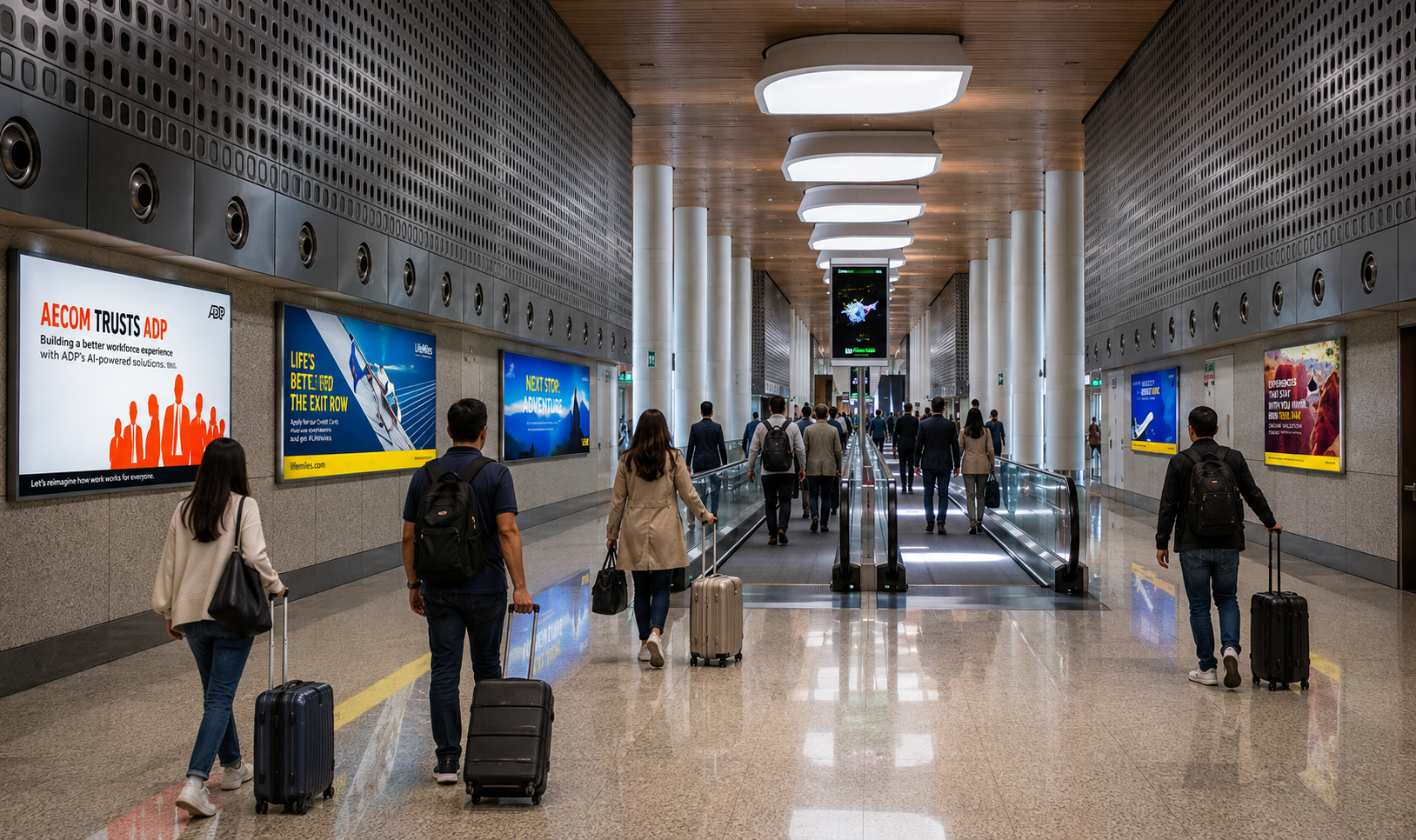
Chhatrapati Shivaji Maharaj International Airport is the primary gateway to Mumbai, India's undisputed financial capital and the city that generates more personal wealth, corporate deal flow, and luxury consumption than any other market on the subcontinent. The passenger walking through Terminal 2 is not a demographic average — this is a curated concentration of banking executives, diamond traders, Bollywood principals, tech founders, and multigenerational business families whose household net worth routinely exceeds what most airport audiences represent nationally. For an advertiser seeking access to India's top wealth tier, BOM is not one option among several — it is the benchmark environment against which all other Indian airports are measured.
The commercial logic of BOM advertising begins with what Mumbai represents structurally. The Bombay Stock Exchange and the National Stock Exchange between them drive the largest capital market in Asia outside of China. The Reserve Bank of India operates from here. The headquarters of Tata, Reliance, Mahindra, HDFC, ICICI, and dozens of other Fortune-equivalent conglomerates anchor the city's commercial gravity. Every major international bank, asset management firm, and professional services network maintains its India hub in Mumbai. The traveller transiting BOM is not passing through — they are the decision-maker.


Advertising Value Snapshot
- Passenger scale: 55.5 million international passengers (2023–24), with consistent year-on-year volume growth driven by new international route additions and rising outbound HNWI travel
- Traveller type: Ultra HNWI corporate executives, Gujarati and Marwari trading diaspora, Bollywood and entertainment industry principals
- Airport classification: Tier 1 — Ultra. BOM sits among the top tier of global airports by audience wealth concentration, not merely passenger volume
- Commercial positioning: India's premiere outbound wealth corridor, serving the city with the highest per capita luxury consumption and outbound investment activity on the subcontinent
- Wealth corridor signal: BOM connects India's financial capital directly to the GCC wealth corridor, London, New York, Singapore, and Toronto — the five primary cities where Mumbai's HNWI diaspora deploys capital
- Advertising opportunity: Masscom Global provides direct access to BOM's premium terminal inventory with full campaign execution, ensuring that brands targeting India's Ultra HNWI audience reach them at the single highest-concentration moment in their travel journey — before they board outbound to global financial centres
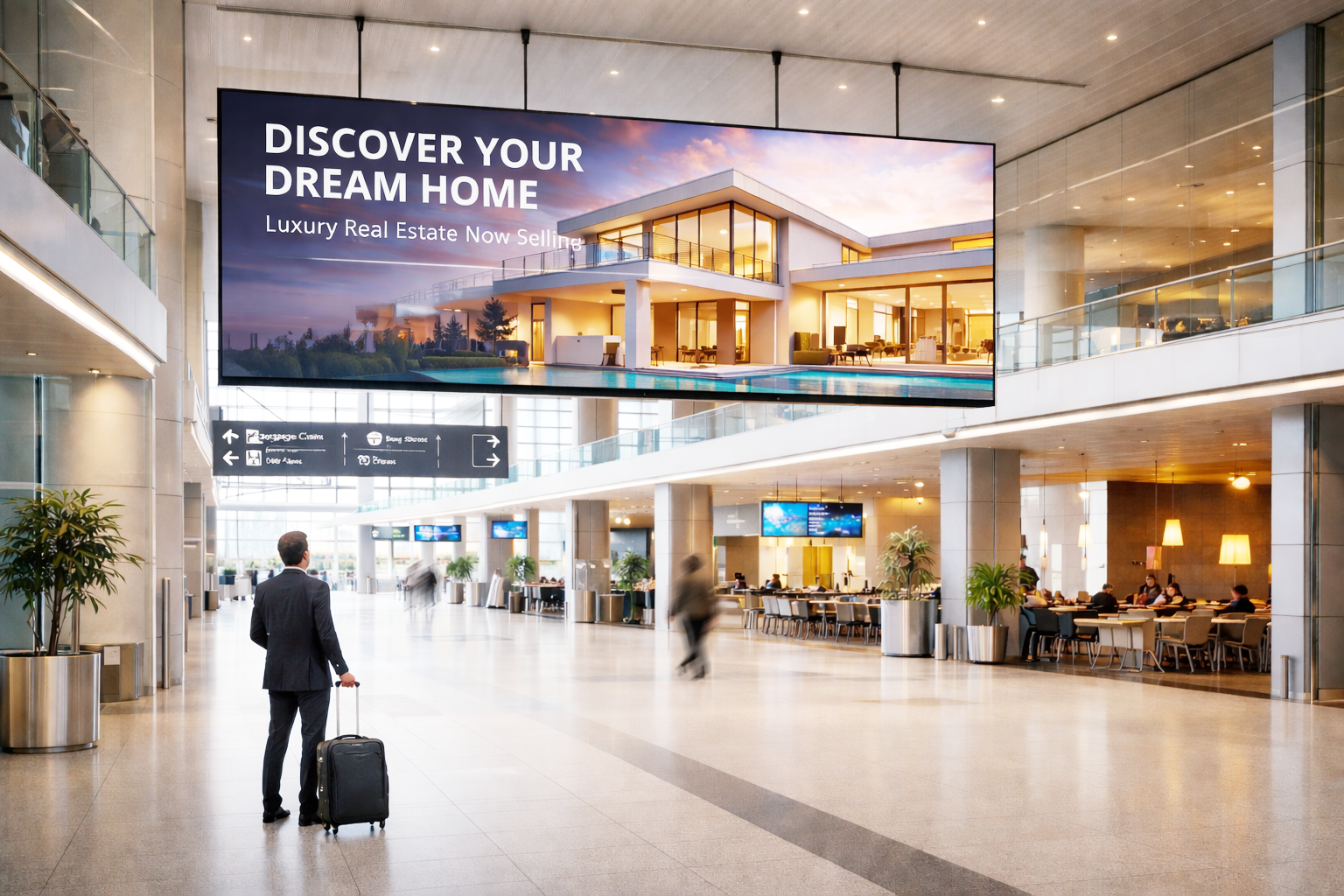
Airport Advertising is Complex to Get Right
We help you execute faster, with proven results and local insight most planners lack starting now.
Talk to an ExpertCatchment Area and Economic Drivers
Top 10 Cities within 150 km — Marketer Intelligence
- Pune: India's fastest-growing IT and manufacturing city, home to Infosys, Wipro, TCS campuses, and a dense population of upper-middle-income tech professionals who travel regularly for business — a strong secondary source of high-income travellers at BOM
- Thane: One of the most rapidly urbanising cities in India, with a large base of salaried financial sector and manufacturing professionals whose consumption behaviour mirrors Mumbai's upper-middle market — ideal for aspirational premium brand exposure
- Navi Mumbai: A planned satellite city with a significant concentration of corporate office parks and pharmaceutical headquarters, generating a consistent flow of business-class travellers using BOM for international departures
- Nashik: The wine capital of India and a major hub for the grape and pharmaceutical industries, with a substantial base of agribusiness entrepreneurs and mid-tier industrialists who travel internationally via BOM
- Aurangabad (Chhatrapati Sambhajinagar): A significant hub for the Aurangabad Industrial City (AURIC), home to auto component manufacturers and textile exporters, generating international business travellers to Germany, Japan, and the GCC
- Lonavala and Khandala: Premium resort destinations within the Mumbai catchment that attract ultra-wealthy second-home owners and corporate retreat organisers — audiences already primed for luxury brand engagement
- Panvel: The primary gateway to Navi Mumbai and a rapidly developing node of logistics, pharmaceutical, and port-linked commerce, with a growing base of upper-income entrepreneurs using BOM for outbound travel
- Kalyan-Dombivli: A densely populated industrial satellite with a large base of mid-tier manufacturing entrepreneurs and salaried professionals — representing the aspirational consumer bracket that BOM serves in volume
- Vasai-Virar: A corridor of significant diamond and jewellery trade activity, linked to the Gujarati community's artisanal and trading economy, producing travellers with strong links to GCC and Southeast Asian markets
- Alibag: An exclusive coastal resort enclave where Mumbai's ultra-wealthy maintain second homes — a feeder catchment of high-net-worth leisure travellers with premium lifestyle spending profiles
NRI and Diaspora Intelligence
Mumbai's diaspora is one of the most commercially powerful in the world. The Gujarati community — with deep roots in the UK, East Africa, North America, and Australia — uses BOM as its primary connection point to its homeland, making return visits during Diwali, Navratri, and family occasions in volumes that drive some of the highest-grossing advertising windows in the year. The Sindhi diaspora, spread across Southeast Asia and the GCC, similarly concentrates travel through BOM. NRI remittances into the Mumbai catchment are estimated among the highest per capita of any Indian city, with a significant proportion flowing into real estate, luxury goods, and financial products. The return NRI traveller at BOM arrives with converted foreign currency, accumulated savings, and a documented preference for international brand consumption — making them one of the most commercially receptive segments in the airport advertising universe.
Economic Importance
Mumbai's economy is not simply large — it is structurally the most diverse and financially sophisticated of any Indian city, generating approximately 6 to 7 percent of national GDP from a city that houses less than 2 percent of the population. Financial services, the entertainment industry, pharmaceuticals, diamonds and gems, IT services, and petrochemicals each produce a distinct and economically significant traveller archetype at BOM. The Bandra-Kurla Complex functions as India's equivalent of Canary Wharf — a purpose-built financial district housing the Indian offices of every major global investment bank, insurance conglomerate, and asset management firm. Nariman Point and the Fort district anchor India's oldest corporate address lines. For an advertiser, the BOM catchment does not produce one audience — it produces multiple distinct ultra-wealthy audience segments simultaneously.
Business and Industrial Ecosystem
- Financial services and capital markets: BSE, NSE, RBI, and the full ecosystem of investment banks, private equity firms, and asset management companies that operate from Mumbai produce a concentrated flow of C-suite and senior financial professionals at BOM — ideal for private banking, wealth management, corporate travel, and B2B financial services advertising
- Diamonds and gems trade: Mumbai — specifically the Bharat Diamond Bourse in BKC — is among the world's largest diamond trading hubs, with Gujarati diamantaires travelling regularly to Antwerp, Dubai, and New York, creating a captive audience for luxury jewellery brands, insurance, and international real estate
- Pharmaceutical and biotech: Major pharma headquarters including Sun Pharma, Cipla, and Lupin operate from Mumbai, generating senior scientific and commercial executives travelling to Europe, the US, and Japan for regulatory, licensing, and commercial negotiations
- Entertainment and media (Bollywood): Mumbai's film industry is a global content economy in itself, with producers, directors, actors, and talent agencies generating premium business travel to Los Angeles, London, Dubai, and Singapore — a niche audience of ultra-high-visibility individuals with lifestyle spending that outperforms most sectors
Passenger Intent — Business Segment
The business traveller at BOM is travelling with a capital purpose — to execute a deal, attend a board meeting, close a licensing negotiation, or manage an investment. They carry corporate cards with elevated spending limits, make high-value decisions in real time, and are heavily influenced by premium positioning at the airport environment. Advertiser categories that intercept them most effectively include private banking and wealth management, corporate legal and advisory services, premium hotel and hospitality, international commercial real estate, and premium B2B technology platforms. The BOM business passenger is not browsing — they are in acquisition mode, and the airport is the last premium environment they pass through before entering a global commercial context.
Strategic Insight
The business environment at BOM is unique in India because it operates simultaneously across multiple global wealth corridors. A single terminal at T2 contains passengers headed to Dubai for a real estate closing, London for a fund raise, Singapore for an asset management review, and New York for a tech IPO roadshow. No other airport in South Asia concentrates this breadth of commercially active, internationally mobile, financially empowered business travellers in a single terminal environment. For B2B advertisers with global ambitions, BOM is not a country-level buy — it is a corridor buy that opens access to India's most influential dealmakers at the moment they are most commercially alert.
Tourism and Premium Travel Drivers
- Gateway of India and South Mumbai heritage circuit: The historic core of South Mumbai — the Taj Mahal Palace Hotel, the Gateway of India, Colaba, and Marine Drive — attract ultra-premium leisure tourists with average per-night spends at the top end of the Indian market, producing airport audiences with confirmed luxury accommodation spending already in place
- Elephanta Caves and Matheran: UNESCO-recognised cultural assets within the immediate Mumbai catchment draw high-value international tourists from Europe, Japan, and North America, producing departing travellers with premium arts and cultural spending profiles
- Bollywood tourism: A rapidly growing category of international visitor who travels to Mumbai specifically for film industry experiences, studio tours, and celebrity events — a segment with strong fashion, entertainment, and experiential spending behaviour
- Luxury resort and wellness circuit: The Alibaug coastline, the Sahyadri hill stations, and the growing number of ultra-premium resort properties within the Mumbai catchment generate inbound leisure tourism from the GCC and Europe, with travellers departing BOM in confirmed premium spending mode
Passenger Intent — Tourism Segment
International leisure tourists arriving and departing BOM have already committed to high per-day spends — this is not a budget travel catchment. The inbound visitor to Mumbai has selected one of India's most expensive destination cities, is likely staying in a five-star or boutique premium property, and is receptive to luxury retail, experiential hospitality, and premium lifestyle brand advertising at the airport. The outbound leisure traveller from Mumbai is typically a family unit from the upper income bracket heading to Europe, the Maldives, Southeast Asia, or the GCC — they have made significant financial commitments before they arrive at the airport and respond strongly to premium destination, travel insurance, financial services, and luxury goods messaging in that final pre-departure window.
Travel Patterns and Seasonality
Peak seasons:
- October to November (Diwali and festive season): The single most commercially powerful travel window at BOM, driven by NRI returns, family reunions, gifting behaviour, luxury goods purchases, and the largest volume of inbound diaspora. Advertising rates and audience quality are at their highest point during this window.
- December to January (winter break and New Year): High volumes of outbound leisure travel to the Maldives, Europe, Southeast Asia, and Australia, combined with inbound business travel ahead of the new financial year. Premium audience, premium dwell time.
- April to May (summer school holidays): Significant outbound family travel to the UK, US, Canada, and Australia, driven by school calendars. The family unit travelling for children's education visits or holiday produces strong spending on travel accessories, premium hospitality, and educational services.
- July to September (Ganesh Chaturthi and Eid): Festival-driven travel, concentrated within India and outbound to the GCC, with elevated retail and luxury gifting behaviour from Ganesh Chaturthi celebrations.
Event-Driven Movement
- Diwali (October/November): India's most economically significant festival drives a massive wave of NRI returns, luxury gifting, and family travel. Advertisers across jewellery, luxury goods, financial products, real estate, and fashion should front-load campaign budgets here.
- Ganesh Chaturthi (August/September): Mumbai's defining cultural festival, driving domestic travel from the diaspora and significant retail and hospitality spending. A peak window for aspirational and premium consumer brands.
- MIPIM and Cityscape (March/April): International property events in Cannes and Dubai draw Mumbai's real estate community outbound through BOM, creating a concentrated window for international property developers and luxury lifestyle brands to reach active buyers in transit.
- Indian Film Festival and Bollywood Awards Season (January/February): The movement of entertainment industry principals through BOM for international award events produces a short but highly visible window of ultra-premium audience exposure.
- Eid al-Fitr and Eid al-Adha (variable): A significant portion of Mumbai's Muslim business community travels to the GCC, Turkey, and Southeast Asia during Eid, creating elevated traffic on Gulf routes and spending on luxury goods and hospitality.
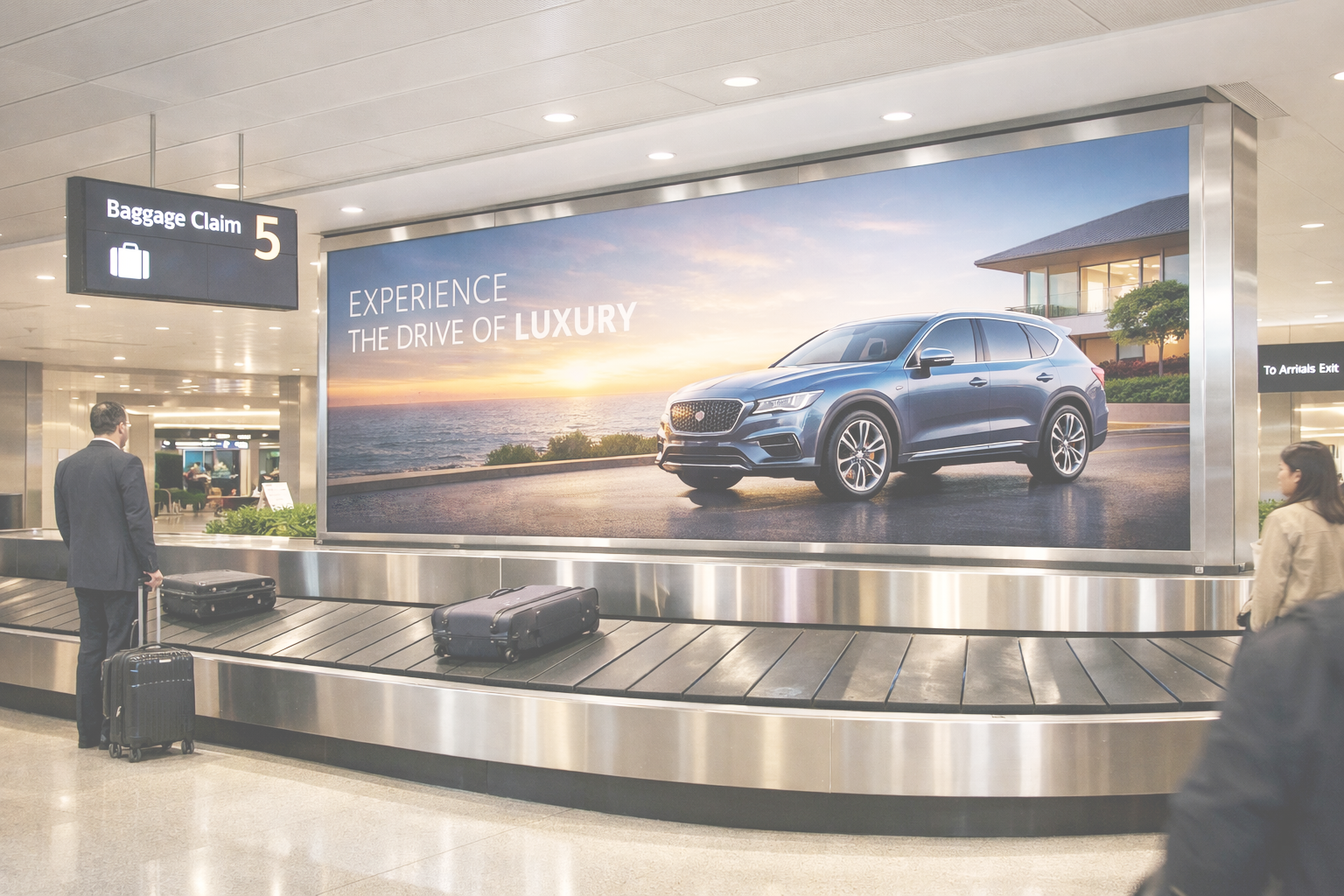
It’s Not Just Where You Advertise - It’s How Fast You Execute
We combine local insight with fast rollout to deliver results for you, now.
Talk to an ExpertAudience and Cultural Intelligence
Top 2 Languages
- Hindi: The dominant commercial and mass-market language of the BOM catchment, spoken across all socioeconomic levels in Mumbai and its satellite cities. For advertisers targeting volume, Hindi-language creative has the broadest reach across the full passenger mix at BOM.
- Gujarati: The language of India's most commercially powerful trading community. The Gujarati-speaking audience at BOM includes diamond traders, textile exporters, pharmaceutical entrepreneurs, and Bollywood financiers — a concentration of transactional wealth that is commercially critical for luxury, financial services, and international real estate advertisers. Campaign creative that signals recognition of Gujarati culture and values consistently outperforms generic English creative with this segment.
Major Traveller Nationalities
The BOM international terminal mixes outbound Indian nationals — predominantly upper-income Mumbaikars and visiting NRIs — with inbound passengers from the GCC, the UK, the US, Singapore, and Germany. The returning Indian diaspora from these corridors travels with foreign currency purchasing power, a heightened exposure to international brand standards, and a proven tendency to make significant purchases in the luxury and real estate categories during their return visit window. Inbound business travellers from the GCC, the UK, and Japan are typically senior corporate decision-makers coming to Mumbai for headquarters-level meetings, joint ventures, or investment decisions — making them a high-value secondary audience for premium B2B and lifestyle brands.
Religion — Advertiser Intelligence
- Hinduism (approximately 65%): The dominant religion of the Mumbai catchment, with Diwali, Navratri, Ganesh Chaturthi, Holi, and Ram Navami each producing distinct travel behaviour, gifting spikes, and luxury consumption triggers. Diwali alone generates the largest single premium advertising window in the Indian airport calendar, combining jewellery, luxury goods, real estate gifting, and premium hospitality into a single sustained spending period. Ganesh Chaturthi is a Mumbai-specific cultural event that concentrates the city's identity and consumer pride simultaneously.
- Islam (approximately 20%): Mumbai has one of India's largest Muslim business communities, with significant commercial representation in textiles, gems, real estate, and finance. Eid al-Fitr and Eid al-Adha drive outbound travel to the GCC, Turkey, and Southeast Asia, with elevated luxury gifting spending at the airport in the days preceding both festivals. Ramadan drives a distinct consumption pattern among this segment that benefits premium food, fashion, and hospitality brands.
- Jainism (approximately 4 to 5%): Disproportionately significant as an advertiser intelligence signal. The Jain community is overrepresented among Mumbai's ultra-wealthy — diamond trading families, textile exporters, and financial sector principals. Paryushana and Diwali are the key festival periods. Jain business families travel frequently to the GCC, Antwerp, New York, and London for commercial purposes, and carry the highest average outbound purchase power of any religious community in the BOM catchment. Luxury goods, private banking, international real estate, and premium hospitality advertisers should treat this audience as a primary target.
Behavioral Insight
The Mumbai airport audience does not make impulse decisions — it makes informed, comparative, and status-aware ones. The wealthy Mumbaikar traveller has seen international brand advertising in New York, Dubai, and Singapore and arrives at BOM with a benchmark for premium positioning. Generic aspirational messaging does not land here. What works is authority signalling — creative that demonstrates genuine expertise, product leadership, or exclusive access. The Gujarati and Marwari business traveller in particular responds to advertising that respects their commercial intelligence and presents investment propositions, product credentials, or service advantages with precision. Emotional resonance works best when grounded in financial logic — which is why financial services, luxury real estate, and premium automotive advertising consistently outperforms at BOM relative to purely lifestyle-driven creative.
Outbound Wealth and Investment Intelligence
The outbound passenger at BOM is among the most commercially significant in the world because Mumbai's wealthy class is not just affluent in Indian terms — they are globally mobile capital deployers. The families that built India's financial, pharmaceutical, entertainment, and trading economies are actively moving money across borders into real estate, business stakes, education assets, and second residency programmes. BOM is the departure point for that capital flow. The international brands that position themselves at this airport are not reaching consumers — they are reaching principals.
Outbound Real Estate Investment
Mumbai's HNWI audience is among the most active outbound real estate investors in Asia. Dubai remains the dominant destination, driven by zero tax, Golden Visa accessibility, strong rental yields in premium zones, and strong cultural and linguistic familiarity from the Gujarati and Sindhi diaspora. London is a generational preference, particularly among Bollywood and financial sector families who maintain properties in Mayfair, Knightsbridge, and Hampstead. The United States — particularly New York, New Jersey, and California — draws investment from pharmaceutical and tech families seeking proximity to their education and business networks. Canada, particularly Toronto and Vancouver, attracts family real estate investment from those with student children or pending immigration applications. Portugal and Greece have emerged as growing Golden Visa markets for Mumbai's HNWI community, combining investment yield with residency optionality across the EU. Singapore attracts ultra-HNWI investment from the financial and trading sectors. International real estate developers operating in any of these corridors should treat BOM as a primary acquisition channel.
Outbound Education Investment
The outbound education flow from BOM is substantial and high-value. The UK — led by London, Edinburgh, Manchester, and Warwick — remains the preferred destination for undergraduate education for Mumbai's upper-income families, driven by brand recognition, proximity to existing diaspora, and immigration optionality. The United States takes the postgraduate and MBA market, with Columbia, NYU, MIT, and the Ivy League carrying the most significant brand pull among Mumbai's business families. Canada has grown rapidly as an education destination due to post-study work rights and streamlined immigration pathways, with Toronto and Vancouver as the primary hubs. Australia — particularly Melbourne and Sydney — is a growing choice for STEM and business education. The airport advertising window at BOM is commercially critical for international universities, education consultancies, student visa services, and education finance providers, particularly in the January to March pre-admissions cycle and the May to July pre-departure window.
Outbound Wealth Migration and Residency
Mumbai's ultra-wealthy have the highest second-residency uptake rate of any Indian city. The UAE Golden Visa has been transformational for this community — long-term residency with zero income tax, full property ownership rights, and a commercial environment built partly around Indian business culture. UAE's ten-year Golden Visa is the most subscribed programme among BOM's departing HNWI passengers. Portugal's Golden Visa — before and after its restructuring — drew Mumbai's wealthy into Lisbon and Porto, with ongoing demand for the fund investment route. Greece's Golden Visa remains active, particularly for families seeking EU mobility at a lower entry threshold. The United Kingdom's Innovator Founder Visa and Global Talent Visa are active among Mumbai's tech and entertainment sector. Citizenship-by-investment programmes in St Kitts, Grenada, and Malta are used by the diamond and trading community for business travel facilitation and offshore structuring. Immigration advisories, tax planning firms, international legal practices, and wealth management platforms should treat BOM as a high-yield permanent advertising environment.
Strategic Implication for Advertisers
Any international brand operating on either side of the Mumbai wealth corridor — whether selling into India's growing luxury market or capturing capital flowing out of it — needs BOM in their media plan. This is not a market entry conversation, it is a market dominance one. The brands that consistently occupy premium BOM inventory set the category benchmark for Mumbai's ultra-wealthy audience before they arrive in Dubai, London, or New York. Masscom Global provides the inventory access and campaign architecture to execute on both sides of this corridor simultaneously.
Airport Infrastructure and Premium Indicators
Terminals
- Terminal 2 (T2): The flagship international and premium domestic terminal, designed by Skidmore, Owings and Merrill with a cathedral-scale departures hall featuring one of the largest public art collections in the world — over 7,000 works displayed across the passenger journey. T2 processes all international departures and the majority of premium domestic routes, operating at a scale and visual quality that supports the highest premium advertising formats.
- Terminal 1 (T1): The domestic terminal primarily handling low-cost carrier operations for IndiGo, SpiceJet, and other domestic operators. A high-volume environment with a broader consumer audience profile, offering reach across India's growing domestic travel market.
Premium Indicators
- Lounge infrastructure: T2 houses multiple premium lounges including the Plaza Premium Lounge, Air India's Maharaja Lounge, and multiple airline-specific business and first class lounges — collectively signalling a sustained premium dwell environment with high advertiser adjacency value
- Private aviation: Mumbai's Juhu Aerodrome, one of India's oldest airports, serves the private charter and helicopter market for ultra-HNWI passengers unwilling to transit through the main terminal — an additional signal of the city's density of private aviation demand
- Luxury hotel adjacency: The Trident Nariman Point and a cluster of five-star properties including the JW Marriott Juhu are within close proximity to BOM, with the airport maintaining connectivity to the premium hospitality corridor that serves international business visitors
- Architectural distinction: T2's award-winning terminal design, its public art programme, and its engineering scale make it one of the most photographed and profiled airport interiors in Asia — an environment where premium brand advertising commands attention through architectural context alone
Forward-Looking Signal
Navi Mumbai International Airport (NMIA) is currently under advanced construction on the eastern outskirts of Mumbai and is expected to significantly expand the city's combined air capacity in the coming years. This new airport, when operational, will serve the growing catchment of Pune, Navi Mumbai, and the wider Mumbai Metropolitan Region. For advertisers, the current window at BOM represents the last period of undivided audience concentration before the Mumbai market bifurcates across two airports. Masscom advises clients to establish strong BOM presence now — securing optimal positions, building audience familiarity, and locking in current rates before NMIA activates competitive inventory demand and the overall Mumbai advertising environment restructures.
Airline and Route Intelligence
Top Airlines
Air India, IndiGo, Emirates, Etihad Airways, British Airways, Qatar Airways, Singapore Airlines, Lufthansa, Air France, Virgin Atlantic, Cathay Pacific, Thai Airways, Malaysian Airlines, Kenya Airways, Ethiopian Airlines, Sri Lanka Airlines
Key International Routes
- Dubai (DXB): Multiple daily frequencies — the single highest-volume route at BOM, reflecting the GCC diaspora and business corridor
- London Heathrow (LHR): Daily wide-body service — primary UK connection for NRI families and corporate travel
- Singapore (SIN): Daily service — Southeast Asia hub connection for financial and tech sector travel
- New York (JFK/EWR): Daily service — primary North America connection for pharmaceutical, tech, and finance sectors
- Toronto (YYZ): Regular service — education and diaspora corridor
- Frankfurt (FRA): Daily service — European industrial and pharmaceutical corridor
- Paris (CDG): Regular service — European leisure and luxury goods corridor
- Bangkok (BKK): Regular service — Southeast Asia leisure and business gateway
- Kuala Lumpur (KUL): Regular service — Southeast Asian hub connectivity
- Abu Dhabi (AUH): Daily service — secondary GCC corridor
Domestic Connectivity
BOM maintains strong domestic connectivity to Delhi (DEL), Bangalore (BLR), Chennai (MAA), Kolkata (CCU), Hyderabad (HYD), Goa (GOI), Ahmedabad (AMD), and Jaipur (JAI), with multiple daily frequencies on metro routes, making it the domestic hub of choice for inter-city business travel within India's western and southern economic corridors.
Wealth Corridor Signal
The BOM route network is structured around wealth transfer, not leisure volume. Dubai is the dominant route because Dubai is where Mumbai's Gujarati and Sindhi business community has built its most significant commercial outpost — the route carries a constant flow of dealmakers, property buyers, and family connection travellers, not primarily tourists. London reflects the generational diaspora anchor. Singapore reflects the financial and tech sector's preferred Asia Pacific base. New York reflects pharmaceutical, finance, and Bollywood's international engagement. Together, these five routes account for the majority of BOM's Ultra HNWI outbound volume — and every one of them is a capital deployment corridor, not a holiday route.
Media Environment at the Airport
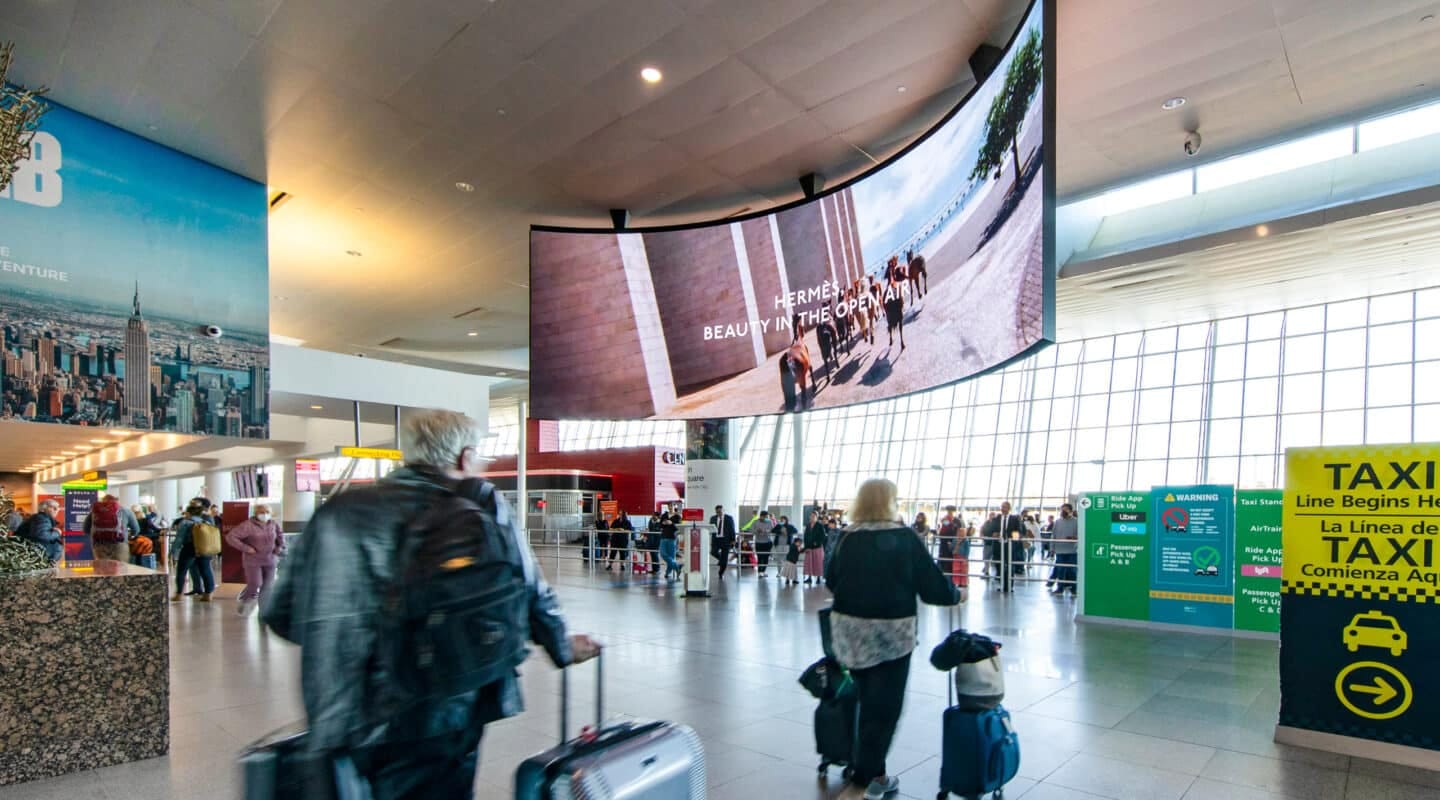
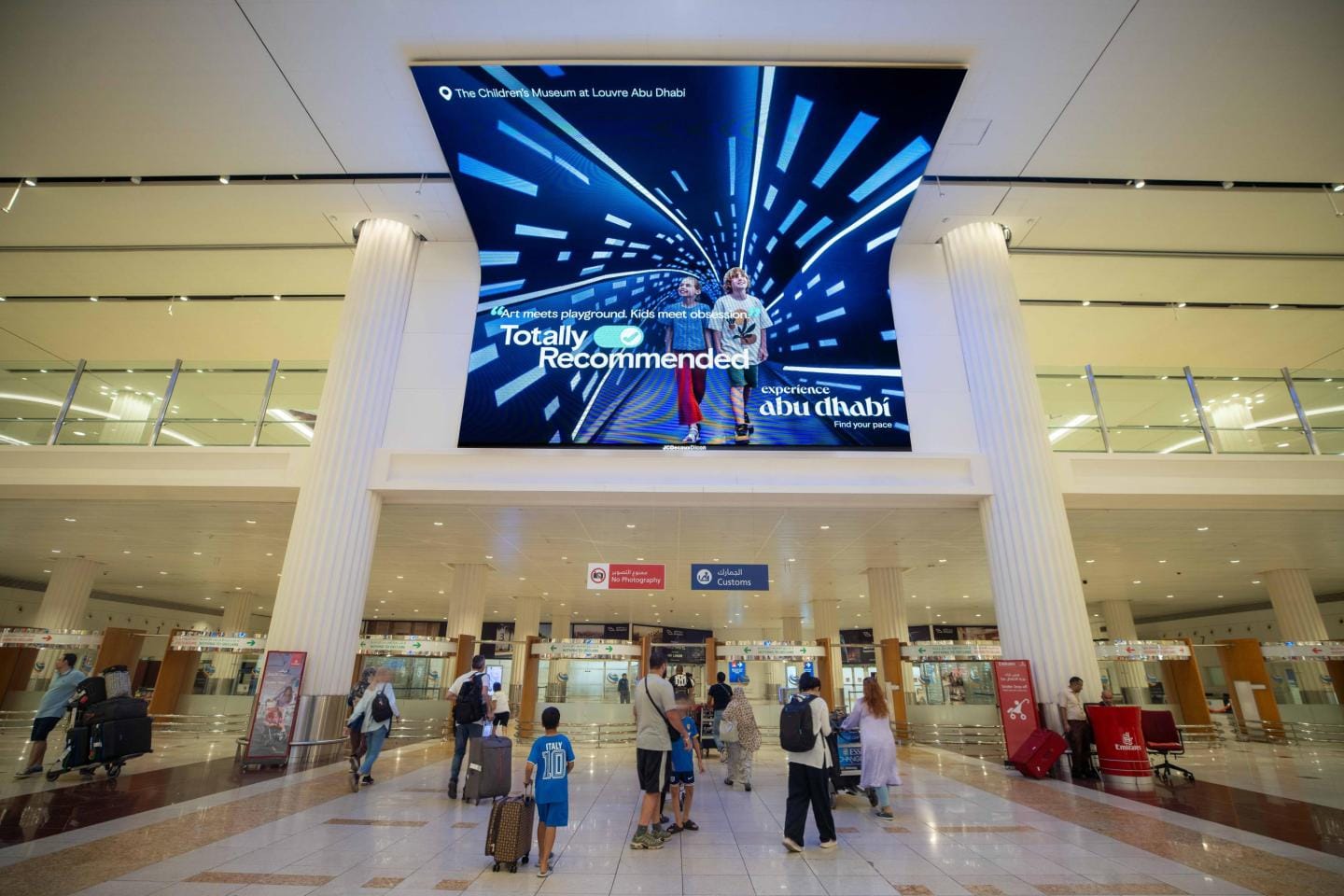
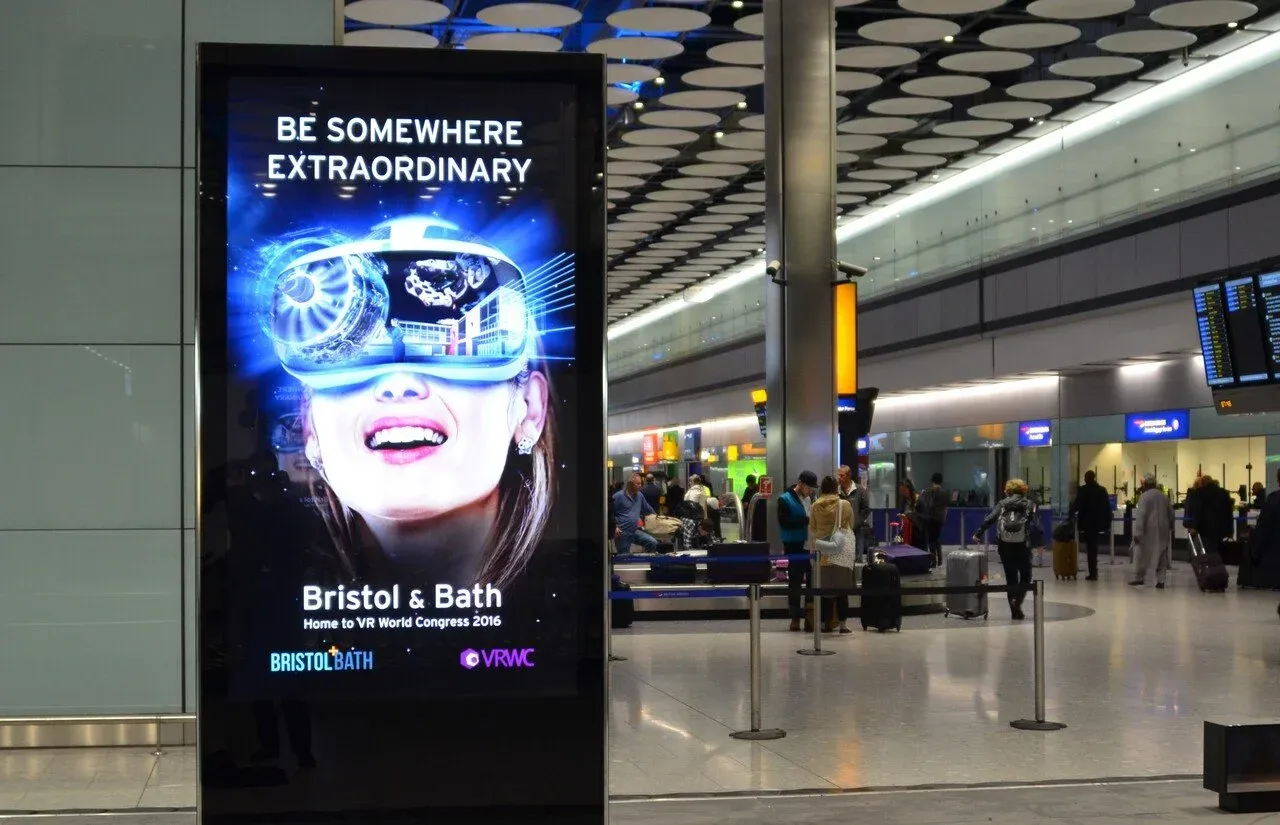
- T2's scale, ceiling height, and architectural openness create advertising dwell conditions that are exceptional by global airport standards — premium large-format placements in the departures forecourt, immigration hall, and pre-boarding zones command sustained attention from a captive audience with average dwell times of 2.5 to 3.5 hours
- T2's art programme and premium retail environment create a brand-elevated context in which luxury advertising is naturalised rather than intrusive — unlike cluttered commercial terminals where premium brands lose distinction, BOM's visual environment actively elevates the perceived value of adjacent advertising
- The absence of an equivalent premium terminal environment in BOM's closest Indian city competitors makes T2 the clear standout airport advertising environment in the western India market — brands that need to signal premium positioning within India do not have a comparable alternative
- Masscom Global provides end-to-end campaign access at BOM — from format selection and position booking to creative localisation, compliance management, and campaign performance tracking across both T1 and T2 environments
Strategic Advertising Fit
Best Fit
- Luxury goods and fashion: The BOM Ultra HNWI audience includes families with multi-generational luxury consumption habits and exposure to Harrods, Harvey Nichols, and global luxury retail — they purchase at home with international benchmarks in mind, making premium brand advertising at BOM a direct conversion channel
- International real estate: Dubai, London, Portugal, Greece, and Canada-focused developers have a pre-qualified, actively investing audience walking through BOM every day — the airport is the highest-concentration point to reach Indian outbound property buyers before they land in the destination market
- Private banking and wealth management: The density of HNWI and Ultra HNWI travellers at BOM is unmatched on the subcontinent — private banks, family offices, and international wealth managers can reach India's most capitalised individuals in a premium, undistracted environment
- Premium automotive: Mumbai's wealthy class has the highest luxury car ownership rate in India, and the aspirational premium automotive buyer travelling through BOM responds strongly to premium format, high-gloss automotive creative that signals status alignment
- International education: The education spend flowing out of BOM is among the highest of any airport in South Asia — UK universities, US business schools, Canadian colleges, and Australian institutions should all treat BOM as a core acquisition channel in their India strategy
- Premium hospitality and travel: High-end hotels, private villa collections, luxury cruise lines, and premium travel management companies have a natural audience among BOM's departing leisure travellers, who consistently book at the top end of the destination hospitality market
- Citizenship and residency by investment: The UAE Golden Visa, Portugal, Greece, and Caribbean CBI programmes have documented, active demand from the BOM HNWI catchment — immigration advisory firms, international legal practices, and government investment promotion boards should treat this airport as their primary India advertising environment
- Financial services and insurance: Mutual funds, private equity platforms, international insurance products, and cross-border financial planning services all have a directly monetisable audience at BOM — the passenger base here is financially sophisticated and actively managing wealth across multiple jurisdictions
Brand Alignment at a Glance
| Category | Fit |
|---|---|
| Luxury goods and fashion | Exceptional |
| International real estate | Exceptional |
| Private banking and wealth management | Exceptional |
| Premium automotive | Exceptional |
| International education | Strong |
| Citizenship and residency advisory | Strong |
| Premium hospitality and travel | Strong |
| Mass FMCG and budget retail | Poor fit |
Who Should Not Advertise Here
- Budget and value retail brands: The BOM audience has documented premium consumption benchmarks — value retail positioning creates negative brand association in this environment and delivers negligible conversion against the cost of premium airport inventory
- Low-cost financial products and credit aggregators: The financial sophistication of BOM travellers makes entry-level financial product advertising non-credible and, in the context of adjacent private banking advertising, actively damaging to brand positioning
- Regional domestic brands with no international relevance: Brands whose market is entirely domestic Indian and have no outbound aspirational narrative will not generate commercial return from BOM's heavily internationally-oriented passenger flow
Event and Seasonality Analysis
- Event Strength: High
- Seasonality Strength: High
- Traffic Pattern: Dual-Peak with sustained baseline volume
Strategic Implication
BOM operates two distinct peak windows — the October to January festive and winter period, which is the single most commercially dense window in the Indian airport advertising calendar, and the April to May summer school holiday departure window, which is heavily outbound and family-oriented. Advertisers should allocate the majority of their campaign budget to the October to January window, with a secondary flight covering April to May for education, premium travel, and real estate. Masscom structures BOM campaigns around this dual-peak rhythm, securing inventory in advance of seasonal rate escalation and ensuring that creative deployment is timed to the precise moment when each audience segment is most commercially responsive.
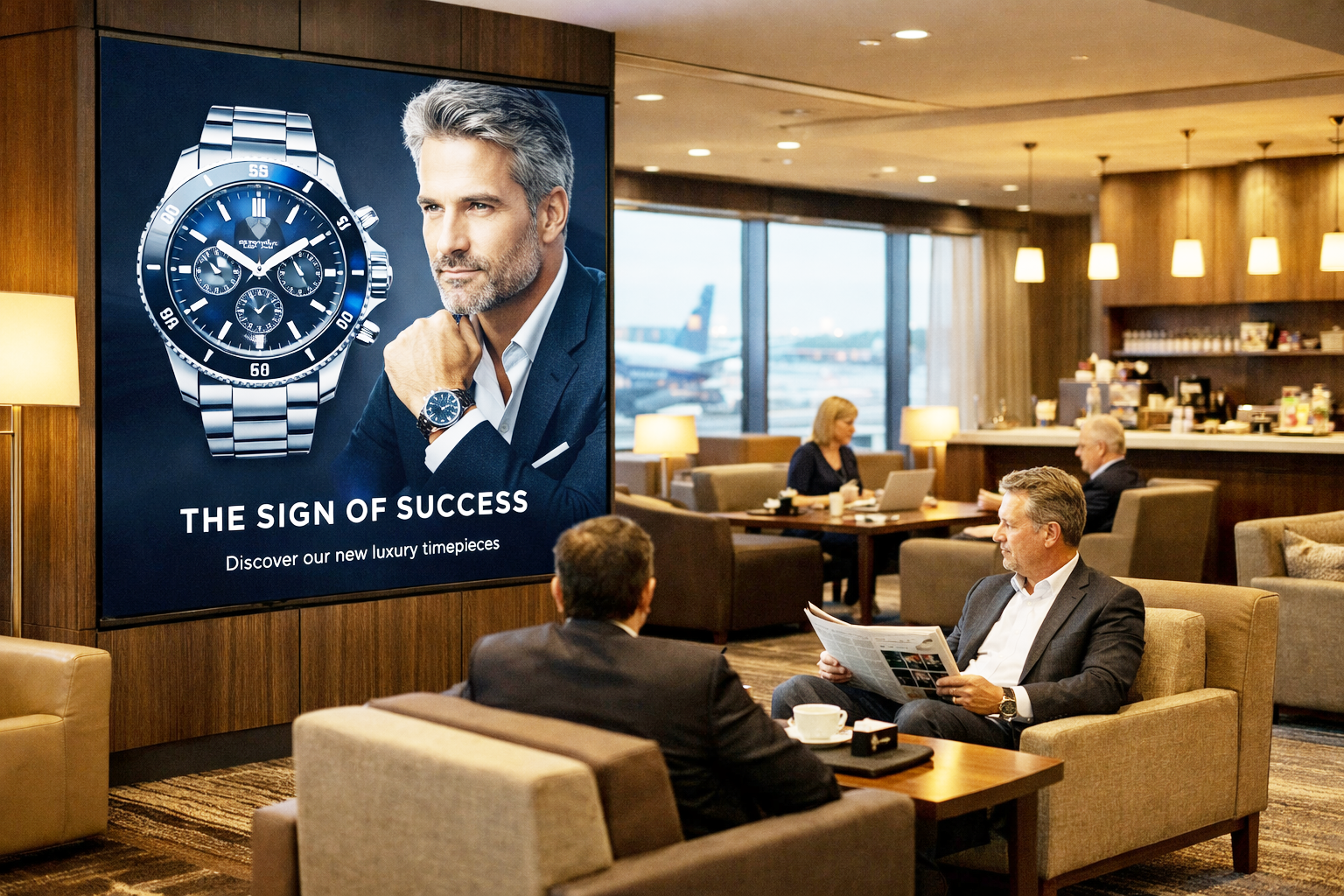
Poor Placement and Delays Affect Airport Campaigns
We help you move faster, access better inventory, and get it right now.
Talk to an ExpertFinal Strategic Verdict
Chhatrapati Shivaji Maharaj International Airport is the most commercially important airport advertising environment in South Asia, without qualification. It serves the single most concentrated ultra-HNWI audience on the subcontinent, in a terminal environment that actively supports premium brand positioning, at a city that functions as the capital of Indian private wealth, outbound capital deployment, and global diaspora commerce. The audience at BOM is not aspirationally wealthy — they are operating at the top of the Indian economic order, with active international investment portfolios, outbound education commitments, second residency interests, and a luxury consumption benchmark set against Dubai, London, and Singapore. Luxury brands, international real estate developers, private banks, premium automotive marques, international universities, and citizenship advisory platforms each have a direct, high-conversion argument for sustained BOM presence. The window to secure optimal inventory and establish premium positioning ahead of NMIA's eventual activation is finite. Masscom Global provides the access, execution capability, and commercial intelligence to ensure that every rupee invested in BOM advertising reaches the right audience, in the right format, at the right moment.
About Masscom Global
Masscom Global is a premium international airport advertising and media buying agency operating across 140 countries. With deep expertise in airport OOH, premium publications, and high-net-worth audience targeting, Masscom helps brands reach the world's most valuable travellers at the moments that matter most. For advertising packages, media rates, and campaign planning at Chhatrapati Shivaji Maharaj International Airport and airports across the globe, contact Masscom Global today.
Frequently Asked Questions
How much does airport advertising cost at Chhatrapati Shivaji Maharaj International Airport? Airport advertising costs at BOM vary significantly depending on format, terminal, position within the passenger journey, campaign duration, and the specific seasonal window. Premium large-format placements in T2's primary passenger flow zones command the highest rates in the Indian airport market and are subject to seasonal demand premiums during Diwali and winter travel windows. Masscom Global provides current rate cards, format recommendations, and package structures tailored to campaign objectives and budget parameters. Contact Masscom for a detailed proposal.
Who are the passengers at Chhatrapati Shivaji Maharaj International Airport? BOM serves an Ultra HNWI-rated audience that includes senior financial services executives, Gujarati and Marwari trading families, pharmaceutical and technology company principals, Bollywood entertainment industry leaders, and returning NRI diaspora from the UK, US, GCC, and Canada. The airport also serves a high volume of upper-income domestic Indian business travellers using BOM as their primary hub for international connections. This is the highest-concentration wealthy audience at any Indian airport.
Is Chhatrapati Shivaji Maharaj International Airport good for luxury brand advertising? BOM is the single best airport in India for luxury brand advertising. The passenger base carries an Ultra HNWI classification, the terminal architecture supports premium positioning, the audience has documented international luxury consumption behaviour, and the catchment includes Mumbai's diamond trading community, financial sector principals, and entertainment industry elite — all active luxury consumers. For any luxury brand seeking India market penetration or outbound audience capture, BOM is the obligatory first placement.
What is the best airport in India to reach HNWI audiences? BOM is India's premier airport for HNWI audience concentration. While Delhi's Indira Gandhi International Airport offers higher total passenger volume, BOM's audience is more densely concentrated at the Ultra HNWI end of the wealth spectrum due to Mumbai's structural role as India's financial capital, diamond hub, and entertainment industry centre. For categories requiring pure wealth concentration over passenger volume, BOM outperforms every other Indian airport.
What is the best time to advertise at Chhatrapati Shivaji Maharaj International Airport? The October to November Diwali window is the single highest-return advertising period at BOM — NRI return volumes, luxury gifting behaviour, and heightened commercial intent converge into the most commercially dense window in the Indian airport calendar. The December to January winter break period is the second peak, followed by April to May for outbound education and family leisure travel. Campaigns should be booked well in advance of these windows as premium inventory is secured early by returning advertisers.
Can international real estate developers advertise at Chhatrapati Shivaji Maharaj International Airport? BOM is one of the most effective airports in the world for international real estate advertising. The outbound passenger base actively invests in Dubai, London, Lisbon, Athens, Toronto, and Singapore — and BOM is the departure point for every significant property buying trip those investors take. Developers in any of these markets are reaching a pre-qualified, actively investing audience in the final airport environment before they arrive in the target market. Masscom Global has specific campaign structures designed for international property developers targeting the BOM audience. Contact the team for details.
Which brands should not advertise at Chhatrapati Shivaji Maharaj International Airport? Budget retail brands, low-cost financial aggregators, and regional domestic brands with no international aspiration or premium narrative will not generate adequate return from BOM's premium inventory costs. The audience is financially sophisticated and internationally benchmarked — brands that cannot credibly position themselves against international equivalents, or that carry strong value-market associations, risk negative adjacency effects in BOM's premium brand environment. Masscom can advise on whether a brand's positioning is calibrated for BOM before any budget is committed.
How does Masscom Global help brands advertise at Chhatrapati Shivaji Maharaj International Airport? Masscom Global provides full-service airport advertising execution at BOM — from audience intelligence and format strategy to inventory access, creative compliance management, and campaign performance tracking. With presence across 140 countries, Masscom delivers the local expertise and global operational capability that most media buyers lack when planning complex airport campaigns in a market as layered as Mumbai. Whether you are launching a new campaign, entering the Indian market, or expanding an existing airport strategy, Masscom ensures that your BOM investment is planned with precision and executed without delay.